
Best AI Tools to Validate Your Startup Idea in 2026 (We Tested 12)

Building a startup used to mean months of guesswork. You would write a business plan nobody reads, build a product nobody wants, and run out of money before finding a single paying customer. Today, AI startup validation tools compress that timeline from months to days — giving founders data-driven confidence before they write a single line of code or spend a single dollar.
But with dozens of AI tools flooding the market, which ones actually help founders validate? We reviewed the landscape and categorized the tools that matter most at each stage of validation.
Table of Contents
- What Is AI Startup Validation?
- AI Idea Analyzers
- AI Customer Interview Tools
- Business Model Canvas AI Tools
- AI Pitch and Financial Tools
- All-in-One Validation Platforms
- How to Choose the Right Tool
- Frequently Asked Questions
What Is AI Startup Validation?
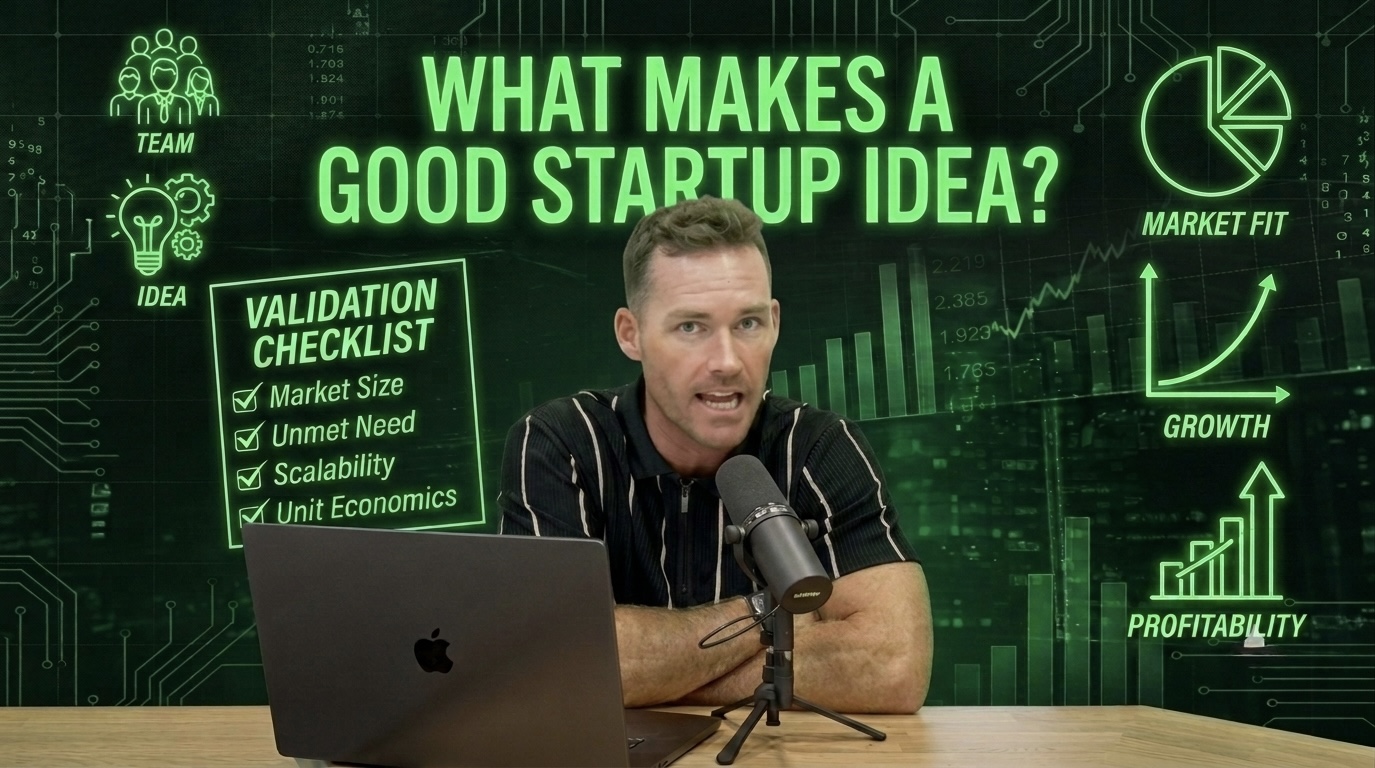
AI startup validation is the process of using artificial intelligence to test whether a business idea is worth pursuing — before investing significant time or capital. Instead of relying on gut instinct or biased feedback from friends and family, founders use AI tools to analyze markets, simulate customer conversations, stress-test business models, and identify blind spots.
The best AI validation tools do not replace the founder’s judgment. They accelerate it. They surface data and patterns that would take weeks of manual research, helping founders answer the three critical questions faster:
- Is this a real problem? Does your target customer actually experience this pain, and is it urgent enough to pay for a solution?
- Will people pay for this? Not “would they be interested” — will they exchange money for what you are building?
- Can this become a real business? Do the unit economics work? Is the market large enough? Can you reach customers efficiently?
AI Idea Analyzers
A startup idea analyzer is typically the first tool a founder uses. You describe your idea, and the AI evaluates it against frameworks like market size, competitive landscape, customer urgency, and defensibility.
What to Look For
- Framework-based analysis, not just generic feedback. The best analyzers use proven startup methodologies (Lean Startup, Business Model Canvas, Jobs-to-be-Done) rather than producing vague encouragement.
- Honest, critical output. You want a tool that tells you your idea has problems, not one that tells you every idea is great.
- Actionable next steps. An analysis that ends with “this looks promising” is useless. You need specific recommendations: what to test, who to talk to, what assumptions to validate.
Tools in This Category
- Startup Ignition ToolSuite — Idea Analysis is the flagship entry point. Powered by the methodology of John Richards, who has mentored over 1,000 ventures, the AI evaluates ideas against real-world patterns from decades of startup coaching. It produces a structured report with specific validation tasks, not generic advice. Part of the broader ToolSuite platform that covers the full validation journey.
- ChatGPT / Claude — General-purpose LLMs can analyze ideas if you prompt them well, but they lack startup-specific frameworks and tend to be encouraging rather than critical. Useful as a supplement, not a primary tool.
- Validator AI — Provides quick idea scoring with market and competitor analysis. Good for a fast gut check, though less depth than specialized platforms.
AI Customer Interview Tools
Customer discovery is where most founders fail. They either skip it entirely or conduct interviews so poorly that they get misleading data. AI customer interview tools help founders design better questions, simulate customer conversations, and analyze interview transcripts for real insights.
What to Look For
- Question frameworks that prevent leading questions and confirmation bias — the two biggest dangers in customer discovery.
- Voice or text-based interview simulation that lets founders practice before talking to real customers.
- Transcript analysis that identifies patterns across multiple interviews automatically.
Tools in This Category
- Startup Ignition ToolSuite — Includes AI-powered customer discovery interviews that walk founders through the process using proven question frameworks. The AI mentor (“Digital John”) coaches founders on what to ask, what not to ask, and how to interpret responses. Also includes the Wow Factor Script tool for testing willingness to pay.
- Dovetail — Primarily a research repository and analysis tool. Strong at organizing and tagging qualitative data from interviews you have already conducted. Less helpful for founders who need guidance on what to ask.
- Grain / Otter.ai — Transcription and highlight tools. Good for recording and reviewing interviews, but they do not guide the interview process itself.
Why This Matters
According to Steve Blank, the father of the Lean Startup methodology, founders need at least 30 customer discovery conversations before they can claim to understand their market. An AI customer interview tool does not replace those conversations — it makes each one dramatically more productive.
Business Model Canvas AI Tools
The Business Model Canvas (BMC) is one of the most widely used frameworks for mapping a startup’s key assumptions on a single page. AI tools in this category help founders fill in, iterate on, and stress-test their canvas.
What to Look For
- Guided completion that asks probing questions rather than just giving you nine empty boxes.
- AI suggestions based on your specific idea, industry, and target customer — not generic templates.
- Iteration support. A good BMC tool lets you create multiple versions as your understanding evolves, so you can compare pivots side by side.
Tools in This Category
- Startup Ignition ToolSuite — The Business Model Canvas tool is AI-assisted and connected to the rest of your validation work (idea analysis, customer interviews, financial projections). Changes in one tool inform suggestions in others. This connected approach prevents the common problem of a canvas that looks good on paper but contradicts your actual customer data.
- Strategyzer — The original BMC tool from Alexander Osterwalder. Well-designed interface, but primarily a drawing tool without AI assistance. Good for teams who already know what to put in each box.
- Canvanizer — Free, simple BMC tool. No AI, no guidance, but functional for quick sketches.
AI Pitch and Financial Tools
Once validation is underway, founders need to translate their findings into financial projections and investor-ready pitches. AI tools in this category help build models and decks grounded in validated data rather than wishful thinking.
Tools in This Category
- Startup Ignition ToolSuite — Financial projections and pitch builder tools that pull from your validated assumptions. Because the tools share data, your pitch deck’s TAM, pricing, and growth assumptions are consistent with what you actually learned during validation.
- Slidebean — AI-powered pitch deck builder with templates. Good design output, but disconnected from your validation data.
- Causal / Fathom — Financial modeling tools. Powerful for spreadsheet-level modeling but not startup-validation-specific.
All-in-One Validation Platforms
The biggest challenge with using separate tools is fragmentation. Your idea analysis lives in one app, your interview notes in another, your canvas in a third, and your financial model in a spreadsheet. Nothing is connected, and insights from one stage do not inform the next.
All-in-one startup validation platforms solve this by providing a connected workflow from idea to investment-readiness.
Startup Ignition ToolSuite
The ToolSuite is the most comprehensive AI startup validation software available. Built on the methodology of John and Tyler Richards — who have collectively mentored over 1,000 ventures and invested in 23+ companies through Startup Ignition Ventures — it provides:
- Idea Analysis — AI-powered evaluation against real startup patterns
- Customer Discovery — Guided interview frameworks with AI coaching
- Business Model Canvas — AI-assisted canvas connected to your validation data
- Financial Projections — Data-driven models based on validated assumptions
- Pitch Builder — Investor-ready decks grounded in evidence, not guesswork
- AI Mentor — “Digital John,” an AI trained on decades of startup mentorship
- Founder Community — Access to other founders going through the same process
- Content Library — Video courses and frameworks from the startup bootcamp
The ToolSuite starts with a free tier (30 credits + community access) and scales with paid plans. It is the same methodology taught in the Startup Ignition startup bootcamp, which has trained over 1,000 founders since 2015.
Try Startup Ignition ToolSuite free →
How to Choose the Right Tool
The right tool depends on your stage and what you need most. (For a breakdown of the actual testing methods — smoke tests, landing pages, pre-sales, and more — see our guide to how to test a startup idea.)
| Stage | What You Need | Best Tool Type |
|---|---|---|
| ”I have an idea” | Honest evaluation, market sizing | AI Idea Analyzer |
| ”I think there’s a problem” | Customer discovery guidance | AI Customer Interview Tool |
| ”I need to map the business” | Framework + AI suggestions | Business Model Canvas AI Tool |
| ”I’m ready to pitch” | Projections + deck | AI Pitch/Financial Tools |
| ”I want the full workflow” | End-to-end validation | All-in-One Platform |
If you are serious about validation — and you should be, since 35% of startups fail due to no market need — an all-in-one platform will save you time, prevent data fragmentation, and produce better results than stitching together separate tools.
Frequently Asked Questions
Can AI really validate a startup idea?
AI cannot guarantee your startup will succeed. Nothing can. But AI can dramatically accelerate the validation process by analyzing markets, identifying competitors, generating interview questions, stress-testing business models, and surfacing blind spots that founders typically miss. Think of AI as a research assistant that works at 100x speed — you still make the decisions, but you make them with better data.
How much do AI validation tools cost?
Costs range from free (ChatGPT, free tiers of specialized tools) to $20–100/month for dedicated platforms. The Startup Ignition ToolSuite offers a free tier with 30 credits and community access, with paid plans starting at $99/year. Compared to the cost of building the wrong product ($50K–500K+ in wasted time and capital), validation tools are the cheapest insurance a founder can buy.
Should I use AI instead of talking to real customers?
Absolutely not. AI tools help you prepare for and analyze customer conversations, but they do not replace them. You still need to talk to real people, observe real behavior, and test real willingness to pay. The best AI tools — like the ToolSuite’s customer discovery features — are designed to make your human conversations more productive, not to eliminate them.
What is the difference between an AI idea analyzer and a business model canvas tool?
An AI idea analyzer evaluates whether your concept is worth pursuing at all — is the problem real, is the market big enough, are there too many competitors. A business model canvas AI tool helps you map out how the business would actually work — revenue streams, cost structure, channels, key partners. You typically use the analyzer first, then build the canvas for ideas that pass the initial screen.
Can I validate a startup idea in one day?
You can get an initial AI analysis and identify your riskiest assumptions in a single day. Full validation — including real customer conversations and willingness-to-pay tests — takes 2–4 weeks of focused work. The point of AI tools is not to skip validation steps but to compress the timeline so each step takes hours instead of weeks.
 Back to All News