
Founder Institute Alternatives: 6 Compared
If you are reading about alternatives to Founder Institute, you have usually already found the two numbers that give people pause: 15 to 20 hours a week for 11 weeks, and a 2.5% warrant on top of the entrance fee.
Those numbers are not unreasonable for what FI does. They are a real commitment, and worth comparing properly before you sign.
Full disclosure: we run Startup Ignition Bootcamp, which is one of the six options below. I will be specific about where FI is the better choice, because for some founders it clearly is.
The short version. If you are pre-launch, employed, and what you actually need is to find out whether anyone wants your idea, a short intensive gets you there in days with no equity attached. If you need months of external structure and a fundraising path at the end, Founder Institute is doing something the short formats do not, and the warrant is the price of it.
What Founder Institute actually costs
| Founder Institute | |
|---|---|
| Time | 15 to 20 hours a week, 11 sessions |
| Entrance fee | Roughly $999 to $1,649, varies by chapter and timing |
| Refund | 75% refundable before the third session |
| Equity | 2.5% warrant to the FI Equity Collective |
| Warrant split | 0.5% mentors, 1% local leaders, 1% Founder Institute |
| Triggers at | First qualified financing, $100,000 or more in outside capital |
| Reach | 200+ cities, 95 countries |
As of November 2026. Terms vary by chapter, so check fi.co for yours.
One detail that is rarely spelled out: you can take part in the program without joining the Equity Collective, but you must join it to graduate and to get the post-program benefits. So while the warrant is technically optional, in practice it is the deal.
And the time figure is the one people underestimate. Eleven weeks at 15 to 20 hours is 165 to 220 hours. That is a part-time job on top of your actual job.
Why people look for alternatives
The hours, not the fee. Almost nobody abandons FI over $1,099. They abandon it in week four when 18 hours a week collides with a full-time role. FI publishes that fewer than 40% of founders make it through the program.
The warrant is real equity. A warrant is not a share purchase, and the distinction matters legally, but 2.5% at your first round is 2.5% at your first round. Founders who expect to raise should price it as such.
Chapter quality varies. With 200+ cities, the mentor pool is local. A strong chapter is excellent. A weak one is a Zoom call. This is structurally true of any global franchise model and is the most common complaint.
You may not need a launch program yet. FI is designed for people who are going to start a company. If you are still deciding whether the idea is worth starting, that is a different and much shorter piece of work.
The six alternatives
1. Startup Ignition Bootcamp
Best for: pre-launch founders who need to validate an idea without quitting, and without giving up equity.
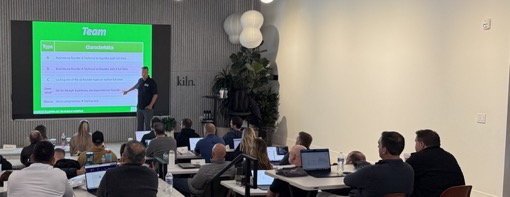
Three days, $1,999, no equity of any kind. The format covers idea analysis, customer discovery and business model work, which is the same early ground FI covers in its first several sessions, compressed into one block you can take as PTO rather than spread across a quarter.
Afterwards you keep ToolSuite access, the community and the content library, and Startup Ignition Ventures writes first checks of $100K to $1M if what you validate is worth backing. We have run 1,000+ ventures through it since 2015.
Where FI is better: eleven weeks of accountability beats three days of it for founders who need someone expecting them every week. FI’s global chapter network also reaches cities we do not, and its fundraising program at the end is a structured path we do not replicate.
Disclosure: this is our program.
2. Y Combinator
Best for: founders with a working product and traction, aiming at the top of the market.
Different stage entirely. YC accepts roughly 1.5% of applicants and invests real money for real equity. If you are weighing FI, you are almost certainly not ready for YC yet, and that is the honest sequence rather than a criticism. We cover the full field in Y Combinator alternatives for first-time founders.
3. Techstars and 500 Global
Best for: founders with a product, early users and a team.
Three-month full-time accelerators that invest and take roughly 6%. The equity is higher than FI’s warrant and so is the bar for getting in. Worth applying to once you have the traction they ask for, not before.
4. Antler
Best for: founders without an idea or a co-founder yet.
Antler runs a residency that starts further back than almost anything else, including matching co-founders, then invests in the teams that form. If your blocker is that you want to start a company but have neither the idea nor the partner, this solves a problem FI assumes you have already solved.
5. MassChallenge
Best for: founders who want structure and will not give up equity under any circumstances.
Zero equity, zero fee, and competitive to get into. The trade is that it is less hands-on than programs that have a financial stake in you. If the warrant is your sole objection to FI, this is the most direct answer to it.
6. Doing it yourself with a deadline
Best for: disciplined founders who need the work, not the program.
Worth saying plainly, because it is what many FI graduates say they could have done. The core of any pre-launch curriculum is talk to customers, test the riskiest assumption, decide. You can run that without buying a program. We publish the customer discovery questions and a full validation guide free.
Most people who choose this route do not actually do it, which is the entire argument for paying for a program. Be honest with yourself about which kind you are.
If you are keeping your job
This is FI’s central promise, so it deserves its own answer.
Evenings-and-weekends formats work when the work genuinely divides into weekly chunks. Curriculum does. Legal setup does. Customer discovery does not divide well, because the people you need to talk to are available during business hours, and momentum matters. Ten interviews across ten weeks teaches you considerably less than ten interviews across three days, because you cannot hold the pattern in your head across that gap.
That is the practical case for a short intensive over a long part-time program at the validation stage, and the practical case for the reverse once you are actually building: building rewards sustained weekly effort, and a three-day format cannot give you that.
Sequence rather than substitute. Find out whether anyone wants it, then commit the quarter.
How to choose
| If you are | Start with |
|---|---|
| Deciding whether the idea is worth starting | Startup Ignition Bootcamp |
| Committed, pre-launch, and have 15+ hours a week | Founder Institute |
| Without an idea or co-founder | Antler |
| Refusing to give up equity, full stop | MassChallenge |
| Building, with early users and a team | Techstars, 500 Global |
| Post-traction and aiming high | Y Combinator |
| Disciplined and self-directed | Our free guides, with a deadline |
Founder Institute appears in that table for a reason. For a founder who is certain they are starting a company, needs eleven weeks of someone expecting them, and wants a fundraising path at the end, it does something a three-day program cannot.
The mismatch is when founders join it to answer a question that does not take eleven weeks. If you are still testing whether the idea holds, you are paying 165 hours and 2.5% for an answer that a week of customer conversations would have given you, and you can run that week before deciding whether FI is worth the rest.
Founder Institute terms were taken from fi.co and its published FAQ in November 2026. Chapter terms vary and figures change. Verify before you apply.
 Startup Ignition Bootcamp
Three days, $1,999, zero equity. Find out if anyone wants it before you commit a quarter.
See Upcoming Cohorts →
 Back to All News