
Anthropic's $2 Trillion IPO: The Biggest Winners Might Be Startups
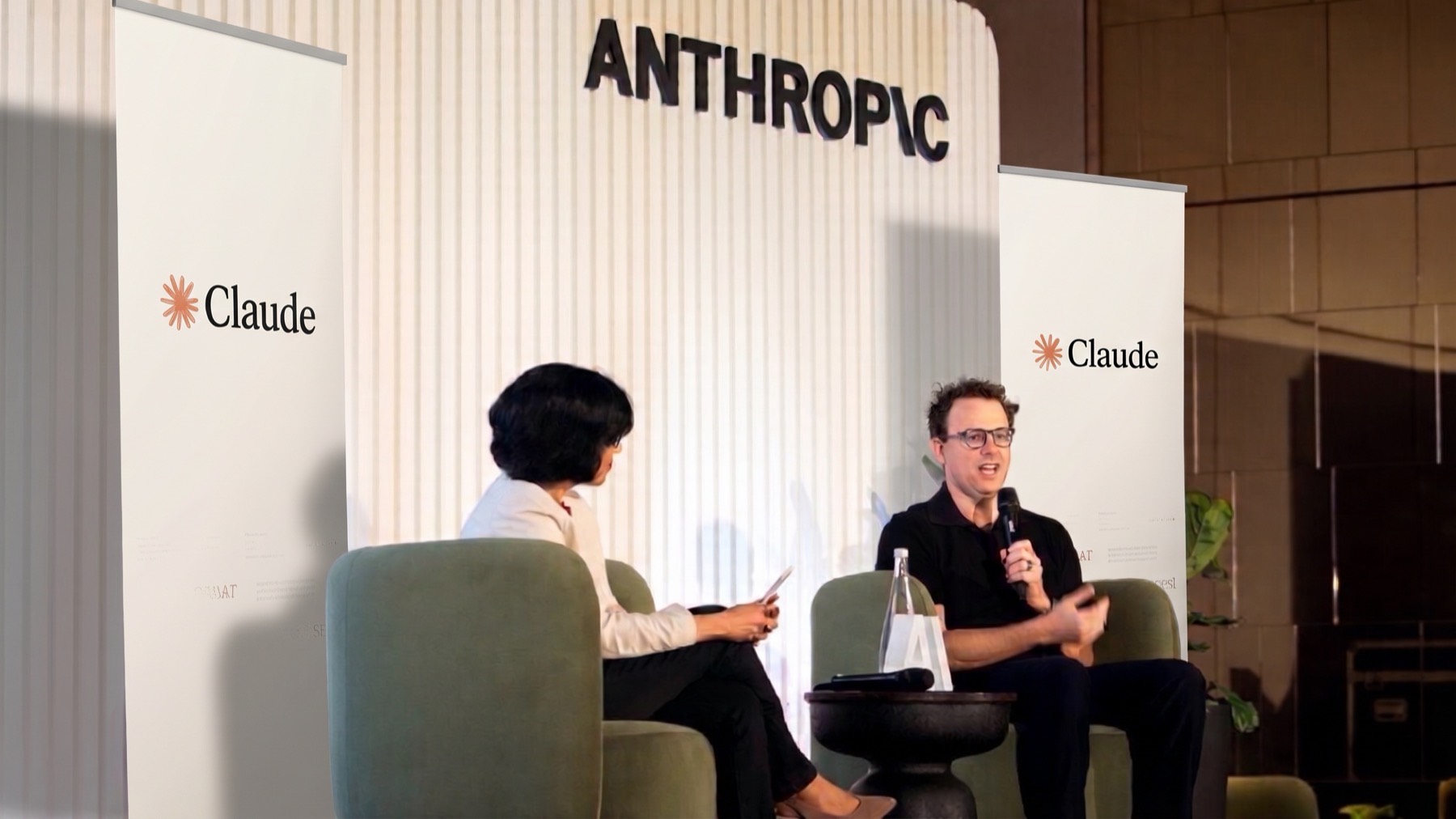
Anthropic, the company behind Claude, publicly filed for its IPO today. Reports suggest the offering could value the company at as much as $2 trillion, potentially raising $100 billion. The company plans to list on the Nasdaq under the ticker ANT. Neither number is finalized, but even the possibility is staggering.
What’s fascinating to me isn’t just the valuation. It’s the economics behind it. These AI companies are raising and spending extraordinary amounts of capital to develop better, faster, and cheaper models. And while investors pour billions into this race, the price of using AI keeps falling.
So what exactly are investors betting on? And more importantly, who else stands to benefit?
I think one of the biggest beneficiaries of this entire AI arms race could be early-stage startups.
The Cost of AI Intelligence Is Collapsing
A September 2026 study from Epoch AI, The Plunging Price of Thought, found something remarkable. Since 2023, the cost of achieving the same level of AI performance has fallen approximately 47% per quarter, or 13-fold annually. That’s an extraordinary rate of technological improvement. For comparison, the study’s authors note it is roughly four times faster than the cost decline in DNA sequencing and six times faster than the decline in raw compute.
To be clear, this measures the price of achieving comparable performance on specific benchmarks. It doesn’t mean every AI API has become 13 times cheaper each year. But the direction is unmistakable: capabilities that once required expensive, cutting-edge models are becoming dramatically more affordable.
Actual prices are falling too, not just performance-adjusted ones. Silicon Data’s token expenditure index peaked at $2.07 per million tokens in late May and has since dropped below a dollar, a 54% decline. Ramp’s index, built from what real businesses actually spend on OpenAI and Anthropic, is down 48% from its February peak. The causes are price cuts from the model providers themselves and customers shifting to cheaper open-weight alternatives.
Axios framed that as a complication for the AI boom, and for investors in the model companies it may well be. For a founder buying tokens, it is the entire opportunity.
Meanwhile, companies like Anthropic and OpenAI continue investing heavily in research, infrastructure, and computing capacity.
Why?
Because they’re betting that as AI becomes more capable and affordable, usage will expand dramatically. Lower costs could unlock entirely new markets, applications, and categories of customers. Investors are betting that the resulting demand will be large enough to support enormous businesses.
That’s a reasonable thesis. But there’s another side to this equation that I think founders should be paying much closer attention to.
The AI Giants Are Effectively Subsidizing the Next Generation of Startups
Think about what’s happening. Anthropic and OpenAI are competing to develop increasingly powerful models. Their investors are funding enormous research efforts and infrastructure commitments.
The scale of those commitments is worth sitting with. Anthropic’s own filing discloses roughly $518 billion in future cloud, compute and infrastructure obligations, with about 80% of it binding and non-cancelable. The largest counterparties are Broadcom, Google, Amazon and Microsoft. That is a capital commitment larger than the GDP of most countries, made by a company that has existed for five years.
And a startup with five employees can access the output of all of it through an API. That small company doesn’t need to hire hundreds of machine learning researchers, build data centers, or spend billions training a foundation model. It can rent access to the intelligence and focus its resources on building a business.
In effect, the AI giants are absorbing much of the technological development cost that startups would otherwise never be able to afford.
And in some cases, the subsidy is literal. Anthropic expanded its Claude Startups program in October 2026, providing eligible startups with API credits, a year of Claude Team, and technical support. Founders backed by participating venture capital firms may qualify for up to $100,000 in additional API credits. OpenAI runs a similar program through its own partner network. Demand for Anthropic’s was heavy enough that the current cohort is now full and applications are closed.
But the underlying strategy is clear. These companies want startups building on their platforms. That makes sense for the model providers, because today’s startup could become tomorrow’s major enterprise customer. It also creates an equally interesting opportunity for entrepreneurs. The giants are competing to make intelligence more powerful and accessible. Startups get to compete on what to do with it.
This doesn’t mean every API call is priced below cost, or that startups will always enjoy falling total AI bills. But it does mean founders can access capabilities that required vastly more capital just a few years ago.
What This Means If You’re Starting Something Now
Put all of that together from a founder’s side of the table. Training a frontier model requires the kind of capital commitment Anthropic just disclosed to the SEC. Using one costs under a dollar per million tokens, and that price fell by half in five months. If you are early enough, some of it is free. The gap between you and a company with a $518 billion infrastructure commitment is an API key.
A two-person team today starts with capabilities that a well-funded engineering organization could not buy three years ago. The expensive part of building software got cheap, it got cheap quickly, and it is still getting cheaper while you read this.
Which is why I think this is one of the better moments to start a company that I have seen.
The Real Opportunity Isn’t Another AI Model
This is where I think founders need to change their thinking. When everyone is watching trillion-dollar AI companies, it’s tempting to believe the biggest opportunities require equally ambitious technology.
I don’t think that’s true.
At Startup Ignition Ventures, we invest in early-stage B2B software companies, particularly those addressing specific industries and workflows. Our request for startups lays out the sectors we are actively looking at right now. And I’m increasingly convinced that some of the most attractive AI opportunities will emerge in industries that aren’t especially exciting to Silicon Valley.
Think about construction, insurance, veterinary medicine, manufacturing, property management, and hundreds of other specialized markets. These industries have complicated workflows, fragmented software systems, legacy processes, and expensive problems that customers deal with every day. They don’t necessarily need a better language model. They need someone who understands their businesses well enough to solve a painful problem.
A foundation model company can build extraordinary intelligence. That doesn’t automatically mean it understands how an insurance adjuster processes a claim, how a veterinary practice manages operations, or how a manufacturer handles regulatory compliance. Those details matter, and the startups that understand them can create meaningful value.
Building the vertical, not the model? Tell us what you are building and get hard, specific investor feedback in hours, not months. We write $250K to $750K first checks into B2B software. Tell Us About Your Idea →The Recipe for Founders Is Simple
If you’re thinking about starting an AI company, here’s where I’d focus.
1. Find a painful customer problem.
Not a clever use of AI. Not something that makes for an impressive demo. Find an expensive, frequent, or frustrating problem that customers already want solved.
2. Focus on a specific industry or customer segment.
The narrower your initial market, the better you can understand the workflows, constraints, purchasing decisions, and actual economics of the problem.
3. Use the best available AI technology.
Don’t spend your limited capital recreating what foundation model companies are already building. Use their technology to accelerate development, experimentation, and delivery.
4. Own the workflow and customer relationship.
This is the part that keeps you alive. Connecting a model to a user interface is not a sustainable advantage, because as foundation models improve, the feature that looks impressive today becomes a standard capability tomorrow. Your advantage has to come from somewhere the model cannot reach: proprietary customer data, deep integrations, a specialized workflow, distribution, switching costs, or expertise that took years to build. Integrate deeply enough that you become part of the customer’s daily operations. The goal isn’t to build something impressive with AI. It is to build something customers cannot imagine operating without.
None of this is easy. Customer discovery, distribution, pricing, and retention are still difficult. In many ways, they’re becoming even more important because AI has made building software so accessible. If you are not technical yourself, that same shift has changed what it takes to find a technical cofounder.
But that’s exactly the opportunity.
Let the Giants Fund the AI Arms Race. You Build the Business.
Anthropic’s IPO could become one of the biggest financial events in technology history, and it may turn out to be a tremendous investment for its shareholders. But I think founders should look at the news differently.
You don’t have to participate in the race to build the most powerful AI model to benefit from it. The competition between the model companies is making increasingly sophisticated technology available to businesses that could never have developed it themselves. For founders who know how to identify painful problems, understand specific markets, and build products customers will pay for, that creates an extraordinary opportunity.
The companies building the intelligence may capture the headlines. But the founders who turn that intelligence into indispensable businesses have a massive opportunity of their own.
Let the giants fund the AI arms race.
You go build the business.
Tyler Richards is a General Partner at Startup Ignition Ventures, a pre-seed venture capital firm focused on B2B software companies. He is a three-time exited software entrepreneur and teaches software entrepreneurship at Brigham Young University.
Sources
- Anthropic IPO prospectus coverage, Fortune, October 26, 2026
- Anthropic S-1 live coverage, CNBC, October 26, 2026
- Axios: The AI boom has a new complication, falling prices, October 22, 2026
- Epoch AI, The Plunging Price of Thought, September 22, 2026
- Anthropic, expanding the Claude Startups program, October 6, 2026
 Back to All News