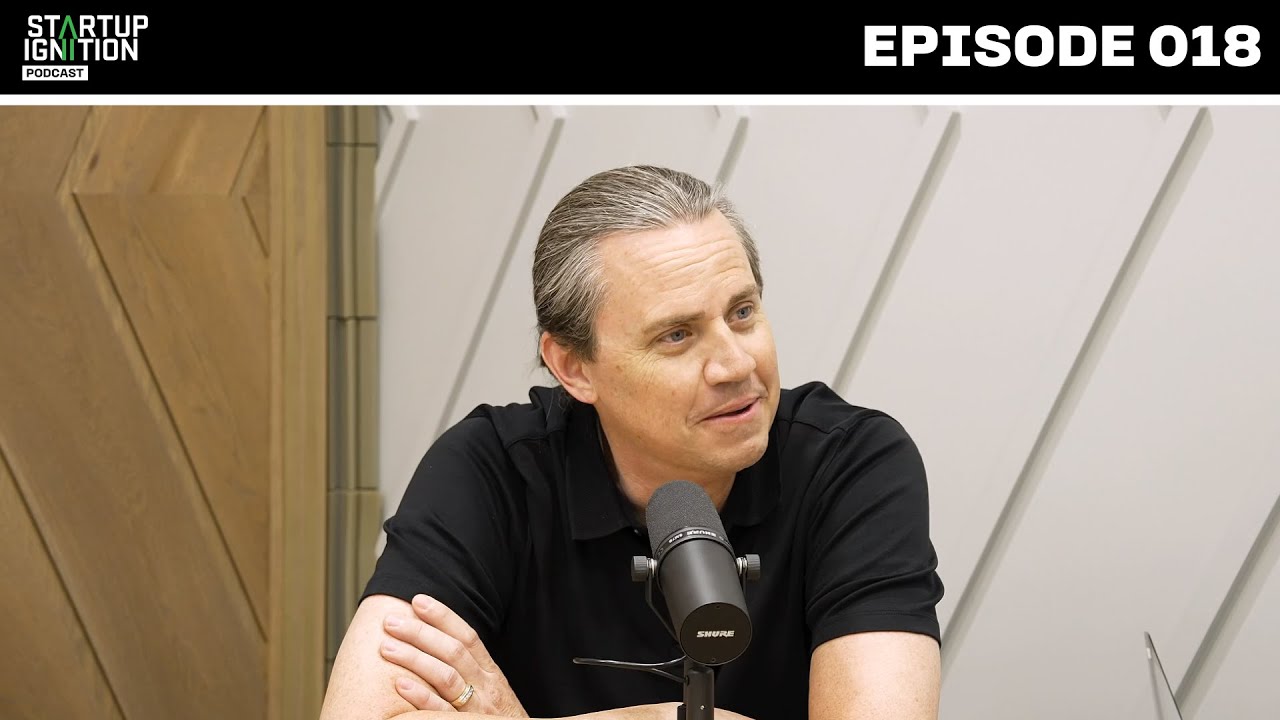
Andrew Smith shares his journey from tech CEO to building a restaurant empire, co-founding Savory Fund with a portfolio exceeding $750M in assets and 360+ restaurants across 12 states generating over $2.2B in cumulative sales.
Andrew K. Smith is the Co-Founder and Managing Director of Savory Fund, a restaurant investment platform with $750M+ in assets across brands like Swig, Mo' Bettahs, and R&R BBQ. Since 2009, he has helped develop, acquire, and operate 360+ restaurants across 12 states, generating $2.2B+ in sales and creating 40,000+ jobs. EY Entrepreneur of the Year 2017.
Show full transcript
I remember seeing my name and seeing over what my bankers were saying. This is what you're worth on paper when we go public. And I'm like, that's more money than I even knew existed in the world. Yeah. Exactly. And we were getting ready to go and file. And then the market popped. So we missed our window. For any founder that doesn't shed a tear from time to time, they're not a true entrepreneur. Yeah. But I remember dark dark nights, you know, looking at the ceiling going, "What the hell am I going to do this?" Today we have an awesome guest, Andrew Smith, the definition of a problem hunter. Yeah. Yeah. I see a problem and I I'm like that's stupid. Yeah, there's probably a better way. And then I create something. But people need to understand that's where the greatest ideas come from is when the entrepreneur actually feels the pain. He's trying to solve. We were in at a race actually on track side. Our zippers were down on our race suits and we were having a cold drink and we were just waiting for our next race and he said, "Tell me a little bit more about the business and how you're funding them." And so I told him the whole shtick. He said, "Well, have you ever thought about doing this in a, you know, private equity standup uh structure, institutionalized structure?" And I'm like, "I've thought of it. I just haven't done it. I was too busy. I mean, we were doing $200 million a year in sales and busy and big teams a lot. I'm like, I'm not going to go figure that out today. Goes, "Well, that's what I exist for." I'm like, "Okay." And he goes, "Why don't you just partner with Marcato? We'll stand all of it up, use our institutional backbone, our name, but it'll be standalone." And I'm like, "Cool." So, I shook his hand. Yeah. And we formed Savory that weekend when we were racing. Rock next to it. Welcome back to the Startup Ignition podcast. Thank you so much for tuning in and listening. We appreciate every single one of you. It has been such a fun adventure. We're meeting awesome people. I hope we're sharing awesome advice and tips. But give us feedback. Let us know in the comments what you're wanting to listen to, what you're wanting to hear about, what kind of advice and mentorship you want to hear about. But today, we have an awesome guest who has been so gracious to give us an hour of his time because he's such a busy dude. Literally coming from deal making, probably going to deal making actually deal. And we have Andrew Smith, who is the founder, an an investor, a managing partner of a fund. He has been an operator, an entrepreneur going from tech to restaurants, which is which is an awesome transition that I definitely want to dive into. Currently, you were you were in early tech ventures and doing a ton of things on your own, which I looked at your LinkedIn. It's very extensive to say the least. Yeah, there's not a lot of resumes I put together in my life. I haven't needed a job, so I just create them. But you've also been now at Savory Fund for I don't know how many years, but I know that it's been around for a while now. I don't know what what fund are you on. We're on fund three now. Fund three. Fun Three about 70% raised on our next fund, 200 million. And for those that don't know, Savory Fund is a restaurant focused fund that are responsible for the brands at least here in Utah and probably na national at this point. Yeah. Like Swig, Mobettas, Arnar Bbecue. What else am I missing in there? VIA 313 which is a very big favorite of ours. I keep turning people on to Via 31. It's an easy one to turn them on to cuz you when they go, they're going to like it. Everybody loves the pizza and they go and the the salads and everything are so fresh and we go, "Hey, we're investors in savory fund." And they throw us some free cinnamon. Oh, good. Yeah. Yeah. Make sure you do. I would do it, too. Yeah. So, a disclaimer on this is I'm an LP savory fund. Yep. But also now you've raised a ton of capital. So, you've also been on that side of the table. You've deployed capital. also just allaround amazing, awesome, wise, just been around the block dude. So, thank you, Andrew, for coming on the podcast. This is awesome. But before we dive into everything, and I want to ask you a ton of questions, of course, on our podcast, we always do like a quick icebreaker. I love ice breakers. We actually start all of our executive meetings with ice breakers. Do you? Oh, yeah. All the time. Yeah. It's just a good way to get in the mood. Good way to get get talking. Yeah. So, real quick, we're going to do a brand blitz, I'm calling it, because we're a little we're a little food focused here because of your background. I had I wanted to do a tech one. I could do a tech one. Yeah. Well, I actually have tech in here, too. So, here we go. I'm just I just want you I'm going to do two popular consumer brands and I want you to tell me which one you prefer over the other one. Just him or me, too. You two. Okay. You guys can both see if you sync up. First one, Chipotle or Chick-fil-A? Chipotle. That's interesting. I'll probably go Chick-fil-A only because this is a hard decision. My grandkids absolutely love the kids love. Oh my gosh. And if they got a play place in there, they think they'd die when they had and and Chick-fil-A is defying the odds. Yeah, they're doing a lot of things. Those I like both. Yeah. Okay, next one. Yeti or Hydro Flask or either? Hydro Flask. Hydro Flask. Yeah, I've got them. They're amazing. Yeah. Do you have a Hydro Flask? I I have both of I have. The crazy thing is is that you you think, how can you continue to come up with new ones, right? And then you get the Hydro Flask, you're like, holy cow, this is the best one I've here's a here's a fun thing. If you have to travel with something that needs to be refrigerated or kept very cold, those are the two leading ones. I research this big time in they maintain the coldness. I do have a Yeti and literally today I was talking to someone about it. I take it to Lake Pal every year because my family, we all go so everybody stuffs the refrigerator and freezer full of their own crap. So I I told my wife one year, I'm like, I'm taking my own cooler, having my own chocolates, having my own yogurt, and I keep it on the back deck. It's cold for 4 days in the middle of Lake. That's incredible. with two bags of ice four days they retain even down to their flasks. But anyways, so okay, next one. Uber Eats or Door Dash? Door Dash. Door Dash. Door Dash, too. Yeah, I know. Uber. They are Yeah, they're the worst. Are they? Yeah. On our side, too. To work with them, it's the worst. Oh, I'm sure. Door Dash is great to work with. Yeah. From the operator side, but from a consumer side, yeah, Door Dash. Yeah. Yeah. Okay. Uh, Apple or Tesla? Apple. Apple. Yeah, I got a Tesla. I like my Tesla, but Apple's really good. That's a really I kind of really compared it to I think Apple should have bought Tesla. So do I. And and Tesla's like the Apple of cars. No, but what if Apple would have come out with the car? Would you have bought an Apple car or a Tesla? It'd be interesting. I have to see what the Apple car was, right? Because they were going to do it for a while and I'm like that's going to be interesting. Well, Apple acquired Beats by Dre. Remember that? And I feel like they took that was an amazing investment for them. It kicked off Apple Music for them. It was incredible. And now they have their own headset. Have you heard about the latest though with Tesla? Tesla's just really ahead on a lot of stuff. Like for instance, the battery. They just came up with the aluminum ion part which could make lithium not have to and the much lighter battery. Yeah. And charges faster, holds battery. Anyway, okay, we got a few more here. Here we go. Netflix or HBO? Netflix. Netflix. In-N-Out. Shake Shack. In-N-Out. In-N-Out. In-N-Out. You like Shake Shack? I like them both. In-N-Out's probably got a hair. Yeah, I like In-N-Out. I think they're doing things right. Okay. Starbucks or Dutch Bros or neither? Dutch Bros. Dutch Bros. I've never been to Dutch Brother, but Starbucks I've gone to, so I'd probably say Starbucks. Okay. Nike or Adidas? Nike. And same. Nike. Yeah, Nike. Instagram or Tik Tok? Instagram. I don't even know what Tik Tok is. And all my team uses it. We market on it, but I just don't use it. The Gen Z. Come on. Embrace the Gen Z within. The good thing I to me that's a true 50/50 because Instagram's got the legacy. He's on Tik Tok. He's on Tik Tok. You're on Tik Tok. I'm not on Tik T Well, he's putting me on Tik Tok, but Tik Tok. Tik Tok is you you can as somebody who's trying to get a message out, it's much easier on Tik Tok than Instagram. Yeah, the the growth and like the algorithm just works in your favor. If you went in and did some of your restaurants on Tik Tok versus Instagram, I bet you Tik Tok get Tik Tok is that's where your brands are probably killing it. It's exploding with swig more on Tik Tok, not as much on Instagram. Yeah, but I think for personal user personal user family, Instagram for But is it also a thing that it's going to be like the younger generation's Tik Tok and then Instagram is we're using that now and then it's going to become the Facebook where people are like Facebook who the uses Facebook Instagram Instagram Instagram's for family and first of all I've never put anything on TikTok that I want my family to look at. Yeah, I agree with that. Okay, thank you. That was awesome. We got to know Andrew really well there. We know that he prefer what did you say? Chipotle or Chipotle? Yeah, Chipotle was the first one and In-N-Out. There we go. So if you ever want to uh brownnose Andrew, bring him some In-N-Out. No, but they were interesting questions because when you ask them to me, you're thinking of it one way as a consumer. I'm always thinking about it from the people I know there, how they're running their business, why they're excellent. So, my mind went immediately to how they're doing it right. Chipotle is a brand I could see you owning, right? Oh my gosh, that's just everybody wants to own that. In-N-Out's not really your kind of brand. So, okay, Andrew, take us back. Where does this begin? Like what? because your background going starting in technology, moving into restaurants, moving into food. How how where does it begin for you? Like go far as far back as you want to go. Yeah. I pre-ol, college, post college, wherever. So, I was born in Chicago, so I'm not I'm not a native Uton. Oh, really? Yeah. Yeah. And my dad was a professional. He was a doctor. He was a a dean of a dental school out in Northwestern. And so, I always grew up thinking, well, maybe I have to be a medical doctor or something because that's what my dad was. And that's what you do when you have a dad that's doing something like maybe I should do what he's doing. The apple doesn't fall too far. And and my other siblings did follow him in that. And then one of my siblings went to NBA, got, you know, his NBA and or her MBA. And I thought, well, I got to pick. And my dad was always like, you got to pick something where you're always going to be needed. And I'm like, yeah, I should do that. Well, I didn't do anything like that because business is not something you need all the time. Um, but I decided to leave Chicago and come out here to Utah because we had cousins in Alpine. We would come out every other summer, whatever, and hang out. So, I I liked Utah and I'm like, I can't be in a city where my my father's Dean Smith. Yeah. So, I'm going to get out of the city. So, I came out here and went down to BYU land and went to school and I was business uh major with finance as well. And um I had a roommate at the time uh that was a computer science engineer and he came home one night and we were in our apartment and we were watching this Jaguar commercial and he said, "How much do you think it cost to put that Jaguar commercial on TV?" And I'm just like, I don't know, probably 250, 300,000, you know, to create it and the film and everything else. He's like, wouldn't it be cool if you could put that on the internet? Now, you have to think about the time, too, cuz this is 1998. Oh, yeah. So, you think about it, like there was just not streaming media. And so, I'm like, yeah, that would be really cool. Yeah. He goes off and works with it with his classmates, comes back two months later, and shows me that Jaguar commercial on the internet. And I'm like, what? It blew my mind. I never thought it was going to be in tech. I thought it was going to go be a finance guy, right? And um I saw that I'm like, "Well, we should call Jaguar and see if they want to want to buy it from us." And so we just started calling Jaguar non-stop. Jaguar USA. I probably called them 400 times. And we finally got someone on the marketing department to call us back. We were sending them the link. And I could hear them. It was the phone with the little thing to the wall though, the cords. Yeah. And I just said, "Hey, I'm going to send you a link. I want to show you something." I could hear them hearing their commercial on them and they're like, "What is this?" I'm like, "Well, it's your commercial on the internet." And they're like, "Well, I can see that, but how'd you do I'm like, "Well, you're going to have to buy it if you want it, you know." And they said, "Well, how much does it cost?" And in my stupid head, I'm thinking, I'm 23 years old. I'm like, "Um, $125,000." I mean, I didn't know. And they're like, "That's a that's great. How many times do we get to use it?" And I'm like, "Wait, that's just to use it? I thought I was selling it, you know?" And they're like, "Yeah, how many impressions?" And I'm like, "What the hell does that mean?" Like, I did not know anything. Yeah. I'm 23 years old, right? I'm engaged. I'm ready to get married. And I don't I'm like, I'm going to be rich at $125,000. And uh they're like, "No, that's just to use it." And I hung up the phone. I'm like, "I think we have a business." So, I started talking to my professors and how do you set up an LLC and how do we raise a little bit of money? And we uh we literally signed Jaguar USA as our first client. Really? And then we went to BMW and created one for them and signed them and Mercedes and City Bank and American Express. We were just shooting fish in a barrel because streaming media was so new. Yeah. And at the time, I didn't think that that was going to be a company. We we were a full-fledged company. Raised a friends and family round. was taught how to do that by asking around raised a venture round of 3 million. Wow. And uh we were a legit company down in Provo in the Salmon buildings right there in Riverwoods. That's where we were. SNET was right above me. Oh wow. And uh we uh we had a business. So what so what was the it was just hosting web media. So no. So we actually had a codec that we built. So it was our codebase. Yeah. and we patented it and uh we went to everybody that had commercials and said we can put your commercial on the internet and then you can serve serve it up to all of your customers that are existing customers to promote something else within your product line or new. Yeah. And the one that the car companies wanted to do is they wanted to promote like today come and drive a Tesla or set up a a test drive. So we we set up a test drive for the new X-Type Jaguar and they set up like 19,000 test drives through our technology. So it just was blown. Nobody even knew about it. Yeah. So we grew that for a couple years and we were growing like a wheat. We were we were exploding. Um we hired the name of it. It was called Capture Quest. So the quest to capture your Did you ever hear a Real Video? Oh yeah. I was from Seattle. Seattle from like 98 to 2000. Real Video was trying to figure out a lot of this too. Oh yeah. Real Video was uh was one in the same time as us. There was Interstitial in New York and then there was Mind Aero Systems in Southern California and then this other pesky guy in in Texas named Mark Cuban. Yeah. And so we were all vying for the same broad sold to Yahoo. That's right. That's how he got us billion. Right. And so I watched that and I remember watching that I'm like, "Oh my gosh, we're worth a billion dollars." Yeah. Interstition went public. Mind system went public. We were preipo. And guys, I'll tell you this and even for the people that are listening, I remember seeing my name and seeing over what my bankers were saying. This is what you're worth on paper when we go public. And I'm like, that's more money than I even knew existed in the world. Yeah. Exactly. And we were getting ready to go and file and then the market popped. This was 2022. And what did the IPO 2002? It never went. No. So we missed our window. So from 2000 and 2001 were tough. 911 really hurt things. So really hurt things. In 2002 was almost impossible. It was toast. You couldn't go out. Doesn't matter how good your company was. Impossible. But the thing that was good for us is this. And this would I would say for anybody and I sit in front of entrepreneurs all the time and I said I say to all of them like you got to get back to fundamentals and not just think about just grow it. It doesn't matter if you are profitable or not and then someone else is going to come and give you a higher value because if someone's not going to give you higher value you're screwed. So for us we were always like let's make sure that we're as close to profitable as possible and then let's make sure that we have not all of our eggs in one basket of one client either. You can't have 80% of your your concentration of your revenue in one client. So we were nicely spread out. So we still had people paying their bills and still marketing during that time. So we survived the docom bubble. A lot of them was vaporware. So they were the ones that went away. Mh. And 6 months later, one of our competitors in Southern California said, "Well, we're already public. There's a consolidation going on. You should sell to us." And I'm like, "Makes sense." So it was a fraction of what I was going to get when we were going to go public. But in my own right, in my mind, it was an incredible stock or cash deal. Stock and cash. Got stock. Stock was good. We had But Think about the time too, John. Yeah. This is 2002. We had 36 million in combined ARR. I mean, it was a good size number. Wow. And so we I was VP of sales, 26 years old, reporting to the street. Hated it. It was just not me. I was an entrepreneur. I was not the spirit of entrepreneurship was gone out of the office. And so that was when I decided to leave that comment. When you sold into that other company, that's when it got bad and you didn't like it. It's not bad. It it was great. Like things were going well like I told you and the market was stabilizing. I'm just saying for me I realize I was an entrepreneur like I like that the growth feel of it the ground up feel the ground up and just the camaraderie and the culture there's a certain number of employees where you start not liking it you're like me and also I honestly I went through an IPO as well road show all the stuff like that and prep the east coast financial world's a different culture different totally different and it wasn't my favorite no it's not it and listen it is for some people and people dream of it right how they're like you're like I cannot wait to go ring the bell and stuff like it's never meant something for me. Yeah, being an investment bank or M&I guy in New York City is a dream of a lot of people. That lifestyle is it's rough. I'm sure you were watching that broadcom Mark Cuban stuff. You're just like, dude, we I cannot believe the value we're holding here and then the feeling you had when it collapsed. Yeah. Before that bubble popped, I was like, "Yeah, I'm the next Mark Zuckerberg. I'm like that guy didn't." I think a lot of experienced entrepreneurs get to a point where they are acquirable or where there's an exit palpable. And I feel like if you are distracted by those kind of things and move off of the main business model, it's it's tiring. It's taxing. And it's like if you were like, I just saw Mark Cuban do that. We're about to do IPO. Boom. All of it collapse. I couldn't imagine what you were feeling like. I'm not trying to bring up bad feelings, but you're like, man, that's hard. It's back to the cycles though, Tyler. 2001 to 2003 was awful in the tech industry. It was awful. I've told you about that. we've talked about. It's just literally you don't understand how dead it was cuz the bubble burst and then a year later 911 happened. It just went into the pits. Yeah, it did. And and it felt Listen, it was a lonely time as an entrepreneur. I mean, I I'm not there was no there was no venture investing happening. Everything stopped. Out of the rubble of the dot crash, a lot of new things emerged because it had to because it was such a bad crash. It was such a bad It was cataclysmic. And I would say that for any founder that doesn't shed a tear from time to time, they're not a true entrepreneur. Yeah. But I remember dark dark nights, you know, looking at the ceiling going, "What the hell am I going to do? This is scary." So where did you go? Where did you go from there? Like what happened? So I I was there for three quarters and then I had already an idea because I took some of my money and I went to an RIA and I said, "Here, invest my money." Yeah. And I said, I'd like to see with my money what you're doing with it here, here, here, and here. And essentially nowadays, you know, PowerBI, give me a dashboard and show me everything what we're doing. Yeah, but we don't have that. I'm like, what? What do you mean you don't have that? And they're like, well, we don't have a software like that. I'm like, I'll build it. Yeah. So, I actually got a couple of my developers and we built a technology for RAAS. And that was my next business. Oh, wow. So, it was like an invest a personal investment dashboard basically dashboard for raia. So, your advisers would actually use it, load up your information with your stocks, your privates, your your whole net worth on a page, PowerBI. Wow. Before PowerBI and so I built it because it was a problem that I didn't have a solution for from my adviser. So, we started selling it to RAAS and we was shooting fish in a barrel and they didn't have it. And then one of my clients two years in from Michigan came to us and said, "Listen, we don't want anybody else to have it." I'm like, "Well, that's not your option." And like, "Well, we'd like to buy it." I'm like, "Name your price." And so, they named their price. I'm like, "And I will take that." Yeah. So, I took the bird in the hand. And so, you took that exit as well. I did. Wow. And so, you went from tech project to tech project. How did you make the jump into restaurant? Well, no. The next one was my uh was my last company that I built here in Thanksgiving Point um called Access Point. It was the point of access between builders and homeowners. And I was building a new home in Highland. Um this was when I was working on my RAIA software. And we built this beautiful million-dollar home and the builder like had like all the use and care manuals and data and information. They were stuffing it in drawers and putting on top of an appliance. I'm like, Andrew, they still do that. Wait, no, I know. So, check this out. I I'm like, "That's the dumbest system. What if my kid kicks a hole in that wall? What's the color of that paint?" Yeah. And they're like, "Well, you just call us." I'm like, "What if you disappear?" Yeah. And so I'm like, "This is stupid. I'm going to build a system." And that was my company. So I built a system, aggregated all the data in the whole building industry and then created it for homeowners to work with their home builders, put all their selections in. It would create them a home profile as well as an online profile and launched my next company. So I the dashboard for the RA was for me. Yeah. The next one was for my home and then we sold it to 2,800 home builders. Donald Trump was a client all the way down to local home builders. We had 2,800 home builders. We were backed by Blum Capital Partners out of San Francisco. The definition of a problem hunter. Yeah. Yeah. I see a problem and I I'm like, that's stupid. Yeah. There's probably a better way. And then I create something. But people need to understand that's where the greatest ideas come from is when the entrepreneur actually feels the pains he's trying to solve. You're like, I I swear I'm not the only one that sees that. And you said they still do that. They still to this day do it. So I grew that for several years, raised a I put my own money in, raised a venture round and then I raised a growth equity round and we had a $10 billion firm behind us and it was a nice little package of funding and we were in Thanksgiving point. Life could not be better. 2007 my wife came to me. We had two toddler boys, six and a half and one and a quarter and she says, "Listen, I' I've been behind you this whole time as you've been doing this entrepreneurial crazy thing and I feel like I have more to give." I'm like, "Great. What would you like to do and she's like I want to open a restaurant. I'm like seriously what you want to do? So I had the same fallacy in my head that in my head that everybody else does and that is they don't work. They don't make money. They all fail. You know they're fallacies and I can re rebut any of them. But at the time especially today you've learned especially today I've been doing this for so long. But either way I just you'd be proud of me because I said I think it's a great idea and I'd love to support you and so I did. What husband does it? I guess. And because of that, we we celebrated our 26th anniversary this year because I support her and she supports me. But um I said, "So what do you want to do?" And she's like, "Well, I want to I want to open up a neater bakery and cafe." And I'm like, "Cool, Bran. Let's let's go talk to them." So we went talk to them. They're here in Lyndon, the founding family. She just wanted to go franchise anything. She just wanted to go try something and just get into the restaurant management business. She's from Alabama. Hospitality is kind of born in a in the in their blood, right? Southern hospitality is there. So she felt like it was kind of her calling. And and Neers, it is a it's a good brand. And I like going to Neers. Yeah. I was going to say they so so did we. And she did, too. She was a customer. And I said, "That's great." And I said, "Let's do one up in in Highland." And so we went So they still had territories left. Oh, they they had not even franchised yet. We started it. Oh, yeah. So there's only five of them when we approached them. Owned by one family. One by one family. Five locations. One family. And so you approached and were the first ones to say, "Hey, we want to own one of these." Well, I think that they would done one with their sister or something like that in in Phoenix or So what's the timeline here? Where are we at? What you So this is 2007. Okay. So So this is right during the No, before the GFC. Oh wow. So we we literally talked to him and I the I will say abbreviated the GFC. It's better to say it that way cuz it's painful. But you know, when we talked to him, I said, you know, you have five units. it's been 10 years since you've been around. Why don't you have more of them? And they're like, well, we've never built a team for scale and we've also not structured capital before. And I'm like, that's all you need to know how to do to scale a brand. And that's I kind of simplified it, but I compartmentalized that cuz I was still the CEO of my tech company. We were crushing it. I said, well, we just want to do one up in in Highland. That's where our hometown is. So, we got the rights to it. Next day, I was driving to work and called the sign that was in front of the new Smith marketplace that was being built and I called them. I said, hey, you'd like to buy a lot out in front and they said, "Yeah, it's a million bucks." I wired them over a million bucks. and we owned a piece of land and we built a building. So we built that in 2007208. So they let you own the land and build the building for the needers. Yeah. Well, you're you're just the franchisee. You it's up to you if you lease something or if you buy it. I'm want to I want to own the real estate. So I bought the real estate and we built the building and we were done with the building and hiring employees in the summer of 2008. And then in September is when it was the market crashed again and I felt like I was reliving the do bubble. Yeah. And it was cataclysmic cuz every day you're saying 2008, right? 2008. Yeah. Yeah, I know. Yeah. That that from August 2008 to September May of 2009 was one of the bleakest periods ever. The bleakest. But in my in my industry though, so you think about this, the banks were failing left and right. My industry is dependent on banks funding builders and homeowners buying them. Yeah. And all the banks were failing in the tech company. My tech company. Yeah. Yeah. Yeah. Cuz I was supporting that. You were in the construction business. I was in that industry. Yeah. And so I'm on fire and I'm like I'm going to fail. Like every day we had plenty of money in the bank, but still you have the feelings of we're going to fail. Let's let's give some sense to our followers and you know our listeners and viewers. I mean just what that period was like like what hap what I saw I was a tech guy and I got hurt less than others during that period. If you were tied to real estate you were going down. We were tied to real estate. But what happened was around as we got deeper into 2008 approaching July and August, I was telling some of my friends who had just killed in '05 and '06 in real estate. Just in ' 05 and '06 was incredible in real estate. And they were telling me they were set for life and everything. I said, "Are you sure you're going to be okay? Cuz I'm hearing some things coming out of the east and west coast and it hasn't hit here yet." You know, and I'm sitting there and no, we're set for life. Everything's great. I've got so much. And then and then it depended where they were at in the building phase. Like you know Scott Peterson very well. Scott Peterson had best vinyl. What's the last thing you do on a residential project? Put up a fence. Okay. So, oh he goes, I got ordered for three years. But every single one and excavators were the first ones to get hit. Yep. And I knew people that had bought two or three excavation, you know, vehicles, the big diggers and all that stuff. those got and they had done huge leases and all a sudden things were getting cancelled on the project. Moth bald canled. Yeah. And then I and the excavation companies that had done all this work for general contractors and never collected dime because it would eventually get paid, they got stiffed on everything. It started going and just everybody and finally when everything went after it was people don't understand this was like you used the word cataclysmic and you were tied to it too. I was tied to it. I was tied to it in the 2001, 2002 era and then 2008, 2009. It was awful. It was bad. The thing for us too is the builders of course they rely on banks. Banks were failing literally. We'd go into the office, we'd put up the screen and be like, "Wamoo's out. Watching mutual lean brothers out just big multi-billion dollar very very Leman Brothers. Leman Brothers, they're out. These are 150y old firms." Yeah. So, so we were on fire and I was like I was fearful again. I'm like, "We're going to have to consol." We did consolidate. We had to consolidate employees. We had to save money. We had so much money in the bank. Of course. Yeah. Um and then my wife was opening her first restaurant October of 2008. Oh my gosh. October 2008. So I thought we're doomed. Um she opened up and she was slammed. And I thought that business slammed. Wow. So I I I was like how's that still have to eat? Yeah. And that's the thing I guess it's recessionary proof. That's the fallacy that I didn't have in my head is that everything's correlated to what happens in the world. And when I would go into the restaurant and I would see her high-fiving her employees and her cast her gas and patrons and having fun, I'm like, do you know what? If you watch, you know, the Richard sitting over there in the corner, they don't give a crap if missiles are flying or the market's down 2,000 points. They don't care in the moment that you're breaking bread with a loved one, a colleague, a family. You don't care. And I can't I can't afford this mortgage I overbought on a house. Dog gone, I'm gonna get my $15 lunch. That's exactly right. And that's what people do. It's It's a nice and it's a way to treat themselves to something. It is. They They'll cut out the Michael Kors purse purchase, but they're not going to cut out going to eat. So, I didn't realize until I saw it. And then the crazy thing is I'm on fire for that whole quarter Q4. And I remember getting her first P&L the end of that first quarter and I'm like, "Oh my gosh, what is that number right here?" And I remember Sean saying, "Andrew, that's called profit." I'd never seen any profit, Sean. Like, I'm a tech entrepreneur. It's like, how much did we burn this month? Oh, good. It was less. So I was like, "Wow, that and it wasn't a little, it was a lot." And I was very impressed with that. Well, in 2009 summer, things kind of got a little bit better. May, June, we sold in um August. We sold our business. You sold the No, no, no. We sold our Sorry, the tech business. Sorry. And I know that this sounds crazy, but I called up Sea and I said, "I can stay here as president of the firm or I can be done and take my chips and I think I want to come join you." And she's like, "Seriously?" I'm like, "Yeah, I think I want to come give it a shot. You're looking like you're having a lot more fun than I have." So I joined her and uh just for a better quality of life at the time just to do something different and I had gone through the do bubble and now the GFC and reset. It's it's tough on you and it listen it was another success. I'd survived two of the biggest crashes in history. And I was like I learned I' I've made money. I've learned a ton but I just want to try something different. And so when I joined Shauna I I thought it was going to be temporary. I'm like I'll help her for a while take a break. We were so busy and I'm like Shauna we should do a couple more of these. And so we went to the family like, "Hey, let's do can we do five of these?" And they're like, "Yeah, sure." We signed another deal for five. And then set another moonshot, another moonshot. I mean, just to jump to kind of the end, we did 50 of those. 50 meters. 50 of them. And we were 50 of 58. So there was only 58. And we were 50 of them. And we did 87 Little Caesars. We've done 450 restaurants across America only. 87 of them. We were the fourth largest in that system, too. Here in Utah, you were in Southeast. So, did you know Nathan Hale by any chance? Cuz he told me he had like 65 or something at one time. He was huge of Little Caesars. Yeah. So, we owned that for a while and it was just her and I and our team and uh in 2017 uh we saw an opportunity where brands were coming to us left and right. One of which was Swig. Yeah. They were being introduced to us, the founders, and they're saying, "Hey, could you do for us what you've done for for neighbors?" Yeah. And I'm like, "Yeah, we have the team, the playbook, the experience, and we have the capital, but let's do it in an institutionalized structure versus SPVing it or, you know, raising money from John. You and I put money together and do this deal." Like, like one time, by the way, that's a managerial headache. Anyways, yeah, he knew that I was managing partner very involved with Utah Angels and all the Utah angel guys, you know, one time Tucanos came to us. Tucano is a very popular restaurant here. Really well. And they came and wanted to do expansion and things like that. And they they only wanted to get investment one restaurant at a time. And we all said, "We want to be in the corpus. We don't want to just invest in that location, then this location." And we didn't invest. They went on and did stuff and some of their locations worked and some of them didn't. That's right. Yeah. And it was really interesting. So I I'm just saying it was fascinating when you think about that cuz I was saying, "Well, all the intellectual property, all of the stuff." It's all at the top. It's at the top, right? So that's why we sold So we sold all of our Neater 7. I was going to so you were a franchisee. Franchisee, master franchisee. Yeah. But you weren't franchiseor. No. And so we knew that too. Like we're building the value of the trademark and we're building the value of the IP. We are, but we don't own it. And we did try to buy it a couple times. Uh-huh. And how did the answer was? No. How did how did it end with needers? I mean, you had 50 of them. What happened? They ended up raising money and buying us. They did. Yeah. Yeah. Even though we tried to buy them and it didn't work out. Um, they ended up buying us. So the the founding family bought them back. They found a finance year to buy. They only had eight locations and you had 50 and they bought you out. How did they raise that money? I mean, that's another story. Okay. All right. Um, and then we sold the the Caesars were easy to sell. We sold those cuz we were franchises and I'm like, we're going to be franchisor or the corpus owner, right? We want to own the IP. So, when Nicole Tanner came into me with Swig and she says, I need help. I'm like, great, let's talk about it. I said, well, I'll do it, but I'll only do it if I'm 51% owner because I know what our power is. I know what we can do as a team. Um, and she needed help. She had hit that wall of I know I have a great brand and this great opportunity. I just don't know how to leaprog over this chasm of true enterprise value growth. What is that? Like what's the walls they're hitting as like a individual restaurant owner? No, I'll tell you. So you you're five units or 10 units or 15 units. You're within driving distance of most of your locations. You got several hundred employees, a couple hundred of them. But when you go to 30 or 50 or 100, you're in multiple states. You have thousands and thousands of employees. you have more tech and more process and systems that you need that you don't know you need to put in place because you have to run it like a$1200 million business. You have to run it like an enterprise where a lot of people in this industry they burn their fingers because they're like well let's the three of us get you know crumble franchise rights and let's go open them up and let's put an 18-year-old in there and it'll be an annuity for us. I'm like no you have to run it like a real business because it is a real business. Yeah. And so most people they they they dabble in food and they don't understand if you run it like a corporation. You can do a half a billion dollars a year and you can kick off $80 million in profit. Yeah. So I have a I have a friend who has like 65 Outbacks. Um he's from Seattle called Evergreen Food Resources or something up in Bellev, Washington. And I just and he said he had over 3,000 employees and how he used computer algorithms to find out where to locate those restaurants. and he's doing super sophisticated things. Out of the 65, he had two failures because they got two blocks away from where they should have located it. That's the science. That's the science of everything. So your tech background probably helped you applied so much so much of the tech to and that's a little bit how I view you to be honest with you is I view you as a tech guy who's applying tech management and sophisticated management to a restaurant industry. Yeah. The three things and I would tell any entrepreneur this it doesn't matter the industry. It doesn't matter. Think about any of the tech founders that you guys have talked to where people, process, and systems don't matter in every one of those businesses. Yeah. So, just think about who who is it on the team, what's the process you're going to use, and what's the system you're going to use to solve the problem. Yeah. And within this industry, you have to have people, process, and systems. And all of them are equally important. The other thing people don't understand is there are so when I got involved in the industry in 2008 n I remember having this shelf and there was a fax machine on it and it was printing out catering orders for businesses. They would call up or they would do it online because there was an online tech but it would come through a fax machine. Yeah. And uh there was no tech co which is surprising like we we started building our own tech because I can't help myself to help our own restaurants especially when we were doing um but then we got to the point in 2020 where it forced about 5 years of development into like 3 months everyone had to use I was going to ask you you went you went through the.com bust you went through the great recession in 2008 and then I'm saying though but then you switched to food but you're not done getting met with things from left field like co I people out there listening to this you got to understand this is a massive operation that faced headon co which wiped out so much restaurant business and you survived and then came out of it thriving so tell us about the whole co experience yeah the co experience and I you know people don't like saying the word even in my industry because everybody's like oh you guys failed right like the whole industry was underwater it's like it actually wasn't those that I would say this, those that decided to pivot and meet the challenge head-on like we did as a team, there was so much opportunity to be to be met. The reason why is that you had all these families going to their home base and they were stuck at home, right? There's nothing to do. Everything was shut down. But you didn't become Betty Crocker overnight. It's not like you had been cooking meals every day for your family, all three plates, you know, during the during the day. And we knew that. So, we closed down our office for two days and we're like, what are we doing? We have thousands of employees that depend on a check. We didn't know about PPP money at the time. We're like, we we have the resources. We have to stay open and you and everyone else have to eat. We know it. So, if we can keep them safe, keep our employees working and then keep the lights on. Those are the things that we cared about mostly. So, or most So, we went back two days later and we never shut down during CO. We pivoted. Were there never mandates in areas or places that had So, we would show up at 7:00 in the morning every day and we sat in the we called it the war room for about eight months because it was the war room. 7 a.m. put up the TV and we'd be watching what the CDC said on the East Coast because we had restaurants across America. Mhm. And that mandate for this region was different than this mandate than this mandate than this mandate. We would all write it down as executive teams and then we would break and we would all go fix what we had to for that day to make sure that we were compliant with CDC rules. Yes. And a lot of it was if a place didn't have a drive-thru, we would make makeshift drive-throughs. We use the drive-thru. We put QR codes out. We would make it so they could scan it, order it. We would have our employees come out, put it right in the back of the car, you know, and you guys remember doing that, too. But we did that. We made more money profit. We added 15 more units of restaurants. We closed down none. We limited no hours and I hired 900 people in that era during 2020. Yeah. So, I like to always wrap things in a academic teachable box because I like to teach about this. So one of the principles which is really important there's research going back decades on this during recessionary times and that could have been counted as a recessionary time okay the companies that survive recessions by being smart cutting their burn you know doing smart things bringing technology in to make it more efficient all the things you did and that other companies like the tech companies had to also be smart and in the last since 2022 with the end of the zero zero interest rate period to where escalating interest rates crushed the venture in tech world. Okay. But the companies that quickly laid off 50% of their staff got through it. All the research shows those companies actually emerge stronger than ever and their market share they capture is amazing and and that's even on advertising marketing like in those periods you have to be careful about cutting out all advertising and marketing because what the advertising marketing if you stay at a level and then when things turn back up in the cycle you're there top of mind and you're capturing market share actually the the ones that survive capture huge market share and I'm sure you saw that with your We saw it because our I would say this too. People have said when what's been the hardest for you and I said 2024. Why? Isn't that crazy? I would go back and live 2020 and 2021 10 times over. Why? Cuz it's unknown. Because of this 2020 was an event where there was this pin just like in the dot bubble. It popped it and it immediately blew up. You knew what the problem was and everybody was suffering at the the exact same moment collectively. Yeah. The GFC market crash also was similar. It's like it was failing every day. We were all feeling it together. 23 and 24 was hard because if you look at the balloon, there was just pressure from everything in the in the world in the ecosystem that was just putting pressure on all sides and you didn't know which one to combat, right? You didn't know how to pivot because you're like, well, costs are expensive, build costs are expensive, employees are expensive, taxes are a lot more, property taxes are more. Everything was more. Yeah. And you didn't know what would give. That make sense? Yeah. So, it was just the unknown. It was the unknown. I would flip of the economy. That's dead. We can't do that anymore. Let's do this and pivot where you would pivot. You didn't know where to go. There were some unique unique economic times cuz what was happening was you were having pressure on revenues and expenses were going up, which means usually you're going to have higher unemployment. That's right. So, you could find employees for cheaper and easier. But that wasn't happening. Wasn't the case. All of a sudden, you're seeing In-N-Out offer $20 an hour to a tremendous amount of money working for us. They made more money during that time than we did. The nice thing is is that if if you have a business that is cash flow positive, though during that time, people couldn't raise money. So, you have a lot of businesses going out of business because they couldn't do a follow on round. The nice thing about our industry is we're not we're asset heavy. So, we have assets. We don't have debt. And if we have any debt, it's very light debt because that's that's a smart thing to do is never have overlever on your business. But, we're a cash flowing business. So where we might be making 25% of margin during that time we were going down to 18 or 16 but you're still cash flowing. Does that make sense? So we were fine but we just didn't know where to pivot. So when you say why we didn't know what to do. No one did. 25 has definitely leveled out where there's some of the pressure coming off some parts of the balloon. I mean and now we know how to pivot and attack. I think a lot of industries felt that way cuz 2023 2024 with the the with everybody felt that. Yeah. with the with the election and who's going to be in office and what's the landscape going to look like if you're not yet profitable and you can't raise any more capital Tyler and I as tech software venture capitalist the period from mid2022 till election day of 2024 we saw so many horror stories I mean and we had people coming at us and we were only wanting to invest in brand new cool great startups that had identified a problem solution and no messed up cap tables and all that but all these companies They had to read like $8 million, got to $400,000 burns, lasted two years, and are out of money, and they're having to lay off 98% of their staff and saying, "Save us, help us, give us more money." That's not that's not going to happen, right? But you had cash flow. I go to VIA 313 on a Friday night. And I go, "Look at this place. Every table is full and the foyer is full of people. So guess what? They're got cash flow. We have cash flow." And people are not going on their vacations, but they'll go to eat still. Yeah, I I get that recession proof industry that is the restaurant world which it's just so non-correlated and I would say that most of our LPs are we're we're really deep into tech. We're really deep into CB CPG or healthcare whatever but savory was killing it. They they know they need to be in this industry because you can't ignore it and they like the non-correlated nature. That's why it's always been great thing about this. I just asking because it's right they have to I also think just each passing decade that I've been alive cuz my wife went out to dinner once a year as a child. Yeah. I had a working mother, single. I went out to dinner five to eight times a week because she didn't want to make dinner. She was too busy and tired. Okay. And all that. But now I see this culture now. I sometimes go to these restaurants, you know, that are expensive and to take two adults, three kids out is going to be$1red to $150. and the young 35 and undercrowd doing it and they're still going out and they're not I don't see them making food at home and preparing their own dinners the same way. And so I I think this cultural shift and the younger generations maybe they got used to I don't know what it is but I think going out to a restaurant is almost feels like an entitlement you know I like no it's a good point and that and I think you're the benefactor of your industry of that movement and so are you agreeing with that 100% there there was a survey that was done in our industry 67% of the respondents said we um depend on restaurants and eating out um every week to sustain life. Wow. So, it wasn't just like a just a nicity. It's like we won't survive unless we do. If you would have taken that 30 years ago, my mom made every meal we ate around the table growing up to in Chicago. It's not that way. Tyler's brother's a pretty sharp cookie. He's an attorney. And he came to me one time when he was just trying to lose a little weight and he goes, he goes, "Eating healthy, too. Going to the grocery store and trying to eat healthy is so expensive, not just hard." And he says, "This is why these um processed foods and all the stuff being pumped up that's not good for you that you do buy and make at home. If you buy that stuff, that's why people get heavy and they get bad health because it's really bad for you." But he goes, "If you really want to try to eat healthy, it's as much for me to make for one person a healthy meal as I just go to a nice restaurant with a healthy meal." That's right. It's the truth. Especially if you have two people at home. If it's me and Shauna and we go and buy all the ingredients and make food, you have all this excess and you're throwing it away. I'm like, "That was expensive. It's cheaper to go eat." Yeah. Just go out to eat. Let's get take out. Yeah. And it's not trying to pump you up. I'm just saying this is a cultural shift that's so different. And in 30 years, I I And I sometimes go though, how did they cuz 20, 30, 40 years ago, the average young family could not afford to go out to eat that way. Yeah. It's It's kind of just the way of life now. You just kind of budget it. You just budget it. It's just what it is. Going back though, Andrew, to when you sold the Neers franchises and you were getting approached by all of these different brands, how did Savory Fund come into play? Like how did you actually manage that, pull that fund together and like actually make moves like, "Hey, let's make this a a restaurant fund." How did you make that leap from selling off needers, I'm now going to be a fund manager? Yeah. So, because I just don't think that's a typical fund. No, it's not a typical industry. You had another name. Were you a fund at first or not? No. So we were four foods group. So you were a management or consultant company? We we were just an operations company. An operations company. So we just owned everything. We owned the real estate. We So you didn't make the jump to Savory Fund right away? No. No. Four foods group had their own brands and owned them all. And it was an operating the Little Caesars, the Neers, whatever. You might have gotten some debt. You might have gotten some investors maybe. You did not raise a fund of other people's money to go acquire others till later. What brands came into the four food group? So it was Neers and it was Little Caesars and we did a deal with Swig and Mobettas before we became savory. Really? So we were four foods group. Yeah. The story goes because you guys know them. That's you four foods group because of those four brands. Yeah. Those four brands. Um we we uh I was racing Porsche for years. So I did it for fun. Yeah, I joined a team and in the team was several tech buddies of mine from the past. You guys know who they are. They're here local, some of our big brands. Known them for a long time and so we formed a team and part of that team was Greg Waro. Yeah. Yeah. And I remember just the questions always came in and I going, can you make money in food? And I love that question especially from a tech buddy of mine and I'm like, I make a lot more than you do. Um, and but what usually when I tell people they want to fall off their chair, they're like, you can make that much money. I'm like, well, you have to run it like a business just like you are too. But no, this is a profitable business model. It's not this passive thing. Greg heard that and pulled me to the side. We were in at a race. We were actually on track side. Our zippers were down on our race suits and we were having a cold drink and we were just waiting for our next race. And he said, "Tell me a little bit more about the business and how you're funding them." And so I told him the whole shtick and it's like it's the Bank of Andrew and Shauna and it's, you know, banks that are local that are partners and I do have some other large family offices that are backing me on a couple of my different uh real estate deals. He said, 'Well, have you ever thought about doing this in a in a, you know, private equity standup uh structure, institutionalized structure? And I'm like, I've thought of it. I just haven't done it. I'm too busy. I mean, we were doing $200 million a year in sales and busy and big teams, a lot. I'm like, I'm not going to go figure that out today. Goes, well, that's what I exist for. I'm like, okay. And he goes, why don't you just partner with Marcato? We'll stand all of it up, use our institutional backbone, our name, but it'll be standalone. And I'm like, cool. So, I shook his hand. Yeah. And we formed Savory that weekend when we were racing. And I I I was your first coming out party or maybe it wasn't was the RNR barbecue one in Pleasant Grove when you came and I was there. That was your That's when you two got together and that's when that happened. That's when it happened. So we we event that was awesome. It was awesome. It was a great event. It was so fun. But we came out, we called it savory because it's better than sweet and uh uh we raised $100 million. That was our debut fund. That's not a typical debut fun, but we had a lot of opportunity. We saw and so we we jumped into $100 million. Um, closed that up and then bought five brands and then we raised another hundred million in 2021 in fund two. Bought six brands and then we just launched fund three last year for 200 million. Wow. And we're a little over a lot of the same LPs in in those funds. A lot of same LPs. The one thing that I would say about LPs right now and we're all feeling it is more capital calls and distributions the last three or four years. Yep. I am an LP in several funds, so I feel the same way. And so the amounts of everybody committing are lower. Um, but everybody's part. Yeah. Yeah. Yeah. No, we're managing those LPs and those expectations right along the same way. Everybody wants to be But the thing is is sad is the best time to invest is right now. We're seeing better deals now than I've ever seen. And so if I think about the times we were most profitable was 2009, 10, 11, and 12. the most profitable, most opportunities, best deals on real estate, best people, best everything and I'm feeling the same opportunity opportunity for for us in tech entrepreneurs in tech our so this is what we did the minute I don't know if you remember 20 uh it was April 15th to the first week of May in 2022 it was like the rug got pulled out from the venture world in in December 2021 it was insane the valuations in the tech world and what they're getting and then all a sudden January got a little weird in February and March kind of hit, but April 15th to the first week of May, we're going uh the rug has been pulled out from under this thing and it's crashing. And that's when we said, "We're going to form a fund and see if people will believe in our historical track record." And from about spring of 2023 till about December of 2023 was the sweet spot. I believe that was the bottom of the curve, the trough. And we were and they're still entrepreneurs forming great companies, but they can't raise money for everybody else. And we have money and we did 19 deals. I think that that was smart. And and right now and some of those deals on just literally less than a million dollars have software in hundreds of locations. It's incredible. I know. And the you know the value that that's creating. Oh yeah. Yeah. And now with the advent of AI, they're needing less and less capital. resources. They sometimes are skipping seed, being very picky on series A and so and their valuation's going up. They're creating value and they just got a little bit of money at preede level. That's our theme. It's it's the right theme. And I'll tell you right now with with any investor, I I'm an LP in several funds and the reason why is because if if it's just up to me, a lot of times you'll try to time the market as an individual investor and investing into someone like you guys or into other firms that I'm invested into that you're also part of. You invest into those because you're like, well, you're going to time it better than me. And then having capital calls over three or four or five years. You're not timing the market. You're taking advantage of opportunities. I will say this though, I'm an LP in a lot of funds, too. And I look at what they did in 2021 and I go, "What were they smoking?" Yeah. But everybody was there. Everybody's there. And but the funny thing is, we like to say we literally made zero investments in 2020 and 2021 because I've learned from I've been through one or two more cycles than you because I'm older. I went through the Gulf War cycle in ' 91. Okay, that was also bad. And before that, I lived really early in the early 80s before Reagan came in and fixed the economy and we had the booming 80s. So, you learn from these things cycles and you it's just interesting that you know as you learn from these you just learn, okay, here's coming another cycle. Let's catch it and do it right. It's the age-old buy low, sell, sell high in any industry. There's no asset class that is not affected by the macro economy. And it's it's super amazing what you've done though to do with food and take kind of a mom and pop mentality apply sophisticated management and how it's coming. Are there other groups around the country doing it and Yeah, that's why I think it's so unique. No, that's why I did it. I because I was in that and we were growing a business and I'm like why isn't anybody helping like nobody knows what I'm doing. So we did it the hard way and figured it out ourselves. And what I figured is well in my tech days I got really smart people around me cuz I didn't know how to code. I got really good tech guys around me telling me what was possible. You had your roommate do it for you. So, exactly. So, I I just knew that building the great team around me made a great business and then you share the pie. And so, doing that in this industry, I don't think enough people do it. They just want to be sle proprietors. They want to own everything. So, the skill set of getting something that's curated from one unit and then they open another site, you know, serendip serendipitously that works and then you do another one. They get to five, 10 units and they hit a wall of, "I don't know where to go from here," but they have an amazing cash flowing business. That's where we come in. What makes that promising brand? Like what gets Andrew off of his seat in a meeting when it's like, "Oh man, this could be it." Like cuz it's got to be partly the product. It's the product in the segment. So it's the flavor profile that we know it's hot. Um we're buying a brand right now that's in the Asian cuisine segment and we know Asian's extremely hot. And there's a whole reason behind it and there's data behind it too which is G1 the first generation that owns all these Chinese shops across America G2 don't want to they don't want to take them over they want to go do something else with their lives or if they want to do it they want to do it cool and hip not these little weird like janky places we go for Chinese food. So we've been watching that and we have one that we're closing on. That's what I was working on as I was coming here in the next couple of weeks. um that is crushing it. So it's a cool hip relation without revealing revealing too much about this deal or opportunity or even other ones that you've looked at in the past like what so it's multiple locations. It's a hot industry massive volumes great cash and cash great uh economics making profits good team and an an impressive founder. So basically we want we care about the founder. The founder is a big what are those attributes? What are those attributes? Well first and foremost you can't be an We don't we have a no policy. That's a good policy. And I would just say to everybody just use that as your your thesis in life, right? Being an is really hard to do business with. And you can vet that out pretty quick. Themselves and yeah, like this is about me and you know when you interview team members, they'll tell you like how it is to work for the guy or the girl. So um the founder is important for how they treat their people, the culture that they build, how they take feedback, are they a sponge or are they a rock? Do they want to listen or do they want to just repel? So, it's the same. By the way, when I'm investing into tech or into a clothing brand or whatever, I have investments peppered all over the place. I'm looking at the same thing with those founders, too. It's not just us. It's any of my investments. And I think most funds that we're in, I'm hoping they're doing the same thing. But founder is a big deal for I think I'm sitting there thinking about why you've been successful and why you've chosen well on what you're doing is the the tech world though has the cap stack is more developed. Yes. Would you agree with that statement? Very much so. So what you've done is you've taken that concept of the cap stack. Like the reason Silicon Valley is what it is is because you can go from a twoperson garage startup. Yep. All the way to an IPO and they've got everything lined up and the cap stacks there. And we've got that for the tech world now here in Utah. But not for food. What if I get five great locations going in a family-owned business that's got great food, great, great concept and all that? And they go, "What do I do now?" What do I do with it? Yeah. And then we exist. and there's not competition. If if we want a brand um to do business with a brand, we'll get the deal. Okay. What's one brand that you wish you wouldn't have passed on? Uh I really like Jason with Crumble and Sawyer. I think that they did a great job. Um at the end of the day though, they they could have burned to the ground, too. Yeah. Did they approach you early on? Yeah. I mean, we talked way early when they had I don't know, one store. Yeah. Like literally their university store and I've known them since then. Uh but again they took tech thinking and applied it to that. And listen, I mean Jason's background is tech. It's tech. Yeah. I I think that you don't see that very often in any industry that someone can take something. So that's one reason they did what they did. Yeah. I think that that was one that not necessarily I passed on, but it would have been fun to be part of that ride. Um but that could have gone an opposite way too. They went so fast. I kept on telling them don't get caught for speeding. What What are they at? What did they 80 units? And then they just sold for over a billion dollars. Yeah, I saw that. That's crazy. Yeah, it's crazy. And and the market has really developed too, John. Like in in tech, it was always like, well, there's a 500 list grouping of people that will buy us or invest. And when I got into this industry, there was probably a hundred. There's the same. There's 500 plus PE firms investing into this. There's hospitality groups that are big that are investing this. And then there's also family offices that are saying, "Listen, we have money in healthcare because healthcare is a $ 1.5 trillion TAM healthcare." Yeah. This is $1.1 trillion. Yeah. when I got involved in it was 600 billion between 2008 and today it's doubled. There's not a lot of markets that have grown that big. It's the second largest TAM next to medical. You can't ignore this industry. Yeah. Yeah. I was in the yellow pages. I don't know if you know that in my career. I remember that. The entire time I was in El Pages, we the number one number of advertisers was restaurants and we just had so many. Um, we made a little bit more money though, believe it or not, from personal injury attorneys on a per capita basis cuz personal injury attorneys, they love to advertise and they and they make quick settlements and get all restaurants. Restaurants was bread and butter for us in the yellow pages, too. You got Yeah, it's a huge huge industry. What I'm saying is all of the top 10 categories in the old yellow page industry were a huge industry. So what I'm learning from this podcast is I need to get out of tech ASAP. Listen, I still have the itch and I scratch it by making investments myself and I sit on a couple boards with tech companies and I I apply all that I learned to them too. And the one thing I will tell you that I I tell all of them and I will say to you guys too and you'll say, "Yep." And that is bad times when they come they will pass. Yes. But so will good times. So when things are going amazing, don't think it's going to just be up and to the right every single day, every single month, every single year. It doesn't happen. I think my generation learned that lesson pretty hard cuz I think from 2009 to 2021 was like the longest runup of all time. The longest run and that was the whole career. That was my whole career. No. And and I don't blame you for it, but if you think about some brands that are here and nationwide that these younger generation guys, they literally get on this train. And by the way, I'm not even under 35. So I'm I'm 37. I'm not even young anymore. And but but no, seriously, Tyler, during a couple as it was, we were going through 2020 and especially 2021. I would, you know, I'm kind of a keragin, I guess, or an OG, which I says stands for old guy. And so what happens is I was telling these young guys, I said, "You got to understand, we're in bubble territory here. And you don't I've seen this before. Something's going to pop soon." And it within six months it popped. And Tyler was going, "Dad, you can't tell these young guys that what they're doing is not good and that it's going to be a trouble within a year." Because I said, you know, I was in in the in the end of 2020, I was going, "This is insane what's going on here." And this is not going to end well. It's not going to end well. And for these people and what and then in 2022 and 2023 Tyler he learned over time. Yeah. This this understanding cycles and people think that venture capital is immune to the cycles of their ever every other asset. Every asset class you don't fight the Fed. What the feds do with the interest rates will set every asset class up and down. Every one of them are tied. Every one of them. And that's a lesson you learn in life. And and you learn it the hard way honestly. And and and I think that whenever I tell an entrepreneur that comes and sits down with me, if I tell them that and you had not done Dev Mountain, I tell you the same thing, but I tell you when it's good, just be prepared and make sure you hedge for when it's bad, which is which which is why why we actually take a lot of early exits out of the investments that we do make in our in our angel investments or even within our fund in our strategy. It's like, hey, if we're getting offered a multiple on the money that's been in there, we have to take that. Yeah. And then it goes and it runs to the moon and you're like, "Oh, we could have." I don't do that either. I'm like, "And it could have been a zero." I'm Rout's a good example. Just to let you know, we sold early out on Route and made 44x our money. That's a good number. Yes. But that was they we we were the first investors at a 3 million valuation. Then it went to 160 and we sold. And after we sold everybody around town, you guys are idiots. Okay. And it went to over a billion. Yeah, but there's no B no liquidity event yet. Okay. And they didn't get out before 2020 and went ended. So, we hope the best for route. We love route. We They're right above me. They're my neighbors. I hope they We hope they do really, really well. But I'm still not regretting that. I So, heavens know, like you said, what was the quote you said? When you have something in your hand, don't throw it away. I don't know what you said. When there's a cookie plate going around, you take the cookie. You don't say. I'm waiting for the bigger better one. Yeah. Let's let's two question. I feel like we could talk for hours. Hey, two questions though. One, tech. You went to restaurants. Is there another underserved, under technologized or whatever you want to call that industry? Sector. It's a sector. Not even industry. That's a sector that you think is right for that kind of movement too. Could a tech person take their management skills and go to a traditionally under served under technology laden? What What is there something that stands out to you? What what do you think? Yeah. the thing that don't ruin his 2026 plans. He's got so much more to do in food. This is my son set is savory and I'm turning over to the team. This is my last harrah. Um you know what's what I'm talking to my son about. My son's 25 going to school, married three years. He's thinking about business, right? Wants to do stuff, right? And I'm telling them the same thing and that is go into the unsexy businesses that are services-based businesses that are not supported by a lot of technology or the people that own them don't understand technology and don't understand the true essence of people process systems and go round some of those up and and implement that. I feel this is happening a little bit in the home services home services. Yeah, it's been that's been PE's mo for it has but the problem is is that um PE and industry in general it's a herd mentality. So if you get everyone going after that runs up the multiple and nobody can make money on it. So, it's kind of like musical chairs. Who's the last one? Who's the last one holding the bag? So, this last question then while we before time runs out is leave some thoughts as it's I'm a young entrepreneur 20 to 25 years old or I'm just or maybe I'm in my 20s and I've been working for the man but I want to I've got an entrepreneurial itch. What's like the top couple tips you'd say to somebody like that? Yeah. So one, uh, enjoy the journey because the journey itself is probably more valuable to you at this stage of your career than what you're going to make out of it. So enjoy the journey because you'll look back and go, you know, I was so busy worrying about how much I'm going to make from it or how I'm going to be the man or the woman that they don't enjoy the journey. So I would say enjoy the journey because I think back about my 20-year-old self and I'm like, man, I wish I would have enjoyed it a little bit more than been so stressed about just making it. Yeah. Um, that's number one. Number two, uh, don't skip steps. You can't skip steps. Everybody wants to get from where they're at today to the next big round to the next big hiring to get to the big office to the stop. Slow down because every single step of the process builds a great business. That is so good to tell you about. We have a fellow who who came to our starting boot camp and he just was so teachable. He followed every one of our steps. He went he he actually jettisoned the company he thought he was going to do. Took the second company he had an idea for. That company's now in the tens of millions of revenue. He and his partner are taking out a million dollars each a year. And he is going around our ecosystem and telling all the people that go through stop skipping steps. Don't skip a step. Do the steps. The skipping the steps is what makes it not work. What what is what's included in that though? Like just slow down. Make sure you're doing things correctly. Yeah. understanding that tripping up is part of the process. So that's a step like I got to trip up to understand that my position of my business is right for the next step. Is there like a validation period in the restaurant industry or or or there is you know cuz in technology like the lean startup principles like validate that there's a customer base that there's a market before you go and build and do and execute right there. you. It's the same I would say for any industry. You don't get caught for speeding. Like you can go too fast and hit a wall because you're going too fast. So validate it. Make sure that the guest in front of you or your guest that's using your tech that they're so happy that you're going to tell everybody about it and then it is just like a car. And when you're speeding in a car, you use your fuel up faster for how much distance you travel. So you run out of cash. So if you're stepping on the gas pedal when your customers are having a 3, four or five out of 10 experience instead of 7 8 n 10 out of 10. If you go pour gasoline on that fire, you're going to burn real quick versus man, if you can make sure those are eights or nines or shortived. My one thing I will tell you about tech is you guys have been tech for a long time. My company that I sold in 2009 still around 17 years later in Southern California, some of my same exacts are still there. Yeah, that's that's saying something about tech. My last thing to all entrepreneurs I would say is positivity breeds success. Be positive because positivity is what's going to get you through the bad times or the tough times. I try to tell them you've got to be positive and sometimes even puff, but also don't believe your own hype if it's not true. No. Yeah. Be a realist. That's right. Yeah. Exactly. Hey, this has been fantastic. I don't know what to say. Love it. Like I said, I I think we could talk for hours, but we have to draw this podcast at some point cuz we've already been going for like an hour plus. So, okay, let's cut it off there. Thank you so much, Andrew. It has been so great having this chat with you. I like I said, it sounds like follow and subscribe. Yes, follow and subscribe for us. But I just want to summarize Andrew. It's like he is like the problem hunter in his own life. Turns those problem, make sure there's a market and goes and implements it in that market. It's insane. It's an awesome insight for all of the entrepreneurs. What a great lesson for all the entrepreneurs. So, thank you so much for tuning in. It's been a great episode. We'll see you next time. Follow, like, subscribe. Everything that Papa Rich says, go and do it. Thank you so much. X2 rock X rock.
New episodes drop weekly. Subscribe so you don't miss the next conversation.