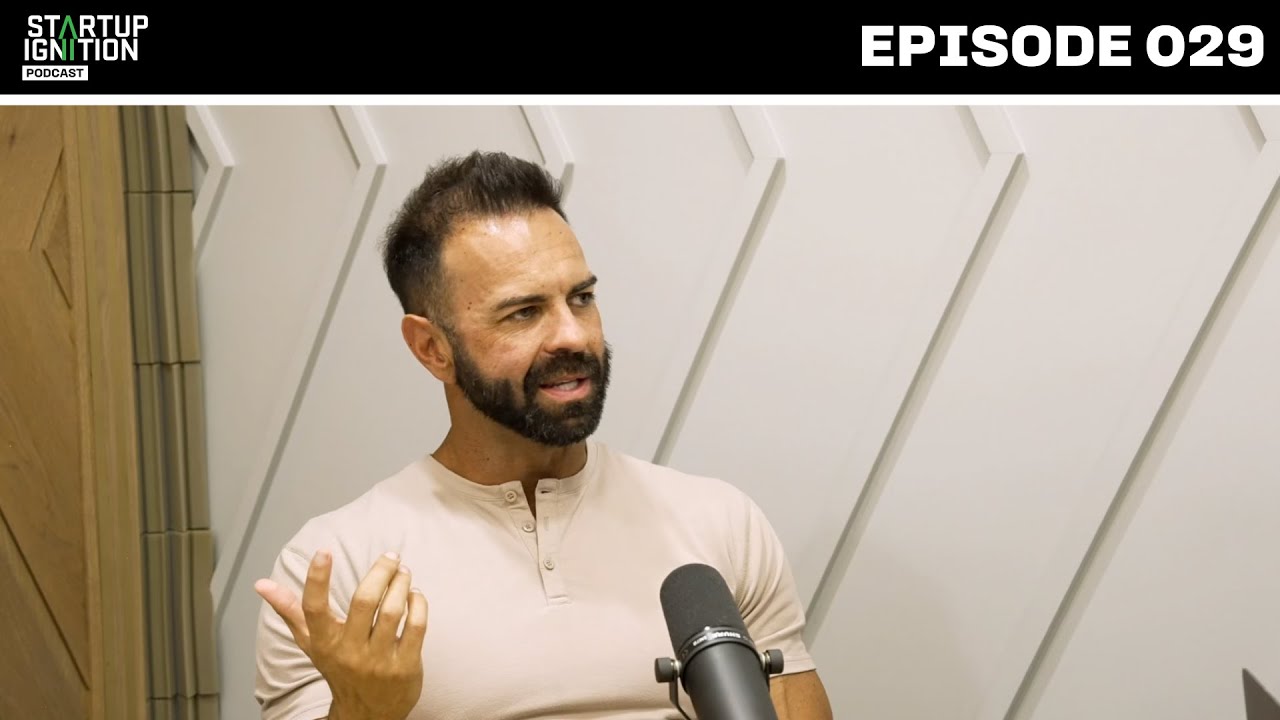
Ben Knell shares how he built BK Marketing into a $100M+ revenue sales engine for the pest control industry, revolutionizing how door-to-door reps are compensated. He also discusses family leadership, balancing six sons with business, and what the FBI taught him about discipline.
Ben Knell is the Founder and CEO of BK Marketing, which he started in 2017 to build outsourced door-to-door sales teams for pest control companies. BK Marketing has generated over $100M in serviced revenue and fundamentally changed how sales reps are compensated in the D2D pest control industry. Father of six boys. Also co-founded BK Fiber in 2024.
Show full transcript
I get a call from the FBI and I'm 23 years old. Like I'm just like, "What the heck? What did I do?" >> Oh my gosh. >> And he says, "Are you in business partner with this gentleman?" >> And I'm like, "Yes." So I lost $800,000. And it caused a lot of chaos, caused a lot of drama, caused a lot of slandering, it caused towards me, put a target on my back. I was offering commissions that no one else has offered before. High commissions >> because I realized I don't have a Nike sign next to my name. How do I separate myself from my competitors that they just have resources I simply don't have? And so I got creative. I started doing things that were like made it almost bulletproof that you can't fail if you come work for me. And so we started scaling pretty quick. >> Your advice to a 20year-old self. >> Yeah. I should look at the camera. >> Why not you? >> Yeah. >> Really though, cuz that's what started for me. I go meet with all these owners. I just wasn't impressed. I just kept thinking, well, if he can do it, why can't I do it? X2. >> Welcome back to the Startup Ignition podcast. I am Tyler. We are talking about everything startups, business, entrepreneurship. This is John, favorite father-son duo on the internet. Wink wink. But today we are joined by an awesome guest who I'm super excited about cuz we go way back. And I was trying to convince him to come on the podcast. He might have been a little camera shy, but we got him here. Ben Nell, we're very excited to have you on the podcast. Thank you for coming. I am so excited to have you because one, my dad does not really know you. No. >> And two, you're not the typical entrepreneur that we have on this podcast cuz we run in tech circles. And not that you're not technical or not that you're not techy, but you're just a different breed of entrepreneur than we typically have on the podcast. So, I'm super excited to dive in today. But I have a bio for you. >> Oh, this is going to be fun. >> Yeah, this will be fun because I again, my dad doesn't know you. So, >> this bio is the first time learning. So, >> yeah. Here we go. So, today we are joined by my good friend, high school buddy, friend all the way back in high school. Ben is the founder and CEO of BK Marketing, which is a sales and marketing company that you have done, I read, over a hundred million for your clients. Yep. >> Which is crazy. That is so awesome. And you've been a huge key leader in kind of the pest control industry and sales industry, at least here in Utah, in the ecosystem, for a while now. How long have you been doing BK marketing for? >> About eight years. >> Eight years. But before that, focuses on pest control. Well, well, we'll let Ben get into it, but you you've done different sectors. A ton of different sectors. But it's not just about those massive wins in those sectors. You are a awesome family man. You have six boys. I know. >> What? >> Six boys. >> Six. >> Yeah. >> Have you been trying for a girl? Is that where that came from? >> We kept trying for a girl and we kept getting boys. >> You can order that these days >> like Tyler did. >> I know, right? >> Along with eye color and hair color. Oh man. Hey, male ordered nowadays, right? Little genetic auditing there. I'm excited to jump into your to to your background and hear your story. Um, you're married, happily married. And one of the coolest things that I think that you are building a massive, massive 18,000, I don't know if I should shout this from the rooftop square foot home that I have seen on Instagram and all your social medias and it looks like a monster of a project, but an awesome family abode. So >> there's a story behind that. But yeah, there is a story supposed to be that big. >> Oh, okay. Okay. We'll save that for later. But before we dive into Ben and your background cuz I do want to start at the very beginning and how you got into what you what you're into. I have an icebreaker. And Ben has told me he's watched a handful of episodes of our podcast, which thank you so much. >> Usually tech related. So I was like crap, how am I going to do? >> Yeah. No, I I tried to I tried to prompt AI to give me an icebreaker that's related to the guest. So we'll we'll see how it did here. But I'm just going to do uh a simple icebreaker. It's going to be 2 minutes. We're going to get into the episode this way. And it's a simple this or that. Okay. So, I'm going to ask you something of two different things and you tell me which one you prefer and you can participate, too. Okay? >> Cuz this is one we haven't done before. Got it. Go. >> Okay. Here we go. Real quick, rapid fire. Pizza, tacos, or neither? >> Tacos. Pizza. >> Okay. >> Used to be pizza, but with my new lifestyle, tacos. >> You're looking pretty fit over there. >> That's like a close tie, though. Pizza and tacos. Well, I went to like the probably most popular foods in the world. So, there you go. Okay. Early morning gym or late afternoon or evening or nighttime gym, right? >> Absolutely. Early morning. I have to get that blood flowing or my day sucks. >> Yeah. And I I exercise in the evening. >> Yeah. You do evenings. >> Okay. And I'm an early too for sure. I have to like pop my head off my pillow and go into the gym. >> Me, too. >> Um Okay. I know that you're in sales. All right. Okay. Do you want to close a big one-time deal or stack consistent small wins? >> I've only stacked consistent small wins up to this point. >> So, just progressive growth. >> So, that's all I know. >> Yeah. How about you? >> Same. Same. >> Consistent small wins. >> Yeah. I like diversification. >> Okay. >> Having all my eggs in one basket can be dangerous. >> Okay. >> Especially at my age. >> Doing it yourself or hiring it out? Oh my gosh, I'm the worst example of the right way to do this. >> Why? >> Cuz I did it myself for so long. And I never sc I hit a ceiling. I just wasn't aware. I was too prideful. And I just kept looking around. I'm like, why am I not scaling? Why am I not growing? And then I started realizing, oh, I need to hire out. I need to delegate. And then I started hiring all the wrong people. Sorry to all those people if you're listening to this. >> And what? You got burned from it or something? >> Yeah. They they just they overpromised, underd delivered. And to their defense, I didn't know how to onboard people. I've never onboarded someone. So, I didn't know how to set correct expectations. Yeah. >> And then I found the right people in the last couple years, and it's been a game changer. It's been the greatest gift in my business. >> So, it used to be do it yourself, now you're hire it out. >> Yeah. It depends on what it is, but yeah, hire it out for sure. >> I think there's a combination answer there, but what about you? >> I tend to do it myself. I got to I've never really mastered that. It's >> I I think a principle for life and for businesses is figure it out yourself and then delegate and hire it out, right? So, it's like because if you're tasking someone with a task at the at the jump of hiring them, it's kind of hard to just say, "Hey, go and hit this and run and do it exactly how I would want it to be done." >> You can't be a lone wolf. You can't be a lone wolf and scale, but it's it's it's tough to find the right people, but when you do it, like you said, it's a magical moment. It's weird. >> Yeah. And I I would definitely say a lot of the success I've had in my career was around a team that I literally took from the beginning all the way through the end. And those core people are everything. >> Um Okay. Sweet reward for yourself like a dessert or you going savory reward like a steak dinner or something? >> Both. >> Doing both. >> Sweet or savory? >> They're both good. But I probably would be on savory side more. >> I think I'm sweet. I'm like I'm going to ice cream. I'm doing something. I like the the chocolate, the kazuki or pizooki. I never had >> cere those. But I like his answer of both because like I always like I want something salty then I want something sweet. I want both. >> Yeah, I like the answer of both. Okay. City or suburban or country life? >> Well, we bought nine acres. So, it's not country country, but for us, I'm a city boy. Like, I fit in in a city setting. >> But lifestyle, family, >> farmland. >> You're literally country life basically. Yeah, but personally, >> but you're not going to embrace the country life, but you are in the country. >> We're get some Highlander cows. We're gonna get some goats. No, you're >> not. Yeah. >> You're gonna get cows. >> Yeah. Highlanders. So, they're the the cute hairy ones. >> Oh, the ones with like the shaggy hair. Yeah. They look like an an emo boy. >> We're going to treat them like dogs. >> Yeah. There we go. Okay. Probably suburb. I I'm happy suburban. I'm I'm not, you know, downtown hardcore city. I'm not crazy about that. Same. >> And uh two country. Not crazy about that. >> Yeah. I need to be close to things but not not like dense Costco nearby, >> right? You got to have a Costco nearby. >> I love how Costco is the indicator. >> Okay. Okay. Friday night out with your boys like your sons. >> Okay. >> Or date night with your wife. >> Date night with my wife for sure. >> Yeah. >> Yeah. >> Yeah. For sure. I mean the kids. You love the kids, but it's like I'm not going to spend extra extra time. >> Yeah. And they're all boys, so we actually have a great time together. But they're so young still that like >> What's the ages? >> 12 and younger. 12 all the way down to >> You have six boys 12 and under. >> Oh my god, that's insane. >> All the women listeners are what a hero wife that is. >> Yeah, we invested in a nanny for the like that was the best gift ever. >> Two of them now. >> That's awesome. >> Last one. And this one has to do a little bit of tech, but I want to see what your opinion is on it. Are you utilizing like these AI rooc calls SDRs that are popping up or are you keeping it in person doortodoor sales? >> So my exact business model has nothing to do with that world. Yeah. >> So we partner with pest companies who would utilize those. >> Yeah. >> So I'm not seeing it even in our industry yet >> really. >> I it might be out there but >> I think I need to learn more about what he does. That'll be interesting. So we get into that. >> That wraps up my this or that. Okay. So, thank you for participating in that. But, yeah, let's let's go let's take it back then. Okay, Ben, take us to the beginning. >> How did you get to where you are today and what does that look like? >> Yeah, I mean, born and raised Provo Orum. >> Yeah. >> Went to Mountain View High School, went to UVU. >> Yeah. >> And I heard about this magical door to door sales thing and you can make $100,000 and you go out and knock and sell alarms. So, I went out with this company called Pinnacle, and come to find out, it's not what we were told. I did not make $100,000. Nowhere near that, not even half. And it was rough. It was really hard. We went to Omaha, Nebraska, and East Bay, California. So, it's cool to see different parts of the US I've never been to and call it home for a few months. Um, but it it was rough. So, I swear off, I'll never do it again. That sucked. Somers was awful. And >> can we give some context to this just because again to our viewers and listeners we're home based here in Utah. >> I think Utah understands this demographic but everybody else does not. Let's describe it. So Utah has two interesting anomalies in business. It's like because of the outgoing salesmanship that's so prevalent in the culture of Utah. It has become a bastion for two industries. the multi-level marketing or network sales industry and also for the summer sales industry where young college students get recruited to sell for companies like alarm companies, pest control companies, the door to door sales, cut >> Cutler knives or whatever the name of that knife company is. I mean cutco knives. I've had one of his cousins did cut knives. So this is a real big recruiting center for that. So, a huge percentage of college students from this part of Utah will go do summer sales at least once. >> I think I think a lot of college kids have at least done summer sales and that career for at least a year. >> Before you continue with that, so you went did that which is interesting. I'd love just you to tell me what you the good, the bad, and the ugly of it. Like what's a good thing about it, a bad thing, and an ugly thing about it. Great thing is it forces you to get creative on the doors. It forces you to evolve without you realizing it because you show up on someone's door. It's actually pretty cool when you think about it. You dissect it. >> You show up on someone's door. They're watching Ellen Oprah. I mean, I'm back in the day when I knocked. >> Yeah. >> Cutting cucumbers. Who knows? They're just minding their own business. You show up on the door. You walk away 15, 20 minutes later with, in my world, a year subscription to pest control. a five-year commitment to Vivant Security or whatever the product may be. You walk away with your credit card and a commitment to something and they had no idea you were coming. Like, it's pretty impossible if you really think about it. >> You just show up and you walk away and you never knew them before on their doorstep. It's crazy what we college students of which you were, right? Uh >> you get shipped out to Nebraska. You went to >> I went in Omaha, Nebraska. It could be anywhere in the country. It could be anywhere in the country, though. Yeah. >> And you got you got assigned to Omaha, Nebraska. And is that because of the person that recruited you? They were recruiting for that area. >> Yes. >> Okay. And it was a friend of yours that recruited you probably. >> Uh or acquaintance. >> Uh number one sales rep married my girl cousin. >> Okay. And then said and then said, "Hey, >> you'd be great." >> I was like, "You got a BMW and you're 24? Sign me up." >> There you go. >> That's what happened. >> Okay. So anyway, you did that. Keep going with your story. So I just wanted everybody to understand what you're talking about. Yeah. >> And then my best friend. So, I played a lot of soccer growing up. Um, on my travel team, he reached out to me and he's like, "Dude, come sell pest control." And I was like, "Bro, there's no money in pest control." Cuz that's what the security guys told us. >> We're more superior >> than pest. You can't make any money in pest control. >> And so, I believed it just cuz that's all I know. That's all I knew. And and pest control wasn't cool back then. It was like and lower. >> It first started very prevalent with alarms, but pest control has found its own now. >> Well, pest control is even before alarms really. And then they all trickled into bigger money and alarms. >> Okay, got it. >> Anyways, so >> and then don't even talk about when solar came on the scene. That was like the coolest thing ever. >> Like gold rush. >> Yeah. >> What happened was Yeah. My best friend's like, "Dude, come sell Pest Control in Utah." And I was like, "Ah, no." And he's like, "Just shadow me." So I finally go shadow him. We go to Herman, Utah, which I've never been to being in Utah. I didn't even know Herman existed. >> Yeah. >> Big beautiful homes. You could actually see on a clear day. Do you know Tyler and I just drove through there last night because we went to Salt Lake Bees game at their new stadium which was amazing. >> It's over there. >> Oh my gosh. The Miller built a new stadium >> and it is a beautiful facility. Yeah. >> Well, on a clear day you can see Salt Lake Valley surprisingly way out there. >> So, we go to all these houses and all these stay-at- home moms are buying on the doorstep when alarm you have to go in their house and build fear, fear, fear. Where pest control, you're you're just offering a service almost like you're the lawn care guy. It's not as threatening. It's not as aggressive. Everyone qualifies. You have to do credit checks. It's just a lot simpler cell. It's not complex. >> Yeah. >> And I just fell in love with the simplicity versus how complex a security >> system was. System was. So, >> it was all about building fear. >> Yeah. >> Horrible example that you're not going to want to record this, but they taught us like if we're at a door, we're role playing and they say, "Hey, I have a Rottweiler. I have a German Shepherd. I don't need a security system. What if I shot your dog in the head and put him in a plastic bag? What would you do next? They taught us to say crap like that. >> Oh my god. We're just like, I don't feel comfortable saying this crap. >> And so Pest Control's the nice guy sell. It's a completely different experience. It's just easy and smooth. >> And so he pops off six sales in 3 hours and he just made it look easy. I didn't realize he was really good, too. >> But he made it look so easy that I quit my job the next day. And I'm a newlywed, mind you. So, just brand new, married, low income. I thought I was going to be a podiatrist. I knew I was going to be a foot doctor. Uh, >> that's a lot of schooling. >> It is. And I took all the prerexs and everything. You only had to get a 21 on the MCAT to qualify. So, I was like, this is this is me. And what happened was it was a means to an end. Went out. We started our first pest control company called Eosmart Pest Control in Dallas, Texas. So, it's the blind leading the blind. I recruited about 31 um rookie reps. So, never done it before. >> Were you doing sales and the service? >> Yes. >> So, you were all you were a self-contained company >> all in. And I >> You didn't sell your contracts off to another pest control? >> No. Like I currently do >> currently that's my model, but we'll get there. >> Yeah. Yeah. >> So, my first one I started calling around asking, "How do you start a pest control company? How do you do this?" I'm writing an English paper at UVU, which I wasn't. um little white lie to find out how do you bootstrap this? Do I just buy trucks off KSL backpack sprayers? Like how do I start a pest control company? Cuz I just sold I just shadowed. I didn't even sell anything. I've never sold a pest account and I started my own company. And I've never had entrepreneurship blood in me. It was never coached to us. Um my dad took over his dad's business, but it was not we were never even told what that meant. >> Yeah. Like what entrepreneurship was >> know the word. Yeah. We It wasn't talked to us. Um, and so you look back at that, you're like, "Oh, it's crazy." >> Yeah. >> But I wanted to impress my in-laws that their daughter was going to be taken care of. That's that was my my true why at the moment was like, "Oh, shoot." Like first and last month's rent in this ghetto quadplex. I need to provide, right? I need to show them that their daughter's going to be taken care of. And so I started Eosmart. We go out there and it was it was crazy. It was just learning, learning, learning, learning, learning. And then I realized I don't have enough cash flow. I didn't even know what the word cash flow was, but I don't have enough cash flow to fund the commissions in the future. Like the backend checks, the famous backend checks of door to door. >> So I panicked. I started calling all the people I wrote papers on and said, "Hey, can you teach me how to or do you have money to like interest just like help me find a solution?" >> What what is the commission on pest control like? Like if they sell $100 worth of pest control, what does the sales rep actually make? >> So they typically back then, let's just call it $500 for easy math. >> Okay. >> Um they would make 25% of that. So they make >> $125 >> $125 a pop. >> Did they And you're saying they get some of it up front, but then later they get more. >> So they get like $50 upfront and then whatever's active at the end of the year, they get the remainder. >> Okay. >> Times it by sold. >> 25% part up front, part later. >> Right. So it's easier to cash flow it >> and also just to protect if there was cancellations, >> cancellations, chargebacks >> cuz you don't want to pay if a >> So you as the pest control operator have to come up and pay that that upfront commission right away before you get money from the client. >> Correct. >> So you have to have some capital >> all while paying technicians and operations and call center people to >> Yeah. >> which is easier to >> when do you charge they're getting like a monthly service so they just pay each month. Is it broken into monthly payments? >> It's now like that but back then it was quarterly. >> Quarterly. Just quarterly, every 90 days. >> Okay. And so you had to pay out to a sales rep commission before you got dollar one from a customer. >> Correct. True. >> Yes. >> Wow. And you didn't know that. So how do you how can you how how can you bootstrap that? >> Um well I took my my alarm security money. I made $28,000 and I had that. I'm very frugal. Very very frugal. >> Yeah. >> And >> so you as a founder had to have the money. >> That's how I started. >> There's nobody that could fund you. But when I was calling these people, I f finally one of them was generous and said, "Hey, call this other guy. He's looking for someone like you with recruiting and sales talent to partner with." And so I actually ended up right before the summer partnering um which is a crazy story actually partnering um with some big money. And what happened was three force into the summer I get a call from the FBI and I'm 23 years old. Like I'm just like, "What the heck? What did I do?" >> Oh my gosh. >> And he says, "Are you in business partner with this gentleman?" >> Yeah. >> And I'm like, "Yes." And then they started with the FBI already freaking out. and he said, "Well, he's being investigated for $51 million of fraud and with um what's it called when it's like the healthcare the fraud was in Medicare, so it was in I'm not afraid to say that cuz I don't know if a lot of people know who this is up north, but >> yeah, >> but it was for basically what he did is he was the VP of sales and he taught the sales team to write fraudulent signatures from the doctors to get the Medicare approved >> to buy powered wheelchairs. Yeah. And and by the way, defrauding Medicare, >> Congress has made it like 10 times more serious than regular fraud. It's bad. >> So he went to 5 years of federal prison. >> Yeah, that makes sense. >> And and I I wasn't part of it. I didn't know. >> But the money he was making from ill gotten gains he was backing you with. >> Yes. And I didn't I'm new to all this. I was trusted these guys because they're successful. And >> and so I called my dad. And I was like, "Dad, what do I do?" He's like, "You run. Like, these are bad people. You get away from these people. I don't care if it's you walk away from your equity." >> Well, did they did they want to reorgge discord? It's called discourge. Did they want to take money back that they had given you? Did they were they trying to cook that? Okay. >> They were just trying to >> find out what he was doing. >> And I was part of it. I came from his past. >> Okay. >> Yeah. >> Yeah. Cuz you know, sometimes they can discourage it. >> They can say, "Take it away. >> That money was given to you. You have to return it cuz we got to put it back here." >> Yeah. I was part of a Ponzi scheme that they did that. >> Okay. >> Story for our time. >> But but yeah, so that was my first. >> When you say part of, you mean a victim of? >> Yes. >> Okay. Thank you. That's better. >> He was not a corome. Yeah, he was a victim. >> I wish I was now. >> Just kidding. >> Welcome to Utah Pon. >> Yeah, that's the third part. >> No, >> we laugh, but that's terrible. But anyway, yeah. Okay. So anyway, so what happened after? So they this they go away and you have no financial backer, >> right? So I have to look for an exit. I have to look for something. And so I'm going to church out in Dallas, Texas, Carolton, Texas specifically. And I meet another pest control owner at the church. We start talking and talking. Long story short, he buys me out for way lower than the value of what it was should have been. >> Um but I was desperate. I didn't care. Just like take it. And then we became friends and then we partnered up 5050 um from that point on for the next five and a half years. >> Bu just building your own pest control company. >> So he already existed >> for a new location. >> Same loc. So how we did it? It was >> you sold to him and then what >> he he took on our he was way bigger than we I was. >> He he took on our accounts >> and that took the pressure off you. >> Correct. and then 5050 on anything that I >> started brought on >> under his umbrella under his umbrella. You got 50/50 of it. I got it. >> So he kept on promising me the world of and he's a great guy. He just had a 60 million plus exit. So he's doing fine. >> Wow. >> Um but he kept on telling me we're going to open up multiple markets. So I started getting really good at recruiting. I started to figure out this is my talent. This is my gift. And he kept on making up excuses. He kept on saying, "No, we can't open up that other market because I don't trust this operator to open it for us." And then he'd buy five rental properties. And then that kind of started compounding and he got up to like 60 plus rental properties. And it finally hit me. I'm being hindered by growth with what I'm really good at because he's building his portfolio, which good for him. Great. He's he's a good guy. He's genuinely a good guy. But I'm really good at this thing that everyone isn't good at in my industry, recruiting and retain building sales teams. What if I could make a business out of this? What if I could just build and provide the sales service and not worry about the operations? And because it's actually very expensive, it's very cash heavy. My nickname in the industry is the cash killer because we come in and we demand a the highest premium in the industry because we're going to come in and be your sales arm that you couldn't figure out on your own and you're going to service it which will bring enterprise value and yeah and all these other great things. And so anyways, I finally grow a pair and I say I'm going to go start my own. And every mentor I had told me not to. Every single one of them were like there's too many liability risks. there's this, there's that. And it just made so much sense to me cuz they weren't in my shoes. I got to do this and I still don't understand how or why, but I'm going to figure this out because I am sick and tired of my friends and family and people that I bring out. >> Yeah. >> Getting taken advantage of by these owners. I was on a mission to build the first platform in my opinion that is in favor of the sales guys versus just the owners. And it caused a lot of chaos, caused a lot of drama, caused a lot of slandering, it caused towards me, put a target on my back. And I wasn't maybe ready for that initially. Um cuz I was offering commissions that no one else has offered before, high commissions, >> because I realized I don't have a Nike sign next to my name. How do I separate myself from my competitors that they just have resources I simply don't have? And so I got creative and started thinking, I'm going to start paying for tuitions. I'm going to start paying for everyone's housing even if they didn't earn it. I'm going to start I started doing things that were like made it almost bulletproof that you can't fail if you come work for me. And so we started scaling pretty quick. And then I got an opportunity got a phone call saying, "Hey, we want you to come be an owner of this company we're building. We have 71 million backing us." And so I met with him and he said, "How many recruits can you do in a year? Like can you bring us?" And I said, "I don't know. you know, if if I had the financial backing, which I've never really had before, I think I could take us to 300 recruits year one. And he's like, I want more. And so, I said, well, let's just see. So, I hire a life coach. And this life coach, which I don't even know life coaches were, accountability coach. First thing he teach, the only thing I actually learned from him, I apologize if he hears it, but he knows actually. I've shared it with him. He said, "You 1099ers, you think you work so much harder than you really do." I was like, "You jerk." you know, but he was right because I was playing a lot of FIFA. I was playing a lot of NBA 2K. He said, "Man, you guys just think you work so much harder. What I want you to do, I want you to track every minute you invest into building your business. Not thinking about it, but actually acting on it. Report back to me. First, let's set a goal. How many hours do you think you put in a week?" And I'm like, I'm not in school. Uh I took two years off UV. And so I started track Oh, sorry. The goal was I was like 30 hours easy. He reports back or he calls back the next week. I'm like look we had a family reunion I wasn't aware of. Of course I didn't get the 30 in. We went down to New Harmony, Utah. Blah blah blah. I did seven hours but next week I'll hit 30. Just watch. Next week comes. I put in an honest effort. Recorded everything. Makes the weekly phone call. How many hours did you do? His name is Tony. Tony. I put in 14 hours. I'm exhausted. I simply wasn't conditioned. I wasn't used to the amount of work a 30 40h hour work week unless it was door to door which is very different than recruiting and building and networking and scaling in the offseason. Right. >> Right. >> And so that um that's where it all started. >> I changed your whole mindset. >> It became a like a video game. I wanted to win. It became how do I get to 14 hours to 20 hours like the work schedule. How do I turn 20? And so it took six months. It didn't happen overnight. Like it was hard to get there. What was so cool, what I learned, and what my advice for everyone is in this scenario, especially young entrepreneurs who are like just trying to figure it out is when you become obsessed with your your baby, your what even if you're part of something, it doesn't matter what it is, but when you become obsessed, a it doesn't feel like work anymore, and b I got all the way up to 80 hours of work work weeks, which I was just so happy. I was just I don't know how to explain it, but like you feel like you matter because you master your craft. Like the 10,000 hour rule is real. Yeah. >> We we teach this in our boot camp. We teach that part of when you find founder fit, meaning where that founder is really fitting the business they want to do is when they have a healthy obsession and time passes, they look forward to it. Sunday night, they're looking forward to Monday. >> You obsess that kind of thing. >> Yeah. You you just you're all in. >> But was it healthy? That's the question because that's what my wife Well, so before I get to the wifey story, um I break an industry record. I recruit 600 guys in one off season. So the goal was 300, but I was going to fall short. I was literally getting to the office like 10:00 a.m. going home at 2:00 a.m. >> Mhm. >> And that was my day. And I'd come home and my wife's asleep and in the morning I briefly see her and be like, "Babe, I recruited this many people." Oh, like I was just so excited to share my victories. She's like, "You have family, you have kids, you At the time we had three boys and isn't it about them, us?" And I'm like, "Yeah, yeah, yeah, but work like no one else now so you can live like no one else later." Like that's Let's go. >> Yeah. >> But I was getting the endorphins. I was getting ego the >> accolades. >> Yeah. Not even realizing it because I was just feeling so good, not realizing my family needed me. slash my third I always I used to get so emotional talking about this but I've talked about it a lot so >> hopefully I don't get emotional but my third oldest if I see pictures of them to this day I'm always like that's mine >> cuz I wasn't there I wasn't present I'm not proud of that >> and so the coolest thing that I learned from that was you can do amazing great things with that work ethic >> but what I also learned was you can still do great create amazing being achieve great goals and still see your family. And so I had a good friend of mine, he's like a CEO coach. I just went to lunch and he said, "What you need to do is trick your brain. You need and don't tell your wife, but you need to schedule a meeting to see your family at 6:00 p.m. from 6:00 to 8:00 p.m. and then work after that." >> Mhm. >> And you He's like, "Do you miss meetings?" I was like, "Never." He's like, "That's why you got to do it." And so I did that. >> Does that sound familiar to you? >> Yes. Very familiar. I This is what I've taught people. This exact 6:00 to 8:00 p.m. That's hilarious. >> Yeah, that is. Yeah. >> And it changed my life for the better. Saved my marriage. >> Took me I halfway through my career, I figured that out. >> Yeah. That's a long time. Yeah. So, um >> mostly because my wife taught me. >> Oh, yeah. >> That the wives have built-in marriage manuals. >> Thousand%. But like she reminds me, I was just getting fed so many endorphins for doing cool things that I was blind to it. >> Um cuz what we learn is your income as it gets bigger. At least depends on who you are. I'm a family man like Tyler said. >> Yeah. >> Our lifestyle didn't change. We didn't get nicer cars. We didn't get nicer house. We just >> And there's only so many of those things you can have anyway. >> Yeah. >> Yeah. >> And so she was just seeing you working like a dog and she's like, "What is this for >> eventually?" Yeah. >> Yeah. I have a question back to the business aspect for one minute. So, how did you create a business that pays higher commissions, but you're now a middleman between the company and the sales rep? Cuz you recruit the sales reps, >> right? >> And then, but you're not involved in this company side that does the fulfillment and service, right? So, how and and you said you were giving really good spiffs. How can you pay more more commissions, give those spiffs, and how does it financially pencil all out? That's what I I don't get that. >> Yeah. So, I mean, the truth is two things. One, I'm a really good negotiator. And I don't know what it is, but when I walk in a room with wealthy people, >> Yeah. >> I feel dumb saying this, but it's true. They'll give me whatever I want. I don't know how to explain it, but I >> Well, you carry yourself well. Yeah. So, >> it it's it's >> But but still But still, how does that pencil out? I didn't cuz >> so I negotiate for a higher commission rate. Therefore, I can share. >> So, in other words, you go into a pest control company say you kind of suck at sales. You want to you want to make you want to have a complete company with fulfillment and providing the service. >> Yeah. >> I'll provide you the sales. >> Yes. >> Is that what you say? And you fulfill and serve and you got to pay me, but I'm going to cost more than if you tried to hire your own salespeople. >> Love it. >> Is that right? >> Yes. Yes, cuz but you'll get more gross revenue. >> Yes. >> And more deals. >> So, cut out what I said earlier. >> Yeah. >> Cuz I was very like ego. >> Let's cut that out. Keep that in and I'll reply to this cuz that's the right thing to say. >> So, that's exactly how it is. And so, I go to these sales companies strategically. I go find there's over 20,000 pest companies nationwide. >> Yeah. >> It's like a I don't want to misrepresent, but I think it's close to a$20 billion dollar industry. Not door too, but pesticide. >> Yeah. I know. It's a It's a huge industry. >> And so what I do is I go target nationwide pest control companies who aren't familiar with doornockers, and I bring the value to them. They're all aware of doornockers. They just don't know how to get the Mormons. They don't know how to get the return missionaries who are ninjas. >> Yes. >> And they all try to get little fraternity boys on the East Coast, but they just can't do it the same way we do it. >> Yeah. And we It's, you know, I say this about the tech world. Silicon Valley actually creates deeper technology, but they can't sell their way out of a paper bag. Yeah. Utah takes the simplest technology and sells the heck out of it. >> Yeah. You know, you look at, you know, all the unicorn companies in the tech world in Utah, they're just great at selling. >> That's it. That's that's it. And so >> so really really what revolutionalized everything was how you paid your salesforce. That that really was the turning point. I was surprised. >> Doesn't I mean I'm not trying to be like a negative Nancy over here, but like isn't that pretty obvious? Like pay reps more. They'll come. >> Yeah. But how he did it how he did it, he says, "Hey, come work for me. I'm going to be a pro uh sales type organization to be around." So sales reps probably like that environment more. And then he goes to the pest control and say though, you got to pay me a little extra so I can run these sales company, these sales guys the right way. And then you're going to get more throughput, more volume, more sales, more services you have to do. And so if you run your own sales, you're going to be here in revenue. If I run your sales, you'll be here in revenue. And out of the middle increase, I get more of your revenue and I can pay my guys more. And it all has a virtuous circle, right? >> Is that kind of it? >> You nailed it. And and for example, my first client, he had about 6 million in revenue. >> Five years later, we took him to about five summers because we talk in summer's terms. Yeah. >> Five summers later, we took him to around 40 million in revenue. >> And it took him 13 years to get to the 6 million. >> And even if your percentage is much higher than what he feels he wants to pay or was paying historically, those few extra percentage points to you allow you to do all these things for those sales reps and make more profit yourself. And he's making because as you grow the company, it scales, right? And so his his uh gross his gross margins there, but his net margin is increasing on that $40 million company. He's got to have a high net margin. >> Well, he's currently being offered 150 160 million to walk away. >> Wow. >> Dude, do it. I would. And he just >> Yeah. >> He loves the grind. >> Yeah. >> It's going to be hard for him. >> That's cool. So So okay, where where are you at today? Like what is the scale that you're operating at today? like where so ever since co private equity has taken over our industry private equity did not exist period >> in pest control services so what happened was co hits everyone wants to protect their money safe bets even safer than ever right well the five essential services on the government website were I don't remember any of them but this one number five was pesticide yeah >> because they didn't know if mosquitoes were passing co or not. So it was allowed like that was one of the greenlighted services that could still happen while everything was on lockdown. >> Yeah. >> So we went door to door with these government print website things saying we're allowed to do this. We weren't allowed to go door to door, but we were like we're allowed to do >> we took it we kind of flipped the script and >> Yeah. >> And we had the not just us, the whole industry had the best years that that ever had. And so what happened was all these private equity guys started hearing about actually I think they started researching the top five from the website and they're like hey what what matches our current portfolios and they started realizing oh my gosh this pest control thing is magical because there's a bunch of reoccurring revenue that they're already used to highdensity routes um and they're just smarter than we are pest guys like we're just door knockocker sales guys come to find out there's smarter people out there and they know how to scale that financially they know how to make higher multiples they single-handedly took a industry with very low multiples that Terminex and Rollins were the two biggest buyers monopolized and to give you an idea just average numbers. The average exit average M&A in pest control was 1.5x on revenue. It's not ebid off revenues >> and that's was that was as good as it gets >> 1.5x >> right >> that's small PE guys came in immediately started paying 3 4x >> right >> some as high as five it's died down a little >> so our value just immediately so my common sense radar told me I'm worth more and I'm already the highest paid Froot Loop in the industry because I'm dumb enough to ask but and my business model is unique where all these other guys are in-house >> and if I went to these in-house companies and I'm like, "Hey, pay me more." Like, "What if our in-house guys find out if we paid you more?" >> Well, it wouldn't work. So, I realized I got to stop going to the Utah companies. I got to start going to the bigger pocket nationwide companies and proposing, "Hey, aren't you sick of this door knocker stealing your accounts?" Well, now we can do it for you >> and enabling them in the door to door. Yeah. >> Right. And create creating higher density routes for yourselves into it's just better. It's just a win-win. So now I am on the brinks of greatness. No, I'm about to pioneer something that's never been touched before in our industry. I found a problem and I've been working on it for the last couple years and I finally found the solution and I've taken it to big big big time private equity companies and they've boughten in and they're in love with the idea of it all. I can't share too many details cuz I want to be the true pioneer. >> It's your secret it's your secret sauce. Oh, it would it'll be a game changer and it's it solves a lot of problems in my world too where it only allows me to pay guys even more. >> Yeah. >> And so that Yeah, that's it in a nutshell. But >> so the the your company is called again >> BK Marketing but and but it's this company the marketing is in the pest control industry and what you're doing correct. Are you doing any other verticals? We dabbled in fiber. We dabbled in solar um lead generation for refinancing way back when. >> Yeah. >> But at the end of the day, I didn't even care to do any of those things. >> We just had a pool of talent who wanted to do those things. So, I created avenues for them to do it so we didn't lose >> that network. But in all reality, we're like 90% pest control, maybe 95 now. Like we just it's our bread and butter. >> Yeah. >> It's It just makes sense. It's gonna be around forever. So Ben, so every entrepreneur has some scars. Okay. And it sounds like you have a lot of scars. >> Oh yeah. >> Because you even mentioned briefly that you were caught up in some kind of Ponzi scheme or something. What tell our viewers and listeners like the biggest scar? >> Yeah. >> Like if I ask you what's the biggest hit you've taken as an entrepreneur, what would that be? >> There's been a couple. I I haven't been paid over a million dollars of commission by a partnership. M >> um >> but you had to pay your people. >> Yes. >> And then you never got the money. >> Correct. To protect my name, to protect the growth. >> Um second one was a Ponzi the Ponzi scheme. I lost. >> That wasn't related to your business though, was it? You just made an investment. >> Yeah. >> Yeah. >> Yeah. >> Personal like you you you you've made wealth from your business and now and then >> Yes. But what I learned So I lost $800,000. >> Okay. And then that same year I lost $600,000 um in crypto nodes >> personally trying to invest your capital out. It's not your business. You were trying to do invest personal investments. >> If I could rewind there's a business attached to this. >> The coolest thing I'm an optimist. I can't ever play victim. I'm not someone who likes to harp on the what didn't happen. I >> eat a Kazuki and that's what I do. But what I learned was, "Oh my gosh, what if I invested that money into my business?" >> Yeah. >> What if I invested that into my people, into my family even? >> Yeah. >> What if, and that's where the house started coming along was like, freak, what if I could >> what if I could get go back in time and put the, you know, 1.4 4 million between the two losses in a year and and stop being a frugal bastage and and my guys are already the highest paid guys in the industry. Yeah. >> But add more value, more resources to the platform >> or even just keep it within your immediate family circle >> or build an 18,000 foot home. >> Um I also want to use that for recruiting though because we're all about visions know the vision for the these young men and young women and so we're going to invite a lot. We're going to have a lot of um retreats at our house and a lot of fun things. But >> um but what I take from that is yeah, like I can either woe is me, I'll go Eeyore. >> Yeah. >> Or realize, oh my gosh, now I need to start investing. And so I started building an executive team. I failed. Um great guys, great individuals, but it wasn't what >> the first set the first >> set couple. And so I and I'm and I started buying like the frugality started like I started evolving and realizing no you got to pay top dollar if you want top value >> experience. It's it's the where you're at. >> I think every entrepreneur goes >> you have to be frugal and can't squander money. But then all of a sudden you've got to go and say no you can't afford not to pay that top person top dollar because you need them. >> And especially when the money's there. >> Yeah. Like I didn't it wasn't like the money wasn't there. >> But I mean that's how you build the next level. We've had this talk like in the area of technology a lot of times you know we're preaching frugality frugality frugality in the first 18 months of a business. Then all of a sudden the company takes off and grows and the original CTO for instance doesn't have the horsepower to take it to the next level. So then the CEO founder goes man I can't afford this other CTO and upgrade my CTO. It's too expensive. I can't afford it. And we have to say you can't afford not to. >> I've heard that on your other podcast. >> Yeah. I just I just I just feel like every entrepreneur gets to a point where they either >> they hit this fork in the road. Either they stay frugal and the company actually is you know set back from that or they actually unleash and start building out and scaling and investing in growth. >> It's an art. The timing on that is an art. There's no magic >> time that you can say this is exactly when to do it. I mean I mean that we have an infamous story that uh you know we had a CEO that was nickel and dimming his employees because he was so frugal. They would go on business trips, overspend on dinners and lunches and he would cent and he would literally charge them 32 cents to pay back the company and it's like can you imagine that kind of environment and that kind of company culture that that sets right that sales the first 18 24 months of the company was critical for them because they also >> got very little investment and built an incredibly valuable company and kept most of the equity for themselves. There's a turning point, right? >> But then there was a point where his frugality was was basically stunting the growth of the company. >> What's the famous phrase? >> Don't drop a diamond while picking up pennies or something. >> Yeah, it's exactly that. >> Or don't trip over dollars picking up pennies. >> Yeah. >> So, yeah. Okay. So, advice for the early stage founders, two things you want to share. What's the two things? >> One is show up every day. No matter if you have a plan, agenda, a schedule or not, if you show up every day, magic happens. >> Yeah. >> If you have that mindset, great things happen. I don't know how to explain other than I've experienced it. Just show up every day and cool things happen. >> Two, know your strengths. And I think at first I started wanting to hyperfocus on my weaknesses. And I kept thinking, man, if I could just strengthen these weaknesses, I could be a balanced CEO or balanced entrepreneur. But what I realized quicker than most was I'm really good at the sales, recruiting, negotiating and this part and I built the whole business around it. But if I would have started chasing the actual pest control service with operations and call centers and it's just not my gift, then I don't think I would ever reach the the pinnacle I've reached to up to this point. And so knowing what your strengths are and trying to find avenues, businesses, even working for businesses that complement your strengths, you'll be 10 times happier than the money that follows. And the money usually follows. >> Yeah. Yeah. That's great advice. >> I I have a business question. You came up with this innovative solution for a huge majority of pest control companies. Maybe they were mom and pop mom and pop shops or whatever, but they just weren't good at spinning up sales in their companies, right? and you came up with this innovation that you could deliver basically a readymade ready to go sales solution for them. But you said it was pretty dramatic and you got some people in the industry didn't like kickback. >> Yeah. Explain that. What I mean you're solving you said there's you know 24,000 or whatever the number of pest control companies in the United States. Probably the vast majority would love would love your service. >> It was just the Utah companies I got mad. >> Oh be >> because I was paying their guys more money to leave them. That's what it is. Okay. So, in other words, instead of going to a captive one company situation, >> they could instead join you and be assigned to different companies over the years and help out companies and sell. My greatest claim is that that's the lifestyle for them was better. Instead of being captive in one company, they were now with a sales organization that helped multiple companies. >> I think I've made more 100,000 errors. Yes. >> In my industry than anyone else. >> Okay. >> At least in pest control. >> Yeah. um solely because I pay them more. >> So basically, you were consuming this incredible uh garden of salespeople in Utah, right? And you were taking them and they were getting more attracted to >> and I was getting non-solicit lawsuits thrown at me left. >> But generally they Oh, cuz Oh, sometimes they were leaving those companies and coming to you >> every time. Yeah. That's why they got mad at me. >> Why did they have did they have those people under a noncompete? >> Yes. And they're 21 22. That's against the law now, isn't it? In Utah, you can't have sales people and >> it still holds up surprisingly >> for one year. Maybe the max is one year. They did change that law. I can't believe that a salesperson for a pest control company can't quit and go work for anybody. >> I agree a thousand%. A thousand%. Like cuz we've never held anyone. We've never gone. >> Are they all independent contractors? >> Yeah. >> And so maybe they're saying because it's a business doing a contract. >> Well, if it's a W2, it's more val it's more credible. As a 1099, it's way less credible. >> Yeah. It's interesting. So when you're recruiting, what maybe tell our viewers and listeners, what do you look for in a recruit? Like what are the attributes that you're like, "Okay, this guy's going to make it." >> The sad truth is is there is no formula. >> Yeah. >> Because I have this five 5A all state, 6'4, handsome, perfect teeth, great social skills. I'm like, "This guy's going to kill it." He goes out, hits average numbers. So he does okay. Get this emu skater punk. It bangs all the way down to here. Uh, tight jeans and I'm just little guy and I'm like, "Guys, why are we bringing him out?" Like, he's just going to go home. Breaks all of our rookie records. >> So, and as this has happened, you can't judge a book by its cover. >> I've had that in sales, too. >> It's happened. So, now I don't have a formula. It's I mean, the formula is D of Social Skills. No, I >> I hired a yellow page sales guy one time and he looked like Abe Lincoln and uh he's going out and I don't know if it was the honest a thing or whatever, but he literally becomes one of our top five sales reps. >> Oh my god. I have the exact same story. I literally was at an event and this guy comes up to me. He's like, I'm a salesman. I want to sell. And he's just like the like very weird vibes. Something was off vibes. And I'm like this guy. And he kept pestering me. He got my email address. He hit me up for like six months in a row like, "I want to work at one of your companies. I want to work at one of your portfolio companies." And I'm like, "This guy will not go away." Like, I'm going to place him somewhere. I placed him at a portfolio company. No joke. 2 months later he he was hired and he was like their number one salesman for the month. I'm like, that is a shocker. I'm not going to lie. That is a shocker. It's just it's so crazy. There's tenacity in every corner. >> It's the same thing with founders. Like as a venture investor, you want to be able to give somebody a test. Oh, you're going to be a great founder of a startup. I'll invest in you. There's no common correlation. You can't you can't predict >> your success and tenacity. >> And they ask, "What do you how do you think I'll do cuz it's 100% commission." >> Yeah. Yeah. >> Oh, >> this other company told me this. I'm like, I don't feel comfortable telling you because >> there is no crystal ball. Well, they said I was going to do this. I'm like, I was told that, too, and I didn't make that >> and I'm really good at this. >> Yeah. >> And so, like, it's it's tough. But what I have learned is what to look out for. There's some red flags when they're experienced reps and they come to you and they say, "Hey, I want a $50,000 sign on bonus." I'm like, "Well, if you're as great as you claim to be, cuz usually those guys are like demanding the highest commissions. Why do you need 50 grand? You're doing just fine." >> Yeah. >> And that's 10 12 out of 10 times you stay away from those guys. >> Yeah. >> And they come by the dozens. Like there are a lot of guys out there who've mastered getting sign on bonuses and then never going out. >> Yeah, that's horrible. >> It's awful. >> Yeah. >> Yeah. >> Real quick, rapid fire to end it as well. Ben, >> I love it. >> Okay. A book that everybody should read. >> I am more of a podcast listener. So, >> okay. Podcast that everybody should listen >> besides the Startup ignition podcast. What's your favorite? >> This has become my next favorite one. I love Casey Boss the case studies. >> The case studies that it's it's awesome. The number one take for me is the becoming process. It's truly the reward. It's not the exit. It's not becoming uber wealthy where you don't know what to do with it. Yeah. It's the becoming. >> But what's so funny is that we our last podcast that we just filmed the the episode prior to this one, uh Jeff Burningham was on it and he literally said the exact same thing and we all agreed like it's not so much about the top of the mountain. It's the climb getting up there that you'll look back on and remember and have a good >> But when you're in the climb, you don't ever think that way. >> Yeah. You don't think that way. >> Do you know that? I think that's one of the most recurring things in the 25 or so episodes we've done here cuz most of our guests have been people that I've mentored and they've become wildly successful and they all have the same recurring thing when they hit the summit. They go, "Is this it? What now?" >> Yeah. >> That's literally what they say. It's an interesting thing, isn't it? I think this is episode 29 of our podcast and I I I will say 90% of our guests have that exact same feeling towards it. It's crazy. >> Yeah. And and and you look back >> and the these are these are deca millionaires or more. You know, these are really really high net worth individuals and they're just like the money doesn't mean much. It's literally about what how several times I felt like I got socked in the stomach. Couldn't catch my breath in business. Like this happened, that happened. I remember Tyler even with his successful venture with Dev Mountain and there were times where he and his co-founders literally thought they were on top of the world and then all of a sudden they thought they were going out of business. >> I I can laugh about it because it was literally like a pingpong. It was just like we suck. We're so good. Oh man, we're going to die. Oh, we're going to sell. >> But when you look back now, those good and bad times are what you remember and how fun it was. It's kind of crazy. And then when you're at the summit, a lot of people lose their way. Like I'm going to be honest with you. And there's six six kids. Your wife, how long you been married now? >> 14 years. >> Okay. So, here's what's interesting. It's fascinating. More than half of the people that I've mentored and helped that became pretty seriously wealthy around more than half lose their families or get divorced. >> I've seen it, too. And and and it's kind of an interesting thing. And it and it there's not, you know, and sometimes people do need to be divorced and marriages don't go well. All that happens. um my own parents, my mother and father should have been divorced. Okay. But at the same time, the goal of being a successful entrepreneur and getting to that summit is not kind of getting weird after that. You know what I mean? And sometimes that happens. >> It takes a special woman, like you said at the beginning of this podcast, to support the ambitions of an entrepreneur. >> Yeah, it definitely does. >> Okay, last another question. What keeps you motivated, Ben? What's your motivation? Finishing that dang house. >> Yeah. >> Ever since. >> Is that like a second job or what? >> Yeah. I love it. >> You have a general contractor? >> Yes. >> Jordan, we have to flash a picture of Ben's unfinished house up here right now to show everybody the project. >> But it does. Jordan's our editor for the podcast. >> It does become like a second job. I one time built my dream house overlooking 150°ree view of Puet Sound up in Seattle, overlooking everything. And we decided to get a guide to help us be our own general contractor. Two years later or like on Spongebob Squarepants two years later. And then it was just and Tyler remembers as a kid how many times you had to sit in a minivan outside that house while my wife had to go take care of stuff while I'm working building a company. And it's hard to do. Building a custom home is like a second job. It really is. >> No, it is. It's a part-time job for sure. And um but it's been fun cuz >> even with a general >> it is. >> Okay. What's the biggest personal win you're proud of? Most proud of >> six boys. That's probably I know I could give you a business answer but like having those six kids I'm telling you like when I come home and they I get chills thinking about it >> and they just jump on my leg and dad I'm just oh like no money can replace that. That is the coolest thing. >> Are you are you about the same age as Tyler? >> Same age. So, so just I'm going to tell you right here, right now, those six kids, you're going to have that's going to come back and bless you later. Literally, when you get older, a huge source of your life satisfaction is grandchildren and your kids and still having great relationships with them and grandchildren, all that. And it is just a big part of life. And it's a lot of work now, but there's going to be a day when you're go, man, this is sweet time. >> I got an amazing wife cuz it doesn't feel like a lot of work because of her. >> Yeah. But to add on to that, I've been asked quite a bit. Well, what's next? What are you gonna do next when pest control runs dry or when you're whenever you're done? >> And I would, it's kind of like what you guys are doing now, too. I want to start a business with my boys one day. I want like I've had these like random stipulations. You got to be 24 years old. You've had to live life a little bit. >> And I want to know what their strengths are. And I want to build a business around their strengths. I don't care if it's Swig 2.0. It could be simple, could be an app, it could be I just don't want it to be pest control. It has to be different. >> Um, and I want to be a chairman and just financially fund it. And then we grow together and we could just stay together as building a business with your boys. That's my dream job. That's life goal. >> That's my life goal. >> That's awesome. Okay. And last one here and we're going to wrap up the episode. Your advice to a 20year-old self. >> You I should look at the camera. >> Yeah. >> Why not you? >> Yeah. >> Really though? Cuz that's what started for me. I go meet with all these owners and I just wasn't impressed. I just kept thinking, well, if he can do it, why can't I do it? >> And I know that's kind of a savage thought to have, but I have that installed in my brain. If I wish everyone could think that way. It's just like if uh Ryan Smith could do it, why can't I go do what Ryan Smith's doing? >> Yeah. >> I'm not that. I don't care to be a billionaire. And and the funny thing is Ryan Smith when he was younger, I Josh James was talking to me about this too about he goes with the day he realized that this, you know, person that was so high and mighty in the business world, uh, he just wears a pair of pants just like me. He has to go to the bathroom just like me. He's no different than me. I can do anything he can do. And you start realizing that type of thing instead of being so intimidated by the situation. That's kind of what you're saying. kind of thing just that >> and I and we try to teach that in our boot camp for entrepreneurs. We teach that there's no difference in the people we've mentored to great success than you sitting in that chair. One day they were there. I mean I even Sergey Brenn and Larry Paige of Google were two students at college in a garage when they launched Google. I actually just saw a video like I was just saw a video of Larry Paige and Sergey Brin and they were so normal and like just goofing around in that garage. There was like a video that surfaced on the internet of it. Go look it up. But it I was just like, "Wow, it's so weird how relatable they are at that stage to every entrepreneur I've ever interacted with." >> And there's no difference. And then look at how they've impacted the world and what their company's gone to. And that woman that they rented the garage from when they first started became president of YouTube later and her success. I mean, but any that's what's great about America though, the United States. Anybody in any station in life become an entrepreneur and have incredible things happen. And it is a little bit of what you said though. It is like >> there are some years where you've got to be a little bit >> going allin and it kind of the family takes a little bit of a hit. You just got to make sure it's not too much. And then >> you get the freedom >> to have a great life for the rest of your life. >> And that's and and society overrewards entrepreneurs for their success. And when I say overrewards, it's really not because they're creating jobs. >> They're creating great products. I mean, you've improved the pest control industry for sales people. >> I was going to say I think key takeaway is Ben's story is reinventing industries. when you put people first and you think big and you learn from your scars and you keep moving forward, right? So, it's been a great episode. So, thank you, Ben. Thank you so much for coming on. Really nice to get to know you. Likewise. >> And I think that wraps it up for today's episode. Thank you so much to everybody that's been tuning in. Like, subscribe, share. Ben's story is so awesome, so relatable. So, share it with your entrepreneurial friends and we will catch you next time. Thank you so much. Rock next to Rock next to Rock.
New episodes drop weekly. Subscribe so you don't miss the next conversation.