Brock Blake shares how he built Lendio into the largest small business lending marketplace in America, facilitating over $10B in funding. He breaks down SBA loans, bootstrapping vs. debt vs. VC, and how Lendio onboarded hundreds of lenders to process $8B in PPP loans during COVID.
Brock Blake is the CEO and Founder of Lendio, the largest small business lending marketplace in the U.S., which has facilitated over $10B in funding through a network of 75+ lenders. During COVID, Lendio processed $8B in PPP loan approvals for 100,000+ businesses. Named Utah Business CEO of the Year (2021) and EY Entrepreneur of the Year (2020).
Show full transcript
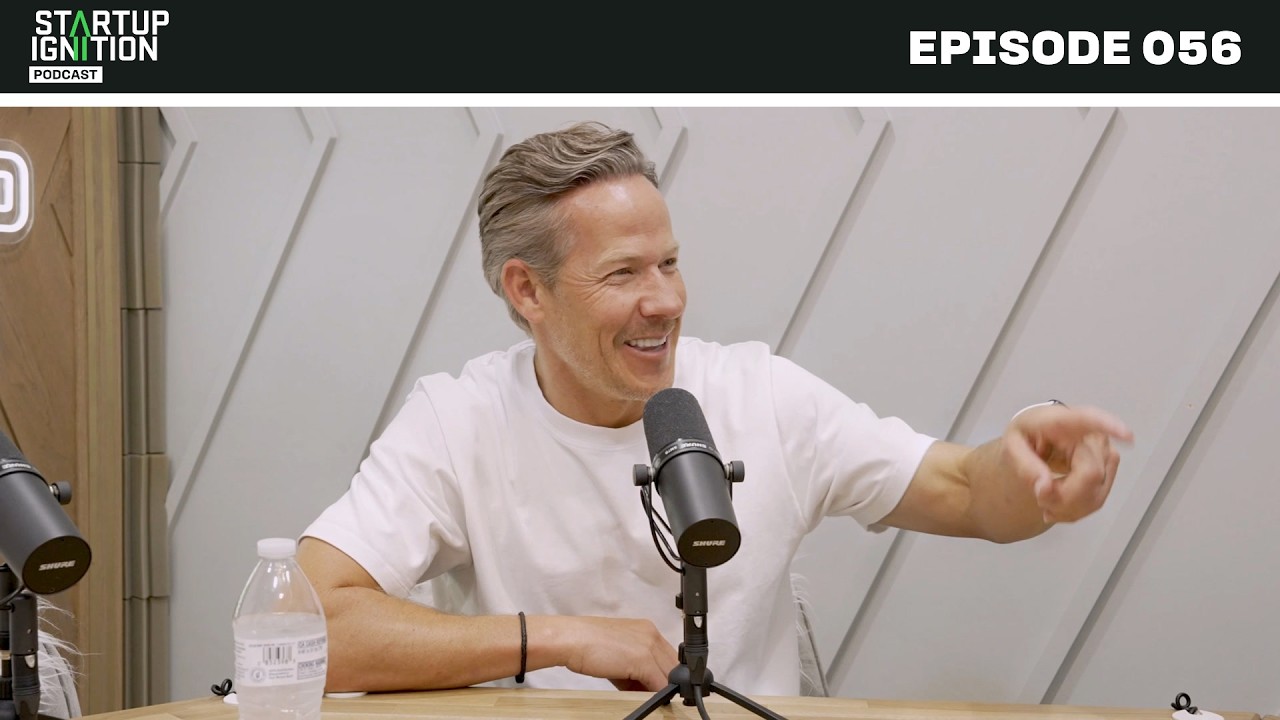
We actually went to lunch at Macaroni Grill and I don't know if you're going to remember the details like I do, but I just do because uh you've been uh you know a successful entrepreneur that I've tracked and so but yeah, macaroni and grill and they used to have the paper tablecloths. Yes. >> And so we literally filled up the entire paper paper cloth writing on it about your business. >> He loved the macaroni and grill because the and he was always writing around. >> Yeah. Cuz it was paper notes and and all the notes could be on the table cloth. >> That's kind of a good idea. start a restaurant with like butcher paper. >> It was literally butcher paper. It was butcher paper for business meetings. >> And a lot of times I'd rip it off and take it with me. [laughter] >> Yeah. Yeah. That's exactly what happened. I I forgot about that. Welcome back to the Startup Ignition podcast. Thank you so much for watching. We are now on I want to say episode 56 of the podcast. So, we are rocking. We are rolling. Thank you for sticking with us. If it's getting boring, uh, we apologize, but hey, at least we're probably the only father-son team doing startup podcasting. So, we got that going for us. I am Tyler Richards. I don't need an introduction by now. Hopefully. Hopefully, you know who I am. This is John Richards, my dad. And we are joined today live in studio with Brock Blake of Lendio. And you are more than Lindio. So, I shouldn't say of Lindio, but Brock Blake of Utah. [laughter] Um, and we are very excited to have Brock. We were talking pre-podcast. I'm I'm really excited to jump into his story because I haven't really sat down and talked with you about it all. So, I'm interesting to see where this all started. And I know you go pretty far back with this guy actually way back. >> It's been a long time. [laughter] Yeah. >> I don't want to date I don't want to date either of you, but seriously, >> when I when I knew him, he didn't have any gray hair. >> Yeah, [laughter] exactly. >> Hey, at least you're rocking it pretty well, though. >> Yeah, I'm rocking the gray hair, man. >> Yeah, I'm already I'm already maybe thinking about getting some of the the hair stuff done up top. Listen, if you don't want gray hair, don't be an entrepreneur. >> There you go. >> I have sons and sons-in-law now that have gray throughout their beard and everything. I go, "Okay, that makes me old." >> Well, [laughter] >> that's why I keep it short, you know, cuz then the grays on the side don't show, right? >> Oh, yeah. >> Getting out of control. >> But thank you, Brock, for joining us. We're really excited to have you. So, thank you. Um, I have a bio for you so everybody knows who we're dealing with here. >> Keep it short. >> Yeah, we'll keep it short, but very >> tight and impactful. Brock Blake is the co-founder of Lindio, a company founded back in 2011. Is that correct? >> Is uh 2011-ish to help small businesses access capital. You guys know how hard it is to find capital and financing and funding for your startup. But what's really interesting is Brock, you had a company before this one that was connecting VC dollars to to startups. So this kind of sprung out of like hey the realization of not every startup needs VC venture capital they can go through traditional loans or other types of funding to fund whatever it is that they're trying to execute on. Um and today I know that Lendio works with 75 funding partners. So you're not actually giving the loans you're kind of facilitating the loans and you're almost like a marketplace for loans. Is that right? >> That's correct. And you have done more than se 17 billion dollars in small business funding. That is huge. I mean, given you've been rocking for 15 years now. >> That's right. >> Um, outside of business though, Brock is more than Lendio. We already established that. I know you're a huge Big Family guy. I know you're a huge BYU guy. I know you're a huge Jazz guy. Yep. Three for three and a Pal. Yeah, I was going to say and travel. I know you're always off somewhere cool. Um, is BYU football or basketball though? >> Both. >> Both. Okay. Basketball or or football are you enjoying more now? >> Football. >> Football. Okay. Um, but also Brock has been recognized as Utah Business's CEO of the year. Uh, and what makes Brock really interesting is just the story that you have behind Lendio, how you arrived on the idea, and the way that you've pivoted and you're helping founders understand the kind of capital that actually matches their venture, which is really interesting. And so I'm excited to dive into that too. So anyways, Brock Blake, everybody. >> Yeah, thank you for coming, Brock. >> Yeah, my pleasure. Thanks for having me. >> So, and I I broke this to Brock before the podcast that we're going to do an icebreaker with Brock, too. So, I'm going to spring an icebreaker on >> Bring it on. Let's >> get in the mode of of podcasting. We're going to do a quick icebreaker, and this one is just called favorites and least favorites. Okay? And and I want actually you to join in, too. So, we're going to hear John's point of view and your point of view. And I'm just going to give you a couple of prompts and you're just going to say what your favorite of that thing is. And if it's a least favorite, I'll let you know. If it's a least favorite, you just tell me what your least favorite of that thing [laughter] is. Okay. >> All right. >> Who is your favorite entrepreneur of all time? >> Favorite? Like, who do you like idolize? >> Entrepreneur of all time. >> Yeah. >> I mean, you have to go with Elon. >> Elon. Oh, that's a that's that's that's a I mean, it's controversial because a lot of people don't like, you know, him and his personality, but just pure entrepreneur. I mean, there's not been anyone in the world that's changed the world more and had more of an impact on the world than he has. That's a >> I mean, if you think about SpaceX, if you think about Tesla, if you think about >> um uh what's the >> Zip 2 is was his first one. >> Neurologic Neurolink. Neuralink. >> Well, Neurolink too. But what's the internet? Uh >> oh, Starink. Starink [laughter] for some reason I couldn't remember Starlink. So you think about Boring Company like all every single one of these companies like everything he does somehow changes the world in some way. >> Yeah. Warren Buffett he first pointed out that Jeff Bezos did something that no other entrepreneur has done in such a dominant way. two companies at the same time, meaning Amazon and then AWS, right? But now you look at Elon and he said the same thing about Elon's now what four or five companies that are dominating and changing the world. >> The paper trillionaire, right? I mean, how can you not >> I mean it's just the pure like the idea to execution at scale and it's the fact that he did it change like he literally changed the world in many different ways, you know, with EVs and with Starlink and and you know, going to the moon and all these things. So like from a personal perspective, I don't care. But just for like pure entrepreneurship, like I it's hard to >> How about you? >> Okay. So Elon really is up there and wouldn't say that. But just to not repeat that, I would point back and probably go the John D. Rockefeller and just what he did with the oil industry. And the more the older I get, >> the world's first kind of trillionaire. >> Yeah. Well, I get really um I I'm understanding how important energy is and you know, electricity, energy, oil. The reason all this tumult in the Middle East, everything's about oil and energy because humans as we become more technologically advanced, we are massive consumers of energy and we need energy to make >> Now it's the precious metals that make chips. >> Yeah. All of this resources >> and data. >> Yeah. >> It it's it if you think about it, a guy in the freewheeling free enterprise system in the United States at one point controlled 80% of all oil in the world, right? I mean that's Rockefeller. And it's incredible. If you look at how he did it and too he was making a different product from you know what comes out of the ground and then discovered he had to he he dominated kerosene where we before electricity the world lit up with kerosene right that's how they saw things at night had light >> all of a sudden electricity is invented by Edison another incredible entrepreneur right and all of a sudden it's crazy all of a sudden kerosene gets wiped out almost overnight by electricity >> yeah But he then says, "Oh, there's this byproduct of making kerosene and it ends up being gasoline that fuels the automobile and engine industry." Right? Think about and what he did to parlay all that and how he did that. He he was so powerful people don't his company Standard Oil had to be broken into 35 smaller companies to weak him as a day dollar. He wasn't a trillionaire though. I >> I know. I know. >> He was never a trillion. He was very adjusted for inflation. He was about a half a trillion. >> Half a trillion. Yeah. Half a trillion. But he what what he did and there's this great series I'm just going to share everybody because one of my favorites called captains of industry it's on the Discovery Channel one of those channels like that they have like 10 episodes and they showed Rockefeller versus whoever at the oil and how they fight the two titans of it's titans of industry maybe that's what it's called and two titans that vi as entrepreneurs and who emerged the winner and they're great great >> episodes but anyway that's myellar >> okay we can't spend that much time on everyone [laughter] we're sure lightning round >> okay lightning round least least favorite [snorts] founder trait. What What's like a What bugs you when you're talking to founders? I Are you doing angel investing? Are you investing in that? I know. I know you are. >> Yeah. I think the thing that bothers me is when they are successful and it changes their personality and like they have roots, you know, going into it and then and then >> when they get success, they change who they are. >> I think it's almost impossible not to change a little bit, but yeah. If it's a wholesale change. Yeah. So that is an annoying. >> How about you? What's your least favorite? >> My least favorite is probably arrogance and so kind of the same. >> Yeah. Well, but during the whole process that they don't they don't they're not teachable. They're not humble enough to take advice. They just literally think that they know it all when really they don't. And the problem is they have a lot of great things going for them and that ends up being their downfall. >> Yeah. Yeah. >> Yeah. Okay. Favorite athlete. >> Oh man. favorite athlete. Um, >> hey, what comes off the top of the dome? We don't >> Yeah. So, I probably have to say I mean the goats obviously for me I hated uh Tom Brady while he played. >> Yeah. >> I love him now. >> Um, so I I I mean just you have to appreciate what he accomplished, but I literally hated him while while he was >> you know Adam Edmonds very well. Yeah. Yeah. I mean he's like rubbing shoulders with Tom Brady somehow. I don't know. I follow Adam. >> He's on his board now. He's on his board or advisory board or something like that. >> Um, so I think I think you know Tom Brady's uh that's that's a that's a pretty cool >> that's a cool one. How about you? >> Michael Jordan's right up there just because of >> what he's achieved >> just Yeah. and just how competitive he was and like just the stories behind the scenes. But there's a lot of great I love Jack Nicholas and golf. >> I might [clears throat] so many good ones. >> Yeah. >> Okay, here we go. Least favorite chore. What do you hate doing? >> I'm I any chore that's like handyman stuff, fixing like, you know, like the back in the day when I was buying IKEA furniture and like the IKEA man just gives me just like, >> you know, uh it's a nightmare. But anything like where you're fixing some, >> you know, fridge or washer dryer or something like that. Like [laughter] I'm not a handyman. That's not my thing. >> I love it. >> What do you think mine is? >> Lee's favorite ch I don't know. >> Pulling weeds. pulling weeds for sure. That's horrible. >> Oh my god. >> I actually enjoy pulling weeds. [laughter] >> I don't I do not like your mother. I like mowing the lawn. I love mowing the weeds. I love mowing the lawn. There's something therapeutic weeds. No matter how many you pull, there's all this more and they keep coming up. And I like stuff where I see immediate results. Like I one of my favorite chores is window washing because I can do window washing and make an ugly window perfectly clear in seconds. >> Kind of like mowing a lawn, right? >> Exactly. [laughter] >> You guys are freaking hilarious. Uh um >> when I'm fixing something, I literally have to go to the like Ace Hardware like 15 times. I go once. Okay, this is the part. I come back home. I try to fix something. I break something else. I got to go get >> You watched the first three minutes of the YouTube video and you should have watched the whole thing. You had to go to >> Home Depot. I'm just like, no way. I'm not doing that. >> Brock's hiring out 10x the price to just do it himself. >> Yes, 100%. >> Okay. favorite business that Lindio has ever funded. >> Man, just one for you. By the way, I don't know the stories of every business that we funded. What comes what comes to mind? And uh so I was in I I was able to go to um Hawaii uh a couple months ago and while we were there, we looked up what's amazing is everywhere we go, we have this map. I can look up who the businesses that we've helped. That's right. And so a story that comes to mind, um, her name is Miesa. We we we showed up or we helped her get a loan the first time and she was trying to open up a little cafe shop and and she needed money to get it off the ground and really she needed money to buy equipment to go from hand scooping acai bowls. Um, and she where it was frozen and hard and and to like this mixer of acai bowls which allowed her to sell instead of like 10 an hour, it was like 50 an hour. like dramatically increased her revenue. And then that store started that cafe started doing really really well. And then she wanted to open a second location in the island in in a breakfast um kind of cafe and and uh so we were able to go and visit both stores and just any entrepreneur, any you know business owner that we help and to hear their story and what they were trying to solve, what the problem was and how the capital made an impact and >> when they come back for a second loan like >> it's that's what makes what I do like amazing. It's mission driven. I love help. I love the stories. >> I bet you have a hundred of those by the way. Yeah. >> A thousand of them. >> Okay. We're going to switch it up for John though here. So, favorite company you've ever funded yourself? >> I'm probably going to say Forup. >> Forup. >> Yeah. Because >> man, you love that company. >> Well, just I mean cuz I think I think that's no shame. >> It's not just, you know, it was my biggest angel return ever. It astronomical return, but also the it was fun because also I got a bunch of people to invest in it through a fund, the Boom Startup Capital 2011 fund. It was called LLC and a bunch of guys. >> A bunch of guys invested in it and you know for many years they thought nothing's ever going to happen you know and it was a fund with other companies in it. For was one of like 10 companies and years later I'm talking nine years later 10 no actually 10 years later I we were it was so fun to call up everybody and say hey we need your wire instructions and they go really what's going on? I go well actually you're getting 10 times your money back. So that fund returns 10. You know what? A fund returning 10x is amazing. That's incredible. By the way, I was in boom startup like 2012 or 2013. So I was in the wrong year. >> Yeah. The 2011, right? The 2011 was amazing. And I remember one guy that had put a pretty good chunk of money in and when he got back, he goes, "What the heck? This is amazing." [laughter] >> Yeah. >> That that's >> I need one of those to come around. >> Yeah, I know. Those are fun when they happen. Um, for those that don't know, and maybe even to catch Brock up a little bit, part of the Startup Ignition ecosystem now is we do run a venture fund. And so we've been in the depths of VC. We kind of >> We love a lot of our current investments. >> Yeah. I was I'm surprised not yet. >> I know. I'm surprised you haven't you didn't say anything. >> You can't be favored if it's not liquid. >> I know, right? [laughter] Right. >> So, uh, portfolio companies, come on. >> Yeah. You're automatically disqualified. >> Yeah. No. Okay, that was the last one. So, thank you for playing my icebreaker. That was good. That was fun. That was really cool. So, I think on that note of 2011, I think maybe let's go all the way back with your history, Brock. Maybe when you guys met, maybe that would be >> I' I'd like to know where you went to high school and grew up. >> Yeah. Okay. >> Yeah. I grew up in Ogden, South Ogden up north. And um you know, I'm the youngest of six. Um >> one one uh sister, she's the oldest and then five boys. And so being the youngest, I was fighting for scraps on the table, you know, and I was and five boys that were also very athletic. Like I I mean everything that my upbringing was all around like competition and and um and all that. I have amazing relationships with with my siblings. Played a lot of sports. I ended up playing going to BOU playing soccer there. >> Oh, you did? I didn't know that. Garrett from Garrett. >> Yeah, Gary G. Yeah, he's a he's a friend of mine. >> Did you play soccer at BYU? >> Uh I was there 2000. went on a mission for a couple years and then uh finished 2006. >> So, shout out to Gary G for those that don't know him. He's been on our podcast and he was a student of mine at BYU that uh is now the Bucket List Family. So, check out the Bucket List Family. >> He's awesome. He's actually here in Utah right now. His sister is my COO. >> Oh, cool. Joanna, she's incredible. Yeah. >> Wow. That's a small world. I didn't know that. >> 2006 was my freshman year. So, when you were Yeah, >> we was just leaving. >> We just barely passed each other at Yeah. That's cool. So, I did not know that you played soccer. I should have known that, but I did. Yep. >> Okay. Okay. So, you went to BYU to play soccer. What did you study? >> Finance. >> Oh, nice. >> And uh entrepreneurship. >> How did that go? >> I loved it. >> Loved everything about it. >> And that's where we would have met. >> Yep. >> And in the entrepreneurship program >> and probably you participating in the business plan competitions or some I did some of those events. Um, where I really got into entrepreneurship is I uh joined a program called Hunto Partners led by Alan Hall and Greg Waro. >> That was and this is kind of that's the nucleus that became Marcato Partners here in Utah, a major thing because that's when Greg and Allan got together and I remember and you and I would go to lunch when you were working in Hunto Partners on some of your first ideas. >> That's right. >> Yeah. So, Hunto was kind of like back in the day, it's kind of like the TV show The Apprentice, you know, except without all the cameras and the glitz and the glamour, but we'd go and it probably is something similar to what you guys are doing. Um, I mean, you guys have taken it to a whole new level, but you know, back in the day, we they had 100 applicants. They narrowed it down to 20. Those 20, we went through an 8week boot camp and every week was like this week we're focused on marketing and then next week we're focused on sales. And what was unique about it is during the week, so we'd do Wednesday night these 4-hour sessions, but during the week, you'd go and practice whatever thing they they taught you on. So he he'd bring in all his the best sales professionals he he'd ever invested in and said, "Come teach us." >> And then that week, like we had to do a competition where we had to sell water bottles with a custom logo on it to the side. And whoever between Wednesday to Wednesday could come back and sell the most water bottles, like you know, they would what got the most points. Yeah. >> And then one week we had to go raise money and one week we had to do a marketing event and all that kind of stuff. And and at the end they um they >> they had chosen five of us and kind of given us $50,000 as a loan, but with very very very flexible terms to be able to then um get, you know, start start whatever business you wanted to start. So that was my starting one. first meet with you, we actually went to lunch at Macaroni Grill. And I don't know if you're going to remember the details like I do, but I just do because uh you've been, you know, a successful entrepreneur that I've tracked. And so, but we have macaroni grill and they used to have the paper tablecloths. Yes. >> And so we literally filled up the entire paper tablecloth writing on it about your business. >> He loved the macaroni grill because the And he was always writing around. >> Yeah. Cuz it was paper notes and and all the notes could be on the tablecloth. That's kind of a good idea. Start a restaurant with like butcher paper. >> It was literally butcher paper butcher paper for business meetings >> and a lot of times I'd rip it off and take it with me. [laughter] >> Yeah. Yeah. That's exactly what happened. I I forgot about that. >> Yeah. So, yeah. And but Hundo Partners was uh great problem and you got started and gave you a good >> So, was that company that you got funded 50,000 with the first thing that you did? >> So, the difference was it wasn't a an investment in a specific company. It was more in you as the entrepreneur. And so then we could take that >> before you even had an idea. You finalized. >> You could go and take that and and create something. You could buy a business. You could do whatever you wanted with it. Now there was there was guidance and there was, you know, and you would go and say, "I'm thinking about this." And we would work on [snorts] the idea together. A little bit of an incubator. So I used that. I was thinking about um starting a business, buying a business. I was out talking to businesses and almost everyone I spoke to their biggest pain point was they needed access to capital >> and um so I knew this was a painoint. Then I went and sat down with and I was meeting with a lot of people like John and I went and met with Paul Allen um at the time was uh you know was kind of the founder of my family and ancestry.com and >> uh an internet kind of entrepreneur and a titan kind of in Utah and he's like hey I'm I'm working on this idea of funding Utah like I want to connect entrepreneur like there's not a good way for entrepreneurs to connect to angel investors and I want to I want to create a dating website. And so it was kind of his initial idea. Um, and I'm like, "Oh, well, every business I'm talking to has that same problem. I've got $50,000. Why don't we, you know, work together?" My other co-founder is a a gentleman named Trent Mskin, who was in the computer science program at BYU, and and he could be the one to like code it, you know? So, it's like, "Okay, Paul and I and or or Paul and Trent and I got together to be able to kind of found what was initially started as funding Utah then we changed it to funding universe. >> Yeah. Is that the funding universe time this is a little bit also I was going to be kind of involved in the founding along with two David Bradford. Yeah. And then there was another guy I can't remember his name right now. There was one other person and he didn't last long but he was going to be I can't remember right now. And so I ended up not doing it and he didn't and David Bradford was involved there early early on doing stuff and it was just great idea. want to be supportive and Brock was always the nucleus of it, the real muscle behind it. >> So, give give us the 10-second pitch on Funding Universe. >> So, essentially, you're an entrepreneur, you need capital, there's not a good way for you to find angels. So, we we we created two things. We created a site where you could go post your business plan, similar to like an angelist today. >> Um, and investors could log in and go review it and whatnot. And then the second component was these speed pitching events, like speed dating. So we would get John and 50 other investors in a room be a table like this and you would go you'd have seven minutes at each table and you would go around you know table to table to table pitching your idea. >> Cool. >> And so we were we the combination of those events and and the the site. The problem was is um we well first of all we weren't very good entrepreneurs. We were we made every mistake in the book. one two uh most angel investors there's not a formulaic way that they invest meaning with lending I always know that 1 plus 2 equals three >> in with an angel investor it's like I'm not I don't have a form an exact science formula and every time I see a deal like this I'm going to invest it's like sometimes I like the entrepreneur and sometimes I like the market and sometime sometimes like right now I'm I don't have liquidity so I you know I'm not going to invest so >> they have no money to like you dictate what they do. It's their own money. They're investing in their own bank account. Right? So, >> so when there's no predictability around an investment, how do you create scale and process and system? >> So, all of those founders that were around funding Utah, funding universe, cuz I was involved in those days like that, but then it really became you and Trent. Yep. >> Is that correct? >> That's correct. Everybody else kind of even Paul. Yep. >> By the way, a shout out to Paul. He'll be on the podcast soon someday. We were trying to arrange that and I've been helping a lot with Soar >> and um Soore uh shout out to Paul Allen, one of the most prolific startup guys in the history of Utah and by the sheer number and company. I mean founder of ancestry and so many things but eventually he what how did he not become involved and how was it left just you and Trent? So he had so many other things going as always and and you know and he's an idea guy. So it was more like okay I've got I've kind of got this idea but I I think he had um >> what did he have family link at the time and he had he had labs I was going to say it was 15 companies in Provo Labs, right? Yeah. >> So he had so many other things going on and he was like okay why don't you this was a concept I had why don't you guys take it and run it? >> Yeah. So you Okay. So you and Trent then basically became the founders and it morphed into from funding universe into Lendio. Tell us that story because I'm not even clear exactly that was the pivot. >> Yeah. So so because you were kind of saying equity to debt and all that and then you Lendio obviously is debt, right? So >> so we we were about five years into this, four or five years into it. Um so we started that about 20 thou uh funding universe uh 2006 and um and we were realizing like 95% of the business owners that come to us looking for capital >> are never going to raise money from an angel investor >> venture they're not venture >> they're just not venture worthy right so they're not truly scalable it's more like main street it's like a restaurant owner a landscaper a dry cleaner right those >> well let's share that statistic I mean literally of Even all the companies that want venture investment, >> what is it 2%. >> I it's somewhere between 1 and 3%. But I think those that take a serious run at it, it's less than 3%. But even of the ones you think should be venture type of businesses, it's about 1%. So that means >> it literally Google Gemini says it's about 1 to 2% of all startups are even truly scalable and VC backable. >> Exactly. >> 1 to 2%. Yeah. >> So, when you're building a business where 99% of the customers that come to you for success are not getting success, [laughter] that's a tough business. I don't care what business you're in, right? And so, >> the reality of that was like while this was like meaningful and and like there was a lot of valuable lessons learned and a lot of really great connections made >> and we were never going to scale it. And we got it to about 10 million in revenue and we were pretty proud of that, but it was like held together with duct tape and bubble gum and whatnot. And we started to say, okay, well, let's look at these 90 90 we we know we're getting demand from business owners that need capital. Let's look at the 99%. Who are they? What do they look like? What are the types of small businesses? And can we is there uh opportunity to deliver value to them? So, we started to really study out and learn the the debt side of the business, right? Helping them get a loan. And when as we started to do that and talking to banks, we realized, well, banks and lenders have the same challenge. They want to lend, but they don't know how to acquire customers. Um, and and the benefit to working with financial institutions is again, like I said, they have a it's formulaic. We always know if it meets this criteria A, B, and C, we know they're going to fund the loan. >> Um, and so you're not guessing with an angel investor. So you morphed it from an equitybased assistance platform type to go after equity money to basically the 99% that really their only option is debt. That's right. Unless they have friends and family, right? >> That's right. >> Um and so it's less about scale. >> Did you become a channel for financial institutions then? >> Yeah. So then we started off and we've kind of gone this evolution early on. We started off as lead genen like that was the easiest way to get off the ground for loans. So banks would pay us, we would qualify a customer and send it to them, right? Then we built out technology where it was more less leg because legen's not a great experience into more like an origination platform um where we actually gather all the docs on behalf of the bank. We process the loan on behalf of them. And then they >> explain why lead genen's not >> well lead genen is just a bad c it's one it's it's the valuation multiples are really low um and from an enterprise value standpoint and two the customer experience isn't great. So when a business owner comes to you and signs up and then there's like four lenders that all want to buy that that that lead because yeah it's meets their criteria. Now all of a sudden that customer is getting calls and this is way back in the day 15 years ago. They're getting four, five calls from lenders like and you're getting bombarded, you know, and that's no that's not a great experience. No one wants calls like that, right? >> And so but and and candidly lenders >> didn't know how to take a lead and turn it into a loan. Um >> and so even though they were paying for the lead, >> they were bad at the conversion. >> They sucked at conversion like Yeah. Shocking, huh? >> Yeah, that's their business. I know. [laughter] >> It was so bad. >> So, did you >> So, we kind of morphed that along. >> Did you shut down Funding Universe then? You turned off that VC platform and everything you had built there. >> Yeah. So, I this is one of the mistakes I really regret. Um, so two things. One, I wish I would have figured out a way to sell it and start new. >> Um, but there's two reasons why we didn't. Um, and and and the one of the reasons I wish I would have done that is because it just when you go from that business and you're totally morphing into a new business, you're you're you're messing up your cap table. >> Yeah. >> And so we had to basically like >> a really crowded cap table. >> Really crowded. And we ended up taking on new money and at some point we had to do a recap. Now the reason why I kept it uh the entity and just tried to pivot to um to Lendio was two reasons. One we had a stream of customers that we had built up that was kind of an asset that we wanted to leverage into the new product >> and two I we had taken on some money from investors and I um I feel this stewardship that if I someone's going to give me money like I'm going to get them a return on their money, right? And so at that point if I don't know if I would have sold we could have got them a return or not. I wish I would have tried but I I wanted to make sure that I could deliver return to my investors. So we kept the cap >> for viewers and listeners. Can you kind of dig into this because this is a good teaching moment I think. So how it you know we use the term in the venture world messed up cap table. Okay. So it kind of you're saying you ended up with a little messier cap table than you would have liked. Y >> explain that a little bit more on why you would have liked to go back in time and have done it differently for the cap taper reason. Just explain that to them. >> Well, I mean the first thing is first I I wish I just would have tried to sell it because it probably could have lived on in some way and maybe we could have got delivered a a return to those investors at that time. Right. >> Um but secondly, you know, we thought, oh well, there's a bunch of reasons why we didn't do that. Um but secondly, we thought that uh a messed up cap table is basically okay, you you've got other shareholders that have ownership in your business, right? And um when you are having to raise money and it's not at an up valuation, um you have to do a recap, right? And recap means they're going to put in money, but they're going to lower the valuation and they're going to take a a pretty big chunk of your >> So the previous investors get diluted. >> The previous investors get diluted >> more than they ordinarily would even if it was an up round. they still get diluted but a down round much more dilution. >> Right. Okay. >> And so now and then and and I get diluted you know quite a bit. And so like from my standpoint I don't have as much ownership today as I want to because of decisions way back when. Yes. >> That um you know that that pushed me down crammed me down as well. And so like >> you know while it was all good intentions it was a painful learning. Did you have different investors when you made that switch to Lendio to capitalize that endeavor and that product or did you keep a lot of the same investors from the previous funding universe? >> Well, I mean all those investors were on the cap table, but they didn't you found new money. Okay. And so so this is just good for our viewers and listen here. Safeguarding and being cognizant of the impact of cap table and thinking of few chess moves ahead is a very important skill and talent entrepreneurs need to develop. Do you agree? >> Oh, 100%. And I wish you know like today you've got Claude and Chat and all these others that where that can be really good thought partners. Yes. Right. Um and you obviously you're looking for other mentors and adviserss that can be helpful as well. But I would say I would definitely get before you take a dollar of capital. Make sure you get really really good legal advice. Not just hey my friend's an attorney and you some person you know but get really >> We had a call this morning where we had to go over that with someone. And we said, uh, you should probably get a proper venture attorney, not your best friends. >> Exactly. Yes. Yes. And then get good, uh, a good tax adviser as well, who who, you know, can help you with QSBs and like all the the qualified business stock and some other things that >> and our viewers, listeners, QSBS is that incredible tax benefit for entrepreneurs, right? We talked about that a lot. I'm I'm going to ask you this because this is again you're bringing out some great teaching uh things here and and in regards to cap tables and everything that you're you you've shared that you you've had this experience on what um in terms of going through these transitions and your cap table. What's some of the things that if you went through it again, how are you being careful with who you're bringing in? And is it like how important is it who you're bringing your capital and investor to the company? I mean, like is it is it just money or is important who the people supplying the money is? >> Oh, man. If I were starting from scratch today, >> um you know, the uh setting up your entity, right, and all of that is critical. Like I said, getting right attorney, getting the right tax advice. Um, uh, I think giving away equity to co-founders and any other early people, I I wouldn't just give it to them. Like, everyone thinks, "Oh, let's go into business together. It must be 50/50, you know." But if it was really your idea and your concept and you're the real founder or whatever, maybe there are there are situations where 50/50 makes sense, by the way, >> but there are other situations where you just feel like you feel bad or whatever, >> and you give it to them and they're not going to be there for the long run, right? And and they go awkward discussions, but you have to have them. >> Yeah. And so it's it's easier to just say, you know, okay, I I want you to earn equity and, you know, but let's make sure it's dependent on the time that you're here and the the contributions that you make. And so you can set up structures where you're giving it based and and if and if the the partnership goes like Trent and I have been together for 20 years, right? >> And that's great. But if if it had been like we had another co-founder who I love but it didn't he didn't last much longer than a year >> and um so you if that happens you don't want them to walk away with this big chunk of equity unearned right >> and so I think putting those things in place the other thing is that with early stage investors and mentors it's it is like getting someone who's been around the block and seen that's invested in companies that is more than just money um that is can can help you see around corners and help guide you and all the smart. >> Can we build on that and tell you what Tyler and I have done recently just as so people know how this works as venture capitalists the last few several investments we made there's a few of them where the main primary founder had given too much equity to other co-founders and he was too low >> and he it's and it's obviously he's the primary founder. >> Yeah. Okay. And so we put a term sheet out, love the company, everything about, but we said, "But we've got to fix this cap table a little bit. We need this founder to go down a little and the primary founder to go up and be at the percentages where we feel confident that he will be the benevolent dictator of this company and that he hasn't doesn't have to worry about it running by a democracy in the early stage because we want him to be decisive and make decisions and have the power to do so." And preede early stage. This is really important. You can't run by a committee or democracy in a business, right? And so it's worked out really well when everybody comes in and it's kind of funny and I just want to say this principle. >> The secondary and tertiary co-founders need to understand that if they got 35% of a company when they should have got 15, that's not good for the company. No. >> And it could your 15% will be worth more if you get liquid and get wealth from it than if you get 35 and the company never makes it. Does that make sense? So in summary, we try to fix a lot of the problems that you because the early stages like you just said, I have less if I would have made different decisions prior 10, 15 years ago, I would be sitting in a much better spot. >> Much much better spot >> and that's really important. That's the message here. >> Let's get back to debt now. So I want to >> There's one other item I just want to cover. One other item I would say is that um when you are taking money like the the the early rounds set the precedence for every other round, right? So, if you don't take a clean, meaning, you know, usually it's like a 1x liquidation preference, no participating, you know, like >> if you don't take a clean round, then the next round they're going to look at your terms and they're going to say, I want those same terms. And then the third round, they're going to look at those terms and and it's really hard to get it back. >> It's a it's it's turned very founder friendly over the last 5 to 10 years. Like a lot of those preferences are not as common anymore. Yeah. Um, as and so bottom line is you're saying don't do any weird stuff like like some of the old stuff that used to happen but you don't see very much anymore is like some angel investor invested and got anti-dilution protection. Yeah. Okay. Or, you know, guaranteed never to go below 5% ownership and stuff like that. And the next investor come in and go, "Well, that means I'm putting money in and I'm automatically diluted because now you got to give free shares to that guy to bring him back up to his percentage, you know." And I try to explain this to people, but sometimes not everybody gets it. Yeah. >> Yeah. You're dead on right on that. Okay. I want to go back to debt because this be as you get into tell the whole Lendio story and how you morphed into being a bank partner. Tell me about how hard it is though before Lendio before something like Lendio existed. You're whether you're one of those 99% that's not going to be venture funded, but you don't have any operating history. And most banks like you know the Wells Fargo, the the you know um JP Morgan Chase or all the top banks, they want to see like 24 months of operating history to even have a chance to get a loan. Have you solved any of that problem or are you working with people with 24 months history or do you help people earlier? No, we're we're not focused on the like early stage startup. Okay. Just because to your point, >> lenders don't want to fund businesses that are very that are early stage. >> And and and the reason for that, if I just kind of walk through it, >> Yeah. >> is >> if you think about it from a lender's perspective, they are evaluating three things. They're evaluating your personal credit score. They're they're personal and business credit. They're evaluating your cash flow. And they're evaluating your collateral. Right now, if you have all if you can check the box on all three of those, then to a bank or to a lender, you are a lowrisk uh loan uh opportunity, right? >> And that means you're going to have low rates and great terms and everything else. If you only have two of the three, you're medium risk and you're going to have a little bit higher rates and and the terms are going to reflect of that. And if you only have one of the three, then you're going to have higher rates, right? Because now their their calculation to say, am I going to get paid back on this? It's either in a startup in that case it's basically an all or nothing and and it's too risky to underwrite. >> Risk and reward go hand in hand. The bank says if I'm going to take this risk I got to be rewarded more and that's higher interest, >> right? >> So as a startup you know uh the really the only options that you have are there's from a debt perspective you're basically just leveraging one of the three which is your credit score. You don't have business credit so you've got personal credit. So, um, you might be able to. So, there's there's there's credit cards that you can kind of stack on top of each other and and and leverage. Like, we don't do that, >> but you can do that. Um, >> but there are business out there set up for that, right? Yeah. >> Yeah. There are um uh like a home equity line. Um, that's probably your best uh option for capital that you can get the largest loan sizes at the lowest rates because your your collateral is your home. If you have equity in your home, you're going to be able to leverage. That's where and the entrepreneur takes out a home equity line of credit against their house, their personal loan. It doesn't involve the business. Then they take that money and do an owner's loan into their company. So the company gets operating funds. Is that right? >> That's exactly right. >> And then there's others. There's now consumer loans where if you have if you have good credit score, you know, you can go to Upstart, you can go to SoFi, you can go to all these. And again, we're that's not we don't do consumer, but you could use a consumer loan, meaning that they'll look at you as an individual and lend money to you >> above beyond what they could get from credit cards. >> Yeah. And you now can take that, like you said, and as an individual lend that money to the business, you know, as as a loan. And so for America funds these companies, right? >> That's how Yeah. That's how a lot of businesses, if you don't have friends or family, if you don't have angel investors, other things like that, then this is, you know, I mean, I just did a um a session uh last week at Silicon Slopes and I and I basically said, "Here are the the 10 ways to be able to fund your business without having to raise money because I think everyone thinks the first thing I have to do is go is get money." >> And and I was I was talking about, you know, bootstrapping the business and all the different ways to bootstrap. like you can go and get a larger company that to sponsor you um because they want that product and so >> customer funded >> customer funded you can you know pre-sell invoices you can do channel deals you can do and and you know it's a longer conversation today less expensive it is to get a company off the ground than like in 2005 when you were in school and just starting your entrepreneurial journey go >> to start a company was way more expensive >> I wish that [laughter] you know so bad we were starting right now and all the tools I know is a great time is amazing amazing time. >> But at the same time with the ease of building becoming so easy, there's just more competition. It's pretty cutthroat out there. So like, you know, and a lot of ideas have been executed on, you know, you think you have something novel. You know, there's 10 other ones out there because coding and claude and chat GBT and CEX help you build it within a weekend, right? So that's it's there's there's trade-offs. Yeah, there's trade-offs. And that's the other interesting thing is like some of these companies like that you can see they'll go from 0 to one or 0 to 10 and like overnight and then they might go to zero overnight. Yeah. Like there's not so >> there are trade-offs. >> So what about like SBA and government stuff? Are you doing and facilitating that? >> We do a lot of SBA loans. Um and so SBA is not in the business of risk and u and so there there's a little mis um conceived kind of notion around what SBA is. So so >> maybe explain that to the listener and viewer. >> Yeah. So basically the SBA is a government entity that is basically insurance on a loan that a lender makes. So if the loan goes bad the the uh and it met all the criteria then the SBA will step into that bank and say okay we will guarantee the loss on that loan. >> Now the lender who made the loan is still going to go and try and collect and you're making a personal guarantee on that loan. >> So um so an SBA loan it's not like you're going to the SBA directly. You're still working with the lender. It's just that that lender will go through all the the hoop. There's a lot of hoops going through SBA of like all the financials and other documentation item 1919 and all these other items. >> You go through, you complete it, the lender makes a credit decision and then they they get the approval, the backing of the SBA. And so by having that backing, what it does is it removes some of the risk from the lender and it means that it lowers the rate and extends the term. An SBA loan is going to be a lower interest rate than a plain loan from the bank. The government helps it. >> Yes. It's going to be the lowest uh rate loan. It's going to be the hardest to get because there's so many hoops you have to jump through, right? So, what we've tried to do is just facilitate and streamline that. Make it as easy as possible. >> Like we're getting SBA loans done in like six days now. Whereas before, you know, when we started into this, like if you got something before like 60 days, you were that was amazing. Just mathematically too, even though we're venture investors and venture capitalists, um the cheapest money in the world to fund businesses when you have to get third party money is bank loans. Yeah. >> Because nowhere is cheaper, but they're hard to qualify and [snorts] you have to jump through hoops, but if you look at the cost of venture capital, it's very high. >> Well, we just spent 10 minutes talking about how precious equity is and that's what you're giving up when you go VC, right? Yeah. and and um the the debt the the thing I'm most passionate about is >> you know when we started in this getting a debt loan a bank loan was so complicated and so complex >> and now we've got it to a point where we've built software for banks where they can use our software to put in the criteria and now we can get instant approvals on these loans >> which is so different than what it used to be you know and and I want it to be where getting an a really qualified bank loan is and and with an amazing rate and any of these loans isn't like, you know, giving up my firstborn child to get it. It's it's like >> all Yeah, I've got to meet the criteria, but I can still get it same day. >> Let's do let's do this. Can you explain just in a paragraph or two the lendio business model is this? And explain that. And I want to reflect back and see how I I because I'm kind of getting the sense too that one of your missions is >> you're giving leverage to the entrepreneur. In other words, the entrepreneur is able to shop their opportunity to many more banks than if they just went to the local bank down the street. >> That's correct. >> And they will get supposedly by shopping at better terms. Is that one of the main reasons you exist? >> Yep. Yep. So, >> we have two customers, right? So, I'll talk since this is an entrepreneur podcast, I'll start with uh the the business owner, even though that's not our true customer. Our true customer is actually the financial institution because they're the one who pays us. But the what we're most passionate about is the entrep the business owner. And so from a business owner's perspective without us, they want a loan. They got to go to a bank, you know, bank to bank to bank applying for a loan, filling out all these applications, getting their credit pulled. Most bank people believe that every bank is the same. Bank A, bank B, bank C, they're all the same. The way they look at loans, the way they underwrite, the products they offer, and it's not even close. It's not like that, right? And so it's just a pain for that entrepreneur to go through that process. What we've done is we've aggregated um about 75 to 100 lenders. We've given them technology and we've made it easy so that business owner can come to one place, submit one application. We do all the work on the the on the back end to figure out, okay, out of all these banks, which one are is the best fit for you and then give you hopefully multiple options where you can say, okay, I've got real offers from three different lending institutions and I can choose the one that's >> so basically they can fill out an application on your platform and go to you communicate with multiple other banks and they don't have to fill out 10 applications. >> Yep, that's exactly right. Okay. >> Yeah. Now for the for the lending institution for them what the way we talk about it with a lending institution is we say you bring your credit policy like who do you want to lend to and you bring your capital and we will do everything else right so u what does that means we'll do all the customer we'll bring you customers that meet your criteria we will uh we have the technology for you to configure you know um I only want businesses in this industry in these states with this revenue with this cash flow So, you know, with no NSFs, with, you know, all the various criteria. It's like >> you're just a matchmaker. >> Yeah. And and then we >> And I don't mean that just a matchmaker. I mean, you're doing a dang good job at it, right? Yeah. >> And we gather all the documents that they need. We package it up. We price it. We say, "Okay, this is at this rate, at these terms, and then and then basically at the end, the lender buys it." >> But what I like is you're you're a marketplace. But you're a marketplace. I in my I came from the yellow page industry. I don't know if you remember that or not, but there was the internet brought the capability of having what's called a reverse yellow pages. And what that means is in the yellow page used to be a consumer, oh, there's 10 vendors for doing my plumbing. I got to call 10 plumbers, get bids from them, and do all this work and all that. The reverse yellow page is this. No, I fill out one, say, this is my job or what I need from you, >> right? >> And it goes out to 10 and gathers the bids and makes it so much easier for the buyer, >> right, >> in the marketplace. what you've done the buyer in the marketplace, you've made the buyer of want the one wanting a loan, you've just made their life so much easier. So, because this is kind of turning into a founder financing master class really >> [laughter] >> um what do founders need to have to be financed in like the next 30 days? Like how can you help our audience that are maybe seeking funds that maybe VC and traditional angels and venture capital is not the route for them? What do they need to have prepared to be able and I'm not trying to just shill Lindio here, but I'm saying what do they need to gather to be at that point? >> And also and also I think also they're not just people that can't get VC money, but people that have gotten VC money and need to augment it with some debt. You probably do that too, right? >> 100%. Yeah. So the most important thing that a lender today is going to look at is their cash flow. Um, and so the way we do that is we've built technology where you put in your bank credentials like via Plaid or Mastercard and through open banking, we'll go pull your last six months of bank transaction data and we'll evaluate that with like a bunch of like so we'll look at is this a seasonal business? Is this is it trending up? Is it trending down? Are there any negative days or NSFs? You know, what's the average daily balance or or other things like that? So, you know, if you were looking for capital, you're going to want to make sure like if you show in the last, you know, we had an entrepreneur who came in and and wanted an SBA loan and he had five NSFs in the last two months, you know, where they went negative. And when a lender looks at that, they're like, "No, no." >> They're like, "He, this business owner doesn't know how to manage their their cash, and so why would I give them a loan?" Right? So I think looking at your evaluation of like okay how am I man if I keep an average daily balance higher that's that's a good signal for that lender. So so you keep kind of like you know a rainy like instead of thinking zero as your your bottom like if you were think of >> I'll tolerate 100,000 minimum in my bank account >> something like that that's going to that's going to show really really well to a lender. So cash flow and and the management of of that cash flow I think is the most important thing. >> Um and then um you know I think obviously credit score your personal credit score or business credit score. So you know usually anything around you can get loans down into you know 580 but you're going to be subprime. Um and so if you want like a bank product you're going to need to be up 700 credit. Um, >> and you know, I don't think you need collateral as much. Um, but you know, that that that helps. >> But I think being being having a package where it's like, okay, they're asking for, okay, I've got I've got my financial statements, I've got my t my tax returns, like if I have all that ready to go and you meet that criteria, you're going to you're going to definitely have loan options. Like plenty of options. >> Three things I want to talk to you about. Yeah. And this will be, I think, interesting, informative. Okay. I'm going to go back to Tyler's history in Dev Mountain. He went through a period in Dev Mountain, which you might know Dev Mountain that Tyler was found and very successful, but they also grew so fast. So, there's two reasons I see companies get into cash problems. Grow too fast or >> seasonality and bad cash management. >> Yep. >> That that's what I see all the time. Okay. So, Dev Mountain grew so fast >> and they were, you know, newer, younger entrepreneurs and didn't understand that that's a problem. You can run out of cash. Yep. >> And so, here's what happened. They needed cash and they actually had a little bit of a hard time with their bank where they bank to get enough line of credit because um of the way the money's flowed through their they put a lot of money through the bank account but we I had to step in and kind of put some people together and do some things and they raised the money and got them through the uh cash flow crunch >> and also the people I pulled in to make the loan were kind of disappointing because they paid it off so fast. It's not that the company's problem. It's just that sometimes entrepreneurs don't understand cash flow management. So I think cash flow management understanding and training is a really important skill set of a company. Right >> now I have another case I want to and then right now this is a real story I'm literally dealing with right now. >> Y >> 33 to 35 million in revenue. >> Mh. >> Super seasonal business. Almost all the cash comes in Q4. >> Yep. >> Okay. They always have a cash flow crunch in the summer months of June, July, August. Yep. And September, and then money starts flowing in in October. What's the best way for a company like that to obviously they need to be good cash planners and if they're not good cash planners, that's a problem, right? But they almost always have to they they actually make a lot of money. It's a really profitable company, but they're constantly having to give owner loans and tap a line of credit to cover this up. But they've grown so fast this year, they're actually needing more cash than they planned for. >> Yep. >> And so they've got a line of credit that they got increased from last year because they're just doing really well and they had to themselves infuse a lot of money back into the company to get through this cash flow crunch because they don't want to lay anybody off. They don't want to make any cuts. The business is a great business and it's true in the fourth quarter they get massive amounts of cash coming in. >> Is there do they get help from Lendio in a situation like that? >> Yeah. So, in a situation like that, you're going to well, there's a couple things. Um, uh, you're probably going to want um, if you're looking the the benefit of of Lendio is that it's formulaic in that A plus B equals C. >> Yes. >> The bad thing about that is that it's formulaic. And so, in situations where they're just looking at it on paper and they don't understand the story, a lender might decline that, right? And so I think the important thing in that case is um if you have a relationship with your lending institution today, yeah, to be able to one, I always say get the money when you don't need it. So I would apply for the loan in Q4. >> That's that that's exactly what happened. Q1 I they I went to lunch with them and they went out and they got increased from 575,000 to 1.2 million. >> Yes. >> And they did it when they had a lot of money in the bank. >> Yep. >> And their receivables were high. >> Exactly. That's the exact time when you have to do it. You have to be have a little bit for >> You're saying this Q4 they should probably go get an increase to like 1.8 cuz if they had 1.8 right now they'd be fine. >> Yeah. Exactly. Right. Okay. >> Now the second thing is is if you I don't know who the who the financial institution is but if you have um if you have a good banking partner and you can show the last you know two or three years of of this is the track record. this is what it looks like >> and now they can you can kind of share that story. We have lenders that will be like okay help me understand the story of >> they have they and they do have that it's it's an incredible business >> and so so there are lenders where you know if but I would I would like package that up and you know and show like okay this is what it's looked like over the last couple years and and this is what it's happened and this is why we need this. >> Yeah. The third thing is to kind of seal the deal. If you have some sort of uh other capital coming in at the same time. So, let's say they had a an investor that was willing to put in a couple hundred grand and you could go to the bank and say, "Hey, we need a million. I've got an investor who's going to put in 200,000 or whatever alongside, then that bank that creates some >> an equity investment or a co-ender. >> It doesn't have to be equity. It can be a co-ender." Yes. But if you >> That's essentially what we did. If you have someone that and and you're telling that as part of the story, that will 100% help every time. >> Really? That's very good advice. Thank you so much. Cuz literally I was on the phone at 10 p.m. last night on this issue. Yeah. [laughter] So it happens a lot. >> You have to report back. Let me know. >> I will. I will. Um my third thing I wanted to bring up is one of the most unique things is going on in Utah that I've seen in your space and that's with Central Bank, a family-owned bank here in Utah that has a program called CB Vault. And CB Vault is specifically taking riskier loans of 250,000 or less in traditionally tough to bank like software startups and things like that that don't have a lot of collateral, right? Because >> the funny thing is the scalable venture businesses don't have a lot of collateral, right? And so it's kind of interesting. Have you heard about that? Do you know about it or anything? It's called Okay. It's called >> Sounds like I need to I need to learn about it. >> You should. CP vault is kind of interesting and >> it's it's true I've noticed sometimes and when it's kind of if they hear the story of the potential what's going on they even more but I kind of saying but this is a family-owned bank literally one family has controlled that bank for 100 years and they've decided we're going to be pro entrepreneur and they do this program and it's really interesting so yeah you should take a look just a shout out to CB vault which from central bank in Utah it is >> but super unique because that's very unusual right >> definitely I I love all the teaching moments here. And this is seriously a master class. I'm not lying. Like every founder needs to listen to this alternative way of financing your venture. But at the same time, I want to bring it back to Lendio and kind of give the audience a little bit more of the scale of where Lendio's at and start wrapping up the episode here because we could probably talk for three more [laughter] hours. >> Um we've already gone an hour by the way, but so give the viewers, you know, where's Lindio at today? Where have you taken this thing? It's been 15 years. So tell everybody kind of the scale of what you're doing. >> Yeah, so we're funding about 150 million a month in loan volume right now. Um 6 to7,000 loans. Um we have a few hundred employees, a little um over 100 million in revenue um growing and >> you know it's an interesting time. Like I'm really proud of what we've accomplished. Yeah, >> it's a tough time right now for us. Um because well for everyone uh if you were if you were pre- AI like you we're going through a little bit of transformation right now like how is AI going to impact the lending business and how do we make sure we're on the forefront of that and and so it changes the way you think about it >> and um and so I think I'm I'm I'm I'm really excited about how it will because because back to the lending is formulaic and it's really complex. I I think it it I think there are very few companies that'll benefit more from AI than we will. >> But you're not starting with a blank whiteboard that you can just go have agents build it, you know, vibe code it overnight, right? You've got a system and you've got processes and you got real revenue and customers coming in the door. >> Have to be checked. >> Yeah. So, you know, we're in the thick of that right now. Um and this month, I'm so excited. We have four big initiatives. Three of them have like the signals are really really positive. It was just super early. Um, but I'm excited about this next chapter of growth for us. >> That's awesome. And what h speaking of AI and its impact which is transforming so much, right? And it's impacting all of us. H >> have you you know the SAS apocalypse as they call it for some software companies. But in the kind of companies you deal with, are you seeing people having pressure? A is AI, you know, what would have been great in 2021 as a grunt company and then AI comes in 2023 and now 2025 and 2026. Are you seeing some of the ones that have taken on loans struggling in a way that you didn't anticipate? >> Yeah. I mean, there's a lot of companies right now. I mean, I in fact, you know, we've got two SAS companies right now that we sublet space to. Yeah. both of them this month have come to us asking for a reprieve, you know, on on their lease because they're just struggling. Um, yeah. >> And so we we see it that's really close to home. Um, but you know, we see it all over the place. >> Um, you know, and and SAS was the rage and every everything was about SAS and now it's it's about outcomes. Like no one wants to pay for the soft or pay for the software. They don't care how the sausage is made. They just want the the the the outcome. Mhm. >> And and that's actually good for I mean we were down the path of like this model of you combine data with SAS with a marketplace and the three of those work together in a really meaningful way >> and now now we're kind of pulling all of that together with AI to be able to say we are lending in a box. We're going to deliver >> high volumes of port you know of a high performing uh uh portfolio of loans for financial institutions. Right. Right. >> And banks want that. They want to scale loans and they don't know how to do it. And so I'm excited about where it's going, but it's it's like it doesn't just, you know, you got a big ship like that you're steering. It's tough to to turn. >> Yeah, that's great. What's your bread and butter? Like what, like if you said my prototypical best type of customer, the one that we're really looking for, what is that? >> Main street. So, restaurant owners and um retail shops, a lot of construction, so roofers, plum plumbers, painters, >> home services, >> home services, doctors, dentists, any of that. Like if you're driving down the road and you're seeing businesses on the side, like that's >> things that are really not that impacted by AI, like almost the the less techy the better. >> It's less Yeah. We're not like really focused on this entrepreneurship, VC, like tech world. That's like we can help there, but it's more >> how do you bank? It's like a home service. I'm curious like okay, I want to start a landscaping business or a plumbing business or electrical contracting business and I'm starting that up. Those people also sometimes don't have a lot of resources or assets or whatever. How do you bank a person like that? It's mostly the ones that have been in business for a while and they want to grow >> most of the time. And usually we need them to be 6 months in business. Okay. Right. And so they're figuring out how to get off the ground as a painter with limited, you know, resources. And then, oh, I've shown that I'm I'm a real business now. I want to hire employees or, you know, I'm a landscaper and I want to buy a tractor or some sort of equipment, you know, and so like we're funding a lot of businesses like that. >> It's kind of like in the movies they have scenes all the time where the person's trying to get a bank loan and they go, "Well, do you have any cash in the bank? Do you have any collateral? Do" and go, "No, if I had all those things, I wouldn't need to come to you." Right. So what your message is though, what I've heard and this is a big takeaway for everybody and you said it earlier. >> You should get set up credit facilities. That's the way of saying it. Set up credit facilities with financial institutions when you're flush. >> So that then when you have the dips, you have access to it. Is that is that a is that a strategically smart thing to say? >> Oh yeah. I I that's I always say is like, you know, when you try and think about the the try and think about a quarter, two quarters ahead, is there a chance that I'm going to need capital? And if I'm doing well right now, now is the best time to get it. Doesn't mean you're not going to be able to get it when you absolutely need it. It's just you're probably >> But the point is is you're going to be more desperate. You're going to be suffering on terms because you're it's just the way. So, in other words, most entrepreneurs don't seek that setting up alone until they absolutely need it. >> You guys, it's really easy. Just be on top of everything. Manage everything super well. Be whip smart. Have all of your cash in place. You know, it's super >> 30 years of experience under your belt. >> Yeah. [laughter] >> No. Okay. Let Well, there's a balance. I I think there was a there was a company that you referred to as that came to you was in a tough spot. Yeah. good ca cash business, but they're in a tough spot and and like we could get them a loan, but but it, you know, the lender knows they're in a tough spot and they're have to factor in that risk, right? Let's bring it back to the early stage entrepreneur again and wrap up the episode because we always like to end with one big takeaway and usually we ask every single guest. What is one piece of advice for the listener and viewer who's listening right now? They're trying to figure out they're trying to find the model. They're trying to figure out what the next 10 years looks like, what they're going to spend their time, effort, and resources on. What's the one piece of advice for that kind of entrepreneur right now? >> Yeah, so it actually probably go a little bit different from what we've even been talking. We've been talking so much about getting capital and and and my my advice is like try not to get capital. Um, you know, bootstrap as long as you possibly can until you absolutely need it. And we've talked about this in the past a lot about nail it, then scale it, right? So the more you can prove your model out, the more you can validate it with customers, >> the longer you can go with product market fit. I mean, if you think about some of these really successful entrepreneurs in the state of Utah, think about Ryan Smith and like how long before he actually raised people don't I have to tell people that all the time. >> It was what 10 years, you know, >> eight years in a basement of Scott Smith, his father, right? Okay. Then four years in a dingy, dirty office on Canyon Road in Provo, Utah. So, it wasn't until about 12 years out they got their first external capital. And you think about Aaron Sconard, you know, I know the Pluralsight story went up and it crashed back down, but he was the same way. Like >> the longer you can go without raising capital and getting scrappy and figuring out how to do trades, figuring out how to pre-sell, figuring out how to how to bootstrap, figuring out how to getting the customer, like getting showing product market fit. And by the way, product market fit is not I went to my family and friends and asked them if my idea was good because they're going to tell you, they're never going to tell you your baby's ugly, right? that's not going to they're going to tell you what you want to hear. >> So product market fit is unbiased. Customers are really paying for the product or service and there's a pain there. Um >> and uh so go as long as you possibly can because you will keep more ownership. You will you will the business will be healthier. You'll really understand that revenue cures all ill, >> right? Yeah. >> Love it. Okay. Thank you. That's awesome. That is great. This was I I thought it was a really good episode. >> Yeah. No, this is great. Again, I think every founder who's looking for ways to finance their company, they need to listen to this episode. So, this has been great, Brock. Thank you so much. >> Yeah, thanks for having me. A lot of fun. >> Yeah. So, tune in next time. This is it for this episode. Episode 56. Thank you, Brock, for coming in. This is a Startup Ignition podcast. We are out. Next to bike rock.
New episodes drop weekly. Subscribe so you don't miss the next conversation.