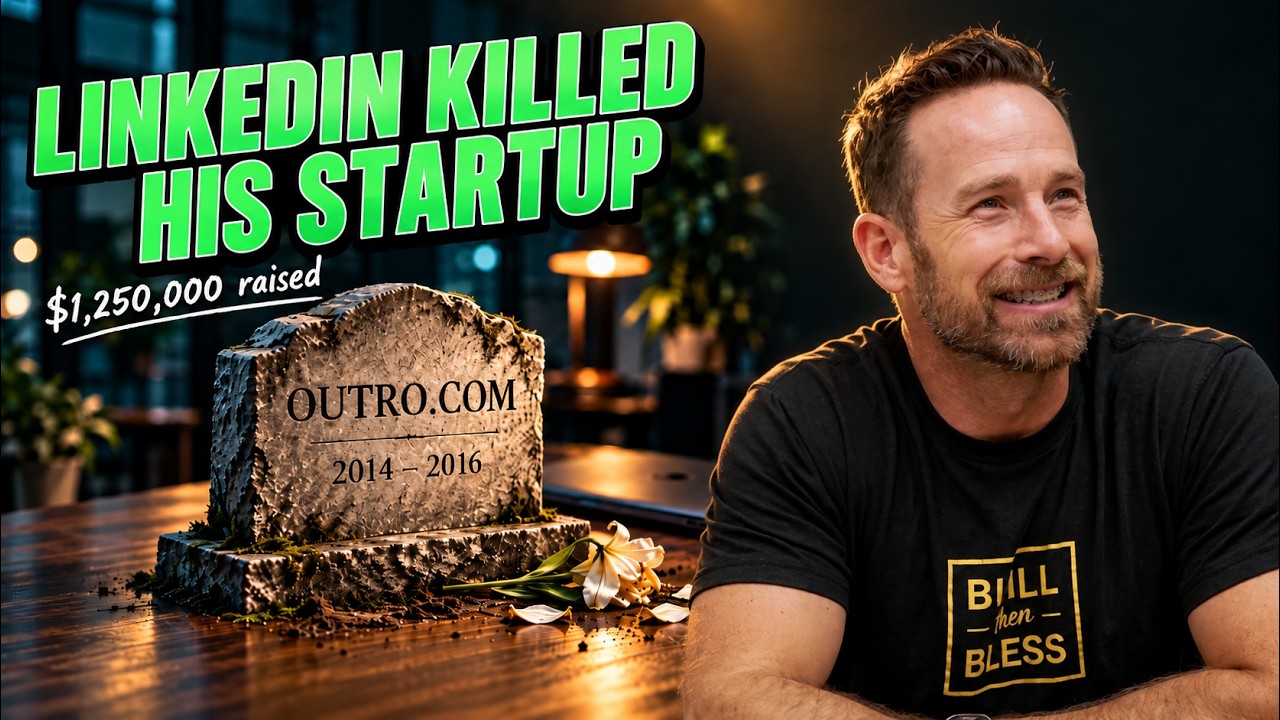
Bubba Page bootstrapped Launch Leads from nothing in 2009 to a three-time Inc. 5000 company he sold in 2020 — taking no paycheck for the first year, on a deal with his wife that he would quit and get a job if he could not support the family by the time their first child arrived. She was pregnant within three months. He went to a Google Startup Weekend in 2014 as a mentor, pitched an idea on a whim, won, raised venture capital on it, and took Outro into Techstars Boulder. Then it failed. He tells John and Tyler what the failure did to him, what his investors said that took six months to sink in, and how he rebuilt — the faith, the divorce, the eight kids, and the syndicate he runs now.
Bubba Page is a Utah entrepreneur, angel investor and founder of Influence.vc, a venture capital syndicate that invests deal by deal and lets members join individual deals rather than commit to a fund. He founded Launch Leads in 2009, bootstrapped it to multiple millions and three consecutive Inc. 5000 listings, and sold it in 2020. He was named Emerging Executive of the Year by the Utah Technology Council in 2009 while still finishing his degree at BYU. In 2014 he founded Outro, the first Utah company accepted into the Techstars Boulder accelerator, which raised venture capital before shutting down. He has written for Inc., invested as an angel in companies including Gabb Wireless, and is building Becoming, an app aimed at people overwhelmed by everything they are carrying. He has eight children.
Show full transcript
You know, for the first year, I didn't take a single paycheck. And I had made a commitment to my spouse at the time that was like, "Okay, look, by the time we have our first kid, if I can't support our family with this business, I'll quit and get a job." Cuz she wanted to be a stay home mom. That was like our agreement. >> Yeah. >> And that was the line that I drew in the sand so that I wouldn't just spend years and years and years trying to figure out, >> right? >> It also lit a fire under my butt to say like, you don't have She got pregnant like within 3 months. Mhm. >> So I had 1 year before we had our kid and she came home. So no, we lived on her salary for that year while I started and didn't take a paycheck. But then we swapped and then I had to be able to support her family. [music] Rock X2. [music] >> Welcome back to the Startup Ignition podcast. Thank you so much for listening. We are now oh 66 or 67. >> 61. 62. I keep thinking we're at 65 already. >> Episode 62. And we have an amazing guest. We're going to pan over to him. Mr. Bubba Paige over here live in the studio. Thank you so much for coming. I'm Tyler Richards. This is John Richards. >> Hello. Hello everybody. >> You guys know us. We're the co-hosts of the show. But today, Bubba Paige, I have a I have an intro for you. Thank you so much for coming. >> Let's see it. >> Correct it on the fly if it's wrong, but I'm pretty sure I mean I'm actually excited to sit down with you cuz I don't think I've talked about your past. I know you guys go way back, but we do kind of >> way back. I don't know how way back. Way back. I don't want to date either of you, but I have a bio for you. So, I'm going to read it real quick so everybody in the audience knows who we're talking to. So, today we have Bubba Paige. He's a Utah entrepreneur, investor, and founder. You started a company called Launch Leads. You bootstrapped it to multiple millions. Uh you later went through Tech Stars. I know that you went through that, but when Tech Stars was very prominent and very cool, like it was a very golden ticket, you know what I mean? Um you raised venture capital, you built a software startup. I I know you've been very uh open about some of your failures online. Some of them there's successes, but there's also failures. Since then, Bubba has helped build and invest in a number of companies as angel investor. Today, you spend a lot of your time with influence VC um where you're basically bringing products to the influencers and investing in those products as a VC. What makes Bubba's story really interesting is about your exited entrepreneurship, but also how you're inter intermingling bootstrapping, venture capital, fail, failures, exits, investing, religion, and you're just an open book. I feel like at least online, I I found a lot about you online when I was doing research that I didn't know about you. So, it's like it's very commendable that you're like, "Hey guys, here's the blood and guts of entrepreneurship." So, it's really cool to have you in studio. So, thank you for coming. >> Thanks for coming. >> Yeah, >> this is cool. I mean, we go way back. There's a lot of history in this room. I think it was 2009. >> That I think that we >> during the Great Recession, you were hunkered in school. That was a good place to be. >> Were you in school? >> It was a great time. So, I had finished school just like that was when I finished was that year. >> Um, technically I left BYU at 2007. Oh, really? >> But I had my last online credit. >> So, my degree came in like 2009 because that's when the Utah Student Awards was given. >> Yeah. called the Utah student 25, I think. That's right. Yeah. >> So, I was in the Utah in the Utah student 25, baby. >> I think I took Put that in the bio. [laughter] >> He's a Utah student 25 winner, baby. >> That's right. Um, so for those that don't know, so what we ran was for several years, we said across all the universities in Utah, what are the best startups and how are they doing? And based on revenue, based on revenue, >> student ran startups. So, specifically, >> student founded. >> Student founded. Yeah. >> Yeah. And uh Bubba's company was in the top 25. >> What was it? Was that Launch? launch leads, baby. >> Yeah. Well, >> cuz Meter Solutions was number one and they sold to Vivant like two years later. That was the first time we did Meter Solutions and he's CFO. He um Paul Dixon. >> Yes. Amazing. >> He got acquired by Todd Peterson and Vivant and then he rose up to be head of he's CFO of Vivven Solar and now Sunn >> just incredible story. >> You know the power of student entrepreneurship. I've got to say that for those who are listening, if you are a student or recently graduated, there are huge benefits. You guys, obviously, I'm preaching to the choir here. >> But if you're listening and you're a student, get on it because it's one of the best times of your life to begin as an entrepreneur. You can fail and it doesn't matter cuz you're a student. Who cares? >> You remember what Paul Dixon said when they got up to get the number one. >> What did he say? >> He and his partner got up there and their wives came over with them and their wives were both beautiful young I mean, beautiful young women. and he gets up and goes, "And the last reason you should be a student entrepreneur, look at the wives you get." [laughter] >> That's awesome. That's awesome. >> It's so funny. I mean, it was hilarious. >> So, before we get into Bubba's whole entrepreneurial story, I I wanted to get to know you a little bit more. And so, we always play a fun game. Usually, at the beginning of our episodes, we call it the icebreaker, where we just get to know you, get in the flow of podcasting, and and ask you dumb or silly questions. So, I'm going to play a game with you real quick here, Bubba. And I want my dad to play, too. So, you both are going to play. We're just going to play a game of favorites. Least favorite or favorite? And I'm going to give you a couple prompts, and you just tell me what your favorite thing is of that thing. Okay. Really easy. What's your favorite consumer brand? Like, what's your favorite brand right now? >> Oh, okay. Uh, Kodapaxi is one of them. >> Kodapaxi. I love local Utah. >> Josh's Pickles. I'm an investor in Josh's Pickles. I I guess I should say I'm biased. I'm technically an investor in COD Pegs as well through the fund and then direct investment in Josh's pickles. They're the best pickles ever and they're going nationwide. >> Oh wow. I'm not a huge pickle guy. I'm not a huge pickle guy. >> That's okay. You don't have to be. You don't have to be. But it's local Utah. They're going to crush it. >> Yeah. That's awesome. >> Um let's see here. Okay. And there's one one other one that I mean look guys the consumer products that I love to like use and and work with. Um San Diablo Churros True Wear. These are local Utah. I just I love supporting the local. >> Yeah, that's cool. >> How about you? Do you have a favorite consumer brand that you're using right now? >> Um I He's Oh, I love Primo. >> Primo. Primo. He's got a lot of Primo swag. >> They're local, right? >> Yeah. Yeah. Matt, he's been on the podcast. golf apparel. >> Um that I really have liked their clothes lately. Um and then I also like Travis Matthews, too. But um I also YouTube Premium, I'm going to just tell you. >> Um the minute I put it off for so long and I like watching YouTube, it's a source of a lot of info. I like it almost better than just surfing TV and stuff. >> And it's worth the no ads. >> Yeah. Paying that price per month. YouTube premium subscriber. >> It was too cheap to do it. And then I did it and I go, where why did I spend all that time messing with those ads? >> [laughter] >> That's crazy. It's true. >> I mean, seriously. >> Well, I did see a car outside and I drive one, too. Tesla. Oh my gosh. You guys, >> that's mine. Did you see my license plate? >> Yes. I love [laughter] that. I I knew it had to been one of yours, right? As a consumer brand, I can't drive anything else. I I mean, I have to cuz I have a 15 passenger to fit all my eight kids. >> I know that's funny. >> But I just love driving and testing. >> You know, John Pastana, co-founder of Omure and all that, and he's been on the podcast, good friend. He just literally he has tons of incredible cars. I mean, tons of incredible cars. Just, you know, I mean, talk we're talking Lamborghinis, whatever. Okay. But one of his favorite drive on cars was this uh Mercedes that's about $200,000 >> A3 or S3, I can't remember which one it is now. It's a beautiful car. And he just got rid of it. And now he's driving a Model Y. [laughter] >> And he goes and he goes and he goes he goes, "This is the best car." He he showed me everything or something. Yeah. He goes, "John, the self-driving is incredible. I sit and do this and this and I get this done." And he he's just like, "So, here's a guy mega wealthy, right? And he's literally telling me how great his Model Y is that costs about $55,000 or whatever it was." >> That's hilarious. >> I I don't know. I can't go back. It's one of those. So, anyway, shout out. I know Tesla Elon Musk. There we go. >> No, it's crazy. I And I looked it I go cuz I have a Model S plaid, but I look they stopped the S and Y's and I go and I found out the last year they only sold 30,000 of the Y's and S's because and they >> X X >> excuse me, I meant Y's and X's. >> No, >> S's and X's, but the Y's were like 2 to three million. >> It's crazy. So the Y's are just selling. And I've heard all in podcast guys, the four billionaires on there saying that's the best car ever made for the value. That's crazy. [laughter] Okay, moving on from consumer brand. >> What's How about this one, Bubba? >> What's your favorite app on your phone right now? >> Oh my gosh, what do I use the most? >> What app are you using >> constantly? >> I mean, right now it's Chat GBT. >> Chat GBT. >> I'm using that's probably where I go to the most. >> Okay. >> Besides my messaging app, if I'm if I'm not I'm messaging someone, I'm using Chat GBT >> because I'm on social media a lot. So, probably the Instagram YouTube type, you know, >> thing. But it's ChatBT. using it all the time. >> Are you wait you're are you using chat GBT right now or what are you using or what's your favorite app? I have three besides all the current apps like calendars and stuff like that. Right. I'm using Telegram because that's my conduit into Hermes agent which is my orchestrator agent which runs open underneath it. >> And then number two >> he texts his uh agent. >> Number two though I still use I go to Google search and I'll hit AI mode for quick answers. I'll do that too sometimes. And then I also use YouTube a lot on it. >> Yeah. Yeah. Okay. Favorite place to travel where? >> I mean, our own cabin. It's up in Huntsville, Utah. I absolutely love going with my kids cuz it's like we you can pretend to be a cowboy. You can use all the toys. We can shoot off our deck, >> you know, a thousand yards. And it's >> Where's Huntsville? South, I'm assuming. >> No, North of Salt Lake. Um it's about 90 minutes from my house. >> Yeah. And um we have some land. We can fit a whole bunch of families up there. >> That's awesome. >> I absolutely love my time there. >> How about you? Favorite favorite place to travel. >> Well, there's a lot of places in the world that are incredible and unique and love to go, but just regular family where we all together. Our whole family loves Cancun. So, and we're going in like a week or two. >> Oh, that's awesome. >> We go to Cancun a ton. Way too much. >> All 17 of us. >> That is cool. >> Okay, last one. Um what's your favorite startup right now? Oh, that's tough. That's tough. >> It doesn't have to be invested. It's like anything in the news. >> But any overall startup, something you are a user of, something you've invested in. What's your favorite startup >> that comes to mind? >> Should we give Should we pass it over to John? What do you think about it? >> Johnny, if you got something, Dad, what do you got? Man, there's a lot of great startups, but I mean I I'm just going to say a lot of Elon Musk stuff. We're back to Tesla, but just like I just heard the hit Elon and I can't remember the name Gwyn something that's the CEO of SpaceX and just all the stuff they're doing. I mean Space X and is incredible. It's incredible what's going on. And then >> Neurolink and all the stuff that those are great companies solving massive problems and they're actually doing it. I mean >> they catch rockets on a boat to reuse them later. >> It's insane. No, for sure. If you can count that still as a startup because it's it's Elon Musk going, "Yeah, we got to be careful because guess what? If you crash it a rocket into a community, that doesn't go over too well. So, we [laughter] got to figure this out." You know, so the way talk it's like a regular entrepreneur talking about something going wrong with their product and he's rockets and trillion dollar companies >> and then oh and then them predicting they when there's going to be a community on the moon and on Mars. It's just pretty. >> Okay, Bubba, we gave you some time here. >> What is your favorite startup right now? [sighs and gasps] >> Gun to the head now. >> Gun to the head. It's got to be in the AI world just because it's making my life easier. So, I am in the process of of building my own agents for things and >> and so I have been using Claude. I don't love it as much. Um, >> Muse just came out from Facebook. >> I don't know if you can count that as a startup because it's with the Facebook ecosystem. >> We can change it to product, I guess. But but it's it is one of those that that I'm excited to see what it can do from a personal assistant standpoint. Everybody wants one. Everyone needs one >> and um it's been able to access everything in my life a lot faster, easier than Claude was. I just Claude was I'm non-technical. >> That's what people are telling me about Grockbot which is u >> I've been watching their whole live series for the last three days. >> Yeah. Is it where they're building a startup or something? >> Yes. In three days they're building a startup. It brings me back. So in 2014, which is when I did my ventureback software company, >> I uh the only reason I did it is because I went to a Google startup weekend. >> They don't do these anymore. >> Did I do startup weekends anymore? >> I haven't heard Maybe I just haven't seen or heard about it, >> but they definitely faded away. Google Google changed from those to where now they go to like the top 50 metro places in the world and build these massive square foot >> facilities like London and Paris and you go in and they have like a 50 75,000 100,000 square foot place. >> Yes, they are still techar startup weekends events are still active around the world. Techars but not this not the Google >> but did they acquire it from Google or something or Google might have been sponsoring I don't know. >> Yeah. So, but I remember so I went as a mentor in 2014 because I was running Launch Leads and I went there because I was asked to go and mentor just like I'm sure you guys were. Yeah. >> And um and I was the buzz it was amazing. Couple hundred people there and the idea was we're going to build startups this weekend, right? >> And uh what's so fascinating about it is they had um I don't know how many people pitched. There were probably like 30 or 40 ideas that were pitched >> and then the top 10 were selected by crowd vote. Yeah. And then people would divide onto teams >> in those 10 >> in those 10 teams build the thing and then at the end of the weekend three days you would pitch and somebody would win >> right >> well I came as a mentor but I had always had this kind of little idea in my head of like well maybe if I wasn't doing what I was doing I'd try this thing and so I pitched it and I got picked in the top 10 and so I had this team of people were like oh this is a great idea I want to join your team. So there were like I don't know eight or nine of us. We worked on it day and night for 72 hours and then we got to pitch it at the end of the weekend and we won. >> we took first place and they even took us So that was Utah's Google startup weekend. They took us to New York to pitch in the national competition. I did not win that one. >> Um still crazy. >> But then I went to raise venture capital on that idea. Yeah. >> And we were featured on the news and we got this press and it was the perfect jump start for a startup. Well, now Grock just and I don't use Grock yet. I'm probably going to have to try it because it's amazing. Supposedly, they're building in one weekend a startup using all of these AI agents. >> And I'm like, if we would have had that. >> Oh my gosh. [laughter] >> What you could accomplish. >> Oh my gosh. >> So anyway, that was just kind of snippet of history. >> How it's changed in the game. We'll talk about that, I'm sure. >> Yeah. No, >> I want to I want to tell a story, but I'm going to save it for when we go back. >> Well, yeah, let's let No, let's do that now. Thank you for playing the my favorite games. Those were some interesting selections. I love your guys' uh my favorite startup is SpaceX, like a trillion dollar company, but okay, we'll take it. >> Startup. >> That is a startup show, >> but they're public company now. >> Well, now they are, but only because they need so much capital, I guess. But I mean, they're still figuring out how to >> get a It was interesting reuse. They because it's so very expensive to use those things once only, right? Yeah. It's kind of cool. But okay, so let's let's do let's go back. I mean, take as far back as you want to go. >> Okay. I love to start at high school because I met you when you were coming out of college. Okay. But so where did you grow up and go to high school? >> Yeah. So born here in Utah, but I only lived here till I was six and then I went to San Francisco. So I my upbringing was the Bay Area. >> Really? >> Yeah. So Walnut Creek Conquered was was >> Costa County. >> Yeah, exactly. >> I bought a yellow pages company there once when I early my career. Yeah, >> that's exactly where I >> CC directories. Contra Costa County. >> That's it. I loved my upbringing there. It was close enough to the beach that we could skip school and go. >> And yet we could also skip school and go snowboarding in Lake Tahoe cuz it was like a, you know, an hour and two and a half hour. Like we would >> It's like in between Reno and San Francisco, right? >> Yeah. And I loved it. We had a great group of friends and it was just like good old fun. I mean it was the n 80s 90s >> um when I was being raised there. And then I came out here to BYU. Yeah. Um, oh, I should go back. My senior year, the summer before my senior year, my dad got a new job and moved me to Mesa, Arizona. >> Oh. >> So, I had my whole almost my whole upbringing was in San Francisco. Best friends, captain of the volleyball team. Like, this was my place. I'm the youngest of four kids. They had paved the way for the Paige name. You know, we we were known. >> Yeah. My parents were like, "Hey, your >> senior year, >> we're going to leave." Yeah. >> And I remember talking to a senior, this is for any kid who ever has to go through this. I talked to my senior, I was a junior, talked to my senior budd, new girls, new experiences. Like, you should totally go. Like, you've seen what this school can do and what it can offer. Cuz I was I was jonesing for the senior year. This is my epic of >> um but the way he described it was like this whole new opportunity. And uh I ended up move because my parents had had mentioned that maybe I could stay behind and >> live with a friend and do whatever. >> Um and the volleyball coach was like, "You should stay, you know, come finish the season." >> And I went and what was so cool about the experience was one I was wellreceived. I think as a guy it's different than maybe girls >> because I think girls maybe they can get caddyy if if a new girl moves in. The guys were open arms. They loved having a new guy and I had immediately had friends. I'm also more outgoing than some and so that wasn't too big of a problem for me. >> I felt bad for the volleyball guy because I did kick out the setter and I became the starting setter, the new one. >> I had an advantage though. California was big on volleyball. >> Yeah. Um, and anyway, I finished off my senior year and so I ended up living at BYU with um, some years were with my best friends from California and some years with my best friends of Arizona and I still get together. Tonight I'm hosting a pool party with my old California friends and their family. That's awesome. >> And then I'll do a a man camp at my cabin with my Arizona buddies. So >> for any kid who has to move middle of the year, it's or you know midseason of life, it's okay. >> So what year did you graduate then? >> 2001. >> 2001 and then the next year off to BYU. >> Came to BYU. absolutely loved my time here. Um, I then left. >> Freshman year at BYU is pretty fun. >> It's the best. [laughter] So fun. >> I think it's changed now though because of the different ages for mission stuff. >> Because I had an entire year and a summer, a summer and a year before I served my mission in Porerto, Brazil. So I was in the furthest south Brazil. Craig Ernshaw's mission. He was my mission president. >> He was on the podcast. >> Oh my gosh, that's awesome. Go watch Craig Earsha. >> Wow. >> And so that was such a fun time. That's funny cuz I knew that was his. Yeah. >> I had never um even considered being an entrepreneur. That wasn't a part of my vocation. >> Turned you on to entrepreneurship. >> He was definitely one of them. So I was out there and he had expressed his story and I had just had normal jobs as a kid, more salesoriented jobs. >> He sold his company while he was in Brazil, did he not? >> Yes. >> During his service. >> And um and so we we had some discussion. We became close in the mission. And then when I came home, he was still serving and and when he came back. So when I came home, I still didn't I was going to go get an MBA. I was going to go do corporate. I thought I'd get married and go live downtown San Francisco in a loft or something. That was like my thought for myself. >> And then I ended up starting my own company 2009. And I am so grateful because one, school wasn't really my jam. I loved school from a social standpoint. >> So if you if you feel like you're in that category, you can still do it. you can still finish. But um if I wouldn't have started that company in 2009, my whole life would be different. >> And I don't know if you remember this or not, so I can't remember exactly when we met, but you I um was helping Tech Stars and Startup Weekend and they asked me to run a special precursor program called Next. >> Oh my gosh. Yes. >> Yes. And I did Next. >> Yes. I was the one who ran. Remember if you remember that? That's how we first really got to know. Go. >> Do you remember that now? I totally remember. So what happened was you got with your c this company and we only took 10 companies into the next program and I ran it at the startup building. It was before you and everything got going with Dev Mountain and everything. Wow. >> So but we ran next and it was meant to be because what they wanted was the startup weekend to have see who would be good candidates to come into and to come into Techstar. It was like a filthy theater. And so, but it was the next program and they provided the curriculum a little and I I augmented it a little with my own and we had a really successful batch and from there you got into tech stars. >> That's exactly right. >> Yeah. And it may have been even before this. So, if I'm really thinking back I joined it wasn't my own startup but I joined seedability. >> Oh yeah. >> With Derek Perkins, Jason Barber. >> We probably definitely then met and of course you knew Craig Ershaw. He got because he and I worked together a lot at the center for entrepreneurship at BYU, right? So we probably met in there but that's it. But I really got to know you during cuz it was only it was a few week program that the next program and you really you super into it and that's why you did well and then right after that you got into tech stars. Isn't that so you guys? So, here's the thing. I just as a young entrepreneur to be able to have mentors and to go through these different types of programs, whatever they are offering, anybody's offering an entrepreneur program, go for it. >> Like, get involved. Get in there because I had no clue what I was doing. And [clears throat] what you said about school, I really relate to a lot. Like when you're like, "Oh, I wasn't the best student. I didn't really enjoy school that much." But like I feel like school rewards a different thing than entrepreneurship. Like I'm sure I it's so I feel like a lot of people get intimidated like oh I'm not the smartest person. I'm not the sharpest tool in the shed. But I really relate to that cuz I'm not the most book smart person but like I feel like I relate to you and like people skills, street skills like you know curiosity and innovation and wheeling and dealing and talking and you know making friends like that's a really good skill set to have too which it sounds like you had. And so, you know, just I'm pretty sure you're aware of this, but startup ignition, we run a boot camp and it's kind of the culmination of all the things I did BYU >> and all the curriculum and training for startups that we've done. It's now in our own boot camp, which Tyler helped me start because he did the Dev Mountain boot camp. So startup initial boot camps have been going for 11 years and every and we just have our next ones this coming week where we'll have another 30 startups in the room for three days and take them kind of what you I I I remember you being so kind of insatiable to learn that is that a right thing. So you were in the next program. Of all the people that participated in next program, you're the one that stands out the most memorable cuz you were so into it. And also you let used the leverage of that and got in with text folks >> for sure. >> The thing is as a young entrepreneur, if you guys are listening, >> the I you we don't know what we're doing as a young entrepreneur. So to have this wealth of knowledge, you know, accessible, >> it was I was insatiable. I need it. I want >> education and mentorship is Yeah. Here here's what I like to say to people. You can't just learn things from trial and error because it's too expensive and too long. If you have to learn everything by trial and error is a great teacher, it'll whack you upside the head, right? No doubt. >> But but if you learn everything by trial and error, you won't make it. No. >> Because it's too expensive, too long, too hard. So what about avoiding 80% of the problems with education and mentorship and leave the you you can handle 20%. But if you have to face everything through trial and error, too hard. >> I I think one of the highest leverage things a founder can do is learn from other people's mistakes so you don't do the same thing. Like you want to save time, effort, and resources, get a mentor. >> Yeah. I was the youngest child of four. And I think that idea of learning from my siblings >> also came into the business world. >> So Greg Waro ran Hunto Partners. Were you doing >> I went through in 2008? >> We've had several people on here that went through. >> What was Hunto Partners? It was a similar ex startup accelerator, but it wasn't necessarily with your specific business. It was just >> uh there were like 200 applicants. They chose 20 and then through eight weeks they just educated us on all of these >> founders who we had on the podcast. >> That's right. Brock, >> he was the year before me. Yeah, he [clears throat] was the year before you went to Bar. We talked about >> So, it was kind of like almost like a venture studio model. >> Warlock was just trying to help young entrepreneurs and he had a special program. The details are interesting, but uh just it was you come in and he'll give you a little bit of money and help you get started. >> Yeah, that's cool. Yeah, >> that those these types of experiences between Hunto Partners, which was the accelerator, next, you know, the tech stars concepts like all of these pieces have blended into the career like that's that is what gave me the >> we didn't have AI and the Google wasn't [laughter] working like the way it was and I didn't have YouTube that had everything on it. AWS and how easy it is to spin up servers if you're doing software. So, but also you got to you have also another magic secret sauce to yourself and I'll tell your viewers and listeners this that you're just a very gregarious network type of individual. You network extremely well. Is that a true thing? I mean, you agree with that? >> I think I mean I learned very early on that my the value of my relationships would have more impact than just about anything else in my life. And so I would go probably too much um but I would go to almost every networking event I could possibly go to. And even um in 2009 won the emerging executive of the year award by the UTC. Yeah. >> The tech Utah Technology Council. >> And I think the only reason I got that was because I was literally at every meeting they ever hosted >> because again I was in I would needed to learn. >> They're just like who is this guy at every single thing we're doing? So like tip like tips to people because there's a lot of introverted people and what [snorts] I view on myself is I let my am I I I was ambitious. I wanted to be successful. I wanted to do things and because I was a little introverted and then I came out of that I just you have to kind of let your ambition and your desire for success and wanting to make a difference and bring great products and services to the world override your introvertedness. I don't think you and Tyler have that as much at all. [laughter] And uh but it's just a really important skill. So I guess to our viewers and listen just say work on your ability to network and get to know people. Like for instance, I used to go to events and there'd be a you know cocktail party or whatever you call it before a dinner or something like for an hour. I'd want to come 10 minutes before because I didn't want to have to sit and talk to people for an hour, right? I got over that because I realized that's actually the most important part of the event. >> That's the value. There's no question. just I'm trying to teach my kids right now. So, for those listening, I have eight kids. Six-year-old twins all the way up to 16. >> I should have put that in your bio. That's a that's definitely a unique data >> data of eight. >> And um and I want them to have these these business skills, these networking skills, the relationship building skills. And so I'll bring them with me to different business events >> because I want them to see how I shake a hand, how I introduce, how I ask questions, >> because I I need them to know. And right now, when they're stuck on their phones >> Yeah. And this is really hard for the new generations to get used to shaking a hand and like awkward. It's awkward to go up to somebody that you don't know that doesn't know you. >> They even like to argue and fight over the phones, you know, through texting instead of one to one. Right. Totally. >> But the biggest thing about networking that a lot of I maybe the views and listeners feel the same way. They think it's just like the biggest network. So I have a question for you Bubba. It's like it's because it's not about just having the biggest network, but it's about having a network that will pick up the phone when you call and that you have real relationship with. So give maybe everybody listening like a tip or what you do when you're tackling network or when you're trying to build that out or when you're going to these events for those that maybe aren't as strong suited as a networker. >> So I just wrote I have a a weekly newsletter. It's called the weekly reset. Cool. >> It comes out every Sunday afternoon as the uh the concept for families to read the email to be able to use that information in the email with their families to set the next weekend right. >> Okay. the the concept of this last weekend was communication and what questions to ask when you're trying to like have a conversation with people. So, if I'll just reiterate what's in the newsletter, the three places that I think are the easiest conversation points with any human being, it doesn't matter where you are, is you just ask a very basic initial question and then you drill down deeper and you can go on for hours. So, the simple question of like, where are you from? That seems like a one-word answer. Oh, I'm from Utah. And then it's done. Well, it's not. You can ask questions about, well, how long have you lived there? What was it like growing up here? What city in Utah? What did you do? What do you like about it? And you can keep going for almost ever >> if you're listening to their answers to be able to ask. And then the next thing is, what do you like to do? >> So, it may not be their job. It may be a hobby. It may, but you just drill. If they say, "Oh, I'm an engineer." Well, what do you do with an engineering degree? or and you just ask ask deeper deeper deeper into it. Um and and then tell me about your family. And so it doesn't matter if they're married, if they're single, if they're young, if they're old, they can all say something about their family. Oh, my parents were like this, or I was the youngest of four siblings, or I have eight kids. >> Yeah. And let them take it where they want to take it. >> Absolutely. And if people are awkward, you just keep asking the questions. >> Yeah. And what's what I've found is that you can spend hours with like if you're stuck in a meeting next to the same person the entire time. You can just go drill down these three topics >> so deeply that by the end of the 30 minute conversation, they didn't ask you a thing, >> but they feel like you're their best friend. >> Right. Right. Right. >> Cuz you've been listening, you were interested, you were curious, and you were asking. >> And there's a difference, too. It feels genuine with you. >> Yeah. You've got that skill and talent, too. Or just innate genuine. >> Thank you. So, so your time in Brazil obviously got you into entrepreur or sparked an interest from Craig Ern did that then came back to BYU >> and then I got asked to join a startup. >> Yeah. What was that one called? You said >> seat ability seatability. >> So we imported office furniture from Taiwan and set up a distribution network. >> Wasn't it also known for having kind of the straps? It was bungee bungee cord >> bungee flat bungee cord. >> So it was like it was an actual product actual chair. >> It was office chairs. >> Office furniture. Bungee cord. Office furniture. >> It was hilarious. It was around. It was around for a long time around BYU though. >> Yeah. I mean I think it lasted six or seven years. I spent two years and blood, sweat, and tears. Didn't take a single paycheck. I borrowed five grand from my parents to invest into the business. all the founders. There were first of all, biggest mistake was how many founders? >> Six founders. >> Wow, that's a big team. >> Horrible. >> Um and so after two years, two of us decided to leave. >> Um that 5,000 that I invested with my parents and we had worked like crazy without taking a paycheck. Um I ended up selling my ownership for 10 times. >> So I got a $50,000 payment. That's awesome. >> 10x return on my very first startup. Um, and the funny thing was they didn't have enough money to pay me out all 50 grand. So they had to pay 25 in cash and 25 was in product. >> So I had $25,000 worth of chairs. >> Guess what everyone in my family got for Christmas? >> Chairs. >> All of them got and I even I remember I even had to make them pay for shipping cuz I was too poor to like figure out how I could do all this. Anyway, but that helped me to buy my first home. I mean money down. I didn't buy the, you know, wedding ring, pay off some school debt, paid my parents back. >> So, they thought that was just a donation. I'm sure they never expected that back. Paid them back with interest. >> It [clears throat] was a beautiful experience. >> Learning experience for sure. >> The learning experience. And >> through that process, I got to travel 22 different trade shows across the country. >> Wow. I mean, yes, I had served a a a mission for the Church of Jesus Christ of Latter-day Saints in Brazil, and that was a, you know, the by far the greatest type of life experience as a young person, but going to 22 different cities across the country as a young entrepreneur. >> Oh, yeah. >> It was insanely valuable. >> See how the rest of the world worked. >> Yes. I had never been to Chicago. I'd never been to New York. I'd never been to, you know, all these places. And then to be in a trade show where you're talking to hundreds of people at a time and trying to sell your wares, right, our our chairs um and negotiate deals and do wholesale stuff. I mean the education was phenomenal. >> That's great. And you also got a seedability got a lot of attention from the program at BYU. So you got a lot of interaction with a lot of >> been there done it mentors too, right? >> Well, that's where I met Johnny Pastana. Yeah. That was way back when when you know they it's >> it was fascinating to just get so get involved if you're a student get involved in the entrepreneurship programs in any free resources and any mentorship programs in any accelerator >> volunteer to help in the entrepreneurship center or programs every university has an entrepreneurship center. >> It is interesting that every single entrepreneur that gets involved in the entrepreneurship scene in college in school they usually are the type that volunteer for everything. It's like I I remember we had Garrett G here on the podcast and he was like >> I raised my hand for everything. I just wanted to be involved in everything. It didn't matter what it was. I was the first one to get >> the first time I met him. He walks up afterwards the first day of class and he goes I'm not sure why I signed up for this and I still don't what does entrepreneur mean [laughter] again. So >> but like he just got in. He just threw his hat into the ring was like I'm in. I'll do it. And it sounds like >> Okay. So after seedability then what happened? Two years doing that. What did you do after that? >> Yeah. So then I sold I got married and then it was about a year and a half later that I started Launch Leads and the only reason I thought >> Launch Leads was that the one you took through Next with me? >> I think it was right. Yes, that's what I did. That's what we worked on. Yeah. >> And and the idea behind it was I had no real skills like I was I didn't have a ton of work experience, right? Yes. Yes, I had done this chair business and my previous jobs were salesreated >> and so I had some sales experience maybe managing a very small team um specifically inside sales >> and so I thought to myself you know what am I supposed to do? I went through Hunto and they were trying to get us to ideulate like what are your assets? Marshall your resources. What do you know? What are you good at? >> And so I thought to myself, I was looking at Alan Hall was who was the other person involved and he had built a company called Marketstar >> and he had sold it for $250 million >> to my memory. >> And um and I remember looking at that business model and said, "Well, if there's any skill I currently have, it would be in the sales world. So, what if I started a mini market star? And I remember going to him sheepishly and saying like, "Are you okay if I started a mini market star?" He didn't care. I mean, come here. He had already exited and he didn't. So, he was like, "Of course." And he and he could be my mentor to to build a business that was just like him, right? And so I went down that path and you know for the first year I didn't take a single paycheck and I had made a commitment to my spouse at the time that was like okay look by the time we have our first kid business I'll quit and get a job cuz she wanted to be a stay home mom. That was like our agreement. >> Yeah. And that was the line that I drew in the s sand so that I wouldn't just spend years and years and years trying to figure out, like you don't have she got pregnant like within 3 months. >> So I had one year before we had our kid support our family and it was paycheck was you know hit or miss but it was enough for us to get going >> to get by. Yeah. Yeah. >> And uh and that first year of not having to take a paycheck helped me invest in the business and hire the right people to get me going. Um because if I would have had to pull out a few thousand dollars to survive, would I have had enough to hire the next guy or >> You got you got accepted into Techstars Boulder, which was at the time and Stars Boulder were the top accelerator programs in the country at the time. >> Was that with Launch Leads then too? >> No. So, so Launch Leads I ran from 2009 to 2014. I was able to hire a CEO. Um, when I did this the program, when I found out that I had this idea and I pitched it and won the awards, I thought, "Oh my gosh, I should probably do it." Like, this is the idea. If other people are doing giving all this validation, >> Oh, you're talking about the tech the the tech got into tech startup weekend thing. >> Yeah. So, that startup weekend thing is what I ended up taking through Techstars in 2014. Yeah. >> So, I had to run it for, you know, so 2009 to 2014. >> And then I was lucky enough to find someone to come and run the day-to-day operations. >> So, I gave him some equity that he had to vest. I paid him very, very well. It was a very profitable business >> and I still got to keep a paycheck. >> So, I was able to pay myself from that business. Yeah. >> And then pay had still enough profit because it was a service tech- enabled services company. um and paid him a big salary and gave that ownership and then when I applied into tech stars and got accepted I could then go and be all in and then I just ran it as a chairman. So when the techers business we did two years blood, sweat and tears raise venture capital textures program. It was phenomenal experience called outro. >> Oh yeah outro.com outro >> and uh loved my experience and we had these it was interesting. I mean >> there's obviously you know things that we could have done better >> because it didn't pan out. >> It ultimately failed. That's >> really put a lot of blood, sweat, and tears into it. >> We put blood, sweat, and tears into that thing and it and and we thought it had legs. We had 250k in revenue like >> we were going >> um but some of the revenue was false negatives so or false positives. We didn't realize >> um two mistakes as an as an entrepreneur. Don't tie your business to someone else's platform. The very short gist of what we were doing was >> we became a referral platform >> for either sales referrals or hiring referrals. So, us three would would sync our LinkedIn contacts to our database. And before AI existed, we would run an algorithm that would see who you knew. If if I wanted to be introduced to someone you knew, I would just type into the platform, I'm looking for VPs of marketing, companies between 5 million and 50 million within the United States. What do you got? And it would scour the algorithm, the AI nowadays is what people would call it. scour the three million contacts that we had and it would pop up on your screen and say, "Hey, would you be open to referring Bubba into these five companies, >> you know, these certain five people?" And then before any referral would happen, you would opt in. >> So, I opted in by saying, "This is who I would want." And then you would have it pop up and say, "Hey, here are the five that fit who he's looking for." And there was this error of reciprocity. So that if I had a request and you knew somebody, you might say, "Well, not those three, but those two, sure, like I have a good enough relationship. I could do that." And if you just clicked a button, it would automatically make the introduction. You wouldn't have to write a thing. You wouldn't have to come up with because it was all pre-w written by me. >> Mhm. >> So it we called it a double opt-in introduction, >> And conceptually speaking, genius. Everybody loved the idea for sales referrals, referrals, and they were putting money into this machine >> to what? just basically pay for the leads or referral. >> The problem was one, we tied ourselves to LinkedIn. >> That was a big mistake. >> Did they shut it down? >> They shut it down. >> Yeah. There's no way they're giving that information and data away today. >> So that that's what huge mistake. >> So viewers and listeners, I'll double down on what our guests are saying because the bottom line is this. I know I've seen companies the same thing. You're dependent on Facebook and then on a Tuesday night they decide they're not allowing it anymore and you're out of business on Wednesday. >> Post. >> Yeah. Is that kind of what happened? almost that close. So, so all of the database was synced through LinkedIn and then all of the new users because it was a click of a button. You could just click a button and it would sync everything immediately. >> And then they changed their entire platform so you had to go through this waiting time frame and then they only sent you partial data and then because they couldn't withhold your personal connection >> kind of got cut off at the knees >> but we got absolutely cut off. So, we tried to scramble and say, "Can we do Google contacts?" But that had like your grandmother in it and your ex-mother-in-law and whatever, >> the babysitter, >> right? And and LinkedIn had all of the data. >> Was this before after Microsoft bought LinkedIn? >> Oo, good question. >> What year was your thing? Cuz >> 2014, ended in 2016. End of >> guess. And you were before? >> Yeah, I think it was before. >> But they they really I mean there were probably a hundred of us companies. >> Microsoft bought LinkedIn in 2016. >> Yeah. So it was probably right around that time >> there were probably a hundred of us >> leveraging their data >> 26 billion >> we they were leveraging um all of us hundred companies were leveraging LinkedIn's data >> and building really cool products around it if LinkedIn would have been like oh well let's just pick you guys up. >> Yeah >> that would have been beautiful >> and even today there's still not a good referral way to do referrals. >> Yeah LinkedIn's really locked it down. It's like why can't we refer to each other? Like this should be a >> remember you used to be able to tell second first second third degree and all that. Now it's hard. >> So much harder. >> So that one cut us off the knees for sure. We tried to go. >> Did you end up raising and did Tech Stars obviously helped you with that raise? I'm assuming that was a huge reason why you went to Tech Stars. So they put their own money. So Tech Stars was an investor. Kickstart Seed Fund was an investor. Wow. Peterson Ventures was an investor. Um Tallwave Capital out of Arizona was an investor. And then we had a couple angels. Brent Thompson who's you know serial entrepreneur here and then um >> uh anyway it failed 1.25 million we raised >> and I I know for me that was one of the most detrimental experiences of my of my career one because >> um I didn't truly know who I was. >> This is what's sad. I believed myself and had all of my confidence in life as an entrepreneur as a successful entrepreneur. I had already built a profitable business. I had already been making good money. >> And I had already invested in a, you know, venture fund. Like I was on the path. >> And then this failed and I I lost like myself in this process. And so it sounds like you were just beating so many headwinds. I mean, not beating but up against so many headwinds, right? It was not really a a fault of Bubba's entrepreneurial skills. >> I didn't realize that at first. >> Yeah. And so I took all of the weight and all of and because hey I was a CEO. >> Buck stops with me. >> I can't blame any no fingers can be pointed to anyone else. It was my deal. >> Even you know >> and uh and we did put blood, sweat, and tears into that thing. And um >> it's still sad that something like that doesn't exist yet. Yeah. You're a LinkedIn expert, right? So I mean like right now LinkedIn to me seems like it's just full we get so much spam. >> It's unbelievable. But they do something. They haven't done anything with spam, right? Like it's insane. >> So, >> so it makes it kind of unusable. >> It is. And especially if you have a lot of connections like we do, right? [clears throat] And and if you do have a voice on LinkedIn and you have, you know, quite you're getting hit and if you have investor anywhere in your profile >> and and invitations [laughter] to connect. I one time got up to over a thousand invitations to connect because I have a lot of connections. Yeah. >> And then I was so tired of going through them. I said, I'm just going to accept these all. That was a nightmare. >> That was a nightmare. It took like two years to work out. So now, right now, guess I'm at 2,000 invitations to connect right now >> and I can't go through them. There's some in there that I really should say yes to now and do it. But it the time consumption. >> Well, I think LinkedIn actually refreshes it when a connection request goes past 6 months, it just goes away. It does. So those are all current. So if you're going Yeah. If [laughter] you're going >> I'm always hovering between 1,200 to 2,000. But I can't I I'm not cuz there's a button you can go accept all. [laughter] Oh my gosh. Yeah. No, that's not I would not suggest >> Look, there is a strategy behind it. I mean, honestly, so kids who are not kids, >> yeah, >> young entrepreneurs, I should be >> kids to me and you now. I'm old. >> Um, >> yeah. I don't like it when I see a little gray hair in the beard. Former 43. I can't believe I'm 43. Um the idea behind LinkedIn I when I speak at BYU or UVU or whatever it is um I try to encourage the college students to still create a LinkedIn account. Most don't have it. >> And they they don't they are like what is that? And I'm like okay guys look here just >> create an account. It's free and then whenever you meet someone like me or you guys or your teachers whoever add them on LinkedIn. >> It doesn't do anything to it doesn't hurt at all but it only builds potential relations. And then if you choose to post, you don't have to post all the time, but if you choose to update your thing here and there, they will be notified and that even though you may not have seen them for a few years, they'll feel like they remember. >> That's actually the best use case of LinkedIn right now. Absolutely. That so we teach that in the boot camp too because um this is a reality even today in 2026 when you pitch investors in the venture world, >> the people are going to LinkedIn and looking you up and seeing how serious you are about the company. if you've got it listed there, what your background is, they that's how the first place they go check is LinkedIn and people don't realize you got to have your profile at least set up right. Yeah. So, I think that's a key tip. >> So, when outro was, you know, kind of fading away and you kind of realized, oh, this might have been a failure. What was going on with your lead company? What did you go back to that or what did you do after outro? >> Yeah. So, so Outro was coming to a point where um we went to our investors and we had always been keeping them up to date. every month they got an update and so they knew the ups and the downs and everything in between. So we came to them and said look we have this much you know money left and uh we think if we try these five things maybe something could work um but we don't know and we were honest like we don't know if we try those five things if it's a guaranteed success. And so the investors and us basically decided >> fold it up fold it. >> Yeah. don't you know because we were going to see if we should go raise more capital and try to go at it again from a different angle >> and they basically just said no don't worry about >> where did you go from there then >> so one of the huge blessings I do want to say is they knew that it wasn't like our my co-founder and I's uh um mishap it's there wasn't a misuse of funds there wasn't a >> yeah they saw those headwinds we talked about they were like oh okay >> and so and they knew where we were going and the progress that we had been making and Then it just cut us off, right? And so one of the biggest blessings was that I was going through depression. I was like anxiety was coming up cuz I this had never happened before. >> And um and one of the investors turned to us and said, "Look, we know this wasn't on you. Like it's not your personal fault that this happened. And look, when you go do another business, we'll invest in you again. Just come back. We love you guys." And I remember hearing that and it didn't sink in for probably six months. >> But I then was able to six months later after I got out of my funk and was like, "Oh my gosh, they really did still believe in me as a human and as an entrepreneur." But during that time, I got closer to God. Um, I got my health back in order. Um, I went back to the old business. I was a chairman. I had a CEO running it. And when I walked into the building and it was two and a half years later, it's not that I hadn't been involved, but I definitely hadn't been there dayto-day. Um, I didn't know, you know, 60% of the people and he was already doing a great job. And we had hit the Inc. 5000 list, you like in a consecutively. And I was like, I I it just didn't feel right. It didn't feel right for me to come back as the chairman with him as a CEO >> and disrupt what he was doing. >> Yes. He was doing a great job. He had the respect of the team. I would be people would do they report to him or to the owner like who do they report to? And I was like you know what this is you're doing great. I'll stay on you our weekly calls. I'm still I'll be here for you to support and give direction guidance. You got this. And uh and so that's when um I took some time off kind of got my life back in order. And then that's when my wife at the time we talked about possibly working together. and um she had been doing the social media thing and she was doing a really good job at social media. It was the beginning days of social media, right? Influencers, >> Instagram, like all the it was very very new. >> And um and we decided to work together >> and so that's how the whole social media thing started to blow up and >> well and she had already started to blow up before I ever even entered the stage. But she wanted it. She had so many dreams and visions of what she wanted to accomplish, products and ideas and events. And so I was like, well, I mean, I think I could help with that. So we worked together for almost >> Were you doing the business side and she was kind of in the front? >> Yep. I was back >> back. Did you ever go and be with her on personality on the front? Yeah. >> I was definitely on stage, but I was to be a personality online was never my goal. >> And to say that I mean our viewers and listening know I mean this got pretty big, right? Tell tell us >> two almost two million followers subscribers across. >> So you had Instagram two million. That's pretty big. >> Instagram, YouTube, Pinterest, you know, all that was about two million. Wow. >> Which at the time was big and it still is big, but at the time it was really big. >> And and we had built an amazing consumer products >> for those audiences >> and it fit perfectly the demographic. We had digital products, we had physical products, we had sponsorships, we had events, we had like it was blowing up and very profitable. >> It was a beautiful, you know, business. >> Um, and working together with a spouse, some people can do a really good job. We did a really good job for a few years >> and then it got more difficult. >> And so, long story short, we did end up getting divorced >> uh two years ago. >> But how many years did you run as working together and that's it? Because >> close to the outside looking in looked wildly successful. >> Yeah. And and honestly, it was it cash flowed like crazy. Yeah. >> It allowed us to pay off. How many years invest and all that? It was about five that we did it together. >> Five years and everything's going great and then just >> about three of those years went really really well and then a couple years were a lot harder. >> Was that the business causing stress or something or what was it? >> Yeah. I mean there's definitely unique dynamics working a husband and wife and then lots of kids involved too >> and then a lot of kids and more kids coming. Right. >> Um and you know there's there's dynamics about working together that I would just suggest if you're a spouse and you're trying to work together with their spouse have very clear um division of responsibilities and ensure that that respect is mutual between each other of making sure that if so and so is doing this like they own it. They understand what you know that piece is and then allow this person to really do. >> That's even good advice for non-spouse partners. You just need to be that way. You and you got to say this is business. >> Yeah. And so it it started getting a little bit more difficult. I won't go into all the details there, but like >> uh the it was a bummer because we did have a very very successful run. >> And it's sad to just kind of see where things have ended up >> and it kind of opened up your eyes to audience and marketing and which brought you to basically I'm assuming the influence VC that you're doing today. >> And what was the name of the influence business if you had to call it something? >> The page company was the umbrella company and then we had six different entities inside. So the so the page company then kind of and you got divorced page company that's done in your life. What did you do next? What's your next? >> Yeah. So she was able to keep the the majority of all those things there. Um and and there was a division of assets and all the things that marriage >> got to love. Yeah. Has to go. So yeah, don't get divorced. Half of your net worth goes away. >> So um that's that's a big one key point. Um so I had uh I had started influence VC with the concept of okay there's I love investing and I had been angel investing on on the side for fun >> and had a few wins which is rare in angel investing. So I was like oh okay maybe maybe I have good connections or deal flow I don't know. Um, and so my thought was, I have enough friends coming to me saying, "If you're going to write a check next time, will you please tell me cuz I want to join you with like, for example, Gab Wireless, >> you know, I was one of their very first angel checks and uh, and they started taking off and I would love if they sold soon. Um, that would be a great liquidity event." >> Um, but >> several of the people in our family are users of Gabire. >> Yep. And we are too. You know, pros and cons. It's good good business and I think they have a great trajectory. But [clears throat] but anyway, I just got involved in these different companies and people were asking when you invest, please tell me. >> So I just formalized my angel investing strategy with the name and I felt like most VCs here, specifically here in Utah, they didn't understand influencers or how influencers could dramatically impact a business. >> So the the word influence in the influence.c DC was to then invest in consumer product, consumer tech as a core focus >> and then bring influencer expertise to that deal. >> To help them grow and scale to secure my investment. >> And we even talked to you recently about maybe something because we should be referring stuff to you. It seems so um >> there's a fine line then between a angel or what we can sometimes call a super angel with really big domain experience, very active and then a VC. So sometimes it's hard is this a super angel or a micro VC? There's kind of that. So basically I kind of look at you then as that angel micro VC kind of in that range like that. >> I never have raised a fund. >> Yeah. Yeah. >> It's all SPVS on a deal. >> But a micro VC is kind also a lot of times just you know it's one person's money but he's look he's operating more formally than just an angel investor. Does that is that kind of how you're doing it >> a little bit. So I do have 200 people in my syndicate. 200 other angel investors that look at the deals that I write. And my thing is if I'm going to personally write a check, >> then I'll say if you want to join, you can. And then we'll pull our funds. >> Are you running on a platform like Angel? You're you're an angelist syndicate or >> that's cool. >> Yeah. And the consideration of do I do a fund at some point? I that's not currently in what I want to do. the flexibility of SPVS and doing it kind of when or wherever or with whomever. >> Well, let's let's give a shout out to you. I mean, so in other words, if there's people out there that >> want to invest in consumer brands >> that can really benefit from your expertise of showing them how to get the most out of influencer marketing. That's kind of what you're doing, right? >> Absolutely. >> Then they should check you out on Angel List and find influence VC and join it. They can start watching your deals. >> Totally. Join join for free. no obligation to invest as low as $2,000 per deal >> because you're going through the Angelist platform. Um, so if you're early on and you want to get involved, that's one of the ways to do it. >> So Bubba, what's your real name? >> That's a good one. >> Bubba Page though is what you go by. >> I've always been called Bubba Paige because I was a fat baby and the name stuck. Bubba has been literally No, my real name. >> That's not his given name. I It took me a few years before I knew that, by the way. Brandt B r a n page right Brandt page and what's funny because I was around university I would see your name on roles or things official and I it took me a couple years to catch on oh Brandt and Bubba are the same >> the same guy [laughter] well when I got home for my mission I felt like to be an entrepreneur cuz I was doing all those >> trade show kind of a stage name >> it I no I felt like I should go by Brandt because it's more professional and it's more official and I'm this young 21-year-old kid who needs to act like a 26 8-year-old kid Isn't that such a funny complex? Like you're 21, you want to act 31. When you're 31, you want to act 21. Crazy. >> So I my business card, my email all said brand for two years. >> So from 200 I'm trying to think what the exact time frame was, like 2007 to 2009 or 10. >> I went in the professional setting by Brandt. So the people that I met within that time frame, there are still some like Johnny Pastana who'll be like, "Oh, hey Brandt." Or introduce me as Brandt. I'll be like, "Oh, [clears throat] Johnny." But but when it seems to me about 90% of the world out there thinks of you as Bubba. I've only known you as Bubba. >> Totally. So it was >> You didn't even know about Brand. That's so funny. >> It was 200 I can't remember now. 2009 or 10 or something. I remember I would get a phone call and if somebody asked for Brandt then my wife at the time would know, oh this is a business call. >> If they ask for Bubba, it was a friend. >> Yeah. Right. And I remember thinking to myself like what am I doing? Like why why am I this is I am Bubba. I've always been Bubba. Yeah, I'll just So, I scrapped the brand thing even though it's a solid name. No shame to my parents. Love your formal legal name. >> That is my formal legal name >> and I've just been Bubba ever since. >> This is awesome. >> Funny fat baby. So, be careful what you nickname your kids. >> You never know. >> Okay, so as we wrap up, this has been amazing. Bubba, what we always ask our guests before they leave, what's the one thing? And I know that's so cliche and it's so like, oh, okay, what can I say? But really though, if you could leave the viewers and listeners with one thing, >> whether that be entrepreneurial, whether that be life, cuz I know you're very hardcore into >> doing things right in life, religious activity, being close to, you know, whatever it is that you seek in life outside of business. What's the one thing? What's the tip? What's the advice? >> I'm going to give a shameless plug while I'm doing this. >> So, I'm in the process of building. By the time this comes out, hopefully it's live and we can get some beta testers on there. Becoming is the new app that I'm building right now. The website is joinbecoming.com. I am so passionate about building abundance without losing what matters most. >> And to me, what matters most is number one, my relationship with God. That's my absolute number one in Jesus Christ. Like that's it. And then it's spouse and then it's kids. And then it's health and it's it's it's in work comes way below those other things. And you know, if I were to leave a legacy behind, I want it to be about my faith in Jesus, my love for my children. And that's what I'm going to be talking about on my deathbed, not what company I built. >> And how much money I made or what inheritance I passed along. Like that that is not the legacy that I care >> to leave behind. Y >> and that wakeup call didn't happen until after my company failed. >> That those new concepts and my my relationship with Jesus really went in through this an awakening phase. I'll be honest, it was like a rebirth in 2017. >> And I started worshiping every week in the temple. I started doubling down on my scripture study. I started connecting in prayer in a different way than I had ever really done. and and I'm so grateful for that because I needed healing. >> So the the tip is with this new venture so that >> So becoming the actual application is to continue to build abundance whether you're an entrepreneur, whether you're a mom or a dad staying at home. Most people that come to me on social media, they come because they're overwhelmed. >> They have so much going on in their life. I have eight children. I think they can relate. Multiple companies, eight kids. And so they're like, "Bubba, how in the heck do you do this and stay sane?" >> That overwhelm is causing so many people stress and struggles and mental illnesses. >> Becoming is an app to help them with that overwhelm. >> That's good. >> So there's pieces, bits and pieces that will help build a structure and a framework. >> And how do they find that? Again, >> joinbecoming.com. >> joinbecoming.com. I think it's I think it's so funny in like psychology and as you listen to these billionaires like the All-In podcast or people that are uber successful and uber wealthy, they always come back to health, >> family, relationships, because I just think there's only so many dollars you can stack up to to really make >> quote unquote happiness, right? And I feel like a lot of entrepreneurs get lost in that kind of in your 20s. That ambition is what drives you. It's such a hard thing. You want to have that ambition, but don't let it get you off the rails, >> right? I don't think it's even the age. It's really about the amount of success you have. I almost feel like a lot of times most of the billionaires like, >> you know, Steve Jobs before he passed or any of these uber successful entrepreneurs, they always go back to the only thing that matters is family, health, and like these core values. You can't buy health, right? You can't buy health and you can't buy happiness, you know? And just all these truisms are really true >> and time like they're always just like, "Oh, I just want more time, right?" So, it's so funny. >> I believe it. And and what I wish I would have known earlier as an entrepreneur was to to deepen my relationship with my maker. >> Even while I have that drive to go and build. And so the idea behind, you know, becoming the app is you can still build abundance, >> but you can do it without losing everything else. [clears throat] >> That's a really good because um I start off the boot camp with this too cuz sadly, you know, I've mentored thousands of entrepreneurs. I think you're aware of that. >> And many of them have become wildly successful, but it's probably more than half >> have had tough times and lose their way. And it's just it's an interesting thing. So, and and so I think that's a really good purpose. >> It's a good initiative. Very >> Let's end on that. It's not a shameless plug because it's not a it's a very important. >> It's not a shameless topic. >> I feel like it's part of my mission. Like honestly, >> so viewers, let's check it out. Thank you for coming today. >> Yeah. I love your story, Bubba. It's been great to sit down and talk with you and actually learn about your history and what you've done because I knew parts and pieces of your story, but it' been cool to put it on a timeline and actually understand where your journey took you. >> Oh, thank you. So, thank you so much. Thank you, Bubba. Thank you so much for watching and listening. Uh, you know, go reach out to Bubba. He's very prominent on social media. Go give him a follow. Go give him a like. Go give him a a connection on LinkedIn. If you're doing anything in consumer technology or consumer product, he's your guy. Um, but other than that, Bubba, thank you again. So, this has been great. We are out. next to Rock [music] next to Rock next to Rock. >> [music]
New episodes drop weekly. Subscribe so you don't miss the next conversation.