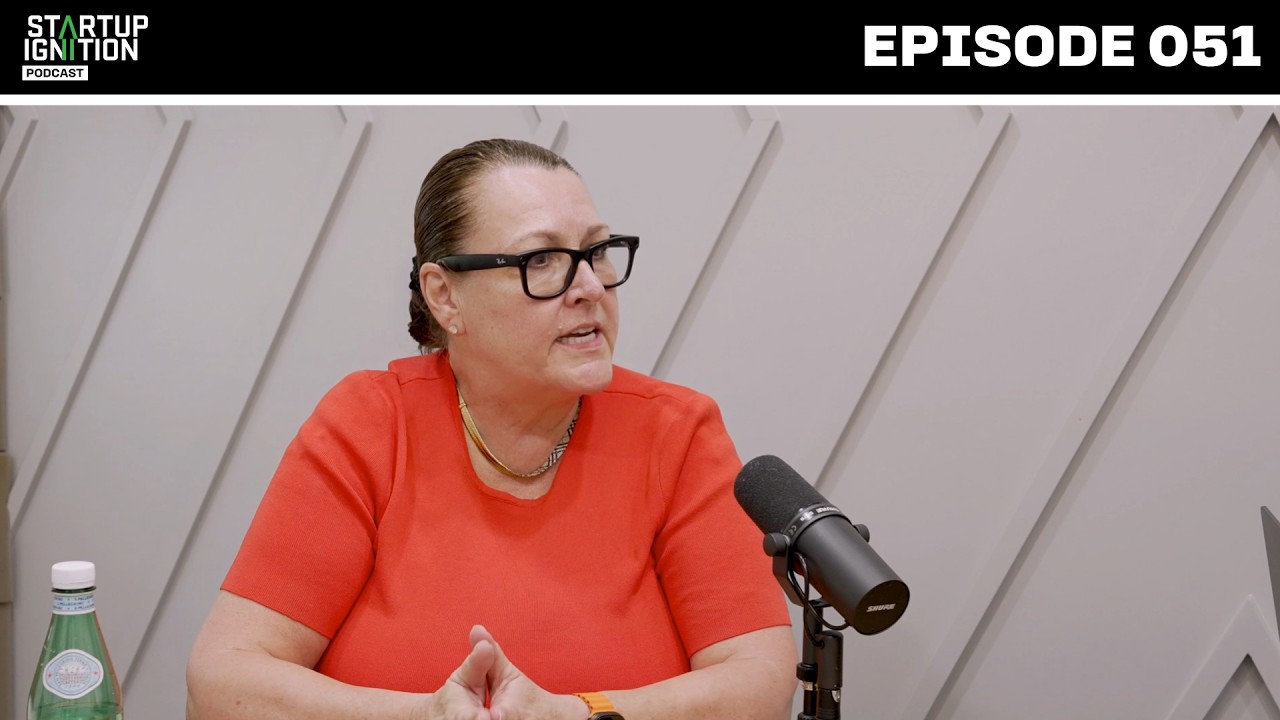
Carine Clark shares her path through four CEO roles at Allegiance, MaritzCX, Banyan, and First Colony Mortgage — plus how a stage 3 ovarian cancer diagnosis with a 20% survival chance transformed her leadership philosophy. She discusses resilience, introvert leadership, and building high-growth teams.
Carine Clark is a 4x CEO who has led Allegiance, MaritzCX, Banyan, and First Colony Mortgage. She was diagnosed with stage 3 ovarian cancer with a 20% survival probability and beat it. Named EY Entrepreneur of the Year (Utah Region) and Utah Business CEO of the Year. She chairs Utah's Governor's Office of Economic Opportunity (GOEO) and serves on the executive board of Silicon Slopes.
Show full transcript
So, Corrine Clark is a four-time president and CEO of high-growth companies and the current CEO of First Colony Mortgage. Before that, you led Banyan and earlier you led Allegiance, which became and became CEO of Merit CX. Earlier in your career, you held major leadership roles at Novell, Altiris, Symantec. Those are some major Utah players. Like, you run deep in Utah here and the tech history of Utah. >> He had a vision that I could help him deliver on and he wanted me to come and change the mortgage industry to bring in tech, to clean up systems, to be just this fire starter. And I loved that. Every time I go up the ladder and meet people of a higher social station or status in business, I start realizing they're no different than me. They just put on pants the same way, one leg at a time and they're just a human. >> [music] [music] >> Welcome back to the Startup Ignition Podcast. Thank you so much for watching the last episode. It was an amazing episode with Matty Gay, who we had the founder and CEO of Primo Golf Apparel and he had amazing stories with Phil Mickelson and so many things at the Masters. But, today we have an even better guest. Sorry, Matty. We're going [laughter] to trump you out. >> Today, we have Corrine Clark, who is CEO times four, startup founder, mentor, advisor, investor, um and just has a tenured past and I'm so excited to dig into it. So, welcome to the podcast. >> Thank you. Thank you so much for coming. It was I was like so shocked that she's like, "Yeah, I'll open up my schedule. We'll find some time. We'll get this to work." I'm like, "Oh my gosh, thank you so much." Cuz I know you're now CEO at First Colony Mortgage. >> Mortgage. And but you've been a CEO many times in the past with a ton of Utah brand names here. I know you know my father, John. >> And but yeah, so here's some history for you. So we got Adam Edmonds on the program. >> Yeah. >> Yeah, as an episode. And so she is the one that came in after Adam left to be CEO of Merit CX. >> Oh, yeah. Which was a first called Allegiance? Allegiance Technologies was acquired I think by Merit's. Is that how that works? >> So um Adam was the CEO of Allegiance and yeah, and then one of the investors called and said we're looking for a new CEO. >> Yeah. And I said I'll only take the job if I can hire and fire who I want. >> Yeah. Because they were going to make a change with Adam. >> Yeah. >> And Adam was is terrific and was a platinum bat and he was the spiritual leader of the company. Yeah, so I wouldn't take it unless I could control that. Yeah, so they said okay. And did you end up kicking Adam? Okay. So you were fighting for Adam? Okay, cool. >> stayed and um we built that company and then sold it to Merit's Market Research and then Okay, so you came in before Merit's acquisition. Okay, got it. And they then Merit's acquisition they That's when I first met you was that it? They would only do the deal if I would stay as CEO of the combined entity. >> Yes. And so Adam really didn't want to stay. He wanted to go to Podium. But he stayed for enough time and I had Dana Russell >> And now he's as CEO of Entrata doing the house. Yeah, oh he's crushing it. I'm so proud of him. >> Yeah, yeah. >> And it was we had a fun time. Yeah. And that's that's that's when I met her is when she was I actually didn't know that you came in before that acquisition. I thought you came with the acquisition. >> in before. Oh, that's cool. That's good That's news to me. So explain that metaphor, the platinum bat. What is a platinum bat? >> So I've never heard that before. >> Really? No. Well, we're going to have some fun today. Yeah. Mr. Debt Mountain. Yeah. So I worked at publicly traded companies, large companies. I worked at startups. I I have People say, are you a Are you a small company or a big I'm like, yes. I can tell. Yeah. So, um in a company that has like growing really fast, you need someone who I call the platinum bat, who can set the biggest deals, who can close the biggest deals. Like a heavy slugger. >> Yeah, who has the swagger to go in. You're not going to send them on every deal. You're going to send them on the $3 million the $10 million deals. You're going to send them in because you know they can set it and close it and that they have the gravitas to be able to talk the talk, walk the walk. And that's what Adam was. So, he was like the heavy hitter. Like he was the one landing the deals. >> Yeah, because he has he has great foresight, great vision. He understood the tech. He built it. And uh it's a waste of time to put him on running the company. Yeah. Like his his skills >> rainmaker. Yeah. Perfect for bringing in the biggest partnerships and the biggest deals. Yeah, that's interesting. That's great. Well, I do have a bio for you, Carine. So, I >> read it cuz it's like you boring. >> People have to know who we're dealing with here, okay? I'm just a girl. >> The audience Just a girl. The audience needs to know. So, I'm going to read it for you. If it's wrong, correct me on the on the fly, okay? So, Carine Clark is a four-time president and CEO of High Growth Companies and the current CEO of First Colony Mortgage. Before that, you led Banyan and earlier you led Allegiance, which became and became CEO of Merit CX. Earlier in your career, you held major leadership roles at Novell, Altiris, Symantec. Those are some major Utah players. Like you run deep in Utah here and the tech history of Utah. Um I'm old. Yeah, is that okay? I I If you say it for us, I guess, okay? Today, you you also serve as executive chair of Domo. Is that still a position you're holding today? >> And you sit on the board of MX. Is that true? And Nelnet Bank. >> Yep. And you chair Utah's Economic Opportunity Board. That's still true? And you serve on the executive board of Silicon Slopes. Wow, okay. And you And you actively invest. Are you still investing? >> Still investing. >> Still investing. If you go to a business event in Utah and there's going to be panels or speakers, it's always on the docket. Always on the docket. Admit it. It's a needed girl. Needed girl. Okay. Well, we were talking pre-podcast. How many women have we had on the podcast? And we're like, we kind of choked ourselves. We haven't had that many, but you know, we're super happy to have you. >> You're going to get more. >> The top of the top. So, hopefully you set the example for many more women to come on to our podcast. I I have a theory though that that you brought this topic up and you're going to finish your bio or is that it? >> No, that's good. No, I just want to say the Olympics. I work on the Olympics. Oh, you work on I didn't know that. Yeah, I was on the bid committee and I served on the In 2002? No, or the One coming up? Yeah, so the one coming up. So, Fraser invited me to be on the bid. Went to Paris, delivered the bid. Now I serve on the steering committee and the people in conversation. It's fantastic. That is awesome. >> Here's a little bit. I've been involved, as you may know, in entrepreneurial education for a long time and an active venture investor. And I've talked to a lot of women. It's just some women in Utah, too, just select out. I mean, they're very capable, but they just select out and it's not It's not always that women are going for it and they get held down. It's like they A lot of Utah culture causes self-selection out of it, right? Because I don't know I don't know if you know, I'm I was raised by an entrepreneurial mother who at age eight my mother got divorced, had to lift herself up by her own bootstraps, and became a business owner and did really well. And I saw a lot of skill sets there. And then what happened you know, I just said, "I'm going to support women in entrepreneurship." And I've done that. I've got some things I've just done. But So, I've talked a lot about this topic with people. It's not that Utah's like oppressing women. It's that sometime there is some of that going on like everywhere, but a lot of women too that are very capable are self-selecting out because we have great women leaders, right? >> put it on the men, actually. I put it on the women. It's like, "Look, you need to show up. You need to raise your hand. You need to have an opinion. You know, it's okay to have a seat at the table, but you have to actually contribute at the table." Yeah. And if you listen to how a lot of women speak, it is I think it's a cultural issue. They'll say things like, "I'm just" Right. Yeah, I got to say Yeah, "I'm just." It's like they or they they pre-qualify things. So, if you listen in in the entrepreneurial program at BYU, a lot of women will say, "I don't know if this is what you're asking for, but I'm not sure if this is the right answer, but" >> Yeah. And when I speak at the universities, I get tons of questions from the young men in the audience. >> Yeah. And no questions from the women. And then after the event's over, they swarm down to ask me questions. >> Yes. So, and I say to them, "You need to ask the questions in the room because everyone benefits from that perspective and that" So, I always put it on young women who lack confidence, who feel like they might be uh posing, you know, this I was just fascinating to me that we have this challenge still. >> Have you met Shauna Theobald ever from UVU? She was a leader of the entrepreneurship center. She said the same thing. She talked just like that saying that the you know, it's not the women do have to step up and do it, right? But it's it's an interesting topic, but I just I mean, your career is a testament to what can happen in Utah and the leadership that can happen. >> Well, you can't be afraid. So, I did serve on the UVU Business School Board for a number of years, and we worked really hard to get the Wolverine Fund set up. >> Yeah. And I was a little disappointed, maybe a lot disappointed, when we had put I think 500K to to form the fund. And the very first year, um they brought the students in to present about what they learned in the fund. And it was all young men. So, I was like, "Hang on. Why are there all young men in the program, no young women? And they said no young women applied. I said okay, I'll give you that. But, you have your investment chair is a man, your like every position that they got to pick, they chose a man. And they're like we couldn't find any women. I'm like Jackie Zener, did you ask her to be on your investment committee? Because she's amazing. And so that a combination of unintended things, that's just easier to pick people that you know, and women not speaking up. So, I try to help young people in general, not just women, find their voice, speak up, and not be afraid. And so many people are afraid. They said, I would apply for every job. And you you won't get maybe you won't get any of them, but you will learn something in the process that's going to frame you and change your confidence level and your ability to learn something. I hope there is in our viewers and listeners a lot of young women that are just getting inspired to know that this is this is what needs to happen and it can happen. We need it. I mean, our community is better, the fabric of our community is better if we have a more balanced distribution, have more voices, not just not just, you know, men and women, but just like all ethnicities, all like we just need a richer fabric. You know, I I will let you know that's changing. I go and mentor the Wolverine Fund and it's I go in once a semester to the class and they have an actual credit in the class that is associated with and a part of the Wolverine Fund. And last time I was there, I want to say two two of the you know, or so. They don't see themselves because you're looking at 12 guys. Like you don't see yourself in there, you're not going to apply naturally. All right. Well, let's get into the podcast, but first I've already told you about this. I'm going to do an icebreaker. >> [laughter] >> I pre-warned you that I'm going to do an icebreaker, okay? We call it a Startup Ignition icebreaker and we always play a fun little game with either John and our guest or just our guest, but today I'm going to have both of you participate, okay? >> fun. Sounds fun. So, we're going to I'm going to give you three founder or employee traits and I want you out of the three to tell us which one you would most promote, fund, or fire. So, fund would probably be the top. So, just what's your favorite, middle of the road, or worst trait out of the three, okay? And they're all going to be semi good traits, okay? And I want you to participate, too. So, are you ready for our first three traits? >> Fund fund promote fire, got it. Yeah, fund promote or fire. Like, you would throw your own dollars at this person, you would promote this person, or you would fire this person. Okay, ready? So, first one is extremely confident, extremely humble, and extremely intense. Which one would you fund? The confident, humble, or intense? Which one would you promote and which one would you fire? Our guest go. What do you think, Karine? >> So, give me the traits again. Confident, humble, and intense. All extremely confident, extremely humble, extremely intense. What are you doing? I like how you're thinking about this, actually. >> [laughter] >> I would fund extremely Confident, humble, intense. Intense. Wow. >> Okay. Really? After just talking about confidence with young women and young people all over, huh? So, why I have to dig into why intense? Because They're not going to let anything stop them. Yeah. They're not going to hear no. It's going to be hard. >> Yeah. It's like no, I mean, not now to them. Yeah. So, okay, intense is number one. What's confident or humble? Which one are you promoting, which one are you firing? >> I'm promoting humble. You're promoting humble. Yeah, but I'm firing the other guy. You're firing confident. >> Yeah, cuz there's such thing as false confidence. Like, I run into a lot of I'm not going to lie, that's the exact opposite I thought you were going to say. I thought the exact opposite. I have people that have so much bravado and then like it was like big hat no cattle. >> [laughter] >> You scrape down and you're like, no. I And like my my rubric is always humble, hungry, smart about people. So, if you gave me someone who is humble, hungry, smart about people, I would fund them, I would promote them, I would I would make sure that they are all well on their way. >> Yeah, we we are talking to a lot of um people about our fund all the time and they're always asking, "What kind of founders are you funding?" And we're like, "People who are teachable, who are humble, who are hard working, roll up your sleeve type attitude." If you have that attitude, you're going to go far. >> Those guys become the plumbing of the world, right? They never out front and center. And I love those guys. Right? >> too. I love those guys. I have to deal with a lot of false confidence. Should we hear John? >> Yeah, just so I'm shocked by your >> Confidence is a qualifier. Real confidence that's not phony, not fake, not trying to be a poser. Yeah, that's different. But, yeah, you and I have talked about this. If you look at the Utah history of unicorn companies or outperforming companies, it's the intense CEOs >> Yeah. really get it going. >> James. Like Ryan Smith. Like Todd Pedersen. I mean, like line them up. And they're just MX, Ryan Caldwell. He's 1,000% in that category. Yeah, it's no offense, that's no shade, Ryan. You're amazing. Yeah, and that that intensity is right there. And and then [clears throat] and then you have to come down because you're not sure if the confidence is real or that that if somebody is really humble, which it to me is teachable. >> So, let's hear your three so we don't spend 15 minutes on the one can't tan. And I'm going to have to I'm falling in line with what you're saying. >> to intense humble confident? >> You're probably saying that as long as long as I didn't know the confidence was real. Okay. Next one. Next one. Round two. Here we go. You ready? >> to read more than one? >> Yeah, well, more than one. I So, here we go. Next one. Someone who moves fast, someone who listens deeply, and someone who sells naturally. What are you funding? What are you promoting and what are you firing? Again, moves fast, listens deeply, and sells naturally. >> I'll go first so I don't Okay, you go for her wisdom. >> Okay, so smart. Yeah, you carry. Um so I'm going to probably say What is it? Thinks deeply? Is it >> Moves fast, listens deeply, sells naturally. I should have like a whiteboard or something. Yeah, but listens deeply because probably who I fund because in the end that person will probably win the day because you move fast, you could move wrong. You do have to be decisive, you can't be, you know, a slug, but at the same time I want to make sure that they're listening and someone who sells naturally is great, but have they got the right business model? Have they listened to the market? >> So you're funding Listen to feedback. You're funding Listen to deep Listen deeply. What are you promoting? Moves fast or sells naturally? Probably sells naturally and then moves fast is third. Even though the decisiveness and moving fast is important, it's got to be done with those other characteristics. That's how I feel. I'm going to go there. Where are you going? So I am promoting moves fast. Moves fast. Cuz my only currency is time. Yeah. Okay. And if they move fast, I need them to like See, sell wise, right? I need like I want straight lines and I want people that perseverate and take forever. Oh, yeah. No, out. >> They drag out. Yeah. Um what's the other two? Uh listens deeply and sells naturally. So that was promote. Which one are you funding? Which one are you firing? >> I'm funding listens deeply and I'm firing sells naturally. Wow. >> Because I I'm I run into like really like they're great salesmen. Yeah. But they got nothing. Yeah, nothing else. >> They haven't had to work really hard cuz they're so good at selling. Yeah. And then when you dig in, you're like, you can't do anything. Yeah. And I I I was being cuz I move I tend to move fast and sometimes I just worry, you know. I do I do think moving fast actually gets you into trouble more than it actually helps you a lot of the times, but you move fast out of it. Yeah. Yeah. So, then they pivot off of it. Yeah. Yeah. Yeah. Like It's not going to be a straight line, so I just I want to keep going. >> Okay. Last one. Okay. Here we go. Great storyteller, great operator, or great recruiter. Which one are you funding, promoting, and firing? Again, storyteller, operator, recruiter. Our wise guest goes first. >> Okay. So, he's He's passing the baton to you. >> Give me the So, great >> Storyteller, operator, recruiter. >> Great operator I'm funding. You're funding an operator. Perfect. Um Storyteller, recruiter. Uh I'm going to say Uh cuz I can do both those myself. I don't need either of them. You know, I need to fire both of them. Yeah, fire both of them. We'll give it to you. How about you, Dad? Yeah. Um So, again, storyteller, operator, recruiter. >> Yeah, operator at the end of the day is going to win. I mean, it's you've got to have good operations, right? So, that's that. Who's got to be orchestrate Yeah. So, storyteller and what's the third one again? Storyteller and recruiter. Yeah. Gosh, recruiter is important, too, though. I mean, the recruiter to be So, I just I would say I would put that above the the the storyteller. >> I probably go recruiter second, storyteller third. You got to be a Storyteller is really good in the pre-seed startup stage, though. There's no doubt about that. Yeah. Yeah, I could support that. I just Yeah, it those are That's a tough one. These are tough. I know cuz they're actually all three traits >> you won't have any trouble recruiting people. Yeah, there you go. Um I I just feel like if we actually make it three traits that are actually realistic and you do want, but you have to force yourself to >> Yeah. prioritize I thought it was a fun game. That's good. Yeah, thank you for playing my fun little icebreaker. Now, let's get back to the beginning. >> I know. Yeah, I know. I I want to know your history cuz I don't know it. So, yeah, take us back as far back as you want to go. Like, where where'd you grow up? Yeah, where where'd you grow up and go to high school? I went to Heidelberg American High School. I grew up in Germany. Germany? >> Yeah. Is that where the name comes from? My mother's name was Claire Irene. Claire Claire Irene, so she just combined it. >> it to Carine, and then they got tired of explaining it, so my sister's Kathy, and my brothers are Sam and Joe. Not Joseph, just Joe. Oh, wow. >> have Carine, Kathy, Sam, and Joe. >> Was this military cuz you were >> Military. Okay, so your father was in the military? >> Father was in the military. Um he had no way to pay for education. His father died in World War II. His mother uh tragic story. So, he raised himself and decided that people that were educated had better lives. So, he joined the Army ROTC, went to Idaho State University, and he met my mother, and they were these poor Idaho kids that decided that their children were going to be educated, and that we were going to be people of tremendous integrity, that we were going to be hard workers. So, moved to Germany when I was an infant, stayed there for a while. My sister was born there, moved back to the United States. My dad went to Vietnam, two tours. And then we moved back to Germany, and I was the oldest. So, um he I had never been to Utah in my life. And I remember I was applying to colleges, and he was like, "Your mother and I would feel better if you went to Brigham Young University." Cuz I was going to go to Columbia. Yeah, uh-huh. >> And uh I was like, "Okay." So, I had never ever been to Utah in my life. >> Wow, just different colleges. >> Oh my gosh. I applied to Colorado School of Mines. There was three. Clearly, no one helped me. Cuz back then you didn't help your kids, I guess. And my father was stationed at the Pentagon, so I stayed in Germany, and then I left Germany, and uh stopped in Virginia to say hi to my folks, and then flew to Utah. I got off the plane. I didn't drive, because in Germany you didn't drive to >> This is for college? You were not going to So, in high school were you in an American school? >> An American school. Okay, got it. >> Because if you go to a German school, you have to take the Abitur, and you go to school for 13 years. So, it would put us behind >> Yeah, a year. Yeah. >> Yeah, okay. And my parents and we we wanted to play sports. So, we went to the American High School and we also wanted to have a access to AP. So, we did And it was a great education. I mean, 4 years of foreign language, 4 years of government. I mean, like there was no graduate early? Yeah. There was no You took economics, you took calculus. >> good. >> It By the time I come came to school, I didn't need my freshman year. Yeah, cuz of all the GEs they make you take that you don't need. Yeah. You test out of some of it. >> Yeah, and I ended up doing that. >> Like math and I know. >> English 115, I was like, "What are you doing here?" >> [snorts] >> I mean, I think I'm going to write I was a straight top math science student. So, I loved it when I went there and I got all the math credit by just taking a test. I like Yeah. >> Yeah. Yeah. And foreign language and >> Yeah. So, came to Utah, I had no intention of staying here at all. As a freshman? As a freshman. It was rough. First semester was rough. >> Yeah, cuz the cultural shock, I bet. I hadn't been in the States for years. I didn't dress like anyone, look like anyone, didn't talk like anyone. I hadn't watched TV. Yeah. Did you You didn't have an accent, did you? >> No, I didn't have an accent, but >> went to an American school. >> Went to an American school, but I was like I had lived by myself in Germany and I moved into a dorm of six girls and they had never first time away from home. I had never left their home and had never been out of the country. I was crying all the time. Yeah. And you're just like And in our household, you didn't cry cuz my dad My dad was a combat heavy brigade commander. Like, if you cry, he was like, "What is coming out of your face?" >> [laughter] >> What's the law of attraction? It's messed up. Yeah. I fixed that since, but >> [laughter] >> I mean, it explains a lot. Josh James always jokes. He's like, "Tell everybody what you say. You're the daughter of a combat heavy brigade commander who did two tours in Vietnam. You went to an all black inner city middle school before you moved to Germany. You had cancer. You did 18 months of chemo. What do you have?" Like, he's like, "Oh my gosh." "Nothing can break you down." I'm like, "That's right. That's right." So, that's kind of what formed me. >> you have cancer? >> Yeah, cancer at 14 years ago. You did? >> And it it changed me. Like it refined me. So, I it's on my mind cuz I went to Huntsman yesterday. I go once a year for all my scans and everything. I passed with the best scores ever. That was great. >> so grateful. >> it now? Yeah, so I had ovarian cancer and cancer of the appendix. And I talk about it because Ooh, I just heard it. Somebody with a cancer appendix is more serious than you'd think. That's cuz you think the appendix gets cut out all the time. >> Yeah. It would suck to die from something you don't need. I know. Yeah, it's a Usually it's a slow grow carcinoma. >> one other person with that. Yeah. >> Yeah, it's called appendiceal cancer. Uh He's Well, I talked to the uh the doctor. He's like, "You have ovarian cancer and it's really bad." And I was like, "Okay." And he's like, "Oh, yeah, and you have cancer of the appendix also." And I was like, "Wait, what? What?" And like, "What?" It's like a man dying from breast cancer. It seems like the worst way ever. >> Yeah. So, no, I had it 14 years ago and it was I was at the top of my career. I was chief marketing officer at Symantec. I had worked so hard to to get my two sons here and I worked so hard for this career and I >> Yeah. like it was building something that was really important. And then now I'm going to die from an old woman's disease. >> go to Huntsman for treatment or anything? Are you Are you happy with how Huntsman went? >> 100%. So happy that I ride every year at the Little Red Riding Hood Race in Logan. It's the first weekend June. It's my 10th year and I raise money and 100% of the money goes to Huntsman Cancer to fight women's cancers. So, when I went to the hospital yesterday for my scans, they're like, "She's the one that raises all the money." So, I'm at 160,000. I'll probably hit 180,000 of the 200 they're trying to raise. So, I try to do half of it every year. >> Wow. And uh it's because of these all these folks in Silicon Slopes who show up to the playground and write checks and have carried me and have supported me. So, I'm a big big supporter of what Huntsman >> What's the number one way it changed you? What do you think? So, um when you So, I did 18 months of chemotherapy and when you think you're going to die for 18 months, you live differently. So, I spent a lot of time at the hospital deciding and even though you're surrounded by people when you're doing chemotherapy, it's just you in the chair hooked up to the machine for 14 hours once a week. I did chemo for 6 months and then I did every 21 days for a year. And I had to I I was like, "Why did I ever watch TV? Why did I not have cake every time I wanted to? Why did I spend so much money on shoes and perfume? Why did I not travel more? Why did I not tell people how I feel?" Your mind just starts racing. >> Yeah, you start you start making lists. You're like, "Well, cuz when you think you're going to die, there's some good things to dying, believe it or not." >> Yeah. Like, I don't have to clean out my husband's garage. >> [laughter] >> I don't have to pay taxes. I don't have to take care of my parents. I don't have to have food storage. I Like, you start coming up with all these things you're like, "Oh gosh, there's like It's like like it's going to be great." But then you're like, "Ah, who will raise my kids? I won't get to be a grandmother. I won't get to meet my daughter-in-law. I won't get to enjoy like the most joyful things on the planet." So, it kind of tips over to this, "Oh my goodness." So, I just started making lists of things I'm not going to do anymore. Like, I am not scrubbing toilets ever again. I'm going to outsource it. I am only going to spend time with things I care about. I'm only going to take jobs I care about. I'm only like I had these I'm going to start doing things I talked about forever. It was kind of empowering. It's like And people said, "Don't tell anybody about your cancer cuz it will define you and you'll never get another job. You'll be broken." And I was like, "That doesn't sit right with me." Yeah. So, I told my oncologist, who I love and adore, she she's she's a miracle worker for me. I said, "Look, I'm not going to let this cancer define me, but I will let it refine me. And I'm going to be a different I'm a better mom, I'm a better executive, I'm a better human, I'm a better everything because I already know I'm going to die. And so I got rid of all the people in my life that were energy vampires. All the people that don't help me do what I care about, thank you so much for being part of my life. Bye. And I wrote I write a ton of letters. So I turned 50 after my treatment. So I said I'm going to write 50 letters to people that formed me. And it sounds like a lot, but my birthday is in May, so I did 10 a month. Ended writing 75 letters. And I was very specific about the part of me that came from that teacher or that relative or that And >> You should put them together in a book. I feel like that would be I'll be a great book. >> Yeah. My birthday was is May 7th and so uh my one of my letters was to be delivered to my mother on my birthday. Well, I had written to a number of people that she knew and she was like, "Where's my letter?" Yeah. Well, [laughter] like uh uh they're still coming. And like my mother-in-law who since passed away, she she said that letter was so meaningful to me because you were so specific about what you learned from me. I mean, it just was it was such a lovely thing that now when I have donors to my ride, I write every single donor, no matter no matter the check. So I write a lot of letters. I We did all my retirement trips while my boys were still in my house. I want to get them all done. I didn't want to have any We took my father to Normandy with all my siblings, my parents, and all their kids to dedicate my grandfather's grave. And we to be in Normandy with my dad who served two tours in Vietnam and to be there where his father was buried. I mean, it was just like so many lovely things. And if I think about it now, I just do it. Yeah. It so but I this is it's like empowering, but you just decided what's important and that's where you're going to spend time. And you literally cut out some of the some things you think are urgent or or important and said, "No, what's truly important?" And that's where I'm going to spend my time on because like you just said earlier, time is the most precious thing we have. >> my only currency. Yeah. Is time. And so I don't have I don't have any regrets. I issue a full pardon to anyone who has ever wronged me because I'm not carrying any of it. Yeah. >> And I don't get into fights. I don't get into like I don't have a lot of chop in my life. >> How How does that change you like your business mentality then? Like the decisions you make on a daily operation? >> it. You see it in the jobs that I do. So, um when I took the job at First Choice Lending, so it's been 2 years now. Uh everyone had a lot of things to say about me taking that job, which I was like, why do y'all care? Why do y'all care? I do what I want to do. I only do what I want to do. And people are like, oh, she's lost her mind. Why would she go to a mortgage company? Cuz I'm not a mortgage person. I'm a financial services person, but I'm not a mortgage person. >> Yeah. And um the chairman of the company, his name's Corey Shelly, he's amazing. He's a young man who's built this his father started the company, but he's really grown it. When I um joined the company the year before, they had done 1.3, 1.4 billion in production revenue, which is great out of Pleasant Grove, Utah. Oh, yeah. 42-year-old company. So, the reason I joined the company is because it was partly for him, but he had a vision that I could help him deliver on. And he wanted me to come and change the mortgage industry to bring in tech, to clean up systems, to be just this fire starter. And I loved that. Um when he first said, I want you to come run my company, I'm like, absolutely not. Absolutely not. He's like, just hear me out. And it was lunch, and he said, when we're done with lunch, I will shake your hand. We're done. Like you're going to do this. And I was like, how am I done? So, fast forward, the year I joined, the company did 2.8 billion. Last year, 4.4 billion. This year, we're going to do 6 and 1/2 billion with 500 employees. >> Wow. >> So, he was true to his So, now people are like, she's so smart. Look what she did, right? So, now it's a tech-enabled financial services company. It's the fastest growing mortgage bank. And his designs and ideas, we built an insurance company. We are working on a tax company, on a title company, on a servicing company. All I want to do a billion a month. And at the end of last year, he's like, what is happening? We did $4.4 billion. I'm like, yeah, wait till we get to a billion a month, and then 2 billion a month. Because we can talk about it, because he has helped like he just tells me what he wants to do, and then we run fast. Are you one of the only mortgage companies that are experiencing that kind of growth right now? >> say yes, because interest rates have gone up. So, when people come So, I got I was in Atlanta last week for my son's graduation from Georgia Tech. He got his master's degree, super proud. And uh Master's degree in what, by the way? It's called He's a data analytics guy, but it's called industrial systems engineering. Oh. >> Number one program in the nation. Didn't know that till I got there. Yeah. And this is a kid who This is a brilliant human who didn't think he could get into the program. And uh his wife is like, oh yeah, we just got to apply him. So, he got hung up though, cuz she had to write an essay. So, he wrote the essay, he got in, but when he walked across that stage, I'm like, he couldn't see himself in that in that I mean, he three year He took him three years to do the program. It's a five-year program. He had two kids and worked full-time during the program. And he couldn't see himself there, but we could see him there. So, we kind of helped him visit his future. When he walked across that stage, I was like, this is what you got to do for young people. You got to help them visit their future. You got to show them that it's just one step after one step, and then take away any friction that you can. But he absolutely did that program, and he did a great job in that program. And now he's well on his way. That's awesome. It's amazing. I mean, just the wisdom coming out of this episode. Viewers and listeners, this is gold. Yeah. By the way, thank you for spending some of your gold, which is your currency of time, with us today. >> Yeah. Let's go back and happen. You freshman year, go forward. >> well, I didn't want to derail you from my question of like the mortgage industry and how you're one of the only >> Yeah, how how are you >> you on that answer. So, if you think about the mortgage industry, so when I first started in the company, Corey said, "You don't need to get your mortgage license." Like, "I don't need a loan officer." But, I was like, "Mhm, but what if I did?" So, I started the end of just to educate yourself. Well, why not? Like, why not? Cuz people say, "Well, she's not a mortgage person." Right? So, I get that. So, I started the end of June, I went to Paris for the Olympics in the first week in August, I got my license. And Corey's like, "Who are you? Like, people don't pass this on the first time." I'm like, "They don't? I didn't know that. It's just a test, right?" >> [laughter] >> It's a test. So, when I passed it, I wrote a blog in the company, I signed it with my NMLS number, and he's like, "If that was ever a mic drop, like if there ever was a mic drop, it was like boom, mortgage." All of a sudden, nobody is says she's not a mortgage person. But, I'm a really good financial services person. So, First Colony had struggled because everyone says to me, "Every time I meet someone, they're like, 'Yeah, I never heard of First Colony.'" But, hey, you did my mortgage. Every time. Because we do most of the mortgages in the state. What Corey wanted to do is go national and bring in brokers in this whole wholesale business, which is completely different business. >> Right. Now, I'm working on a direct-to-consumer business. So, because there are not comparable sums of money coming into mortgage companies, they're either a wholesale or a retail, they haven't figured it out. We use technology to not add more bodies. We use technology, we use AI, we scrape the appraisal, we go out to 40 insurance companies, we get bids back for our customers, we take the friction out of the mortgage buying process. The problem with mortgage is it hasn't been disrupted yet. It will be. >> It will be, and it's a lot of old white guys that don't want to really want to change, that have just they just like Have you seen the paperwork that they have you sign for a mortgage? >> gosh. I mean, I bought a second house. I almost like I almost got a riot check. I'm not I'm not I'm not filling that out. I know. I know. I It's got to be I'm being insane, right? Yeah. And who Nobody Companies for >> And by the way, nobody reads it. Well, and how about Sign this form. Okay, sign this form that you just signed that form. Okay, sign this form I mean, it's just like I'm like, what is happening? Yeah. What is happening? I It's like you have >> That's lawyers over the years of little things like Those loan officers are not going to do it. Yeah. Yeah, they're not going to do it. And now we have AI to be able to go and pull all your all your information. Yeah. So, we can actually have the application for you. And we can tell you how much you can qualify for. We can tell you how to clean your credit out. I mean, there's so many things. So, I'm trying to build with Corey and the team. I mean, it's not me. It really is these guys know this space better than anyone. 42 years in the business. I just know how to make it take the friction out. I know how to build systems. I know how to make it so that we don't have to add a lot of people. I'm always I'm a capacity model person cuz I'm an operator at heart. So, I'm always paying attention to capacity. I'm always paying attention to Okay, and I'm I'm projecting out best-case, worst-case, most likely. So, when I say I want to do a billion a month, he's like, I'm on to you. You said a billion a month so that people can have that vision and that they can see themselves there. I'm like, 100%. >> Yep. So, you Okay, this amazing accomplishment of what you're doing right now disrupting an industry and all these numbers. Let's go back. How did you become this Yeah. solid of a business operator and what you're doing. So, fret You're a freshman at BYU, pissed out of water a little bit. The worst The worst. >> Okay. What Take us forward. What happened after that? Oh, um graduated in organizational communications, which they It's part of the school of business. It's uh rhetoric. So, apparently I'm really good at persuasion and negotiation and communicating and marketing. So, stayed in marketing. Uh went to work for Novell, was there 14 years. Worked for every single CEO of Novell except for the very last one. So, worked for Eric Schmidt. Wow. Uh worked for Ray Noorda. Do you know David Bradford? >> Yes, he's a He's a neighbor and was on here and stuff. So, >> asking about me? >> Late Modrzewski? Do you know I know him very well. Very well. These are all my friends. >> just on here two episodes ago. >> Oh, he I just love and adore him and his family. Yeah. So, these are I mean, Novell in my 20s, like I'm I have an international marketing job. I mean, you're able to cut your teeth on things that most people don't And that is Green Border still there? >> Yeah, I worked for I My office was right outside his. >> Really? >> Yeah. That's I also got to build Novell KK. >> meet Jan Newman? >> Yes, very well. Jan hired at Altiris. Yeah. Yeah, so was there, loved it. Left from went from there, so big public company went to Altiris before they were public. >> Yeah. Jan called Jan hired me and he's like, "Look, I don't care what you do. I just need you to come help me do this." So, took a job for a third of my pay, no staff, no title cuz I was pretty I was senior executive at Novell. No, like nothing. But a bigger stock position. So, I'm sitting in a cubicle building out the Dell partnership, working on partnerships. And the CEO, Greg Butterfield comes to my office. He's like, "You make me nervous." I'm like, "Okay." He's like, "You're kind of a big deal and you took a job for nothing." I'm like, "I know, Mr. Butterfield." He's like, "I think you rolled your dice the rolled the dice on your own skills." I'm like, "Maybe so." >> [clears throat] >> So, I was the only person to be an individual contributor, work my way all the way up to executive staff. And so, I worked for Greg. Uh became the CMO for Altiris. Loved it, great time, 5 years. And then uh Symantec came to acquire the company. People don't know we actually had a hostile takeover. We had three downstream acquisitions we were making. And then we had a hostile bid to take over the company that Greg was afraid the board would take. So, Greg called John Thompson who was the CEO of Symantec and said, "Buy us. 1.3 billion. This is why. Because the most secure endpoint is a well-managed endpoint. This is that creative to what you're doing." So, that's how that deal came together. >> Wow. Very quickly. So, I was the only executive that was not supportive of the deal. Symantec I didn't have any interest. So, they were buying up companies in >> Yeah. So, we got the deal done and I became they asked me to be the CMO of the bigger company and I was like, "No. You all are No. You're a sales company, you're not a marketing company." And Greg said, "You have to take the job because if you don't, they're going to close Utah and 600 people will lose their job." And I was like, "That's not right or fair." Here, I was like, "Welcome to the NFL." >> [laughter] >> So, I took the job. Greg left me there, but I ended up working with John Thompson who, if you look at my press release when I took the CEO job at Allegiance, I have a quote from Eric Schmidt and I have a quote from John Thompson. So, the chairman of Google, the chairman of Microsoft. And Adam Edmonds, who was the founder, said, "Can I be the quote in the middle cuz that's the closest I'm going to be to those two guys?" >> [laughter] >> I was like, Yes. Yeah, so So, explain to our viewers and listeners a little bit about you said hostile takeover. So, cuz because Altera had gone public, is that right? >> So, how does a hostile takeover, what happens? So, you have an interest So, we had we had quite a bit of cash, but a company that's interested is also public could make a an offer to buy the company. The company doesn't want to be acquired, but the board of directors will take it because it's lucrative for them. It's not in the best interest of the company necessarily, may not be, but if the board votes to take it, then they'll sell the company to the other public company and they'll take your cash as part of the deal. >> Right. They get cash with it. Yeah, cuz they're buying the stock. So, they have the whole kit and caboodle. >> whole thing. That's why you don't want to have a ton of stuff. Like Novell had a ton of cash. Yeah. And I was always worried they were going to be acquired. >> Yeah. So, Greg is the most amazing mentor because he he cared about the company and he was able to negotiate a pretty good deal. So, it was it was a purchase from Symantec hadn't made that big of a purchase since they bought uh the storage company, Veritas. Yeah. It was their second biggest acquisition. So, John Thompson shows up, and he's a historical figure. He shows up at our office when we are making the announcements, early in the morning. We're waiting for the markets to open. I'm sitting next to him in this conference room, and I'm like, "No offense, sir, but are you here on this conference call? And why do you have presidential cufflinks?" He's like, "Well, I'm here because this is the This is a handshake deal that I made with Greg Butterfield. Now, I want to see it through, and it's the second largest acquisition I've made since I bought Veritas. And I forgot my cufflinks, and these were rolling around in my dop kit." I'm like, "Did President Obama give them to you?" He's like, "He did." I was like, "You and I have very different problems." And we became friends over the years, so that's why when I asked him to do a quote for me, he was He was great. He was And I'm like poor scum. I'm not anybody, but I am in the picture with Eric Schmidt and Thompson and you know, Steve Jobs and with the I've met cuz my time at Novell, I got to meet all these historical figures who shaped the technology industry. >> Yeah, but every one of those people has a Karen Clark that they needed to be who they were because you did You've done a lot of behind-the-scenes and work to make those things happen. >> Well, and I I've loved it. I mean, it's really been a wave. It's really been this technology way I remember the very first Utah Information Technology Association Hall of Fame event. >> Yeah. Ray Noorda, Allan Ashton, Philo T. Farnsworth, >> Uh-huh. and I was sitting at the table cuz I was like Ray I was >> Philo Farnsworth, inventor of television from Idaho, Utah. What What year was this? Well, he was being He was being posthumously awarded. >> Oh, I was going to say. His wife accepted the award, and she got up there. She was so cute. Her grandson escorted her to the stage, and she said, "When I'm when when Philo asked me to marry him, he said, 'I need you to understand I have a mistress.' And she was She was so distressed. He said, "My mistress is TB." And she said, "Then she was fine." >> Okay, that's fine. But So so there's this great series on Oh my gosh, now I'm forgetting which network it's on, but it's called Captains of Industry. And they've done about 12 episodes where they showed two people fighting like Edison versus Tesla on electricity. >> Right. >> Okay. They have an episode of Farnsworth versus and now I'm forgetting the name, very famous name, I can't remember from RCA. Huh. And when television came and it was a huge lawsuit and Farnsworth won the right to be called the inventor of television cuz RCA was trying to do that cuz they went television was wiping radio out, right? Right? RCA was huge Radio Corporation of America, that's RCA. And it's a great episode I'm saying. Oh, I'd love to watch it. And yeah, it's a great episode cuz Farnsworth, little old Idaho Utah guy. Yeah. You know, who who would who would plow the rows? >> I know. And he would go That's how he thought about the horizontal scan lines of TV. That's right. It's such a great story and they tell us in there, but they show the court dramatization of the dude. >> Oh my gosh. You would love that episode. >> love to see it. Because but it's fascinating and cuz RCA tried to bully him and he stood up and said, "No. Yes, this is my patent. This is my patent." Think about it, he had an entrepreneur. He and I remember sitting there at the table, a raised table, and thinking Sunday I'm going to be I'm going to be inducted and I'm going to be the first woman inducted in the >> Oh, that'd be awesome. I remember remember as clear as because here was here was Evans and Sutherland. I mean, these were all these folks that brought computer science to to Utah, to Utah and then and then the partnership BYU. Yeah. So um it was like a great time to be a young person and I felt and I was not afraid to move out of the state. I just never had to. Yeah. No. Well, you So okay, so you went from Novell to Altiris to Symantec. So, you took that CMO job and >> big company, big company, big company, 5 years at Symantec, loved it. I had a half a billion dollar budget. Wow. I mean, I'm meeting all these, you know, it's like Colin Colin Powell was one of my heroes, right? Yeah. And so, hired him to help to do this customer event for us. Don't meet your heroes cuz it was so disappointing cuz the Enrique Salem was the CEO by this time and he's like we we know how much you love him. So, you get you go first, too, cuz we had paid for a meet and greet for 75K. And I was so nervous. I had prepared everything and so, I'm like, "General Powell, you know, I was going to talk about my dad." And he's like, "How long do I have to do this?" And I was like, I was I don't know what to do. I said, "We actually paid you $150,000 to spend 30 minutes with 75 customers. Do you think you can do that?" And he's like, "Yeah, I think I can do that." So, the picture you see me, Kyle, like I have this weird face. I I've had that experience of meeting your heroes and be It's like, you know, it's like Wizard of Oz behind the curtain. >> Yeah. You you you have the same I've I do not want to say who it is cuz it's people that people know, but I mean, you go They're not I mean, they're But it also I it didn't take away their skill and what they achieved, but they could be nicer people behind the curtain. >> Yeah. We're just regular people, right? I maybe it even leveled the playing field a little bit. It's like, "Oh, if they're like that, I could be like that." It reminds me of something Josh James has said to me all the time. He said he said one time he goes, you know, cuz I mentored him at first. And helped on their earlier days, they would come up to Seattle or whatever. So, Josh James, he says one thing he about, I don't know, 10 years into it, let's say, you know, when he was successful, I think they got maybe close to going public or public. He goes, "Man, one thing I've learned is every time I go up the ladder and meet people of a higher social station or status in business, I start realizing they're no different than me. They just put on pants the same way, one leg it a time, and they're just a human not and he goes he goes and that's and that I said cuz you know where did his confidence come to pull off what he pulled off and you know he just changed Utah forever, right? And with think of Nature and Adobe and I mean think of the sagebrush area of Lehi is now a thriving fast-growing incredible place. He doesn't get a ton of credit for that. Yeah, well well he does for me cuz we all know it's true, right? So but the point is is that it's interesting. He told me that one time and he goes it's just interesting and I go I'm listening to that cuz of all the experience he had rising up through that and he's just it was it's kind of interesting, isn't it? >> Yeah. Yeah, so I'm at Sam's Club at the top of my game. I'm I'm like ranked like number 25 in the world for CMOs. I'm like is that a thing? Is that a big thing? It's And then um I'm on my way to go to a meeting. It's Martin Luther King holiday and I had the stabbing pain. And I call my assistant. I'm like, "Hey." Cuz I was in San Jose a lot. That's where my office was. And um I was so sick all of a sudden and it turned out that I had ovarian cancer. That's when you discovered it? Five years into Sam's Club? I had ovarian cyst rupture. >> Top of your game at Sam's Club. You had a rupture. That was the They had ovarian cyst rupture and I went to Utah Valley and they're like, "Yeah, you had ovarian That just put poison throughout your system. >> like, "Just give me an Motrin. I'm good." No, >> [laughter] >> change my flight. And then I started to deteriorate like rapidly. So that went from like a Monday Martin Luther King Day to by the Friday my husband was like, "Something's not right. I got to take you back to the hospital." I'm like, "I'm fine. I'm fine. Just give me cuz I have a really high tolerance for pain. So he takes me which I think is a problem because then you don't go get Yeah, cuz then you don't go get So I go back to Utah Valley and they're um Dr. Callus. I'll never forget. I'm in the emergency room and he comes. He's like, "We're going to do a CT scan with contrast this time." And he's like, "You need to hold your breath." I'm like, "I can't even breathe." So I do the thing scan with contrast. He comes back. He's white. He's like, "Mrs. Clark, we missed something when we did the scans on Tuesday. You have an ovarian cyst rupture, but you have a massive tumor behind it that has also ruptured. So we're going to put you in a medical transport out to Huntsman. And I'm like, "Huntsman Cancer?" And he's like, "If it's cancer, they know what to do. If it's not cancer, they know what to do." And I was like, "Okay. So, I have little kids at home. So, I said to my husband, just go home and get the kids ready for school. Like, it's fine." So, it's Thursday night late. So, they take me to Huntsman Cancer. I remember calling him saying, "Hey, I'm going to have surgery in the morning. It's fine. I got my credit card. I know what I'm doing." It's great. And he's like, "Oh, no." So, he calls my parents. Like, everybody mobilizes. So, I'm at Huntsman Cancer. I'm ready. First thing in the morning, I'm ready. I'm going to have surgery. We're going to get this thing figured out. I got it all dialed in. They take me to the surgical room and I'm ready. I'm signing everything and they're like, this woman comes out and she's like, "We made a mistake. There was a scheduling problem." I'm like, "Nope. Nope. Nope. I'm next. I'm the fast pass person. I'm next." "We don't have a surgeon for you." So, uh they take me back to my room and I'm a brat all day long. I'm I'm in pain. I've had this this thing since Monday. I mean, I I like I cannot solve for this. And I'm so agitated. So, they finally take me back down in the afternoon. They're like, "We finally have somebody to work on you." And back then, surgery was not at Huntsman. You had to go to the U. So, you had to go through the garage. Great. >> Yeah. So, I finally get in there and this guy walks in. I've signed all the papers again. This guy walks in in a cowboy hat and he's like, "I don't know who you are, but I've been trying to get to Montana all day." That's why it's been delayed, delayed, canceled, delayed, delayed, canceled, delayed, delayed, canceled. And I finally called my office and said, "Is there someone I'm supposed to work on?" And they're like, "Yeah, she's a lot, too." So, he shows up. Turns out he's world famous for his surgery. He only does it laparoscopically. Really? >> And he has all these tools. And he's like, and my my my doctor's like, "You would have never gotten him, ever." So, he does the surgery and I come out of the surgery and he's My husband My husband like, not a clue. I come out of surgery, he's like, "So, the cancer's really bad." I'm like, "I have cancer?" Like, like it wouldn't occur to me that I had cancer. I mean, I'm at Huntsman Cancer. He's like, "Yeah, it's pretty bad and it's not great." So, then I talked to this to the surgeon and he was perfect for me because he's just straight line. Yeah. Ms. Clark, you could die from this. I said, "What's my survival rate?" He's like, "I'm not going to tell you." I'm like, "You know I have the internet in my hand. So, just tell me." He's like, "You have a 20% chance of beating this. People don't beat it." I'm like, "People don't beat it yet. So, what do I got to do to be part of the 20% or the new 20%?" And my husband, he can't form a sentence cuz he's like, "What has happened?" Yeah. And it took me 22 years to get my two sons here cuz they're like, "Ms. Clark, you'll never have children." But it took me I did in vitro. I did everything to get them here. Now, I'm going to die and leave them for the second wife? I don't think so. >> [laughter] >> So, I was like I was very I'm a vision and plan person. In my vision, not die. My plan, do everything to not die. But I decided I'm going to take this like I take everything. I'm going to I'm going to run this myself. Yeah. So, I said, uh can I interview oncologist? They're like, uh okay. I'm like, "Don't assign me someone. Like I want to meet the people that are going to work with me." So, I interviewed oncologist from my hospital. Really? Yeah. [clears throat] And it was super I think you have to take control of your health that way, don't you? >> Yeah. I do too. And so, uh I and I kept it really simple. I asked them one question, "Do you think I can beat this?" And this one doctor, I'm not going to say who he is, he's like, "Absolutely." I'm like, "Okay, so if I don't you don't have to explain it to me?" And he's like, "Pretty much." I'm like, "No." So, when I interviewed Dr. Teresa Warner, I said, "Do you think I can beat this?" She's like, "Well, I guess it's up to you, isn't it?" And I was like, "You're my oncologist." Because she kept me in the power spot. Yeah. And so, I worked with her and my protocol was two cancer drugs every 3 weeks for 6 months. I'm like, "Not interested in that. I need a higher success rate because I am not going to deal with the second wife. I am not going to deal with her coming in spending my money doing with her rotten six kids." I mean, I had this whole thing formed. >> This scenario going on. Yeah. Oh, I had it all. I had the dialogue and everything. I made my husband drive me to the estate attorney. Sick on the desk. The second wife can't get my money. She He's like, "Why are you in here?" I'm like He's like, "You set your up state up state up fine. She's not She only get half of what he gets." I'm like, "How about we don't give him anything? How about we give it all to the boys?" >> [laughter] >> So, um she worked with me. So, instead of the protocol that was the standard protocol, we worked on 6 months of weekly chemo every single week. Three drugs every Monday morning and then one drug every 21 days for a year. And so that's what we built. And she's like, "No one can do this." And I'm like, "Uh no one can do it yet." Cuz I'm pretty tough. So, why was it just really draining and >> you have chemotherapy every week, you can't come back from it. Right? You don't Cuz usually you have every 3 weeks, so you get hit, you feel terrible, you're nauseous, you're sick, and your immune system fights it back. Yeah. Yeah, and the third week you come back and you're ready to go again. You're like, "I can still do this." When you do it every single week, you don't get any recovery time. So, there was one week, um like 2/3 of the way in, they're like She's like, "Your white count is so bad, you could die from a paper cut. So, we're going to have to take a pause." I'm like, "Nope. Nope. Like, let's keep going. Let's keep going." And it turns Basically, they bring you to the brink of death to cure you. They just kill everything. They just kill everything. And though like I'm a pretty faithful person and I'm a pretty determined person and I have a high tolerance for pain. And I was like the first day of chemo, um I brought treats for everybody. I'm like, "Let's go." And I told my oncologist, "I'm not going to lose my hair." And she's like, "Ah, no. You got to worry about the cancer." I'm like, "You need to worry about the patient." Cuz a 6-ft woman is bald, everybody knows you have cancer. And people treat you like you're dying. Not interested. So, I found this cool cap therapy out of the UK. She's like, "I've never seen it work." I'm like, "You've never seen it work yet." So, I did That's what I did. And I'm in the I'm I got the cool caps on. I'm in the chair. You have all these pre-meds. Like, I'm I'm I'm I'm I'm I got a great attitude. And the first drug they give me is called Taxol and I have a cardiac event. I go and I have a heart attack. You Are you kidding? >> No. Wow. >> They didn't tell me that. >> I've known you and I've never heard all this story. >> I was like, and you I couldn't even speak. And my husband had just gone to get a drink cuz we'd been there for a few hours, and I start slamming on my table, and the nurse she comes running. She shuts the line. She throws on a bag of steroids, Pepcid, Benadryl, 100 mg of Benadryl. Go get Dr. Werner. Like, everyone's And I'm like, I have a strong heart. Like, I've never had any heart anything. Yeah. And so, I see my oncologist run, and she's talking to the doctors for an hour. My husband comes back with his diet Mountain Dew, and he's like, "What is happening?" Like, they're working on me. They won't let him near me. And I've had so much Benadryl and Pepcid, my eyeballs are like vibrating. So, she comes back, and at this time I don't really know her that well. I've only known her for like a month. And she pulls my chair back up, and she's like, "All right. So, the medicine we gave you is a new drug. We like this drug a lot. It's new to this treatment, and um but your body has rejected it outright. So, your body will not accept it. So, the old drug is called Taxotere. We like that drug, too. Pretty good drug. So, we have to make a decision today. We have to decide, are we going to go with the new drug, or are we going to go with the old drug?" And I was like, I look at my husband, and he's like, he's not going to be any help. So, she said, "But before you decide, this decision may be the difference between being here and not being here. So, I want you to trust me." And I rear back in my chair. I'm like, "Teresa, like a cardiac a heart attack?" And she's like, "We're just going to call it a cardiac event." I'm like, "It felt like a heart attack." She's like, "I'm going to give you the meds again, but I'm going to slow the flow, and I'm going to give you so much Benadryl and so much Pepcid, but over time, I think you'll tolerate it. And then I think you get to be here. So I said, "Okay." So that's what we did. So you kept taking them? I kept taking them. Did you have another cardiac event? she gave me slow blows. She gave me her ice. She gave me and she pushed me. But she involved you as a partner. Yeah. She didn't dictate. No, and she So she and I speak in What a good doctor. She was perfect for me because she always kept me in the position of a power position, but she informed me she cuz there's a lot of crap out there about cancer. So she gave me the right direction where to study and where to read. And we had this interplay like I pushed her cuz I wanted to do the cold caps and I did save my hair. I didn't lose my hair cuz I didn't want my sons, their friends to be like, "Dude, why is your mom bald?" >> [laughter] >> I needed to shield them from They were 9 and 17 at the time. I didn't need them to see the worst part of cancer. I need them to be in scouts and in high school and being regular boys. And but we celebrate my cancer anniversary every year which is January 20th. We celebrate it every year. And the boys talk about what it what they learned and what it meant for them and and the struggles that they had that no one knew about and my daughter-in-law said who she when she was new to our family, she's like, "I think it's weird that you celebrate your cancer anniversary instead of your clear day or like she I think that's weird." I'm like, "Rachel, the day that I was diagnosed was the day the universe ripped in half for this family and it was the day that we had to either become people of tremendous faith, people of tremendous strength. Like we it it it formed a metal in this family that we recognize and that we honor." And so she said, "Would you excuse me?" She got up from the table. She went to my office and made me a paper crown that said cancer survivor. >> Oh, wow. And I have that crown today and she's like, "It makes sense to me now." >> Yeah, I get it now. Yeah. So So how long were you in that regimen of all the cancer treatment? >> So I was diagnosed in 2012 on January 20th and I did 18 months of chemo. And 18 months of chemo is not for sissies. So, four root canals, like hardening of the joints and my soft tissue because one of the drugs was a trial drug. I had a medical port put in before I wanted to have a medical port put in before all the treatment because it's pretty hard on your veins and everything. And when I went to have the medical port put in, uh they take me to Huntsman and I'm sitting there with all these old guys. I'm like, "Wow, the prostate patrol." >> and me, it's super, right? >> And my husband's there with me cuz he's got to drive me home. And as I'm sitting there, I'm like, "Okay, I'm going to do this the way I want to do this." So, they call me back. They're like, "Mrs. Clark." I'm like, "I wonder who that is, right? One of these things is not like the others." So, I go back. This technician, the way they do it is you're in these They have four rooms and you're on the gurney and the doctors are on the cameras, but there's a technician that does it. So, he's explaining to me, "Mrs. Clark, we're going to put you under." And I'm like, "Jason, how good are you at this?" He's like, "I'm pretty good." I'm like, "Are you Captain America best of the best of the best good or you just like regular good?" He's like, "I'm the best of the best. I did thousands of these." I'm like, "Okay, so here's the deal. I want to do it with no anesthesia." He's like, "Oh, no, no, no, no, no, no, no, no, no, no, we don't do that because it's microscopic surgery. It goes into your carotid artery. They put a cable in and they put this medical port in there. It goes under your skin. It's about an hour and then you got to go into recovery." He's like, "No, no, no, we don't do it that way. You like you cannot move." I'm like, "I understand." And he's like, I said, "But I want to walk out of here on my own legs. I want to have lunch with my kids. I don't want to be in recovery with all the old white guys out there." He's like, "That's not how we do it." I'm like, "Jason, I need the cancer to know that they are the Somali pirates and they just landed on a US naval frigate." >> [laughter] >> I can do it. >> Great analogy. Yeah, and he says, um "Okay." So, we go go the room. I'm I walk in there and the doctor's like, "Why why wha- why isn't Mrs. Clark on an IV? Why why isn't she been sedated? Why why why is she walking?" And they had a problem with one of their machines cuz they had to a guy that came in from Wyoming, and they he had a stroke, and so they had to move me around. And I'm like, "Do you need me to help you with the computers? Like, I can reset them for you." And they're like, "Why is she not sedated?" I'm like, "You know I can hear you, right?" And he said, "She doesn't want to be sedated. She wants to do this without anesthesia. We we don't do that. We do that? We don't we don't do that. We don't we we don't do that, do we? We don't do that." And then I'm like, "I'll be fine." So, I get on the gurney, and they have to put a drape so you're not breathing over cuz they're doing surgery right here. And I say, "Jason, if you talk to me, I'll be fine. You tell me what you're doing." He's like, "Okay." He's like, "Are you ready?" I'm like, "I'm ready." He's like, "Okay." So, it's more physical than you think, right? They're making incisions. And then he makes his incision, and then I feel this stuff running down my neck. And I said, "Jason, is that blood?" "No, Mrs. Clark, that's lidocaine." And I'm like, "Ooh, don't lidocaine to me because lidocaine evaporates when it hits the air." And he's like, "No, it's just lidocaine." So, then he's telling me what he's doing. I'm watching it on the cuz you're on a CT you're on a CT machine while they do it. And they put this cable down in there, and then it goes into your carotid. And then they just put pressure on it for it to seal. Like, I'm [ __ ] okay. So, then like 45 minutes, he's like, he stitches it up. And he's like, "Mrs. Clark, I never would have believed it, but I guess you can go." So, I hopped off the gurney. I shook his hand. And I get to the door. He's like, "Mrs. Clark, uh I wouldn't bet against you." He said he doesn't have a chance. Yeah, [clears throat] I was like, "Got him." So, I walk out of there with this ginormous Band-Aid. My husband's moved in for the day. He's got his laptop. He's got Wi-Fi. He's got beverages. >> [laughter] >> And I walk down the hall, and he's in this waiting room. He's like, "They're not going to do it today?" And then he sees the Band-Aid. He's like, "Oh my gosh, what did you do?" And I'm like, "Wheels up, buddy. Let's go." Went home, stopped at the Dodo, got lunch, brought it home to my kids. And I was like, this is what winning is. >> We are so glad that you survived this and did this. I mean, yeah, you you you took the bull by the horns, didn't you, and just beat it. Yeah, because and I didn't know if I was going I did a TED Talk about it, TEDx Talk about it. First time I spoke publicly about the cancer. And like after the point where I was like, dude, you're just going to you're going to do everything you can, but you have to give it to God. Like, you have to give it to him. And uh whatever happens, it's going to be fine. Your kids are going to be fine. Your husband's going to be fine. Not sure about the second wife, but like [laughter] it's going to be fine. And that was part of the refinement is that >> Yeah. So, when you do stuff like that, people try to come after you, you're like, really? Really? That's what you got? Yeah. Who cares? Yeah. So, you did 18 months of chemo? >> 18 months of chemo. And so, I um took a 6-month medical leave from Symantec. The day before I came back, the CEO calls me. He's like, he told me Shira cuz I was the most powerful woman in the universe. Cuz I got him tickets to Twilight for him and his daughter and the after-party. And he's like, Shira, they just frog-marched me out the building. They fired me today. So, they fired the CEO the day before I came back. He's like, you have to come back. I'm like, nah, I actually don't. Because when you think you're going to die, you start looking at everything. So, I'm like, the guy they picked from the board, I don't actually like him. So, I call my attorney, and my attorney's like, hey, you're highly decorated. You're one of the few females. You have a perfect career. You're going to get whatever you want. So, I negotiated a way out. Took me 6 months to get out of there, but uh Greg Butterfield called me, and he's like, I want you to take the CEO job. And when you're not afraid anymore, Yeah. cuz I had had offers before, but I was like, oh, no, I can't do that. Cuz that's what we do to ourselves. Like, if you haven't done it, I can't do it. So, when he said, I want you to take the CEO job, I was like, okay. So, I took the job. I called Dana Russell, who was a public company CFO. I'm like, Dana, I haven't talked to you in 10 years. Same in text. "Dana, I'm taking a CEO job. I need a CFO. Just say yes." He's like, "Will you at least take me to lunch?" I'm like, "Sure." I said, "Just give me a year so I can get this company where I need it to be cuz I am I know how to fix things. I know that friction points means opportunity to fix things. I know how to make straight lines to money. I know how to make a lot of money for a lot of people." So, it turns out that's like a good skill. Yeah. And that's why you've done it multiple times over and over and over. We How are we doing on time? >> Oh, we're we're good. I mean, we're we're getting we're getting up there. I want to be sensitive to your time. >> Yeah. But I want to I want to get through the timeline. I want to get through the timeline. >> Well, so Cuz we're missing a lot of a time between Semantic to current day, right? >> Well, also Seman- So, after Semantic, then, you know, I just I Let's see. It's first CEO job, Allegiance. >> Yeah. And then, uh Maritz Market Research bought the company, then Maritz CX, then Banyan, then Pelecan, which love my time at Pelecan. >> That's right. You were partner. What did you do at You were partner at Pelecan? I did not know that. >> Yeah, they call the the like an operating partner. Is that what it is? So, I was an operating partner for years, then I was one of the group of guys. General partner? Yeah. Okay, well. GP a little bit. Uh there a couple years. >> in the 2018, 2019, 2020 kind of era, right? >> Yeah, something like that. Yeah. Yeah. I remember that. Love Blake, love Chris, love the team. And then, but I'm operator at heart. >> Yeah. So, um Greg Butterfield had uh called me and said, "Hey, I put four companies together. We did 860 million in revenue and I need somebody Is that Lumio? Yeah, Lumio. Oh, yeah. Okay. He's like, "Is it okay that you're not going to be the CEO?" I'm like, "Dude, I don't care. I love building things." So, he hired me as chief innovation officer. I became chief people officer. I became chief marketing officer. Like, whenever he had Whenever he had a change, take it. Take it. Take it. You and Greg have had kind of good working relationship. Oh, yeah. I love him. I love him. Yeah. We've worked with him He he actually came through and wanted to learn about startups with us and stuff. So, that was fun. He's amazing, talented, best sales guy I ever worked with. I traveled the world with him. I built partnerships with him. I would do anything for him. I'm like hopelessly devoted. Yeah. >> And so, he needed help. So, I went there for a few years. Um I've done I have a lot of boards I've done all along the way and governor stuff all along the way, lobby stuff all along the way. But then, Uh I was at Lineo. He left because the investors not great. Like it wasn't set up to be great from the debt Yeah. Look at that facility. And they wouldn't move out of the second position even though we had a big investor that would come in. And when Greg said, "I'm not going to do it if they're not going to support this." So, I had said to them, "Hey, he's out. I'm out. I won't leave overnight, but I will make an easy transition for you." >> Yeah. And um that's when Corey Corey called me and said, "I had worked with I had met Corey at a family office event and had helped him through the years when he needed stuff. Hey, I want to buy this tech company. Hey, I want to buy a bank. Hey, And so, whenever he called me, I'm always like anyone. I'm always happy to help. So, then when he out of the blue, he's like, "Hey, I want to take you to lunch. Where's your favorite place?" I was like, "Ooh, that's a weird question." So, we had to lunch and then he truly mid-sentence, he's like, "I want you to run my And then you told us that whole story. So, that's awesome. What a fantastic career. I mean, and all you've done to contribute to Utah. So, Well, I love it here. I love building things. >> Yeah. So, if we can wrap up the episode, I have a few more questions. >> Okay. What What is the one thing you would attribute to a lot of these CEO positions, high-power positions, the networking you've been able to experience? If you were to leave all of our audience and viewers and listeners with a theme, what would it be? Like what do you What are you telling these new entrepreneurs, these new business owners, these new people who are trying and budding right now? What do they need to focus on? >> Don't let fear determine your fate. It's the confidence thing? It's okay to be afraid. Just do it anyway. And don't be afraid to fail. Guess what? You're going to fail. Who cares? Who cares? You tell yourself, what's the worst thing that can happen? And then you have to ask yourself, can I survive it? The answer is always yes. You can always survive it. Yeah. Doesn't matter. Like, all these CEO jobs do this. This is the rough spots. This not It's like it's been It's a lot of work. It's like really hard work to get companies to turn around, to sell them, to to make sure the investors are happy. But, you learn something wonderful and magical on every single turn. Yeah. Just do it anyway. So, just do it. Yeah, and don't let people write a script for you. I didn't let people write a script for me for cancer. I don't let people write a script for me for my jobs. I do what I want to do. I If I see the clay and what and I hear the vision of the founder, I'm super respectful of the founder, but guess what? I know how I know how to move a ton of dirt. I know how to get a lot done. And I'm not afraid. We were in a negotiation a couple weeks ago and I was negotiating for First Colony with Corey and you it got super tense. And I just kept held my line. And uh at the end of it, the guy we were negotiating with, he says, "You're a stone-cold killer, are you?" And I was like, "Maybe so." Yeah. And later I said to Corey, "Was that okay?" He's like, "That was perfect. That was great. Perfect. That was great. Thank you." >> [laughter] >> Cuz I'm not afraid. Like, what what's going to happen? They're going to be mad at me? Like, And say that again. Don't let fear >> determine your fate. >> determine your fate. Is that Is that like the leadership quality that you're saying or just general life? >> Just general life. Like, if you think of something, "Hey, I should go and approach that person." I remember when I Ryan Smith and I were competitors. Merit CX was bigger than Qualtrics at the time. And people wanted us to fight. They put us on panels and they would pit us against each other. So, I called him one day and said, "If people want us to fight, we should be friends because I need Qualtrics to do well." He's like, "Come to my shop." So, went down and then it was supposed to be 30 minutes. It was hours. And I just love and adore him. He's done so much for the state of Utah, but I wasn't afraid to just call him and make it what it what it needed to be, right? And just say, "Hey, I need qualifiers to do well." And they did very well, right? They won. And to not be afraid to say what you think, to be like I'm not a stone cold killer, but I'm actually not afraid to challenge people on their stuff. I another question. One more question. >> ahead. >> I I I just don't want to let her go. >> [laughter] >> What out of all of these moments, this whole timeline since your Germany days and pre-Germany days and growing up in your career specifically though, what's like the number one moment that's like coming back to your head and saying, "That was really defining for me." Or maybe you got that confidence or you knew of your capability or where fear left the building or or what's what's like the most defining So, I was paralyzingly shy as a young person. Shy? Shy? Paralyzingly shy. I'm an extreme introvert. So, I read 31,000 pages last year. I'd rather be in a book than anywhere else. I have to go outside of myself to do it anyway. Every time I speak, I speak all the time. I have tremendous stage fright the second before I get on that stage. >> I mean you casually dropped that you did a TEDx talk, so that's crazy. Do you know that my wife read a book I'm trying to remember the name of it cuz it's very much and she found out that I my my youngest daughter and I are introverts. And I am an introvert, too. >> Probably the book Quiet. That's it. Quiet, that's it. You know about that book. >> Annie And she read it and she then she told me about it. And I am an introvert, but the funny thing is >> I've never heard about this book. What's this book? >> It's called Quiet. Yeah, your mother read it and she instantly goes, "I'm parented Ashley wrong." She's an introvert. Yeah, and so okay. Yeah, and cuz Ashley is an introvert and I'm an introvert, but I've my passion for other things or ambition or whatever help people people think I'm not. But I am. And people would not think you are. But you are. >> stunned. >> But it's it's very interesting. >> I score on Myers-Briggs, like I had to retest me cuz it's like you're like you're like clinical. Yeah. How introverted you are. >> And people are stunned, but extreme introvert. So, I think the real pivot point was when I left Novell. Um I was I was 6 months pregnant with triplets. Woah. And they had brought a new leadership and I lost my job. And I go home and my son was like, are we going to have enough food to eat? And I'm thinking to myself, I haven't had any debt since I was in my 30s. Like, I did a bad job of making sure he felt okay. And when I when Jan Newman called me and said, we want you to come and help us build this company, it was I had five other job offers for much bigger jobs, much bigger titles, much more money. And I knew exactly what I had to do. So, when I took the job at Alteryx, my husband's like, are you sure? It is the pregnancy like messing with you? >> wash your mind? I knew exactly what I was supposed to do and I trusted it and it became a springboard for all this career. >> Yeah. And I think that's the first time I was like, dude, you know what you need to do, but you have to be willing to do it. And so, when people have opinions about when I went to Alteryx, people said she's lost her mind. When I went to Symantec, people Everybody has something to say and I'm like, why y'all Why y'all care what I do? I'm just me. So, I stay in my line. I think being as being an introvert, you just stay your line cuz you're used to being by yourself. And so, it turns out that the introvert has been a power for me that I honor, respect, and both I have both my boys are introverts and so, I'm trying to get them to get their own company. >> What a great conversation. Do you have more questions? >> No. I I I mean I do, but I I'm not going to ask any more cuz we got the 5-minute warning from our studio manager here. Kareem. He's like, "Don't bring her back." >> I was just like, "You guys are talking forever." Thank you so much for coming on. >> For inviting me. >> No, seriously. This We attacked business from so many different angles, right? From you being an operator, from you being within venture, from you being within startups, from you being with the big boys at the top. >> I know. Girl. It's so crazy. So, this is definitely an episode to watch. Thank you so Thank you for coming on. Thank you for being Um we will see you next episode. We're going to wrap up this episode. Anything else to close with? That's it. Well, thank you for watching your favorite father and son duo here. Hopefully, maybe probably the only father and son duo within the startup podcasting realm, but thank you so much for watching. We are out.
New episodes drop weekly. Subscribe so you don't miss the next conversation.