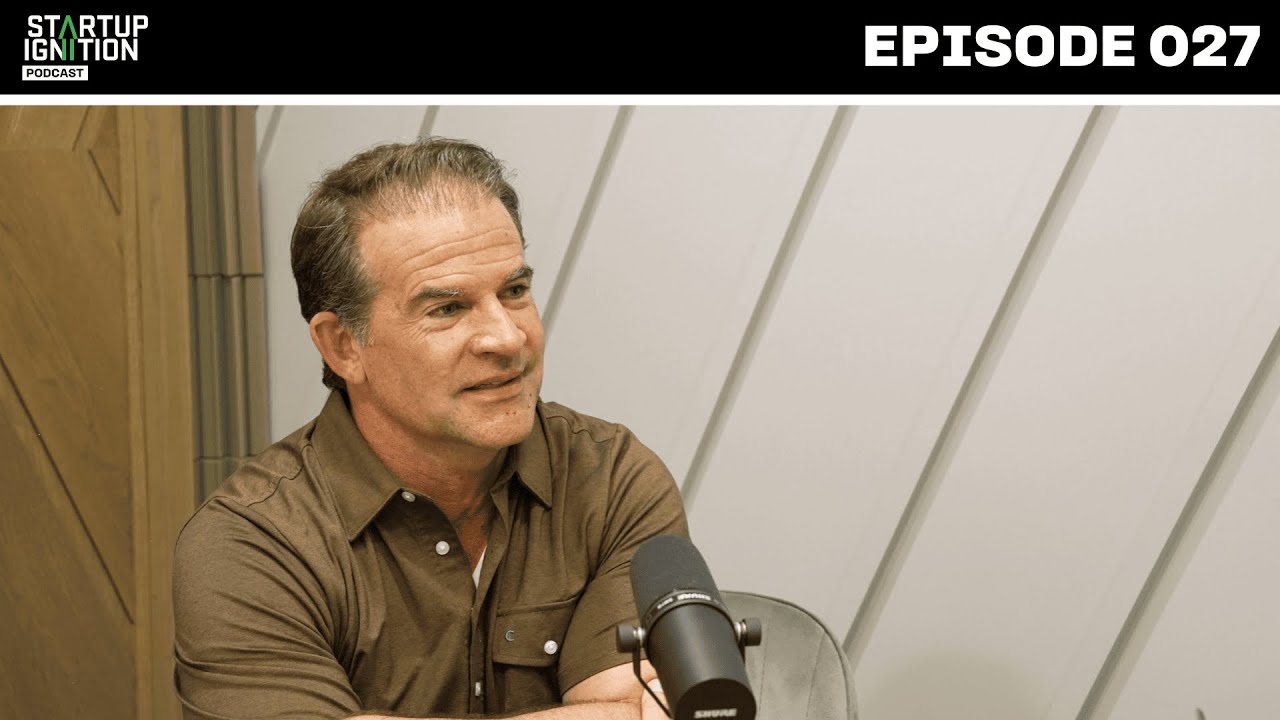
Case Lawrence tells the story of leaving a legal career (including work with Elon Musk) to found Sky Zone, the world’s largest trampoline park franchise. He covers growing to 300+ locations and 50 million annual guests, nearly going bankrupt, and the eventual acquisition by CircusTrix.
Case Lawrence is the Founder, CEO, and Vice Chairman of Sky Zone, the world’s largest indoor trampoline park company with 300+ locations, 5,000+ employees, and 50 million annual guests. Named EY Entrepreneur of the Year and Utah Business CEO of the Year. CircusTrix acquired Sky Zone in 2018. Lawrence now teaches Entrepreneurship at BYU’s Marriott School and chairs This is The Place Heritage Park.
Show full transcript
We have Case Lawrence here today, a man that turned a near bankruptcy into a billion-dollar playbook. >> I spent 2 years just trying to avoid bankruptcy. My thing was I have no income. I'm I'm I literally have got to make something happen. You know, when you're desperate, uh you're Yeah. you're going to make it happen. >> You got into this business cuz you had no income. You didn't know what you were going to do. And now there's 150 million IBIDA. >> God bless America. It rock. >> So, welcome back to the Startup Ignition podcast. Thank you so much for tuning back in. I'm Tyler Richards. This is John Richards. We're we are your hosts, but today we have a very important guest. We're so excited to have here on the podcast. We have Case Lawrence here today who I am actually meeting for one of the first times. I think I've heard of you by in in passing and through my dad's connection, but like actually to get to know your story. I'm actually really excited for the podcast today. So, thank you so much for coming. And I do have a bio on on you, Case. Yeah, correct anything that's wrong here, but I want to read this for the audience because we do have an audience here that um I I like to introduce every guest that we have on the podcast just so upfront they know, okay, who is this guy and what is he talking about? Right. And and so today we have Case Lawrence who's the founder of Circus Tricks that is now Sky Zone. Is that right? >> That's correct. >> Which is the world's largest indoor trampoline park with 300 plus locations and thousands of employees at this point. I mean, with those many locations, you have to have a lot of people working underneath that umbrella. >> Over 20,000,000 system, right? We have franchises. So, so, uh, we say we're over 5,000 employees directly and then over 20,000 facilities need a lot of part-time employees. >> That's Yeah, exactly. >> And you've you're also responsible for a ton of other brands. You've been featured on Forbes, NBC, Inc., Uh and and you're all you're usually pioneering in the entertainment and uh the market to millennials. Um you're Duke Law grad which is really cool. >> Has nothing to do with trampolines. >> Yeah. Nothing to do with trampolines, but hey, a great foundation. EY entrepreneur of the year, which is really cool. What year was that, by the way? >> 2017. >> 2017. You're a professor at BYU or have been or current. >> Before we started recording, I didn't actually know. So you're now you said you were following my footsteps or something like you said but it was a nice compliment you said but you're now you're teaching at BYU too. >> Yeah. So >> so as an adjunct professor. >> Adjunct. Yeah. Really? >> Entrepreneurship 101. >> Oh that's the class I started. That's why I created that class. You're the one who created that class. That's crazy. >> Oh. So you're take you took that over. I I did. >> So we had um >> that we talk about that if you want. But No, but it's I awesome to wrap up the bio. That's John's baby wrap. There's a picture of him in the hall. >> Yeah. >> We wrap up the bio though, just so we can get to the meat of the content here. You're also a husband, a father of six. Um, and you are also a man that turned a near bankruptcy into a billion-dollar playbook. So, I'm really excited to dive into this story. So, everybody, welcome Case Lawrence to the podcast. Very excited. >> There's one major thing you left out. He's also a quality pickle ball player. Oh, we're going to get we've actually played against him, but >> who won? >> Yeah. Who won? He was a draw. >> Yeah. No, he's No draws. Played with your younger son was about 14 at the time. >> That's right. Yeah. Yeah. >> He's probably now how old? 18, 19. >> He's 18. He's 18. And he's a good player, too. >> Yeah. I've gotten a little bit He was like 40 before you and I were. >> Oh, wow. >> I don't know about that. >> So, you can you could probably school us in a game. >> It's a great sport. It is such a great sport. Yeah. So, I don't know if you've seen any of our podcast episodes, no hard feelings if not, but we always do a little segment that we call our icebreaker that I like to spring on our guests that you have no idea. >> That was just the ones I saw. >> No, we're doing it with with you case as well. So, this one is going to we're going to do a game. We're going to call it jump or pass. So, uh and and fitting off of the trampoline park. Okay. So,re >> jump is Yeah, I'm all in. I suggest it. You I do it. I'd build it. Or pass. No, I'm not buying it. I'm not doing it. Okay. So, here we go. >> And you want just or both of us? >> I want both of you. So, you're both saying jump or pass. Okay. I'm going to give you a couple of scenarios and a couple of situations. You tell me jump or pass. That's all it is. Really easy game. Here we go. >> Franch as an entrepreneur, a budding entrepreneur franchising your first business. Jump or pass? >> Come on people. >> Simultaneously. What do you What do you say, Case? >> No, I I'm going to jump. I'm bullish on franchising. Obviously, we're in that business. We could talk more about that. >> That's why I brought it up. >> I think it's a real underrated >> business model, >> entrepreneurial path. >> Yeah. Yeah. Yeah. Yeah. Here's some stats on that for our viewers and listeners. That the five-year failure rate on regular entrepreneurship is 80%. So 80% are going to be failed in the within five years. Franchises invert that. >> Yeah. It's only 20% in five years because they're getting a playbook that's proven and tested. Now, obviously the quality of the franchiseor that a franchisee hooks themsel up to has a lot to do with that, right? So, but if you go with the top 100 franchiseors in the country and you become a franchisee of one of them, you're going to be in business and survive much more easily. >> So, I want to hear your jump or pass. >> Um, for me, first business, it depends. my first business that I had. Is that what you're asking? >> No, I'm saying what as a budding entrepreneur, would the mentorship advice say yes, you should do a franchise for your first go at a business? Yes or no? >> I I think it's a great option for somebody to get in that way. But I don't know if I would take my first business and become a franchiseor right away because that's hard. But being a franchisee, >> that's an easier. >> Get your toes wet. Yeah. Okay, next one. Here we go. By the way, I'd love I love that topic and I would love to come back to that. Just >> Okay, let's do it. Let's do it. No, let's do it. Um, number two, jumper pass. Cold emailing investors without a pitch deck. Just reaching out, no pitch deck. Are you pitch deck or no pitch deck? First, reach out to an investor. I >> I'm a no pitch deck and I'll tell you why, but go ahead. What's your thought? >> So, I was going to say the same really. And depending on context, right? I mean, >> um, >> that's actually interesting. Okay. But again, >> what what are your you've heard me teach. >> I know. What are your reasons? >> Um because I don't want most venture investors are type A personality and make very quick judgments. They get the pitch deck, look at a few slides and say, "Nope, >> they haven't met me. They haven't talked to me. Haven't heard my voice inflection, my energy, my excitement, my passion, why I'm doing the deal. I don't want the pitch deck doing my selling." So, if avoidable, the only place, and this is for viewers and listeners here, that I would send a pitch deck in an email ahead of a personal meeting is to like a tier one VC out of Silicon Valley. Like, if Sequoia was interested enough to me to ask for my pitch deck, okay, I'll send it to them. But an average run-of-the-mill VC, and I hate to say that for the VCs listening, but not everybody's a tier one, okay? And uh I would not send it in advance if I can get a meeting in person. 's case is the same similar. You don't want a prejudgement or >> your your word there cold that you used. I like that because I I think you know I I would rather use the first email to set some context. >> Yeah. >> Maybe someone a mutual friend we have or establish some common ground before going in cold. >> Another lesson that's coming out these always bring up great teaching moments. Another lesson the facts are is that cold outreach to VCs anyway produce very little results. 98 plus percent of investments VCs make are usually from a warm introduction. >> Yeah. Okay. Here go >> great stats. >> Here goes another one. Yeah. He's a stat machine over there. Uh here's another one. Third one. Working with a family member. Starting a business with a spouse, a brother, a family member. I mean, we're kind of probably a little biased on this, but what do you think? Jump or pass, case? >> Well, I again, I'll parse it for you. I think father son's a lot different. I'm doing something with my >> son right now. You guys do I I think the dynamics, but in general, extended family, I'm I'm going to pass. >> Yeah, you're out on that. Yeah. So, um there it's a double-edged sword. This is a 50/50 completely down the middle. Uh Japan, for instance, has a ton of nepotism, way more than the United States. And it's good and bad. That's a great case study. The ones where it works, the nepatism has greater trust. Things move faster through the seale decisions, all that because there's so much trust. >> But when it's not a good situation, not a good family dynamic, it's way way worse. So it can either be the best of the best or the worst of the worst. >> It's not usually the middle of the road. >> Yeah. It could go either way on the spectrum. >> Yeah. Yeah. Like Tyler and I, we disagree and sometimes have our moments, but we know at the end of the day, >> we really have look out for our backs. >> Yeah. It's not like he's going to screw me, right? He's he's, you know, I've loved this kid for 37 years. >> Yeah. And I think that's an important thing to parse also is is what we're talking about. The question was starting a business. >> Yeah. Yeah. Yeah. And uh what the question was not was hiring family members to the startup that you have already started. That's a whole different discussion. >> But there's a different temperature and boiling point and experience being co-founders. >> Yeah. >> Yeah. Yeah. Yeah. >> Co-founding until you've been in a co-founding situation that gets hairy, you haven't seen what a person's really like. Because >> you know, I've seen the weirdest behavior out of co-founder to co-founder when the going gets tough. >> Yeah. When money gets involved, it changes relationships. >> It's not just the money, the power, the dynamic. There's a lot of stuff going on. And it's just it it's sad. Tyler, you've seen too, it's we've you and I just in our living experience because you don't have the decades. You have years now, but not decades. And you've seen co-founder nightmares. >> Yeah. And a lot of them ruin relationships too sometimes. So, just for sure. >> Listeners and viewers, be careful there. >> Emp next one. And we'll I'm trying to get through these ones here. >> These are fun. Um, these are takeoffs on in their own right. >> I know, right? We could have a conversation on all these. Here we go. Next one. >> Starting or investing in a business that is a category creator, like a business or a category or vertical that didn't even exist like three or five years ago. >> Jump. >> You're jumping at that. Yeah. >> Yeah. The new innovation. What about you? Jump. Jump. I mean, you're jumping too. That's my background. And, you know, I think that's one of the principles that I encourage. I I I think that idea of of being finding yourself on the frontier >> of something >> of something whether it's pickle ball whether it's trampolines whether it's whatever you know I mean that's that's where you want to be actually yeah >> you want to hear a quote that I just heard on the way here from the all-in podcast um Sachs what's his first name again David Sax >> from Craft Ventures who we've had some dealings with so David Sachs said and this is really insightful to me he explained how for about 10-15 years the SAS and software was getting a little stale and like it was a pond that had been well fished >> and it was hard to find stuff and it takes a disruption to restock the pond for the venture investors. And he says that's why venture is more exciting now than it was for a while and it was getting a little stale. He says and AI is the greatest disruptor of all time and that has completely restocked the pond for venture investors which is a really interesting insight. It is that is >> love that. >> Okay, so we got two jumps on that one. Have we even had any passes yet? I don't know. Oh, may maybe working with your spouse or family member >> depending on. >> I would I would pass on starting as a franchiseor with my first business, but not but jump as a franchisee. >> Okay, ready? Last one. Here we go. And this one's actually a little weird, but here we go. Because it's going to be an obvious answer, I know from both of you knowing your backgrounds, but raising venture capital >> before identifying or really hitting product market fit. So, you need some cash. You need money to go. You You know, you can't get it off the ground. You're not sure if you've hit product market fit. Are you jumping at the chance if it's there or are you passing until you have product market fit? >> Passing generally, there could be a little exception. >> I I'm going to pass. And especially in today's world, >> you know, where it's kind of the accepted practice has become safes, you know, convertible notes. Yeah. There are ways to figure out seed funding until you get product market fit to get that formal money. It'll it'll snuff out an entrepreneur. >> I mean, if you need 100,000 or $200,000 to get going and you can find another way, but generally speaking, >> um it's just a crash and burn scenario. >> The earlier you take money, the more expensive it is. It takes more of your equity. Yeah. >> But all but also it's a good way to waste a lot of money if you don't have product market fit. It's almost a surefire way to go downhill >> and squandering. This is an interesting insight. So for viewers and listeners, when you raise money and you don't have product market fit and you're spending the money then trying to find product market fit, you're supposed to be creating value as an entrepreneur and you're destroying value because you have raised this money, sold it for equity or committed to equity in the future and then you go squander the money >> when you didn't need to. And that's called value destruction. And entrepreneurs are all about value creation, not value destruction. Right. I like that. >> Yeah. Um, so thank you for playing jump or pass. We had a lot of jumps, not a lot of passes. And I knew that last one what your answer would be, but I still asked it. Um, but thank you for playing the icebreaker, Case. That was >> a great icebreaker. >> Yeah, there we go. Like I said, >> and we can turn back to those conversations if you want to, but I also wanted to kick off the podcast with Case. Uh, just like literally your origin story, like where does it begin? like take us back to wherever you want to take us back. >> There's it's a nonsequittor generally. Um so my my background is uh I am uh an attorney by training and um >> uh went to BYU. >> Such a good name for an attorney by the way. >> Yeah. Case >> that's my email case lawgmail. I got it first day Gmail >> launched that day. I got that email and uh >> case Lawrence Esquire just sounds but abbreviated to case law. >> Yeah, I got that the day. I forget what it was but in the early early >> but yeah so I I was an attorney went to Duke Law School practiced in Menllo Park in Silicon Valley for a couple years doing tech ventures. In fact, the >> the anecdote I tell everyone is that, you know, I was Elon's attorney >> at the original X >> at Zip 2 >> at >> after Zip 2 Kimble sold Zip 2 and then he had started X. I did the merger >> of X into PayPal. >> So my my.com competed against Zip 2. Zip 2 was in Yeah. I was one of the I was the first guy to launch internet yellow pages and Zip 2 got into our arena for that. Yeah. So Zip 2 was I went to a lot of conventions and conferences with Zip 2. Zip >> too. >> Yeah. >> Wow. So, so you were you worked in Silicon Valley doing tech venture. >> Yeah. >> And then I you know and I tell people one of one of the inspirations for me was Elon because I was this grunt attorney working you know >> in Venture Law. Were you in the venture law? >> Yeah. Working at Venture Law Group on Sand Hill Road. And you know, I'm looking across the table and Elon was my age and and here was this smart, obviously, brilliant, brilliant guy. But it but it was a an experience of, hey, >> these guys are shaking it up and starting things and creating things. I want to do that. I don't want to be servicing >> those guys, >> entrepreneurs. I want to be an entrepreneur. And so that that >> led me to launch my first company, which was called Cargo Bay. And it was kind of a small business we work before we work. It was a the the paradigm was it was a really a storage campus. So a large like five to seven acre campus with storage mini warehouse space and offices for entrepreneurs. And the idea was you could put all this stuff on a credit card without signing a lease. And then you could grow monthto monthth as you scale up or down. And um anyway it was a great idea until it wasn't. because we ran into the jaws of the great recession >> and uh and and at its core it was a real estate business. So so it was a real estate play >> everything that had you know even three degrees removed from real estate was in big trouble back in in the recession and so I spent two years just trying to avoid bankruptcy there. I had two big big commercial loans that I guaranteed >> personal guarant personal guarantees and both were existential. I mean, you know, if they had been called, I was done. Yeah. >> They were both in special assets for over two years. And uh you know, and you know, banks are changing ownership and control. >> You completely quit your law practice. >> Yeah. Yeah. Yeah. Yeah. Um, and uh, anyway, long story short is I was able to avoid bankruptcy fortunately, not by any credit of my own, but just I I kind of outlasted the banks >> at that time, which was a strategy. And uh and so you know I found myself in ' 09 and 10 sitting here relieved that I I wasn't bankrupt or hadn't been forced into bankruptcy but needing a job, needing a career. And >> you know I had all my family and friends told me, well this is why you went and got an education case so you could fall back on it in this type of situation. So it's time to go get a law job. >> Yeah. And that made sense, but the reality was there weren't a lot of law firms hiring back in >> n they call that the forgotten generation. I don't know if you heard that. 09 if you graduate in '09. Yeah. >> And maybe 10 a little bit too, but 09 was really bad. They they they didn't, you know, it was almost a given if you interned. Yeah. >> In the summer, you got a job offer. Right. Right. >> And they gave no job offers for lawyers that summer. >> It was It was dead. >> Yeah. >> So you were you were Yeah. Yeah. you were competing with a lot of new graduates that couldn't even get jobs. >> Yeah, it was and and so, >> you know, but I had I had begun to take steps to get my bar license back active and and so on. >> And about that time, I went on a trip up to San Francisco with my boys who were nine and seven at the time. And a friend of mine, we're big Giants fans, so we went to a Giants game and we we'd done that done a spring game just about every year. We loved doing that. and a friend of mine said, "Hey, while you're there, you got to go check this place out." It was at the right underneath the Golden Gate Bridge at the Prescidio. Um, they had redeveloped the military base, the Prescidio base, and they had taken an old hanger. There was actually two of the original hangers at the uh military base. >> And one they had turned into a Planet Granite, you know, a climbing gym, and the other they turned into a trampoline park. And it was one of the first, you know, there were just literally >> What year was this? Yeah. >> This was 11. >> Okay. >> And there was, you know, literally 10 of these throughout the c I mean less than 10 throughout the country. This was a concept that hadn't taken off yet. And >> and when I heard about it, I was like, I can't even visualize what that is, but it sounds crazy. And I'm with my boys. So, we went we went to this place. And I'll remember never forget walking in and kind of being confronted with this concept and just going, "Wow, this is wild. This is just nuts. And by the end, >> the boys loved it. >> The boys loved it. You know, by the end, >> we're playing dodgeball trampoline dodgeball with total strangers. And you know, you're throwing balls at people's grill. You don't even you don't even know. >> Yeah. >> And I left there going, you know, this is interesting. This is this this could be a side hustle. This could be something to >> to do to get some cash going. >> Yeah. personally >> um while I find a real job. >> I want to pause for one second just point out to the viewers and listeners that my experience is lawyers that become entrepreneurs are some of the best operators. I in my life experience for what for better for worse I can point to five 10 lawyers I know that abandoned law and went into entrepreneurship and became successful. My next door neighbor was Ernst Young entrepreneur of the year in Utah just a few years ago >> and he just wanted to be healthier and he became now he's got a massive company for healthy food and it's crazy and he but I find and I sense this in you too is just the attention to detail and operational detail. I bet you that's one of your strong suits because that's what law school teaches you. >> Yeah. Yeah. That that's great insight. By the way, in our boot camps for entrepreneurs, there's hardly ever a cohort without at least one lawyer in them. >> Turning entrepreneur, >> we've sometimes had four attorneys in a 25 person boot camp. Yeah. Yeah. Anyway, >> you're a wealth of data and knowledge. I I love hearing these anecdotes because I mean, they're just wonderful. >> But so so you see this trampoline park and you're like, I got to do something with this and it could maybe supplement my job hunt. >> Yeah. I remember sitting down with my wife and saying, "Look," because there were no proformas. There was no model to do. I I made a one-page Excel spreadsheet and kind of imagined how many people might come and we charge 10 bucks an entry or whatever. >> And I I looked at it. I told my wife, I said, "You know, if everything goes right here, I bet we could make we could clear five grand a month." And I thought that could be a good little cash >> sustainer while I look for a real job, you know. So, it was always >> intended as a side hustle as kind of a a family business on the side. >> And I went and found a building, signed a lease. >> Where was it at? >> Uh in Madera, California. >> Oh, you were out in California. >> And uh you know, I was I had no money. So I I and and the fortunate thing happening was that the economy was still really slow. And so I went to the landlord of this building I was going to lease and I said, "Listen, you know, typically you're used to giving tenants a TI allowance and I don't I'll just take the building as is. Would you put that TI allowance in and give me a couple hundred grand for trampolines?" And and the landlord, you know, thought about it. He got back to me a few days later. He's like, "You know, I'm probably crazy, but I'm going to do it. I'll do that." >> So, he just gave you the cash. >> He gave me the cash and I just >> Well, he didn't he didn't have to spend it on making the space what he wanted. >> Yeah. Right. Right. Yeah. It was the TI improve the tenant improvements. He's like, "Okay, I'll just buy your trampolines for you." >> Which >> So, today, SkyOne is one of the, >> you know, best credit corporate A+ corporate tenants in America for big box real estate. >> Yeah. today. I could never get a landlord to do >> to do that. Yeah. I know. I mean, like it just wouldn't have happened. So, I mean, that was a miracle and I did the same thing. >> The thing the reason that it happens though is because you had to have it happen. So, in other words, it's kind of interesting. A lot of us, you know, further along in our careers, well, that won't work. You can't do that. Yeah. >> No. When it's the only option, >> right? >> Humans can make it happen. Yeah. I mean, may maybe >> make it sound persuasive. May maybe for all the entrepreneur entrepreneurs who are listening right now like what what should founders kind of look for before signing a lease cuz I think that's a little >> a big part of because I remember when we were doing Dev Mountain back in the day we were physical space every location we dropped I had to personally guarantee when I sold that business it was a big red mark on the on the due diligence or just like oh you and your co-founders are personally guaranteeing all these locations all these spaces so like what is your founder tip tips and what should they know before getting into a lease like that? >> I I think first of all, Tyler, that's a great insight because I think there's no greater stifler of entrepreneurship in location-based businesses than >> than leases. Yeah. >> You know, because we we have this paradigm in in American real estate where you guarantee the lease a you know, a minimum term commercial lease in America today is five years. Yeah. like even trying to get anything less than that is is a non-starter. >> And so, you know, by far, you know, it's one thing to take money from investors and then a concept fail, but >> then you're on the hook. >> But these leases, you know, entrepreneurs are on the hook. And so, and so there's been a shortage of entrepreneurship >> in locationbased experience type businesses. And and it's because of that. risky is risky. >> It's a slightly broken model, too, because most startups >> what they are in their first year will be wildly different by their third and certainly by their fifth year. And signing a five-year commitment is kind of insane. Yeah. >> Because and we see it in software all the time, too. They find out this they outgrow a space or they find out, no, we don't need that much space. Why did I, you know, how much dark space exists from software companies not needing all the space, especially now with AI and everything happening, >> but that scrappy financing and execution you did? I just wouldn't even thought to be like, oh, I don't need the TI, just give me trampolines. Like, like I guess that's where my questions stem from. Like, how did you even know that was possible or to do? Because >> here's why, Tyler. It's to John's point, I mean, >> I was desperate. >> Yeah. Yeah. Yeah. Yeah. You know, and it it's one thing like I actually have a lot of respect and and think that my path to entrepreneurship is actually less brave because I was desperate. You know, it's it's a different thing for people who have an idea and a passion and leave a six-f figureure job. >> Yeah. >> And walk away from it to take that risk. My thing was I have no income. I'm I'm I literally have got to make something happen. And so, you know, when you're desperate, uh, you're, yeah, you're gonna make it happen. >> And that's and that's what's interesting. Instead of throwing money at problems when you have to I mean, you can solve so much so many problems without money, too. Like, you actually made more money or solve your problem in five minutes of negotiating with the with the, you know, it was probably more than five minutes, but I always say you can make more money in 10 minutes of negotiating than you can earn in a lifetime. And it's true. you you negotiated your way over the obstacle and made it happen and you had no financial resources to maneuver. >> Yeah, I liked I actually really like your answer. It's like I was des I had this constraint and it forced me to be creative and I I I took my shot. >> I like the way you put it like like literally you can you can make more money negotiating and and just asking big, right? Like >> all of us it's amazing the risk we're willing to submit. What was the worst thing the landlord was going to tell you? No. >> Right. Yeah. >> And then you say, "What's another way I can get these trampolines in there?" Then the next thing you would have gone to a trampoline company and said, >> "Hey, I in the future plan to buy a lot of trampolines. Help me get the first one going." >> Well, that's what that was part of the equation, too. >> There you go. >> Plan, you know. >> Okay. So, you stand up this first location. How does it go? >> It was wildly successful. More than I ever expected. Definitely cleared the five grand a month hurdle. And so my mindset was like, "Oh, great. I just bought myself some time to kind of get a job, you know, I'm still putting resumes out." And a few weeks into opening, I show up at at the trampoline park. And there was a couple there. And they were the couple who lived right behind this trampoline park, >> the warehouse, >> the warehouse. And I thought, "Oh, no. They're mad because the music is too loud, you know, and >> I I knew this was going to be an issue." and and and our employee said, "Hey, these this couple has been here for like 30 minutes. They want to talk to you." So, I'm like, "Oh, I'm bracing myself for a tough conversation and and they're going to call the city and we're going to we're going to have an issue." And I sit down with them and they said, "Listen, we just wanted to introduce ourselves. We live here and we watch the cars coming in day and night. This business is incredible. Would you be willing to partner with us to do one of these on the East Coast?" we're we're trying to move to the east coast to be closer to family. This guy had had a commercial construction company that had been wiped out in the recession. Yeah. >> So, he was looking for a career change and he said, "Would you be willing to partner with us?" And I thought I was so relieved that they weren't there >> to report you to the city >> to knock me on the music. And I said, "Well, gosh, that's fascinating." And we looked into it and we ended up we ended up doing it. They they went out to Durham, North Carolina, where I had gone to law school. So, I kind of suggested that market and uh and we partnered and we opened a second one. >> Wow. >> And it killed it and I was there for the opening. You know, these things would open and I' I'd be there for like three or four weeks just >> So, did you structure that as a franchisee or did you give them ownership? >> Brand new LLC. Yeah. We split it 50/50 >> on that location. >> On that location, >> there was no parent. >> There's no parent company. >> You you just had you owned 100% of yours and then you owned 50% of theirs. >> Exactly. And it it really goes down to this point like I didn't have a vision of this scaling. It was just yeah I'll do a couple of these and I'm still >> it was organic. It was organic. Yeah. >> So we opened it. Same fact pattern. So I'm there. We had just opened and and one of the employees says, "Hey, there's a lady here who would like to talk to you." And I sat down with her. She goes, "I'm visiting from Richmond, Virginia." This was in Durham, North Carolina. She said, "I just went through a divorce. I've got a million bucks I want to put into something and my kids love this. It's incredible. Would you do one of these enrichment? I said, you know, I think I will. >> Wow, that is just what serendipitous. So the first three or four were all this kind of like stumbling into growth. Not >> it was a novel idea though. People were like, "Oh wow, this is crazy. >> It was so new and it was so crazy that it >> couldn't do that today. Could not do that today." >> Again, back to disruption. >> It was very disruptive. Yeah, it >> was very disruptive. >> And so you scale to four locations and just blow it up. >> Scale to four and then and then I started to think that, you know, if I'm honest, I started to say all four of these are performing great. This is going to grow. Um this is fun. Why why not scale this thing and see what what we >> At what point did you say I'm not going to go back to being an attorney? >> Yeah. It was it wasn't until that fourth one. >> Yeah. you know, and then he said, "Yeah, it was a side hustle right up until then." And >> and that timed up with I got a lead to an investor. >> And that was a that was a lifealtering thing, too. It was Jason Perry >> from the Perry family. >> From the Perry family. And that was the perfect >> These are huge huge real estate land owners in California and all over. Yeah. Exactly. >> Big donors to universities is is a legend in in real estate and in Silicon Valley. >> In Silicon Valley. Yeah. Um billionaire. Yeah. And his son Jason is just a remarkable >> human being and and kind ran the family office which was >> a huge deal because >> trampoline parks back then you couldn't even get a loan. >> Yeah. >> To do a trampoline park. It was so wacky and so dangerous and so >> on the edge. And and VCs too. No one I mean there weren't any in that's not a VC type invest. It's a private equity investment with a family office. >> It had to be a family office that had the flexibility. >> Hey, footnote on this. What What about insurance? What were you doing? I mean, because is insurance a big part of that business? >> Yeah. So, so >> did you get insurance? >> Yeah. So, the insurance model early on, it's changed a little bit, but early in those days, it was, you know, up to 7% of our revenue. And by the way, it was a percentage of revenue. So we would pay a premium and then we would be audited at the end of the year and and pay a percentage of the revenue of why the model was it percentage of cash receipts. Yeah. >> Okay. So whatever your cash receipts they got 7% of it. >> They got 7% >> and that was the premium. >> Yeah. And um and no one knew what to make of it. Right. There was no actuarials. There was there was no data. >> So basically the the death the desk at an insurance company had to custom package something for you. >> And that's what it was. It was kind of that alternative market, you know, that you would and there were a couple groups that had done that were doing it >> and you know over time as the data set got bigger and the actuarials got honed out that price went down fortunately. >> Yeah. >> Um and uh but >> but that was that was a key part of that early business. >> But is it still a few percentage points of your business? Yeah. Yeah. Because because you got to be covered there because I I know won't name their mention their names but the ones who owned um Seven Peaks. Yeah. Yeah. >> The first developers of that >> had somebody get injured and they didn't have coverage and it was a big lawsuit and they it caused forced them to have to sell. >> Right. Right. Yeah. No, it's >> cuz it's a big issue. >> A water park is also something want to be well insured for. >> The liability is there, you know, and and uh >> Yeah. And and that's, you know, especially in that first those first several years, you know, if I'd go to a dinner party or tell anyone what business I was in, that that's always the first thing out of their like, oh, the the liability must be crazy, you know? >> How many broken ankles do you do you have over there? >> So, what were your first kind of like this model really works metrics that you were looking at? What told you, oh like I can go to locations 1 2 3 4 or I can support VC investment >> yeah what is the PI family like when they did their due diligence on you what was it they pulled the trigger and they became your major backer >> when they p when they pulled back the curtain they're like oh wow this is really good business like what was the metrics they were looking at >> when I sent them the numbers for those first four parks they didn't believe it >> the numbers were so good >> the revenues and profit >> yeah yeah the the margin is incredible >> the the unit economic cuz it's just space incredible >> and and they didn't believe it and then >> they didn't believe it. >> Okay. >> And uh and so we met and I kind of walked them through it and and I think even you know they began to trust me and we built a good relationship but right right on through I just think they didn't believe it that something was not right. The numbers were so good and so I finally proposed to them. I said listen >> let's do an experiment. Let let's just do a couple >> Yeah. >> and we'll see how they go and then we can go from there. and they would just front the investment for those couple. >> And so we we did a deal and they said, "Yeah, this is these numbers are good enough. It's worth an experiment here." >> And so we did a deal to do >> uh three parks. >> Uhhuh. >> And um and they were one was in Greenville, South Carolina, one was in >> So these were what were more corporate owned still where you were owning it wasn't a franchisee. It wasn't a lic. So they they gave you money for those three LLC's and you owned part of it. They own part of it. They own part of it. >> And you just give up, oh, what are we gonna call this one? It's like >> we'd have three different names, three different social media accounts, three different markets. >> Yeah. Yeah. Yeah. >> And uh and so we opened those and they all just crushed it. They crushed it and and made the numbers. They were believers. And I'll never forget, you know, we went on a little trip to go visit these parks. They were in like uh Knoxville, Tennessee and Greenville, South Carolina. And and so we're driving between these markets looking at the parks. And it was during that drive that we worked out a program. And they said, "Case, this is real. It can scale. We're going to put a program together and just let you grow." >> Like a franchise program. >> No, it was just a fun >> investment. Yeah. And they said, "Here's the criteria. You know, as long as things meet this criteria, you just go run." And so that took care of >> my financing problem and uh and allowed me to just grow and and so there were some years, you know, 2013, 2014, 2015 there with Perryi >> where we were doing 14 of these a year, you know, so like more than one a month. We were just boom boom boom. >> Wow. >> And uh and he was to this day one of my best friends and just a he was Jason period. >> How did how did you get to Utah? What what is this later? there, you know, right when um uh I had I was in Utah that time. So after I did that first one in Madera, California, I did the one in Durham and my wife and I realized, you know, as it as we began to do more of these, I I thought I'm not sure where I'm going to find a job anyway. And her parents were having some health issues. She's from Utah and we thought, let's let's >> And you moved here to Utah County. We moved to Utah and then right to Mapleton. Yeah. >> Okay. >> And then when I began the discussions with Perryi >> that the al the other point was when I realized I was going to scale it that Utah is going to be a better place to to scale a business like this and I need a good airport. I need a business friendly environment >> like to establish HQ here. Yeah. >> Yeah. And so you're and that's your HQ down on Fifth in uh University. And it's such a fun it's such a cool office and all that. So, so you you come to Utah and you're running this empire out of Utah and you're getting >> uh 14 a year and all that. What um I have two questions. So, what how when you were doing this where I see entrepreneurs fail is they can get one location that they're at every day and it goes well, >> getting that second one in another farway market, another metro area is that's where they fail. >> So, how did you overcome that? Yeah. >> So, that is a great question and I'm glad you asked it because it's one of the things that I >> it must be one of your specialties. >> Well, most fondly, you know, and cuz spent a lot of sleepless nights thinking about that very problem. And what we did was >> we would >> take I call them jet fighters. We would take young, hungry entrepreneurs and I would tell them I said, "Listen, this is going to be the best entrepreneurial training you'll ever have. You're going to run a $3 to5 million P&L. >> We're going to drop you in Baton Rouge, Louisiana. >> You know, you're going to go with your young wife. And these are typically BYU grads grads. You know, may first job or maybe they've done something else not liking. >> And we said, we're going to drop you over there. And guess what? We're going to give you 20%. >> Wow. So instead of going and being a summer sale selling arms or pest control, you're going to go do this. You're going to go do this and you're going to employ, you know, up to 50 teenagers. You're going to do all the marketing, all the hiring. You're going to be the PR guy with mad party parents or whoever you need to >> take the effort to find the right person. >> Yeah. And so it was that, you know, and and Utah as we know has that entrepreneurial culture or these guys would >> we just had some great just jet fighters who would go out there and and sell like people from Utah. knows how to tapped into that young talent and that's how you found these managers. They were like the GMs of each location. >> I mean I I I can really relate to what you built and what you did cuz my my background was almost exactly the same. Like the boots on the ground, the leadership that were at the ground level was everything. >> Right. Right. Yeah. >> Cuz it was the same thing for our location cuz we we just had teachers and instructors and mentors. You had managers and operators and employees. >> Yeah. You went to Salt Lake, then you went to Dallas, then you went to >> Phoenix and all. And it was like, man, whoever we have over that location is so key. >> It's so key. >> Finding those people. But and now I have a question is >> when did competition start entering in? Because I feel like now it's kind of no offense case a dime a dozen, right? Once people saw the model, they probably saw the margins. They probably saw the success and they're just like, I'm going to do that. >> By the way, that's a great teaching moment. I you have to understand in entrepreneurship all you viewers and listeners literally when you start a company and you're unique and a disruptor and you're doing all these things and if you have high margins that's especially the indicator that you're not going to be very long before you have competition because the way capitalism works is if somebody's >> sucking out of a capitalistic society unusually high margins for an activity you're going to get competition because others are going to want going to come in and then you're going to have the margins go down. >> Yeah. Because it's a price it's a price war. >> It's just the way it works. And that's that's that's the >> Exactly. >> And we're grateful to have capitalism, aren't we? >> Well, and that's that's what I was going to say. You know, it was it was really one of the cool things about this journey was witnessing what you just described. >> Yeah. >> Was the American system responding to this new market because it didn't exist. It was brand new >> and watching how quickly >> American entrepreneurs filled that vacuum. >> I mean, it was just so efficient. >> You remember Warren Osborne? >> Yeah. >> Okay. Yeah. He's passed away now. Um, good friend of ours. And Warren literally told me, "Here's how it works. >> First year, I get premium pricing and margins. I come up with a new idea." He was a product guy, physical, tangible product guy. Second year, everybody discovers what margins I got and they start competing and I've got to ramp it up with a feature or do something to keep it up a little bit. But by the third year, it's commoditization and I have to sell. >> Yeah. >> If I go past the third year, I will have a commodity product. >> So, you're just turning just turning things every year. >> Where where are we at in the timeline? And by the way, is this now all branded Circus Tricks or are they still separate brands? So, Circus Tricks was the name of the company as we grew it and and did that and and we had all kinds of different brands. So, we had a family of brands. >> Did you start having a parent company structure? Yeah. And that was Circus Tricks. >> Yeah. Circus Tricks in the company. >> Started owning the ownership. >> Did that come in with the investment dollars too? You had to kind of organize it that way. Yeah. >> So, Circus Tricks started when we took that money from >> So, you and the investor, the >> their family office, uh, and then your general manager on location, they got 20%, you guys split the other 80%. That's how it went. And you were able to scale and grow that. >> We're able to scale >> to how many locations over the years? >> So, you know, PI during that kind of golden age of growth, PI put in over $30 million. Wow. And we got up uh to 30 locations. >> Yes. And uh at that point Jason came to me and he said, "Listen, I love this concept, but I'm kind of tapped out because you know these things the price when I did my first one it was about half a million bucks." >> Yeah. >> By year >> by the end of the first year they were up to a million and then you know after a couple years these were up to three million bucks a unit that >> Wow. technology was improving, competition was requiring us to >> to kind of arm up, right, and do them bigger and better. >> And so suddenly you're doing 10 to 14 of these a year at 3 million a pop. That's a lot of capital. And so, >> um, so Jason came to me and we said, "Okay, well, let's let's go out and see what >> the private equity market would be here." Cuz no one had ever done a private equity deal in our space, right? And so we went out and got surprisingly good response. Um and we took on a part a private equity partner at that point uh from New York called Palladium. >> Oh yeah. >> And um and that opened a whole new era of growth because we had been growing unit by unit by unit and they came in and said capital's no issue. Who are we going to acquire now? And no one John to your point about the stages of an industry no one had really done any rollups like consolidation consolidation consolidation again I want to teach so consolidation play or roll up the words we're using and I teach about this all the time and I did that in my industry too it's it's such a beautiful thing because the the money you push down to the bottom line when you start consolidating and acquiring others is yeah because you can centralize so much expense structure >> but the way you attack competition was consolidating. >> Yeah, >> you just bought them out. >> So, we went and bought our, you know, we were all owned and operated parks. That was our specialty. We had these jet fighters. We drop in. We owned all our stuff. >> And so, the private equity guy said, "What if we we got into franchising and what if we bought a franchising platform?" So, we bought our big competitor, which was SkyOne. Um, and they were purely franchising. And so, we bought the SkyOne platform. We brought that in, ended up rebranding under that brand. Um, and then we we did several other acquisitions as well. And and that was that was the beauty of teaming up with a big private equity partner is the ability to go do do that and the expertise in knowing how to do that. You know, >> we're getting I I I don't want to miss anything. We're getting a little low on time, but but here So, where is >> So, Circus Trick is not tricks is not the name or is that still the parent company name? >> Yeah. Skyone is your product name that people know you by. Okay. So that's all the same now. So where where is it? How many locations is it now? Are you still the active CEO? >> No. No. So I So we have over 300 location. >> You were the CEO for a long time. >> Yeah. So um I was the CEO until 2019. >> 2019. >> Through 2019. Okay. >> Oh man. In fact, I stepped down right right before the end of the year right before co and um >> and so you know >> co was tough on this business. that was a you know we were the we were in the bullseye of the exact business that was affected by co and >> um if you if you took all of our locations you know we have international locations but every state was different every county was different every >> how many locations in 2019 right before co because you didn't know international >> yeah we we'd already done that sky zone deal so we were we were at like 277 >> locations wow >> and um and you know every city and state was different. But if you were to take the shutdowns and net them over our parks, right, some were closed 10 months, some were only closed for a month, >> but net average, every one of our facilities was closed for 7.5 months. >> Yeah. >> That's no revenue for 7. >> And I bet you the restart after opening was also slow. >> Brutal. >> Yeah. >> And so, you know, we it was it was existential. So, we we had to do amendments with our bank obviously because we were just by shutting down. Yeah. We were out of compliance with our bank covenants. We had to go to landlords because a lot of people don't realize that you know you have forced dour terms in lease contracts. But >> the courts made a decision that CO was not going to >> trigger that. They they said look we've got this PPP and these other programs. >> Let's not ruin the real estate market as well. So, so >> you got some relief. You got some relief. Yeah. On the hook. The problem is we didn't qualify for PPP because we didn't because we had private equity >> uh ownership and that was one of the things that you that dqed you from PPP. So, >> so we had so we had to go to landlords and on a one-off basis negotiate every lease. >> How involved were you after 2019 during that phase? Did you have to come back in and help? I you know I was I had stepped in as chairman and then I and and but in that role I ended up jumping back into these negotiations with landlords >> and you know >> you were side by side with the doing everything then. Okay. >> Yeah. And then and then it was also with you know these GMs because these parts are closed. They're not making any revenue but we can't you can't lay off the GM or you're basically giving up on that unit. Yeah. And >> so we had to go in and kind of do furloss and and get creative. So that period of time, I mean, it was it was really >> So you thought in 2019, hey, I'm going to chairman status. I'm on easy street. It's going to be easy. >> And then you got hit by out of left field. Couldn't predict. >> Where is it today? What how what is and what's your involvement today? >> So you know, I mean, I'm not dayto-day in the business anymore. And the reality is we survived and all these things negotiating with landlords, furlows, bank amendments, like we squeaked by through CO and it was that was really the test was just to survive because coming out of CO there was this huge appetite for people to have experiences again and to go have physical experiences. So we came roaring >> back >> out of CO but uh and so now we're doing better than we've ever done. And I mean, you know, >> how many locations is >> company? We're now we're now over 300 locations now. >> Um, you know, we >> have you taken any chips off the table? >> Yeah, we had we took some chips off. >> You had carve outs on the different investors. Okay. >> But, you know, our our the company now is, you know, over 150 million in IBIDA and and growing and and >> that's you know, and one of the things that happened coming out of COVID was the business model changed and we >> that's a whole another story we could talk about. You got into this business cuz you had no income. You didn't know what you were going to do. And now there's 150 million IBIDA. >> God bless America. >> Exactly. Exactly. Yeah. >> So, okay. >> I because I do we talked prior to filming the podcast and starting these cameras rolling that you did a little bit of a political run here and I wanted to talk a little bit about that. >> That's incredible success. We tip our hat to you. But then you wanted to go into politics, the lion's den. Just explain that real quick cuz I I have friends that have done it. I kind of told you before we started recording. >> I have no clue why you guys want to do this, but why did you want to do it? >> Well, there's >> you're not wrong that there's truly no logic behind any of it because there there can't be. I mean it is um you know I had always considered you know I'm a lawyer and um >> I actually went to law school thinking I was going to be a prosecutor and and have that orientation. You know I studied American history public service. >> Yeah. Public service. And so you know I think now as I went through my post SkyOne time I was thinking where where do I make a difference? Where do I serve? And I had been encouraged to do it by a couple people and an opportunity opened up. There was an open seat. John Curtis was running for Senate. >> Yeah. >> And a lot of stars kind of aligned. A lot of encouragement came together to say you should you should run for this. And and so I was thoughtful about it, prayerful about it. My family was on board and I I jumped in. >> And that actually makes a lot of sense the way you're explaining it now. I start understand a little bit especially. Yeah, >> a little. It's still irrational, but anyway. Um, but it it was quite an experience. I mean, the reality is it's it's very much >> a um sim it's very similar to entrepreneurship. You know, you're you're popping up. You're you're you're standing up. >> It's just a different paradigm, but a lot of the same issues, >> all the same things on a very compressed timeline that you got you're trying to get a product out a little bit more personal and emotional too. >> That too, you know, there's that. So at the end of the day right here right now are you would you say now that you've been through that so you ran for Congress. Yeah. >> Okay. >> Are you with when you being inside that are you more hopeful or disillusioned about the way the government works and politics works? >> Yeah. What I mean just what's your feeling? Well, I think you come away with, and I mentioned earlier, with a very specific taste in your mouth about Utah politics because >> Utah politics is different than any other state in in the union. It just it is. And >> the way I've described it, >> how so? Yeah. >> Yeah. is, you know, nationally you have all the dynamics between the left and the right that play out nationally that we all follow, Republicans, Democrats, >> um, and that whole spectrum. In Utah, that whole thing plays out within the Republican party, right? I mean, that's that's the reality. And so, >> so the factions you might ordinarily have between left and right are actually the Republican party because the Republicans always win. >> That's exactly that's that's exactly. So you've got all these lanes within the Republican party and and all of these partisans within the Republican party like you know and so a lot of the the the political heat happens there. It happens in the convention which all of us are familiar with >> and so that that was a eyeopening I'd even say maybe a red pilling experience. Um, I consider myself a conservative guy, you know, but there but but there's some there there's a a broad spectrum Yes. >> of craziness >> out there. And uh >> usually the extremes on both left and right are you don't want to be around >> and and those exist. >> But it just took you some time to learn those lanes. >> Yeah. You got to learn those lanes. Exactly. And kind of learn your place and where you're going. >> Here's the golden question of anything in life. Would you do it again? I I will not do it again in the future. I w I would not not have done it. Like it was such a positive experience. >> You're glad that you did it and had that life experience. It was a great experience. >> But okay, the next cycle 26, 28, 30, are you going to do it? >> No. No. >> Okay. Then my question for you, >> I'm going to support a lot of these other brave souls. >> My question for you then is what's next then, Case? Like what like is your involvement with Sky Zone still there? Are you really >> not dayto-day? Yeah. I I just took on a new role in uh January. I took over the This is the place heritage park up in Salt Lake. Oh, you did? Which is a living history? >> A volunteer position. >> It's a volunteer position. Okay. >> I took over for Ellis Ivory who'd done it for 19 years and uh and I'm loving it. My wife's involved with me. We're having a blast and it's it's a lot of fun and it draws upon a lot of my career lessons that I've learned about >> experience and entertainment and so on. And so we're making some changes, trying to freshen things up up there. And so it's a fun fun intellectual challenge and it's taking my energy. And then I'm going to continue to teach like, >> yeah, it's so fun. So many rewarding. Yeah. The students I'm not so sure about the university's bureaucracy, but as an adjunct, you don't get exposed. I was full-time. I got a little bit more exposed in how our friend Scott Peterson handled being right in the line of fire of all the bureaucracy. But being an adjunct, but the students make it all worthwhile. I mean, they're incredible. And you pioneered the way. You pioneered that quest. >> Well, there was pioneers before me, too. So, yeah. >> No, but really, >> that's nice of you to say. >> You did, John. >> Okay. So, I mean, I think that kind of wraps up the episode, but I really want to thank you, Case, for coming on. No, thank you for your story. Like, we could go another hour. >> Oh, we totally could talk about, >> but your business experience is going to be so helpful to the listeners and viewers of this podcast. Yeah. >> Thank you. >> I'm impressed by your command of data and you >> you run a good podcast. I'm trying I'm trying to be the best host in the world here, Case. You're >> good. >> But no, thank you. If you love this episode, please subscribe, reach out to us, reach out to Case. I'm sure he's willing to talk to anybody and everybody who's listening right now. But this is the Startup Ignition podcast. Thank you so much for watching. But we are out. So, thank you. Next to Rock next to Rock.
New episodes drop weekly. Subscribe so you don't miss the next conversation.