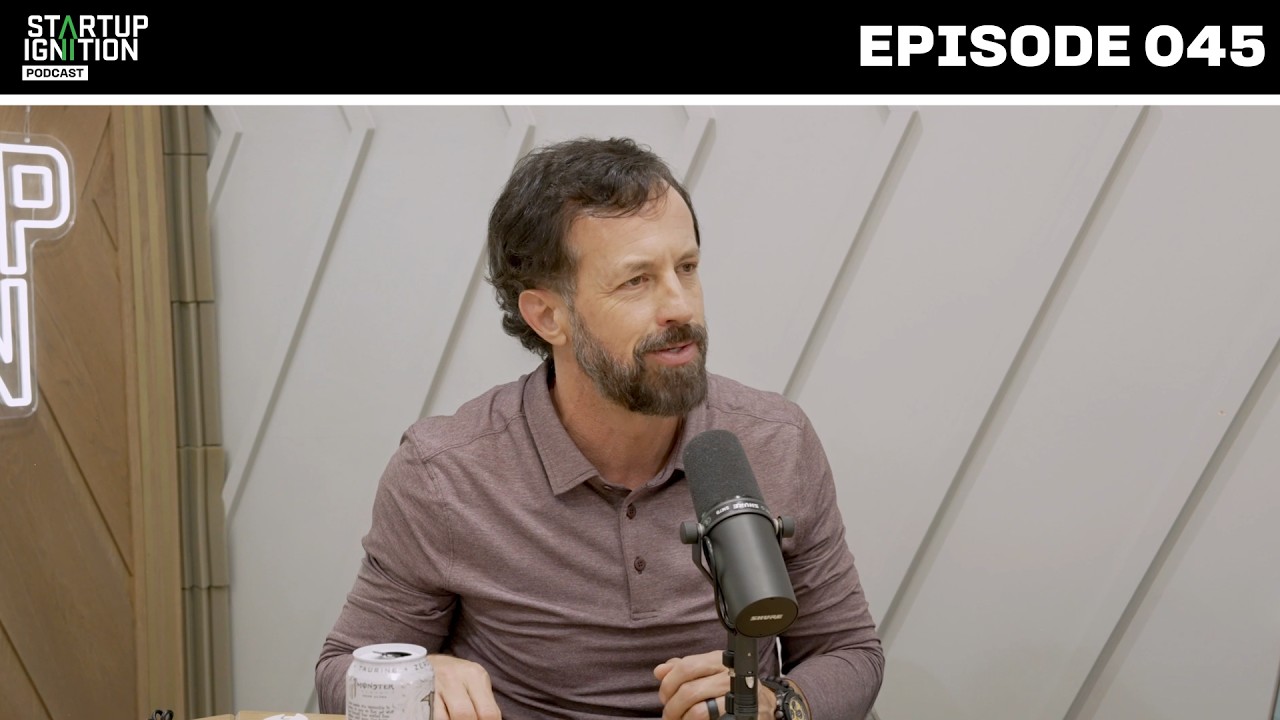
Jeremy Andrus shares how he acquired Traeger Grills in 2014 at $70M in sales and grew it to $545M+ by 2020, then took it public at a $2B valuation. He also discusses scaling Skullcandy from under $1M to $300M and why company culture is the ultimate competitive moat.
Jeremy Andrus is the CEO and Chairman of Traeger Grills, which he acquired in 2014 and grew from $70M to $545M+ in revenue before taking it public on NYSE at a $2B valuation. Previously CEO of Skullcandy, growing it from under $1M to $300M in sales through its IPO. Harvard MBA, BYU grad.
Show full transcript
I spent a ton of time before Trager or Post Skull Candy writing about my experience like really really being introspective around the success and the failures >> and so that became the blueprint at least for the first two or three years at Trager. And what I've realized is you know as a business leader and still trying to be an entrepreneur because I think that's important. You have to reinvent yourself and you have to reinvent your team and you got to reinvent your company. And if you don't do that, you get disrupted the same way that you were disrupted. X2. >> Welcome back to the Startup Ignition Podcast. Thank you so much for watching, liking, subscribing, whatever you're doing it, sharing it with your co-founder, sharing it with your entrepreneurial buddies. But today, I'm Tyler. You know me by now. And this is John, our co-host. >> Hello. Hello. >> We're your fatherson dynamic duo. in entrepreneurship training. I don't know who else you're listening to that has a father-son podcast, but maybe there's a couple out there. But today, >> I'm about to start one. >> Yeah. Oh, hey Jeremy. Today we have Jeremy Andress, guys. Awesome guest. I'm so excited to have you. I'm so excited to dive into the conversation. And hey, maybe we'll take you up on your father-son podcast. How many sons do you have? >> Two. >> Two sons. >> Two. Yes. >> Okay. And how many kids total? >> Six. >> Okay. >> Oh, wow. >> Four. Four little girls. And we tried one more time for a boy. >> Oh wow. >> Hit a double in the bottom of the ninth. >> Identical twin boys. There was no way we were. >> It's been amazing. They're 9 years old now. Yeah. >> Oh wow. >> They're my buds. >> That's awesome. Is that who you're going to the basketball game today? >> Yes. Yeah. Jeremy said, "Oh, I got to I got to push up the podcast because I got to go to a basketball game tonight. It's a high school basketball game." Like that's crazy that your kids want to go to a high school game, huh? >> Yes, indeed. >> Um but you're saying it's like a semi-final or something. >> Uh okay. So anyways, we're John and Tyler. This is Jeremy. Jeremy, I have a bio on you. I'm going to read it real quick here and then we're going to do a fun little icebreaker and then we're going to get into the meat of the podcast, which is we just hope to hear your story. >> Sounds good. >> Okay. Um, so Jeremy Andress is a serial entrepreneur and business leader best known for transforming Trager Grills and Skull Candy. He joined Skull Candy back in what 20 >> uh 0 late 04 >> 2004 2005 area era. Yeah, we're talking right after the dot era. Um then after that uh it was a tiny little startup, Skull Candy. And then same thing with Trager Grills, right? Trager Grills, you turned that thing into a $300 million public company. Now, uh you have moved its headquarters from Oregon to Utah, rebuilding the team, putting people first in your culture, and under your leadership, Trigger has just gone to new heights. How long have you been at doing Trager Grills now? >> 12 12 years. And uh we're about a $500 million business. AI has failed me once again. So, not f not 300, 500 million public company. Holy moly, that's amazing. You were also EY entrepreneur of the year. >> Uh, what else do you have underneath your name? You're hugely known for culture and community building. You earned your MBA from Harvard. Uh, you went to BYU for your undergrad. What did you study there? >> Uh, I studied economics, international relations. >> Hey, an economics major who has actually turned entrepreneur. Who would have thought, right? 100%. >> Yeah. And you're living up in Salt Lake City with apparently your six kids >> and your full-time Trager or and are you doing anything cool, fun, new, and different? >> You know what? Uh so, so, so first of all, I love that bios have none of my failures in there because we don't have time for that list. Honestly, I am I am busy all the time. >> Yeah, >> six kids, very involved. Trager is definitely Trager is where I spend most of my energy, but I I I sit some I sit some non-b businessiness boards like Go. >> I know you're doing a lot of angel investing too. I read too. >> You know what? I I do far too much angel investing. Uh it is I I'll call it a habit, a passion, a weakness. might be an addiction. >> An and addiction is probably uh it's probably a good word, but you know, we >> all of us have that a little >> we my my family office uh we've we we have hundreds of small investments and you know the guys that run it tell me this is getting too complicated. I'm like that's your job. >> Yeah. >> I just I love I love to invest. I love entrepreneurship. >> That's awesome. >> Yeah. Your superpower to me has always been too. I think about it as kind of like um you leadership and operations like you really know how to lead and bring in efficient effective operations into startup ventures. That's kind of what I've always looked at you as you take it from this level to that level and you're not a lot of founders and entrepreneurs can actually make it through that full gauntlet. >> Has it has it always been product companies? >> You know what? So So I I have a I have a lot of passion for product. I really love durables. I love innovation. I love sort of bringing technology to stale product categories. >> And so I I do love product. I love entrepreneurship first and foremost. And John, what what it's interesting that you say that one of the things that I was literally telling my CFO this yesterday in in our annual performance review where he's giving me feedback- which I which I gladly take. And one of the things I said is, you know, I've been an entrepreneur for over 20 years now. And every one of those years, I think about how can I how can I bridge from being an entrepreneur to being a good leader to to being a CEO who's not just in every detail, in every product, pricing, strategy meeting, but someone that's actually learning how to motivate and inspire people. >> Yeah. Yeah. >> And that's that's not that that is not I'll just say for me it's not an easy transition because as an entrepreneur you want to be in the middle of everything and then you realize that doesn't scale. >> You got to figure out how do you how do you scale by inspiring people and building culture that creates >> delegating without abdicating. >> That that's right. Trust trust but verify hold accountable. >> Right. but but but not not with an iron fist, but but with something that actually unlocks people's like their their real value and their real potential. So, I I'm I'm somewhere on that continuum. Better than I was a year ago. Certainly better than when I started Skull Candy. >> Yeah. >> I thought I knew what I was doing. I looked back and I had no idea. That's amazing. >> Yeah. It's you. We've had Adam Edmonds on the podcast. And so Adam was somebody I mentored from his earliest days at school in college >> and he shared with us something that he's learned about his career. He you know he fancied himself being an entrepreneur startup guy but he's found out he's just really good at operations. So >> that's why he got tagged over to Entrada and Entrada's gone from 1 billion to four billion under his tenure and even ready to go more and he's just really good leader and operator. Adam's awesome. Yeah. I mean, it's really interesting that and of course I knew him when he was just trying to be a scrappy student entrepreneur, right? So, it's interesting. >> I I want to hear about how you guys met, but I'm going to do this icebreaker. I'm going to force an icebreaker. Okay. I got a quick game to get to get into the mood of podcasting. Jeremy, get a little loose here. I got a game. And you're playing, too. Okay. I got a game here called Grill or Chill. I hate to dive into Trager. You're like, "Guys, >> Grill or Chill." >> You guys, Trager's not my identity. getting in my grill this fast. >> Yeah. So, grill or chill. Okay. I'm going to give you a prompt in the age of AI, right? We're all prompting. I'm going to give you a prompt and you're going to tell me if you're grilling, if you're into it, or if you're chilling and you're not into it. All right. All right. And you're two, you two. First one, we're going to start easy. Pineapple on pizza. >> Chill. >> You're chilling on it. >> You are hard grilling. I know my dad. He's hard. >> I'm not offended. It's not where I start. >> I get offended. I get so not offended. I get so many people attacking me a little bit when I go for pizza that are pizza affixion going, "How can you put pineapple on a pizza?" >> For what it's worth, >> the Hawaiian roots, there for what it's worth, I I'm mildly grilling on that. >> Okay, here we go. Next one. Uh, starting a company with your best friend as your co-founder. >> Oo, >> you grilling or chilling? >> Uh, it it it boy, it's hard to say without knowing the dynamic, but but on balance, I love it. I love a partnership of people who know and trust and care for each other. >> Yeah. >> Um while they can go sideways, I think if like if you if you really know this person, >> I'm I'm I'm grilling. I I think it's a great way to live life with people you love and like you get inspired with. >> Yep. I'm a slight grill with caution because like you and I are uh working together, father son. There's >> incredible risk with that, but also incredible levels of trust. >> Grillin with caution. and he's touching the Trager caution. >> I I' I've had some spatula. >> I've had some best friends I've pulled into my ventures over the years and um it's been really good and they did a really good job and they became wealthy and it was good. So, >> you know what? I I actually I actually like that response because the the with caution I've seen it go very badly and it's actually very those ones don't just go badly, they become toxic and it's very sad to see. >> Okay, quick story and then we'll move on to the next one here. We invested in a company through our fund. It was two brothers that started the company and then one additional third co-founder, tertiary co-founder who was not related to the family. The two brothers were the one that broke up the co-founding team, not the third one coming. >> Don't tell the story cuz people can't even go into I can't even leave it at that. It was bad. All right, next one. >> Grill with caution. I like that. >> Yeah, grill. We're grilling with caution over here. Wearing Crocs. Are you grilling? Are you chilling? >> I'm not grilling. I'm not. chilling hard chilling. >> I am I'm okay to grill cuz I have those in my uh garage and when I need to go outside to take the garbage out, put on the top. >> You have six kids. You own a 100 pair of my kids do and my boys like they're they're big aggressive football and lacrosse players. I don't know where they got any of the any of their I do from their from their mom. My wife's an amazing athlete, >> but they've got these incredible pink Crocs they wear with so much passion. >> But but here here's the one thing I will tell you. I I I remember looking at Crocs when when we were taking Skull Candy public. Croc Crocs kind of went public and it was a it was a disaster. I mean, it went up and it dropped off a cliff. >> Fast forward, >> I don't know, 15 17 years later. >> A CEO came in and completely reinvented Crocs and took it from zero to hero. I mean, it's got to be worth I haven't checked it lately, seven, seven, six, seven, eight billion dollars. >> I mean, they are hot. and and and so I would say from from a maybe not my style um but I really have a lot of respect for a CEO that can take something >> that's it's incredible. >> Yeah. I uh I also besides the pair I have in my garage I have a literally a pair of golf shoe Crocs. Crocs that are golf shoes. >> Oh, I need to get my hands on that. >> That is that is a product extension. I didn't know they did that. >> They did that. It's got all the um uh what do you call them underneath the the cleats? It's crazy. that they're Crocs. >> I'm leaving here and buying my first pair of Crocs. Thank you for inspiring me. >> Okay, here we go. Jeremy, I'm just going to dangle this one out for you. >> Where are we going? >> Okay. You grilling or chilling on my idea here? A trigger AI. Are you grilling or you chilling? >> Trager AI. Question is, what does it do? >> I don't know. >> Okay. >> It's a It's a grilling mate that AI infused into your next grill. >> It's your grilling co-pilot. >> So, I am 100% grilling on I I am. But it in part part of that is that >> you heard it here first, folks. >> Yeah. Yeah. I I I I can't tell you what I'm thinking about. What but but here's what I would say. Um you know, we are not an appliance company. We we we are not we are not steel and and steel benders and welders and electronics and and like all of those things are commodities. The wood that goes in it. >> We're experienced providers. >> Yep. >> And when you think about what really inspires someone to cook, you got to nail the durable. But it's it's really the content and it's the it's sort of the frictionless frictionless experience of inspiring them, teaching them and because everyone comes from a different place and some of the things that we find three years ago were hard to do in an app in terms of you know like really robust meal planning and and timing of when you put it on, what temperatures, how you put a meal together. >> I think AI is going to be an incredible tool. Oh, for sure. >> You say, "I'm you, you live in AI." You know, you have your Trager app which has all this stuff, but they say, "Hey, I want to do something cool for my friends coming over tonight with my Trago. What's the coolest latest thing I can do?" And it tells you some ideas >> and it says, "Take a picture of your refrigerator and I'll tell you exactly what to cook." Like, I'll tell you what you have and what you might see. >> We just leaked the new future trigger grill infused with AI. >> It's coming. But, but it's like it's so fascinating. You think about what is going to get disrupted. >> Yeah. How quickly and where is their value? AI is never going to build our grills. The optimist robots that that that have AI and that may >> Yeah. >> But but how do you how do you create an advantage even in a space that's not AI powered to create emotional connection with your consumer? >> You know, this question leads something before we end the episode. I have to tell one uh both basically Jeremy and Rick Alden of Skull Candy back in the day taught me something super important that informed the rest of my angel investing career. I learned something from that deal and I want to share that because it's spot on with what you're saying about the experience. >> So, we're going back to that. Don't say now. >> Not now. We're gonna go back when I got to get through this icebreaker, boys. >> When we met when we met, By the way, though, I got to say about the Optimus thing. Did you guys see yesterday the Chinese uh video that came out where they had like 30 robots doing Tai Chi kung fu moves in unison? >> Yeah, I've seen I've seen Do we know if that was AI generated? I don't know. Maybe it was. You You never know. You really don't know. >> If that was real, I go, "What the heck?" >> We We could go sideways on >> I I was envisioning soldiers coming over the hill. >> Okay, here we go. I'm moving us along, boys. Here we go. >> You're doing You're doing a good job. >> I'm I'm trying to be moderator here. >> We're having too much fun. >> I know. Here we go. >> Do you prescribe to this? Okay. You grilling or chilling? Growth at all cost mindset. >> Oh my gosh. You're catching me in a moment. I am chill on that. >> You are super chill on that. >> You know what? Uh so so it's interesting I yeah I I was a grill at all costs that that too grow at all costs entrepreneur until I realized that it can lead you in a tough spot and you always need to be moderating is my growth actually driving long-term value creation and you realize that sometimes it is and sometimes it's not. >> What do you mean by that? Dive into that just for a second. You know what? Um, when when you can really create a a a business whose flywheel lives on high quality dollars, like high quality, sustainable, repeatable, profitable dollars, then you'd rather be a smaller business doing that than a bit bigger business that's just not creating underlying value where it's not repeatable, it's not profitable, it's not a segment that can grow. There are all sorts of things that you step back and look at and and I just without go I can go sideways on the la the last 12 months in our business. >> Yeah. >> Hardest of my 20 plus year career. >> And one of the things that was really hard for me to learn is we needed to unwind some of the growth. I mean like we we we are deliberately cutting many tens of millions of dollars more uh that that were they were they were a bandwidth suck. They weren't going anywhere. They were complicated. They were supply chain complicated. They were unprofitable. They were bad end consumer experiences. We shut down our direct to consumer business which almost no one in consumer does. And so it's like really understanding how is value getting created long term and as an entrepreneur it's a product and it's all growth. Mhm. >> Until you start to hit natural ceilings and you realize I need to find good growth, not just growth. >> Sustainability. >> Sustainability for sure. >> So, so one of the things too, >> by the way, that's a that's a great question. If you'd asked me that three years ago, I'm like growth all the time. Yes. >> Well, now I am interested. Are you grilling or chilling on that? >> So, I am on growth at all cost. >> It depends. This a very important a lot of e as an economics. >> Got a lot of depends on >> the econ you as an economic major, you know, most answers in economics are it depends on this and that, right? So, but on this one is the and you know we are super big believers in assets and cycles. Okay. So, it's where you're at in the macroeconomic cycle, not the life cycle of a a product as much as the you know where the Fed fund rate is and what are we going in an interest >> environment that's saying let's go for it right that type of thing. So, I'm just saying if I was in 2012 to 2016, I'd be saying probably growth at all costs because I know what's coming, a bubble, and we're marching up towards a bubble. And that growth, that revenue, wherever it comes from, is going to get highly rewarded in 2020 and 2021, if I were to look back and analyze that. But in 2022, 2023, 2024, we have to know where we're at in the economic cycle. And that is not a smart play. We got to say, yeah, we got to say not growth at all costs because this could cost us our company. So, we've got to be very measured in what we do in the 22 to 23. So, zero interest rate period >> is different than >> you're spot on. >> You know what I'm saying? We have to where like I I want to as a as one of the legends in the Utah ecosystem and you truly are. Um like I've maintained this like I saw the beginnings at BYU of Podium and Divvy. Let's take those two companies. I believe both of those companies if they had started in 2018 2019 versus 2012 2014 would we have the same outcome? >> Yeah, that is that is that's actually really interesting. The answer is >> answer is absolutely not. >> Exactly. >> It's like it it it matters how much you can accelerate into growth investments. If you're swimming upstream for growth, you would ra you would rather moderate growth and focus on underlying unit economics and and just think about a business model. And I and I love that you've couched it in a macro economy because that really is it's like what is the interest rate environment and what what what is the underlying engine of business customers of consumers? Y >> and so I've certainly seen that but I but I've also seen that there's there are life cycles within industries within counter >> within categories or waves within companies generally speaking a lot of people think venture >> is immune to these cycles but it's not either is Bitcoin by the way either is any asset class we have to be aware of how that asset class is affecting the cycle and where we're at. Right. I've just that's what I've noticed. >> No, you're right. and and and and I and I've I've seen some some some counteryclical, you know, two 2008 to 2012. >> Yeah. >> Like that was the first recession I lived through as a business leader >> and I didn't know there was a recession. >> Like we we in 2007 we were a, you know, $40 million business. In 2012, we were $300 million. Wasn't that bad, right? >> It was it wasn't bad. So So we had a counter, you know, for us the counteryclical was was portable media and we were just connected to that. had no idea the housing market was >> that blew up during that time. Yeah. >> Yeah. >> Yeah. Okay. This leads me into the podcast over like this is by the way I I I'm impressed that we're what 20 minutes in. I know you're >> it's like but but we're hitting some media like beyond. >> I have three more. Should I skip them or should we keep going? I think we should keep going. Great. >> Okay, here we go. You grilling or chilling on this one, Jeremy? >> Office dogs. What do you think about office dogs? >> Bringing dogs to the world. Uh so so I'm I'm grilling on office dogs with caution. >> Okay. >> And and and and here's gosh by I'm sitting the Abbey which is a place where we feed our team yesterday have having a meeting over lunch. >> Wait, does Trigger allow office dogs? >> We we we do uh with with my with my um CHRO and there's a dog barking and barking and barking. I am a dog lover. My my children want a dog so bad. My wife is a hard no on dogs. >> Oh yeah. And uh and that's okay. I don't I don't I don't fight that battle. And so I'm happy to have them there, but when they're leaving messes and they're yapping and we've got 300 people in this room for a company meeting and there's a dog that's upset that they're not joining the meeting. >> You you got to you got to take a little bit of ownership over. But I but I I love dogs. >> I'm chilling. >> Sensitive subject. Sorry. Interesting. >> I I'm chilling because I maybe it's my age, but I chill on remote work. I you know >> I was going to say if the question was remote work or not, he's chilling hard. >> All the data shows remote work is way less productive. >> I have strong opinions on this one. >> Oh, you do? >> Yeah. >> What's your opinion? >> I am 100% in your camp on this one. I I >> office only. >> I am chilling. Well, that's not what we do at Trager right now. Uh but I but I I am I've always been a believer that you know the the intangible or the X factor in an organization is >> in person. >> It's it's in person. It's it's the culture and how you live it together. It's it's these sort of spontaneous moments that don't happen in 30 or hour >> collisions between humans that make magic. >> It's trust and relationships and that's not that's not clinical. And I I actually like fortunately like we we really debated this because talking about cycles we grew from you know 2013 to 2021 and really accelerated during the pandemic and then 22 was when we decided you know we were we were not focused on growth we were focused on other things profit liquidity things like that >> and um and and I'm watching this this ecosystem of companies say no work anywhere come in anytime. >> Yeah. And we we chose to not pioneer the first to be back at the office other than we said we're three days and it's not three random days. I want everyone here Monday through Wednesday. But I actually really appreciate that other companies are now saying we're together all the time because it gives us something to lean into. I think it's the right thing for an organization. >> How many how many employees are there at Trigger now? >> Uh well in in in Utah, which are our Salt Lake headquarter office, uh just under 300. Oh wow. Yeah. So you you're three days a week right now. >> We're three days a week. Uh we cook every day for everyone who's there, which should be everyone. And um you know what? I I just think I I I think there was a time for this experiment. I always believed it was a failure. Now, here's what I'll say. Our team's really good. They're really committed. We went through some downsizing last year post tariffs. And so you're sort of left with the best of the best. Mhm. >> And so I do believe that right now because there there's a lot of appetite for like they love the flexibility >> Thursday, Friday >> for now it's working fine. >> Yeah. >> But it's just but back to the dog too. I just see it as a >> I love how this started as office dogs where this has arrived to. >> All right. You better hit your last. >> But so you to summarize you're you're you are chilling on office dogs and you are chilling on uh return to office. No, you're grilling on office. I I'm I'm grilling on that. No, no question. >> Yep. Okay, last one and then this is this because this is the one I I want to ask you. >> Taking a company public, are you grilling or are you chilling? >> Oh my gosh, >> how much time do you have? Let's just say when when I when I >> say whatever you want. >> When I So, so I'll answer with a story. when I when I went on the Trager IPO road show uh which was actually from the four from the four my four seasons hotel room >> in downtown uh in downtown New York because we >> during the pandemic we couldn't do a road show. >> Uh >> well, you were just jumping on video calls in the Four Seasons in New York. >> Yes. And and we had so many more Oh, it was it was the most intense far more intense than doing 30 meetings over two weeks in 30 different well 50 meetings in 30 cities. It was like 4 days like 50 meetings. >> Wow. >> 49 of the 50 meetings from the very first one. >> Um I I I published something in Harvard Business Review in like 2017 18 and I and I made this comment that's buried in like four or five page article which was I will I I left Skull Candy because I hated running a public company and I'll never do it again. like from like the very the very first person it's like okay I'm gonna quote you on I'm >> and then and it's like every other meeting it's like hey I read something let me explain to you what you read okay >> and so honestly um but I will say it depends >> um I don't mind running a public company uh I hated doing it the first time because I was young and I was scared and we were the highest shorted stock on the NASDAQ and that's uncomfort it's uncomfortable uh but I will say that I do think There is a case for being a public company, but I don't believe that consu consumer product brands make for great public companies. And that's just because you know what what Wall Street really values is predictability. You almost get paid more for predictability than for growth. >> Growth that's not predictable, you don't get paid for. Um, consumer companies uh tend to go through more aggressive cycles, particularly consumer discretionary. And so and and and notably high ticket things things that are just the durables that you can just get another year or two out of them. >> Aren't there aren't a ton of public companies CPG companies? >> Yeah. And you know what? I I just I think it's really hard to be a public company w without scale. And in in a consumer business, you've got to be north of a billion dollars of revenue. And we're not. >> Yeah. >> And uh just just without like real predictability of if you are a a direct business that has a very very predictable mo predictable model. But when you are predominantly selling through other retailers, you have a wholesale business. Yeah. >> You really depend upon >> the investments that they want to make to drive your brand. >> And so, um, I've learned a lot the second time being public if I would be honest. That wasn't, um, you know, that wasn't what I would have necessarily chosen. It wasn't my first choice, but I had private equity partners that they, um, they were motivated to do it. I was willing to do it. They they've been great partners and I failed the first time at it. So I said, "Let me see if I can s succeed the second time." >> So okay. >> And I failed the second time. >> Insight you're sharing. >> This is so good. Let me rephrase the grill or chill grill or chill proposal or prompt. >> So not thinking historically now, >> thinking forward, thinking of our audience member who's a budding entrepreneur starting something new, hopefully potentially getting to this spot. Should they grill or should they chill on a public IPO? >> I think that I like for for the for the most part I think they should chill. >> They should chill on it. >> And I I I think there are select cases. There's so much so much private market capital liquidity that I think there has to be a very specific case to go public and it's not and it's not for an exit. Yeah. >> It's actually not an exit. When you are a founder, when you're a concentrated owner, everyone gets upset every time you sell. >> Yeah. Yeah, they they they don't care if you sell as long as they're no longer holders. >> And so I I I it's an incredible experience to take a business public, >> but if it's not right, it's like marrying the wrong person and saying, "Boy, that that was a that was a great wedding party, but whoa." Yeah. >> Well, all I wanted was a party. >> I can't I can't speak to it. I've never taken a company public, but this guy over here has. Are you grilling or chilling? >> I'm chilling. Uh I agree with everything he's saying. Also, the people you meet in the process. There's some great ones. There's also some people that are not so great. Yeah. Um, you know, the New York crowd, I'm going to just say it up front, right? They're they're a tough crowd and they're different than we than my normal people I hang around, right? So, and and so that's that. And it's just the, you know, you have to be the right kind of company. Mine was lucky. I was in the dotcom era. I was a sweetheart company of that style. So, it was really pretty good. But I could see that if everything doesn't come together perfectly, it's probably more negative, positive. >> Yeah, I agree. I agree. That's how I'm saying. And look, it's I actually it's a lot harder to run a public company today than it was 20 years ago. Sarbain Oxley and all just all of the very very tight SEC regulation policy makes it hard. >> And then with with uh automated trading right now, the shorting that goes on, I mean, there's just a lot that comes with it. I you know you know if you're an employee of a public company that has a rocket ship opportunity going public it's great but the leaders the founders the seauite it's not the best life >> it's not I agree I agree yeah >> okay all right >> otherwise we have no opinion on that topic >> yes exactly >> other than the last 10 minutes we have no opinion uh you survived my hot seat that was great I I mean we're we're 25 minutes into the podcast >> it was getting a little warm in here then let's >> and now we can officially fire up the full conversation Okay, we can move into Jeremy and your background. Take us >> back. I want to hear this though. I mean, pre Skull Candy. I want to hear your history before >> Skull. So So where do we begin, Jeremy? You You take us wherever you Where'd you go to high school? >> Well, so so so I'll start by I went to high school in Washington DC. So I'm uh I'm I'm kind of an East Coaster. >> Live lived in Europe for a little bit growing up in the Midwest till I was 11. Here's how I would describe here's how I would describe me and and and how that sort of that that grew with me and why I'm an entrepreneur today. Um, gritty. I grew up in I was telling my boys this and they couldn't understand this last night as we were driving back from Park City. Uh, I had a paper out at 7 years old and I I delivered the paper seven days a week with my older sister uh in Minnesota in the blistering cold on Sunday mornings. You'd have to kind of go you have to pack pack the papers and put the wan ads and the comics and in in the paper >> and take this metal cart around the neighborhood. But that's I grew up in a lower middle income home and if I wanted to buy a pair of Nike shoes, I'm going to deliver the paper and I'm going to collect the money from the paper customers, which is the worst thing in the world. Uh I cut I started I bought a lawnmower at like eight years old and started cutting lawns. And so I grew up very gritty. Like I just grew up gritty. My dad was a hard worker and so it was in my blood but but I also I I hated scarcity and I kind of grew up in scarcity and so that motivated me to work hard. Um I was uh I'm a I'm a very introverted person and I was very and I was small growing up and so I was always confident but I was quietly confident and I always had a chip on my shoulder. It wasn't a negative chip. I'm like a super positive. >> How many siblings do you do you have? four siblings and uh I'm the second. My older sister is 18 months older. But but I but I knew that I had to outwork everyone else because I al I sort of looked at myself as high confidence but but but sort of uh mediocre capability. I always thought at the end I think it today when I say this to my wife she hates she's like ah stop you're the smartest person I know. I was like I'm actually not being self-deprecated. I actually really believe, you know, business and life success is a willingness to just methodically keep going through good times and through bad at the same pace. >> Yeah. But we also have different paradigms to measure that like the academic world and the whole education system. I mean that's why we say A students teach B students how to work for C students. >> And uh because there's not just an IQ, there's an EQ. >> There's an EQ. And so so and by the way I I actually that that is one of the reasons why I have had some success. Um you know at Harvard Business School I worked harder than anyone. I mean like I was in the Baker library every day six seven hours studying and and I and I was middle of the pack. >> Mhm. >> But I know how to make I I know how to make money. I know how to business. Uh I could I I would I would have negotiated well below sticker price on a car at four or five years old. Like I've always loved negotiation. I've always been selling things. I've always been >> writing business. >> This is kind of a hallmark of Utah, too. If you think about it, I think let's take Silicon Valley. >> Often deeper tech, >> really deep thinkers, >> can't sell their way out of a paperback. >> It's so true. >> Utah cut kind of cut >> tech we write software code. We write in a weekend >> and then we sell the heck out of them and create a unicorn. But I also think that that's why when a AI could really play to the strength the go to market strength in Utah, right? >> Um because it sort of it levels the playing field a little bit on development. >> Thought that's a good insight. Like AI is actually going to help Utah. >> Oh, for sure. >> A lot. >> Well, it's going to make the world flatter. Yep. >> It's going to shrink the world and Utah is going to have more prominent presence. And and as AI enables all of those skills and the execution, it's like it's about owning the market, the customer, who's got access to the customer more than anything else. As product cost comes down, >> that's going to matter more more. So, how did Minnesota DC happen? >> Yeah. >> You you know what? U so my my dad uh he's a brand marketer. >> Yeah. >> And uh I I grew up in a in a General Mills family in Minnesota. >> Okay. Okay. Uh, I was in the back of the Cheerios box in second grade because their paid model didn't show up. So, my they called the school, can you come and take pictures >> and Jeremy was the best looking sibling, so they selected you? >> Jeremy was the only one available that day. Um, so so moved to the UK to the Midlands of England when I was 11 years old. Um, General Mills owned a toy company there that my dad went went to run. So, I definitely grew up in in a product and a brand family. >> Yeah. Um and then uh went to uh General sorry went went to Marriott Corporation DC and was was very early in the in the courtyard by Marriott Brand. >> Your dad moved from General Mills to Marriott. >> He did. Okay. Yep. Um Bill Marriott recruited him recruited him there and and and it's interesting like and he be he became an entrepreneur in the second part of his career. I saw a couple of >> very meaningful disruptions to to my dad's career. The one was when we went from uh the UK to Boston, again, a General Mills owned toy company called Parker Brothers. It's like Monopoly Games and GI Joe. >> Yeah. >> Uh they had a large uh Atari Atari video game >> division and this thing was blowing up >> and my dad lost his job when when it went it went from like feast to famine overnight. >> Lost his job. Uh that that business unit it disappeared. General Mills owned Parker Brothers and Atari. >> Yeah. >> I had no idea. >> They owned a lot of businesses. Surprise, you and of course like focus is a real business principle. >> They were just serial. >> Uh they they they were a lot. Um but but so so went to Marriott and then um lost his job again when he was uh he he was heading up the Courtyard International division and in the early 90s Marriott almost didn't survive and and and and so he became an entrepreneur and like I saw entrepreneurship in him. We did things together all the time. Remember one summer he started a scone a scone stand at the Minnesota State Fair because he was thinking about building a scone retail concept. Yeah. >> And uh so he became an entrepreneur really really out of necessity. Um you know he he had few months of severance and >> he uh he built a business and and was very very successful in his second career. Um but it's interesting like entrepreneurship oftenimes comes early. Yeah, >> he had a mindset, but when you have kids early and you have a, you know, not a not a >> not a great lifestyle to support, but but a mortgage to pay and kids going to college. >> And so that really inspired me to watch him because I I always believed that I was a business builder, which which is amazing when you look at some of the things I did. It's like, what were you thinking? Like you did a summer of investment banking. It was like it was horrible. You spent two and a half years as a management consultant. Like these things are just the antithesis of entrepreneurship. >> You post your economics degree. You just got into the work. >> Well, you know what? Economics made me really smart and I decided I was going to be a management consultant. Learn strategy. >> Beat the risk and made you risk averse that. >> So I what what it actually did is it it it it made me a risk-seeking animal. Oh, really? because I I I'm in consulting and it's just like it is a portfolio of risk spread across other companies and when they don't succeed you go somewhere else and when you when your advice is not valuable it's all right you already got paid and I saw this and I couldn't stand having a finished product be a PowerPoint strategy document >> and not really know you don't have skin in the game to know if it works and so you know two two years but two two or so years as into management consulting Uh, I started day trading stocks full-time and this this is late 90s and you know I'd saved a lot of money cutting lawns and you know delivering newspapers and stuff and uh I was just so bored in management consulting that I would show up in my office in Santa Monica, California at you know 3:30 4 in the morning and I would start day trading. >> Um and you know I I I turned a hundred grand into $2.5 million which was a ton of money then. Oh wow. Yeah, that's a lot. >> And and by the way, I wouldn't tell you the story if that was the end of the story. >> Um and then I turned $2.5 million into negative $200,000. >> Oh my god, that could happen. >> And and that's when I started shorting internet stocks that I just like these things have no business model. This is insane. I I was right. >> What year did you do that in? >> Uh 98.99. >> Little early to start shorting. >> I I I was early. I I was I was >> a year or two later, you would have made a lot of money, >> right? But early. and and and so no consulting like made me realize I want to have skin in the game. Day trading was like but but I wasn't creating value. Yeah. And so >> you know I started building real estate too slow like I loved I loved going from building PowerPoint decks to seeing like things come out of the ground in development but too slow for me. >> Yeah. And so like I look a career journey is for me was just it was a lot of trial and error >> and it was many years of feeling like I was spinning my wheels working my hardest and not really finding either success like actually more important than success not finding like a real connection to what I was building. And I've actually found it and I actually found it in business you've never heard of because it was not enormously successful. But this is when I realized, okay, you've always been an entrepreneur. You're show you're showing up to this place, writing a business plan, raising money, doing customer calls, operating a forklift in the warehouse, and you're happy as could be making no money whatsoever. And so it it's been a journey, but it took me a while to figure out like to really unlock what I cared the most about. >> It's about what I'm hearing and it's what I like to say. Entrepreneurship entrepreneurs are really builder growers. You like to build and grow things. >> That's exactly it. Yeah. Which which is why it's a little hard when you get to a moment where it's not about growth. >> Yeah. >> And you got to think this is about this is about being a catalyst for the next wave of growth. >> Setting the table for the next. So you have to do the build process before you scale. Yes. Build, scale, build. And I also like to say it's a stair step. >> It's not a straight curve. It's set the table, scale. Set the table, scale. >> Exactly. Right. So, when when did you first start your own thing then? So, you did consulting. You did >> Let's go back to the high school. So, high school in DC, then you came out to Utah for college. >> Did did BYU >> BYU? So, you got that undergraduate. Then you worked for a while. I became When did Harvard come into play? Well, so so Harvard Harvard's something I always wanted to do. I I I >> That was after management consulting and things. >> It was. So I I I I worked for four years and um >> You graduated college what year? >> Uh 96. >> And then you worked in these places you were saying. So then you went to Harvard in 2000. So for four years you got during the dot era. Why didn't you start or join a dot startup? >> You know what? So by the way, it's a good question. Uh >> hindsight's 2020. Yeah. and and and I >> think you've been you've done all right. It's okay. >> Well, I'm just saying that was the perfect it was the perfect time and and honestly I invested in a lot of.coms and then I started shorting them. >> Yes. >> Um so so so right right and wrong. Um but I I I I left BYU with a really defined career strategy and I won't say that was a mistake but it took me a while to figure out my strategy was wrong. And there's some there's something there's something about being willing to make investments but also being will investments in yourself and your career but also being willing to to be opportunistic and to follow something that really feels good where your gut says no this is what I love right now. >> I was like the.com like 96 should have been like the best part of my career and it was the worst part of my career. I was miserable >> almost every day. So I started doing random things. >> Yeah. >> Um Har Har Har Har Har Har Har Har Har Har Har Har Har Har Har Har Har Har Har Har Har Har Har Har Har Har Har Har Har Har Har Har Har Har Har Har Har Har Har Har Harvard like interestingly Harvard was something I decided to do when I was 13 years old. >> You know I we we had a family friend who ran Black & Decker and I really admired him and great family. I'd go see him every year. I'm trying to remember his name cuz I Nolan Arch that was a family friend. You meet him in DC. >> Yeah. In Maryland. >> Yeah. Because he's he's a legend too. Yeah. >> He he is a great great leader. Very successful business leader. He went to Harvard and so I said I'm going to go to Harvard. Now, interesting. My dad went to Kellogg, went to Northwestern, and because I love consumer and brand so much, >> Kellogg probably would have been a great fit for me. >> Yeah. >> Um, but uh, but I decided that's where I was going to go to school. And so, I sort of built consulting as like like the right platform to get into Harvard. >> And it took me a minute to figure out I just wasn't happy doing what I was doing uh, as a consultant. And and by the way, I went to I went to Harvard and I I made some good friends. It's an it's an experience that I value, but probably not something that was that valuable to me. >> The network you make there seems to sometimes be more valuable than the education. And >> not not even close. And it's the network is phenomenally valuable. Yeah. >> The education is it's a great education, but when you're an entrepreneur, your education is tenfold every year. Yeah. >> Like when you have skin in the game and you have to learn >> and I realize that and I I would even say, >> you know, the the last 12 months of my career, I learned more than the prior 20 years combined. >> There's something about having skin in the game. >> Y >> and and it's not when you're succeeding and it's when it's deeply painful. >> You learn fast, right? >> Because it learning matters. >> Trial and error. >> Trial and error. Yes. >> The world is a very efficient teacher. Yes. It's not always pleasant. >> It's a cruel it's a cruel teacher, but you know what? That's it's awesome. That's where growth comes from. >> So So I I I want to get to school candy. I want to get to Trigger. I want to hear all the stories. >> So it was it's a three-year program at Harvard. >> Two year. >> It was two year. So two years. So you were done in 2002 from Harvard. >> And then how did you find yourself in Utah and joining Skull Candy? >> Well, so so truth be known, I graduated without a job. Uh, I had decided to become an entrepreneur and my parents had relocated from DC to Park City and so I had a basement to live in. >> Okay. >> They didn't love that. They loved me, but like, hey, first of all, you're you're a single guy. Like, stop focusing so much. >> You were single during all this. >> I was stop focusing so much on your career and you're living in our basement again. And so, I partnered with my cousin to build a business. Um, it was a it was a it was a consumer business called Igloo's Frozen Drinks. So, so I I I won't go into what it what what it does other than to say, uh, I graduated from Harvard and I got a phone call from um, career services. They said, "Hey, Business Week does this annual business school edition every October. You know, we've given him some name. Would it be okay if we gave him your name to interview you?" I'm like, "Whoa, no one's ever interviewed me before." like high school newspaper, no interest whatsoever in me. And so I took took the interview, had had two or three interviews. They came and took pictures and I'm building this startup for my parents' basement. And uh there was a moment where uh an article was published in in this October business week uh business week edition or business school edition. And I opened it up and I see this giant centerfold picture of me looking depressed. Oh gosh. >> And the and the title of the article was, "Hi mom, hi dad, I'm home." >> Oh my god. You know, if >> that's what the journalist turned it into. >> Yeah. >> Like a dot economy bust article. >> That's exactly what it was. No, this it was so so it was the like what's the value of an MBA? And >> so Harvard's like, who's like the worst graduate? It was go to Germany. It was the poster child. It's like this 2002. the do bubble had had been burst and and it was like couldn't find a job so I moved in with mom and dad and by the way it wasn't true I turned down jobs in consulting and in other places in banking because they weren't I want I went back to school in part because I wanted to to build a different career >> so I decided to become an entrepreneur and the first time I opened that article I was with um my then girlfriend named Kristen >> uh she must have seen potential because we have six children together now. Uh, >> but but I was saying, "Hey, let's go. Let let's go check it out. I hear it's I hear it's on the magazine stand." I knew it was. >> Yeah. >> And we went to Barnes & Noble together and we opened it >> and I'm like, "Oh gosh, it was it was slightly embarrassing." Days later, I'm flying to Dallas to raise money for this for this business. And I walk into this this vent venture capital office and this we sit down. We're talking the guy says, "You look so familiar." and he says, "Hold on a second." He goes to his office, comes and he opens this article and it basically said he decided to become an entrepreneur because he couldn't find a job. So, you know what? As my dad said, a little embarrassing for an introverted kid. It's either a good a good time or a good story. >> That had to have helped you out in that pitch meeting, though. >> All all press is good press. >> Yeah. I was going to say that that probably made you very memorable. >> It it did. It did. Yeah. >> Okay. So, you do this frozen drink company. >> A great experience. I loved it. I I had an amazing experience. Uh was not enormously successful. Uh but but in part because my my my business partner and I um who was my cousin and best best friend growing up by this is a this is a different story than than where we started. >> Um we uh we needed to we needed to to to part ways. >> Yes. >> Um we we we are in the >> better friends and business partners. >> You know what? No friends and business partners. um you know he's he has he has a great great life. He's been very successful. He's building a multi-billion dollar data center. So I can tell the story now. Uh I'm in Southern California on a business like I'm I'm trying to sell an event venue. I'm sleeping in like a $50 motel and I'm going and on on the way there I get a call from our office manager and Dedra said she's like panicked hyperventilating. She said I won't use his name. Uh, but everybody knows this guy. He's like, "Your cousin, I just got a call from uh from from a sheriff and your cousin drove the company drove the igloo's truck off a cliff high on crack and uh he's he's in jail." And I said, "Oh my gosh, okay, I suspect something. I suspected something for like 6 months. Something was not quite right." >> Yeah. >> And uh I said, "Okay, Dedra, calm down. Where where is he?" Like, where is he? I don't know. I didn't write it down. Some small town in Louisiana. Like, that's great. Okay. So, I go back I go back to my cheap cheap hotel. I cancel my sales call and I spend hours dialing for my cousin. Found him. Uh did did not did did not bail him out. And uh then uh about two weeks after that, we decided I decided that this was not the right time for us to raise money as as business partners. Love him to death. an amazing human being, you know, sober for for for decades, married with children. But um that but but what I realized and it was it was a I won't say it was a failed business. I mean we were doing few million dollars in revenue and you know we paid ourselves like 20 grand a year which which was nothing even then. >> Uh but I but I loved it like I loved being a builder. I love the risk mostly because I love the exhilaration of of the feedback that you get along the way as a business builder. >> Yeah. Yeah. Was so this had to lead right after that into Skull County or was there something in between? >> You know what? There there there was a brief stint in between and part was that didn't go well. I had $150,000 of business school debt. It it at like an 8% rate which is expensive. So I'm so I'm paying off my business school like a mortgage. $700 a month over 30 years. >> Wow. >> And so I said, "Okay, I got to get a job." Like this this didn't go well. I've got 20 grand. You know, it's all I had. I'd already day traded my money away. I was already in the whole $200,000 and paying interest on it. >> And so I went and got a job. I I went to San Francisco. I'd read something about a CEO, a guy named Mike Depati who was running Kimton Hotels and Restaurants in the city. And I said, "Okay, this is like this is interesting. It's fun. I I'm going to go and see if I'm employable. And it turns out I wasn't. You know, I I and and it it was because I got there and I was just bored. Like this is it's the last time I did something where I just kept looking at my watch a hundred times a day. I had plenty to do. Totally uninspired. So good people. I I perfectly good experience there. Uh but but I got a phone call one day and it was someone who said, "Hey, there's this guy that's starting this this helmet audio company and I think it's really good. I think it's got really cool concept. It's called Skull Candy." And I'm like, "Skull Candy? Like that's got an interesting ring to it." And I and I and I go back to with my wife in Southern California and her my girlfriend then and and we go back and we d we dial up we dial up the internet uh on AOL and I get I get on this uh I get on this website uh probably wasn't quite quite that bad then I get on this website and it's got this this 10sec heavy metal loop going over and over >> and it was so bad >> but but like the rawness of the brand just felt so interesting and authentic, rooted in snowboarding originally, >> rooted in wearable electronics. >> And so, uh, >> the Skull and Crossbones logo was there or not, >> the the the the skull was there and, um, you know, I would say a couple of weeks after that, I found myself in Park City driving towards the Skull Candy office and, uh, I spent spent a day with Rick. We snowboarded. We listened to music. We ate sushi. And then I went back and I quit my job and I became an entrepreneur. >> This is it. This is it. >> And I moved into my parents basement again. >> That's awesome. >> So there you go. So I'm going to tell >> was that where you guys met? >> Yeah. So well so let me tell you my intersection here with you on that then. So uh I'm not sure if you were with Rick at the first one, but you may have been. So I was, you know, with Utah Angels. Yep. >> And >> I was not in that first. So but Rick came. So my first interaction and I really learned a lot from Skull Candy though. So So you are part of the story Tyler. So real quickly, Skull Candy comes and presents to our angel group. None of us understood or got it. Skull and Crossbones, Skull Candy, skateboarders and snowboarders. And >> it was a hard business to raise money for, >> but yeah. So we're there. But one of them got it in the room. Greg Waro. >> Oh, of course. >> He's in the room and he got it. >> But the rest of us didn't really get it that much. So, but they gave us samples. So, you gave us samples. I took them home and gave them to him. >> I remember that. And >> I know it was probably the Was it the icon or headphones? >> It was probably the skull crusher. Skull crusher. Tactile. Yes. >> All four of my children who Tyler at the time was probably 16ish, maybe 17ish. >> That was our consumer. >> Okay. So, here's what happened. All four of my kids, this is the coolest brand and things I've ever seen. They thought it was so cool. So, they sit here and say this. And so then I'm going wait a minute, what did we miss here? Okay. And I sit here going like that and I learned and so then Rick did sit me down one time and shared with me the about this and also Greg and Rick together just taught me about I >> underappreciated the power of a brand. Yeah. >> Especially in consumer products. And I learned from Skull Candy that you can take even a standard product and slap a brand on it and do incredible things with them. >> Now you obviously try to make those as high quality as possible and everything, but really it was the brand. So this was what I then coined a term in my own life called a brand play. I later saw it when I mentored Reed Quinn with KT Tape. >> Oh yeah. >> Okay. He was in a class I taught >> and he sees this opportunity during the Olympics where those women are wearing the black tape on the volleyball team and he takes and say goes I looked it up there's nobody that's branded this product it's can KT tape or kinesiology tape or whatever it's called >> has existed forever but nobody's created a brand goes I'm going to create a brand and all he did is slap a brand on it and started marketing it and look at what KT tape becomes that's what you guys did at Skull Candy and it was really a big life lesson for me so I tip my hat to you guys and what you achieved at Skull Candy And and next part of the story is much later, a year or two later, whatever it was. >> By the way, at that first pitch, we were offered at a 3 million pre- money valuation. >> Okay. >> Yeah. Yeah. Oh, I remember that round. I I put a bunch of I put a bunch of money that I borrowed from my dad into that round. >> And then and then a year or two later, whenever it was, you came back and we're now successful. Yep. >> Came and pitched to us again at a 70 million. Very unusual for us to even listen to a 70 million pre- money. and we all invested >> and and and and you and you did well in that round. That was actually two billion, right? You went to 1.2 to two billion and all that. So yeah, that seven even at 70 million. I made good money. >> Yeah, for sure. Well, and actually it's so Greg Greg of course came in very early in that $3 million round. >> He was having to teach the rest of what was going on. Right. >> Greg's a brilliant investor and uh Marcatoa was our first institutional money that we took >> and that's how Jeff Kurland got involved and everything. Right. Yeah. So it was I just wanted to tip my hat to you though. That was as far as me being an investor. I learned a lot from the Skull Canyon interaction. Brands are powerful. >> So how did you fall into I know we're skipping a lot here just for the sake of time though. How did you fall into the Trager thing? You know what you exit? How do you exit Skull Candy and how do you get into >> and by the way I just want to summarize though Skull Candy legendary Utah company. Incredible. I'm not trying to all over the world everything. Got to uh you were a unicorn company. Yep. >> Okay. For Utah. one of the first amazing story >> and then here you go and you do it all again and do this great thing with Trager. Yeah. Go. >> So, so I I I think it's important to say in the bridge a couple of things. Number one, I learned so much from Rick Alden. Rick Alden and I I I eventually took over as CEO, but he and I were like there were three of us, but there were really two of us. Rick Rick Ald and I were joined at the hip in an office uh on jumping out of jumping out of uh helicopters in in in Alaska in Hong Kong and China and I really learned a lot from Rick is >> he has a native intelligence and brand. He is a very intuitive uh entrepreneur. >> It's making sense now. Your General Mills and dad experience being around that then combined with Rick Alden has produced an incredible leader track. Yeah. >> And and and so tremendous learnings from Rick and I would say tremendous learnings as as a leader. It's it's the first time like I had to lead a team of you know 300 people in and multiple global offices. And if I were to be honest it was hard. I mean it was a hard experience. And you were in your 20s. >> I was young. The the we we we were public. We were highly shorted and and honestly it it just beat it beat me up and it wore me down. It really it really really did. And so um I decided I hated running a public company. Uh Rick came back in to to run Skull Candy for five or five or six weeks. He did he realized he hated running a public company too. >> And um and and I went out looking for my next my next venture. And I actually looked like all like I was all over the place. I was at MIT Media Labs looking looking at technology to acquire license. I was looking at nonprofits. I was everywhere. We we we had made enough money that it didn't have to be business for profit. >> So you were looking you something you really passionately wanted to do. Let me I want to ask you Warren Osborne. You remember him? >> Very very well. And so he dear friend, good >> super close friend of mine too, just a legend also in consumer product space in Utah. I want to ask you this. He told me, John, he we did Braven. Do you remember Braven? I do. So he goes, John, the consumer electronic space is the most doggy dog space I've ever he. So is that a little bit that wore you down in Skull Candy? That whole world too a little It it was the intersection between um I didn't know why people didn't want to invest in Skull Candy and then the more we grew the more we we were subject to the the competitive dynamic of consumer electronics. It's a horrible it's a tough industry. >> It is tough. Yeah. I just want >> and so it was it was that and and in a a public markets that just didn't believe in us. So so that was tough. >> Okay. Back to trigger. Thanks. >> Yeah. And and so so I take a year off. I look at a lot of things. I also like it wasn't just a year to look. I actually took time and and got to know my my wife and my children and and that was >> super smart. >> It was it it was just a way to sort of reset my priorities in life. For me, the path of least resistance is like build a business. Like my mind goes to my business all the time >> and I needed to sort of create some boundaries because there was there was no boundaries and it's still something that's daily maintenance. It's like how do I how do I prioritize this and still be a successful CEO? Uh but but I found Trager along the way. It was one of 50 things that I looked at and I was mesmerized by the passion that I saw. It was a it was an Oregon-based business. It's a very small Pacific Northwest brand and it was really like really cluji early adopters product that was so so errorprone. >> Um but consumers loved it like they preached like like my dad used to trade. It was 27y old business that really hadn't made its way out. no marketing team. They didn't really have a brand. It it had a had an innovative product. And so I loved the energy that I felt there. And I saw so many corlaries with Skull Candy, like completely unrelated consumers and and products. >> Similar. Yeah. >> It is it's the reinvention of a consumer category that had not innovated that had underserved consumers. It had created this race to the bottom on product and price and it wasn't because consumers didn't value food or outdoor cooking. The brands weren't giving them any reason to invest. >> Yeah. Yeah. >> And so and and so that that was the beginning and and honestly my the blueprint from Skull Candy where I really had no foundation was making all up and trying like learning where I could. >> There was a blueprint. And I spent a ton of time before Trager, post Skull Candy writing about my experience, >> like really really being introspective around the success and the failures. >> And so that became the blueprint at least for the first two or three years at Trager. >> And then like you said, businesses go like this. >> Yes. >> And and we've had that all the all the way along. And what I've realized is, you know, as a business leader and still trying to be an entrepreneur because I think that's important. You have to reinvent yourself and you have to reinvent your team and you've got to reinvent your company. And if you don't do that, you get disrupted the same way that you were disrupted. >> Yeah. Because even not even just consumer electronics, but just consumer products are a dog eat dog. There there's competitors. >> Yeah. Don't be stale. You got invate. >> Yeah. So, but is this a true statement? I from outside looking in and knowing you and your great history and everything. I saw what you did with Trager >> was you took what you learned at Skull Candy of saying here is a a pretty commoditized consumer product y let's put a brand on it and go after and find a wedge >> y >> right into the market to and you did skateboarders and and snowboarders with skull candy and then grew to be a general product for everybody with sound audio equipment. Now Trager grill a very invent an inventor's product and kind of >> it's a definite playbook a play and so then you said okay but let's now put a brand on this the people that love it because of the unique nature of it for and people that are passionate grillers and then you put this general consumer brand on to make it you >> we wanted to go after a mass consumer >> the company for 25 plus years sounds like it found a wedge y >> but now you needed to slap a brand on it and create a culture and take it this way which is spot That that's actually exactly right and and the one of the thing one of my learnings at Skull Candy is that >> um you want an equal brand and product mo and consumer. >> We were as much as we tried to innovate on product headphones are hard to innovate on other than materialization >> and um we were all brand. >> Yeah. and and and I I think that left us a little bit vulnerable when we started selling outside of our core 14 to 24 year old skater snowboarder sort of irreverent male team >> and so what I loved about Trager is it had no brand >> but it started with a product point of difference >> and and I and what I've one of the things that I've really tried to do is make sure that product and brand are always creating value >> you know and and it es and flows you launch new innovation and product is taking you further, but like over a long period of time in the world of consumer, >> if you do just one or the other, you don't have the same defensibility. And >> I actually think consumer is a hard place to make money. >> Yeah. >> Because you have to reinvent or a consumer moves on. >> Yeah. Yeah. Yeah. Well, we we're so low on time. I I should we just close with our standard thing, but I just want I also want to say just as kind of one of the old dogs of Utah here, I want to say I really want to pay you a compliment. say how what how great you've done for yourself and your companies but also for the Utah ecosystem and and just I tip my hat to you. >> Thank you. And I I I I I I first of all thank you and I'll respond by saying you know it's it's interesting to look at the journey of an entrepreneur and I I came here with uh without two nickels a rub together >> and I was desperate to build a business and to succeed and it wasn't until I got 16 17 years into it that my wife and I sort of looked at each other and said Utah's been a really important part of this. Yeah, >> I mean like this has been a community that has supported us. It has like really nurtured. It's it it's been friendly as investors, as as customers, a place to build a brand. I I we love Utah and we love that this this community of entrepreneurs, although it's so much bigger than it was 21 years ago when I came here, >> it's still very connected. It's very friendly. >> Uh it it's incredible. Like, so I I I really do It's unique. I I look at Utah and say this is an important part of it. >> It's hard to explain to those outside. >> They they don't they don't get it when I try and explain like wait you do you >> but they do get it because they're coming here to find good deals. Let's end on this note. We always love to ask at the end and say if you had to leave one big tip or advice for the budding or entrepreneur who wants to make it, what's the one thing you'd share with them? >> You know what? Oh, I could give you a thousand things. One or two. Give us one or two. So, so I I I I I will share the one which is the passion for building and problem solving is so much more important than than any milestone in the journey. When when when your journey as an entrepreneur is built around milestones, exits, fundraising, I think you can miss the joy of of of what you actually get to do. And and I didn't realize that till I had my first exit and and I sort of said like I I the journey was great but the exit was like it felt great for 24 hours. >> Yes. >> And I've had parts of my journey that I really haven't enjoyed because it was just focus on an outcome. >> We we all of our you're you're going to be our 45th episode and we've had so many people on and this pattern keeps coming up. >> Yeah. >> They get to the top of the mountain 24 hours. Is this it? That's it. >> It was way more fun climbing up. >> You know what? And and and and so it's cliche to say en enjoy the journey. Like it's truly all you have and and it can be amazing. >> Yeah. >> And if you and if you get to the top of the mountain and you haven't enjoyed the journey, it's like it doesn't mean anything. >> And I tell people I I say this I teach this lesson. It's like a pair of glasses. Two lenses. One lens is you know focus on value and value creation and the money and economic side. But the other side is the passion for creating a product or service that makes people's lives better. It's the best. And those two things and it says if you focus on just one of those things, you'll never make it. They both have to be focused on. And it's funny if you really focus on >> helping people with solving their problems and fulfilling their needs. Very symbiotic. >> The economic side comes from it. It always follows build value and the money will follow. Right. For sure. >> Well, man, we could go on for hours. This is fun. >> I know. And I know you have somewhere to be. So, we need to wrap up the podcast so that you're so Jordan doesn't get pissed at me. Okay, so here we go. I'm going to wrap it up. So, I think that's it. We're going to wrap up today's episode. Thank you so much, Jeremy, for coming. Like, seriously, really appreciate it. Excellent. Thank you. And that is it for the episode today. Like, subscribe, follow Jeremy, on LinkedIn, follow him on Instagram, wherever he's at, follow him. Him and his family are so >> Buy a Trager grill. >> Yeah, buy a grill. >> Thank you. I needed that. >> Thank you so much. This is another episode of the Startup Ignition podcast. We are out. Next rock. Roll it back.
New episodes drop weekly. Subscribe so you don't miss the next conversation.