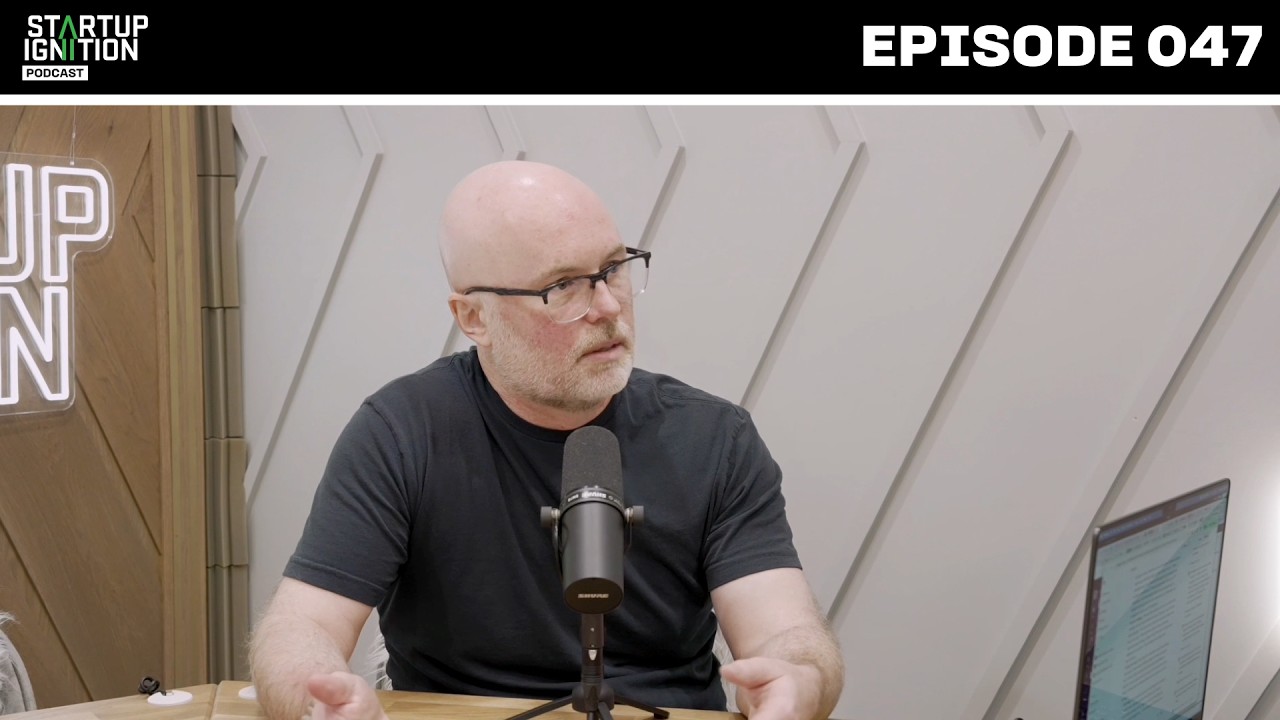
Matt Holman — known as 'The Subscription Doc' — breaks down the ecommerce subscription playbook, CPG unit economics, and why a 4x margin minimum is critical for survival. He also shares his extraordinary personal journey from 15 years of incarceration to becoming a respected ecommerce community builder.
Matt Holman, known as 'The Subscription Doc,' is the founder of Commerce Catalyst and Subscription Prescription, and co-founder of QPilot. He specializes in subscription commerce strategy, retention frameworks, and CPG unit economics. His personal journey includes 15 years of incarceration before becoming a highly respected entrepreneur and ecommerce community builder in Utah.
Show full transcript
part of my journey the last 6-7 years is like how do I want to show up in the world? How do I want to build? Who do I want to be? And again, I mentioned like there's plenty of stuff I still love about B2B marketing in the SaaS space, but I've learned that like hey, this community stuff is something that I I can do in a way that's a little bit different and people really appreciate and really cling to. Matt is a Utah-based entrepreneur who wears many hats. He's the co-founder and head of growth at QPilot, a platform that helps e-commerce brands automate and optimize their subscription services. You also co-founded Commerce Catalyst, a thriving community for e-commerce marketers that was founded here in Utah. >> The naysayers back then were wrong, right? And they they missed it. But it did take a long time to get there. So I walked out with the maturity of a 37-year-old like emotionally, but the like curiosity and drive of like a 20 20-year-old. >> Yeah. >> [music] >> Hey, everybody. Welcome back to the Startup Ignition Podcast. I am your host, Tyler Richards. You know me. This is John Richards, my co-host or I'm your co-host. Doesn't matter who's superior or not. >> We're co-hosts and you are the moderator. >> Yes, there we go. I guess that's >> greatest moderator. You're taking that over from the All In guys. >> I get I guess I'm the world's greatest moderator. Okay, but here is where we break down real stories behind entrepreneurial ventures, where we talk shop about startups and business and getting started or even scaling and growing. And today we have an awesome guest I'm super excited to to invite to the studio and he came on our offer, Matt Holman. Thank you so much for joining us here live in person in studio. >> I'm excited, guys. >> We were just talking pre pre podcast here that that Matt hasn't also has a podcast that he does a lot of Riverside and Zoom or like distant Right. We have yet to do that on our podcast. We like the in-person studio. >> Yeah, so we love that Matt came down to our studio and is filming with us today and so we're super excited to have you. So thank you, Matt, for coming and welcome to the podcast. Um if you caught last week's episode, we had John Richards on the podcast, not this John Richards, the John Richards of Nomadic. If you guys are familiar with Nomadic and you watched that episode, it was so great. So if you haven't checked that one out, go back and watch this one. But Matt is going to be equivalently as awesome today. So Matt, I have a bio for you. >> Sure. And I had AI put it together for me. I tasked it with your LinkedIn and some of your online profiles and all of your websites. So let's see how good AI comes out. Okay? >> So uh again, welcome to episode 47. I don't know if I said that yet, but Matt Holman, episode 47, we're super excited. Um so I'm thrilled to welcome Matt Holman. Matt is a Utah-based entrepreneur who wears many hats is what I found online. He's the co-founder and head of growth at QPilot, a platform that helps e-commerce brands automate and optimize their subscription services. You also co-founded Commerce Catalyst, a thriving community for e-commerce marketers that was founded here in Utah and it's grown to a huge community. >> our Slack is 1,300 members. >> 1,300 members in a Slack community, which is really really cool. All focused on e-commerce. >> That's right. Yeah, and um you've just been in this community and in this um this vertical for your whole career. Uh you spent your early 20s uh talking about uh an incarceration. Is that what Is that what I found online? >> correct. >> love to dive into that later in the podcast. >> we can get that. And you transformed your life and you merged into this kind of e-commerce leader and innovator, which is really cool story. Um and you built an awesome reputation online uh and we got together for this podcast, so we were super excited to have you on. So thank you, Matt, for coming in and I'm super excited to dive in. But if you've ever watched any one of our podcast episodes before, I always do an icebreaker with every single one of our guests where I spring a random game on them just to get into the flow of podcasting. >> And I have I think a cool one today that I'm going to invite my dad, John, to to play along with. So you guys are both going to play real or ridiculous, okay? >> Okay. All right. >> Okay. So [clears throat] what we're going to do is kind of going off of Matt's background with his subscription services and also with your your platform and with your e-commerce background, we're going to determine if these are real subscriptions, product subscriptions, or if they're ridiculous and fake, okay? >> Okay. >> [laughter] >> So to kick things off on a lighthearted note, we're going to do this quick icebreaker, real or ridiculous, okay? Okay. So here we go. Here's the first one. A subscription that delivers premium merino wool socks on a regular schedule uh known for their comfort, dur- durability, and lifetime warranty. Real or ridiculous? A sock subscription. >> That's got to be real. >> I say real. Yeah, that's real. Okay, that was an easy one. We started out easy, okay? This one does exist. It's called uh Darn Tough subscription and they are merino wool socks. So shoutout shoutout to Darn Socks. Uh Darn Tough, sorry. >> Yeah. Okay, next one. A beach sand of the month subscription. A subscription that sends you a vial of sand and a postcard from a different exotic beach every month, so you can travel from home. Real or ridiculous? >> stupid, it might be real. >> That one could That one [laughter] could be real, but I I'm I'm afraid the TAM for that one might not be that very big. When I say stupid, I just mean it's unique. I mean, there's people that I've heard go around bottle air from different cities and sell the air. So there you go. So I'd I'll say real. >> to say real just because I'd be surprised if it's fake. Okay, it actually is ridiculous and fake. So we we made that one up, okay? >> [laughter] >> So if that existed, shoutout to whoever wants to do that as a monthly thing. >> that? That they Somebody wants to capture the air in a jar and sell it to people. I have heard that. I think that beach sand one actually is a pretty good idea. Somebody's going to start launching that after this podcast. >> idea for the next entrepreneur out there. Okay, here we go. Are you ready? A mystery puzzle box subscription. A monthly escape room in a box adventure shipped to your door, complete with puzzles and clues to solve. Real or ridiculous? >> Real, it's got to be I know that's real cuz I think I'm I'm almost bought that for my for my wife. Okay, yeah, it actually is. It's real and there's two of them. Sounds like a great idea. >> There's competitors. [laughter] So there's Hunt A Killer or Escape the Crate.com, so >> Hunt A Killer's been a a killer in the subscription space for a while. They're a massive brand. Wow, so both are real monthly mystery and escape room style subscription boxes. I find that so interesting. Well, people love them, but you want new ones constantly, so monthly subscriptions are a perfect mechanism for new exciting >> You get a date night delivered every every month. >> Yeah, that's cool. Okay, here we go. Next one. This one's fun. Okay. Gourmet Bacon Club, a bacon of the month subscription that delivers different artisan bacon flavors to you every month. Real or ridiculous? >> with all these is I can see somebody wanting to do it. Hey, AI's pretty good. You don't know if I made this one up or not. Bacon's a pretty hot topic. I'm going to say real. I'll say ridiculous just to go a little counter, but it's probably real. It actually is real. Yeah, yeah, yeah. A bacon of the month club is a thing. It's called One is called Bacon Freak and the other one is called Bacon of the Month Club by Zingerman's. So >> Oh, wow. >> two of them competing bacon of the month. Yeah, there's too many people that believe if it doesn't have bacon, it isn't any good. >> Exactly. Bacon makes everything better. >> That's insane. baconfreak.com. That is so crazy. Okay, what Here we go. Ready? A monthly box where you adopt a pet rock, complete with googly eyes, a name tag, and different accessories shipped to you every month. See, I Correct. Real pet rocks in the '70s. Do you Real or ridiculous? >> You guys are I don't know how old you are. I'm 45. I do remember pet rocks. >> in the 1970s. Pet Rock was one of the most successful selling toys. It's crazy. And they sold a rock in a box. >> I'm pretty sure >> it to people or just sold it in the store? They bought them in retail. It was You buy a pet rock and in retail. >> rock. It was a pet rock in the '70s. It It was a huge business. Okay, so real or ridiculous? >> I've seen this one online, so I think that it's real. >> real because a pet rock >> Yeah, it's real. Okay, this one is ridiculous. It was fake. So unless someone out there is doing something that I couldn't find, this is >> any listeners, look up pet rock from the '70s, make sure that uh that we two older guys are not crazy. So it's funny. You didn't come up with some of the most ridiculous subscriptions that I know exist, that I've met >> Hey, if you're only 45, how do you remember the pet rock in the >> remember I just remember seeing >> Probably in a marketing class or something. Well, actually I feel like we talk still talk about those in grad school. Yeah. >> Cuz it was pet rocks and Chia Pets that were still pretty popular. Chia Pets was still into the '90s and 2000s. I remember seeing commercials for the Chia Pet all the time and I wanted one so badly. But since you mentioned a monthly rock, how about a guinea pig of the month box where you get different toys and activities and stuff for your guinea pig? >> Hopefully they're not shipping guinea pigs around the country. Not not anymore. Shipping toys for guinea pigs. Toys and uh food and all kinds of stuff. And then there's a few others that I'll tell you offline. It's not uh not not PG. Yeah, >> [laughter] >> I don't know. I thought those were pretty funny. So I'm actually shocked that there's a bacon of the month. How can you have a bacon shipped to your door every month and have it like differentiated and like Well, if you think about like like drink like drinks, so we see like these bourbon and like whiskey tasting clubs, like bacon's just falling right in line with that. >> Yeah, just the different flavors of smokes. >> about there's so many farmers all over the country, Canada, the US, there are different types of >> Bakes from different areas. Different styles, different seasons. You just met with a slaughterhouse, right? They have new brand of meat and they're trying to do. But it's kind of interesting when we talk about this and you're some subscription expert. I'm just curious how you will hear about kind of weird subscriptions you've heard of and things going on. Like I think about Amazon. Also, wasn't there just a couple years ago where people were putting combination products in a package and they're called boxes They sell them on my Amazon. And then Amazon overnight outlawed them. >> Yes. I had a friend >> like black Monday for that whole industry. >> million company that had Amazon as a pretty large channel. Thankfully, it wasn't their main channel and they got shut down essentially overnight. >> maybe I mean that if you're haven't heard of that, I I saw companies wiped out overnight because they were making so much money by selling multiple products in a package that they put together and then people bought the package and then all of a sudden Amazon wouldn't let them do it anymore. Exactly. >> Yeah, crazy. Well, okay. So, thank you for playing my awesome little light-hearted game. >> [laughter] >> Yeah, hopefully that meshes a little bit with your background here here Matt because I thought that'd be pretty funny. But okay, let's let's dive in. Let's just go straight into your background Matt. Take us back to wherever you want. We always with our guests we say, you want to go back to high school? Let's go back to high school. Like where did your journey kind of begin and kind of set, you know, the table for us? >> without necessarily getting into my entire life story, which we can't talk more about like I have a very Well, I have a very colorful background as you as you alluded to earlier. I will say the the fun part when I'm doing interviews or talking is when I decided to become an entrepreneur like all all-in entrepreneur. So, I've had side hustles and other stuff. But made the the jump. I was working at a a local company here called eHub. I was their marketing director and my now wife started working there. She's the CEO's sister. And so, partially to like let that relationship survive, but also kind of feeling like that if I really want to take control of my own destiny, I needed to start running my own business. I had the opportunity to join David Bradley's in Colorado at QPilot as a marketing co-founder and start build helping market that subscription business. And the fun part, the reason I bring that up is because the same time that happened, feeling like a solo marketer at a bootstrap bootstrap startup, I started a little meetup with a couple other friends that were in a similar boat and that was the genesis of Commerce Catalyst. It is is that little marketing meetup grew and grew and grew. The subscription platform we tried doing a few different things in trying to grow and everything and a couple years ago launched a consultancy out of it. And so, I've been leading that that brand is called Subscription Prescription because I found in my own journey that being the B2B marketer is is good. I'm good at it, but maybe not great or special. But helping people figure out how to solve their subscription problems I am special at and creating content and education and resources around that I'm special at. So, define that subscription problem for us. What give examples of two or three examples of companies that you've seen with subscription problems and how you turn them around. >> Yeah, absolutely. So, if we look at a couple companies right here in Utah. So, JustIngredients is one of them. They're a client of ours. And so, if you if you've seen if anybody is I mean, living under a rock in Utah, maybe you don't know who that is. But they've gone from just a little like influencer from five six years ago with Carli and too a massive brand, hundreds of employees, huge product footprint. The thing is is that a company like that, they really know how to sell. They're worried about influencers. They're worried about retail. They're worried about product development. >> And what is their product? >> And their product they sell a lot of different things. They have protein powders. They have >> [clears throat] >> um >> living under a rock apparently. You don't know JustIngredients. >> I'm sure you've seen the brand. They're everywhere. But they sell they sell The thing is they sell everything. >> They've got toothpaste. They have a lot of skews. supplements they and a lot of different categories. I buy I've bought their protein and bought their protein before and it's pretty good stuff. >> My My wife takes their supplements. Oh, really? >> Yeah. She's in perimenopause and they have some products that are perfect for her and that. So, it's good. >> I'm pretty sure they started as a a protein. >> They start Actually, I think some of their first stuff was skin care brand actually. So, again, they've been all they've been they do a lot of different things. But so, you build these growth engines, right? You build on marketers and people to get you into retail, get you into doors. And you bring on a retention team to do email marketing engagement. But subscription strategy is often either just a little bit different or very different for how a brand might see this. So, you have maybe some retention marketers with some experience working on your company, but they've never scaled a subscription program. So, what what you mean by this is people will buy one-sy two-sy products and skews. But you're saying the is it the golden calf for a company like that to get people on a subscription? >> if I if I tell you that the LTV of somebody who subscribes to protein versus somebody who buys protein is three times higher. What would you optimize for? >> Yeah, yeah. And the but the problem is as you start telling your company, "Okay, we need to optimize for subscriptions." You have a growth team that's trying to do one thing and you have a retention team that's doing So, tell tell me how the unit economics work on that when I I think about this like I'm offered subscriptions uh but I get a discount. So, let's say it's a $20 item, but they say if you subscribe to a monthly send out of it you get it for 18. Right. Okay. So, how does that financially work out? So, the the the main goal with that is actually trying to drive up so that there's a higher average order value. So, like we're looking trying to get into something in the 40s and 50s or even higher. So, like a like a JustIngredients protein powder is like 50 55 60 dollars. Uh-huh. Smaller products, you can make them work, but it's the unit economics are just harder to acquire a customer. It's expensive to acquire a customer through meta or any other platform. So, with subscriptions, the idea is like how can we make that subscription feel compelling enough? Is it just a discount? Is it a bundle? Is it exclusive access? Like is it reliability or control? Like when we talk about a lot of different subscriptions out there like I have my hot tub cleaning supply subscription through Bullfrog Spas, right? They're another local Utah company. So, that I get my cleaning supplies on the cadence that it takes to you know, if I have to go change the chemicals. That's when it gets it gets delivered. I go do it. Right. So, there's like an ease of mind for that. So, there's a lot of different reasons why >> of it. Just on the unit economics, if something's $50 and I can get it for $40 on a subscription, how is the company selling me cuz I was buying it for 50 one-sy two-sy here and there and now they get me on a regular subscription every month. Yeah. But now they're getting 20% less revenue per unit. >> are, but let's think about like purchasing over time. So, if a really simple way to say you're buying the one-sy two-sies. Okay. How often Maybe I do it four times a year, but now I'm doing monthly. Yeah, now you're doing now you're doing 12. So, so they're still profitable at the $40. They were just more profitable at the 50 per unit. >> Right. But if they could sell more volume with a little bit less profit per unit, their company is still making more and higher frequency >> net income. Yeah, absolutely. And the more purchases they can kind of get like as you you start to build these predictive models. It's like, "Hey, the average subscription customer is going to be around say for six orders or maybe it's three or four as opposed to a normal one-time customer say we get 30% of them to do a repeat >> problem with the e-commerce is somebody buys something once and never comes back. >> Yeah, how do you get them to keep staying engaged, right? Because they don't have like typical SaaS models you already have subscriptions kind of baked into that process. Yeah. Physical goods aren't the same way. You have to come up with a system. >> as you're not selling dime apples for a nickel. That's an old saying from my mother, his grandmother. You can't make money make it up in volume selling dime apples for a nickel. As long as you're not doing that. Right. As long as your landed unit costs are $10, you can still do well selling for $40 instead. >> Or if you or if you start to understand what your LTV is, you can start to realize that I can afford to pay more for this customer. So, our typical say cost to acquire a customer for a 50 bag dollar protein in the typical e-commerce space is often at a loss anyway. So, let's say you're losing a few dollars on a first sale without a subscription and then you get say 30% of people to come back. That's where your profit margin is. The cocaine industry does this really well. [laughter] They get you. But a subscription Let's say a subscription I know on average I don't have that 30% repeat purchase rate. Let's say the average lifetime value of somebody who buys a $50 bag of subscription protein powder say it's $180. Well, now I know with my unit economics lander cost how many average orders that makes up, right? I come up with that cost component. I know, "Hey, I've actually got another $60 of margin I can afford to use to acquire more customers." So, I can be a little bit more aggressive in my marketing campaigns because the subscription has a lifetime value that's baked in that's higher than a normal customer. So, so what's the story behind this? Like what what first got you into this deep analysis of subscriptions? So, or like what what what pushed you to found you know, QPilot Subscription Prescription is a business? It is, but it's it's part done with same partner that I have at QPilot. >> And is it a consultative agency type business? Okay, and then what's QPilot? >> QPilot is a software software program. So, like if you're wanting to enable the subscription purchase >> words, it's like an add-on to a e-commerce store. >> Shopify store, yeah. So, like Shop it So, QPilot would help a Shopify store take in subscriptions. >> Absolutely. Is that that's like a hot spot for you? Absolutely. >> in the Shopify store? Yeah, and it's listed as AutoShip Cloud is the plugin. AutoShip Cloud is the platform. >> So, a lot of people on Shopify, they have what? Two to five million? I can't remember what the number is of stores on there, right? Those that are offering subscriptions, some of them will be using your software. >> That is correct. >> Okay, got it. So, that's the software. Okay. Yeah, so and then the third thing is just a community you build. Yeah. three main things in life. Right. Yeah, the the software part I'm less involved in now. I think when we started to see some real good traction on the consultancy side that's when we kind of started to wear a different hat where we started marketing doing content on the software with um some different partners because the consultancy was allowing us to well, it's a lot more profitable. Does Subscription Prescription push QPilot though as a product? >> It It does sometimes, but we we're platform agnostic. Like our largest customers are not on QPilot. They're on other platforms. >> QPilot's more for moderate mid-size kind of companies. >> Yeah, I mean, we do have some enterprise stuff. It does depend on platform. Like again, like cuz like WooCommerce we have some enterprise level customers on there. >> off your question. I want to really understand these. But so, how did you get into e-commerce generally? >> That's kind of the fun I've always loved e-commerce. I've always been like for me it's like this really fun blend of like psychology and technology and marketing cuz it it moves so quickly, right? Like like tariffs affect e-commerce immediately, right? Like if there's a new product, a new special, something comes out, e-commerce implements it so fast, um which makes it really fun. But when when I was we were trying to market us a software company, we're trying to pitch a software company, we're trying to do all these things, and I start doing this community stuff on the side, these little meetups, and the marketing meetups were early on were just hey, 10 people in a room, go around, share your top problem, and the room sources it. And that started to feel like really really easy getting people coming together and and talking. And so with on the software side, I was looking in more for more and more opportunities to engage directly with people because a software vendor, you're often viewed as you're just trying to sell your service. And so I don't know if anybody's had this experience before, but I've gone to the exact same conference as a software vendor, the next year I went as the consultant, and everyone wants to talk to me. Everyone is wondering what's working, what's not, who are you working with, what do you know? >> Cuz they assume you're agnostic and not biased, right? Right, which is what we try we've always tried to be. And so um but for me it was like we just start with a little newsletter. We were on WooCommerce, we were preparing our Shopify integration. We started newsletter to market to try to build an audience. And the feedback we got we got a couple of customers out of it, but the feedback was primarily hey, this is amazing stuff, but I'm not going to switch platforms. Can you just help me figure out how to do it on my own? And so it was like okay, we start doing that, next thing you know it's a podcast and start consulting little projects here and there, and we started to build a agency around it because I something I really loved, and I I just really love bringing so many different problems together, the logistics piece, the marketing, you know, understanding like the margin available when you're marketing stuff. Like that's how my brain works, and so subscriptions is is kind of niche and very specific, but it's really really fun, and I've really really enjoyed it. It's awesome. So I have a question on e-commerce generally, uh back in my day in the dot-com era, there was a prediction that e-commerce would never go over 15% of all total commerce, okay? And then I heard in the COVID era that changed the game, and it cracked 15% and even went over 20%, right? For that. And then maybe it it was a flirting with 25 even, maybe? >> It was for a little while, but it pulled back down. >> is it at today? Give us a flavor for this and cuz back in the dot-com era, all the people that said, you know, the internet would take over everything, a lot of the real experts said no, e-commerce will never be more than 15% of total sales. It's probably around 22% right now, I think. So the naysayers back then were wrong, right? They they missed it, but it did take a long time to get there. This the the the and the hard part, too, is like 50% of all e-commerce is still Amazon. Like that's the other piece that to to qualify like those numbers. Amazon is still dominant. Of all e-commerce. >> Of all e-commerce. So when you're saying like hey, if e-commerce is making up 22% of retail, like that's Amazon's taking a lot of But you know why that is? I mean they're It's so simple. >> It is so simple. >> Like seriously, I tried to buy something on walmart.com like 2 weeks ago, and it was the most painful experience I've ever had in my I'm like I don't get how Walmart doesn't just do a one-click pay like get out of the best shopping cart and go. Cuz Amazon I can go on Amazon and I'll swipe anything, and it's It's Add to cart, buy now. >> It's a classic innovator's dilemma. They've got an existing in-store business that is the biggest company in the world. That Walmart is the biggest, okay? And they know online is important, but it's a stepchild still. It's still a stepchild. >> There's the thing is you look at Amazon being online has tried testing in-person stuff, and they've pulled back a lot where it's primarily like returns >> Yeah, like like in the airports with an Amazon or cashless store. >> yeah. But like a whole store is not It's not. So they just have been testing it to see what happens, and then it doesn't work. >> It's serving two masters. This is back to the innovator's dilemma. You just cuz you're an incumbent doesn't mean you can go do what a disruptor is doing, and vice versa. >> Well, and you think about think about those two in the same room. Walmart wants to be more like Amazon, Amazon wants to be more like Walmart, but the truth is is you need to focus on what And that's because of their press for growth, right? They think it's growth that's going to >> hard part to answer your question, the hard part with e-commerce is that the cost to acquire customer online is incredibly difficult and is has been going up. COVID, because of the demand of people being at home, that's what caused all the spike, is you had to order something online to get it delivered easily. Yeah. But now most e-commerce brands are scaling. Like I mentioned Just Ingredients, like their primary goal is getting into doors and into retail doors. They're working at getting into the Targets, the Whole the Whole Foods, the >> Like Harmon's or the 20 top big box stores, so to speak. >> margin is often like the the unit economics are such that um they're having to give up margin to the store to do that, right? But the volume and the cost to acquire cuz cuz they're not paying a customer to walk into a Harmon's as opposed to somebody's clicking on an ad to do that. >> over those for our viewers and listeners that are, you know, uh budding entrepreneurs, a lot of them, and a lot of them want to get into CPG, consumer products, right? And stuff like that, package goods. So how does it What is the thinking here? When you're a brand and you've got products to sell, if you go DTC, direct to customer, you've got no middleman, so you can afford to sell for less and make more money, right? Like >> yes. >> Cuz there's no in theory, right? But same time, if that's only 22% of e-commerce sites, but to get on Amazon you still got to give up a percentage. Right. That's literally on your own website is where you could sell. Like if your landed costs are 100, you could sell something for 200 and make okay money on your own website. >> Right. But the minute you've got to go sell on Amazon Amazon's taking 15% >> store or something, you're paying all these middleman. So now you've got to be up to about four times, so like $400 for that $100 cost item that it cost you, right? >> Yep. And that's what you've got to do to make it. And that's the minimum to be in a big box store. If I want to be in Costco, Target, Walmart inside the store, right? I've got to have that they're going to buy it from me for about a 100% markup, so I ain't making back down to $200 to them [clears throat] cuz they want to sell for the 400. So there's some cool companies here in Utah I've over time I've seen they just sell on their own website and get enough sales and they make so much profit. But and people are going why don't you want to grow more, and they go cuz I'm profitable enough. But other people want to go for big gusto, and then they go into the big box stores. But you got to be very careful with your unit economics, don't you? >> Yeah, the biggest mistake Explain that to everybody. How the The biggest mistake The biggest mistake that I hear in the CPG space, because if you I think SaaS is totally different. It's like you understand as you grow you're going to realize unit like economies of scale. CPG, those don't come. Yeah. You think that you're like your minimum order like quantity at your manufacturing stuff that that can improve. So like my cost to get it from China might be $5 a widget, it could go down to three or four, something like that. >> As you go from 1,000 to 5,000 to 10,000 order size. >> improve, but everything else you just keep adding on layers of operating expenses, uh the cost of new channels and all these things. So you As you go from five to 100 people, you've got HR expenses, medical, dental benefits for your employees, right? >> a 3PL for pick and pack costs. And so that's the biggest mistake. And so generally the idea is you want to look at four at minimum of four to five times Exactly what I said on the last our last episode of Cosmotic, exact conversation. >> And John's John's amazing cuz they've launched they've launched so many products, and they started on alternative channels, Kickstarter back in the day, right? So um it's it's kind of a little bit tricky because you have to have that built in because what ends up everybody's going to come for a piece of the pie. Subscriptions is a great example. Subscriptions most subscription platforms are going to charge you a percentage of 1% of the sale. >> sale, yeah. And then Shopify's taking two to 3% for credit card processing fees and other things. >> 1% is a lot higher of your margin cuz your margin is not 100%. >> Right, exactly. So let's Should we say to our viewers and listeners, let's address this for all. If you're going to do a tangible product, you need to have a 4x or better unit economics on to even get started cuz we constantly see people coming at us and say, yeah, my costs are $50 and I'm going to sell for $129. [clears throat] And we say you're it's not going to work, and they often they don't even listen to us and they go forward, and then 2 years later they realize there's no business here. >> Well, I think two of the common myths with CPG and e-commerce entrepreneurs are I'm going to do a cost-plus model, where it's like oh, here's my cost, and then I'll just make some kind of margin on it. No, it's got to be multiple. >> To to run the full business. Yeah, so right here, right now, we have an expert 4x or better And that's the final 4x or better. >> The final point would be like just thinking through like the the number one channel CPG brands or any e-commerce physical goods that you use to grow is Meta, so Facebook and Instagram. >> And those costs can vary widely depending on the industry, depending on your size, a lot of >> John was saying Meta is really underperforming for them right now, too. John from Nomada Coffee. So the the problem is is that if I'm selling something that costs me $20 and I'm selling it for 50, that means I only have $30 of margin to be profitable on the first purchase, and very few products can be sold for a $30 customer acquisition cost. So if I were to ask you an entrepreneur came to you and wanted you invest in their new brand company, and they said their unit economics were 2.8, you'd say that's a non-starter. Yeah. Okay. If they came to you and said, I've actually calculated it and I think I've got a 6.5, would you be excited? >> I'd be really interested, yeah. Yeah, that's exactly >> Then depending on the vertical, right? Like there's especially in subscriptions, like right now hydration drinks, electrolytes, and stuff like that, they're just like There's a couple of firms here in Utah that have like a 7x, and they've never done anything but sell on their own website. One of them is Snap Power. Okay. It was incredible. It had it's a great product again. And literally everybody said, you and they had Lowe's, Home Depot, Walmart, everybody wanted them to be in the stores, but they were going we're selling for 12 to 15 They cost us two bucks. They're We're selling for 12 to $15 on on our own website, and they only want to pay us four $4.50 and sell for nine. It always just brings that question of like do you want to run a profitable business, or you going to try to build a giant? And and that's the thing I think a lot I think if I mean I myself personally if I was running a really profitable successful business, I'm not sure I'd want to take that headache of going and offering them >> I've had friends cuz costs can go up and just you're adding on more expense. >> Listen to this story. I had a friend who was doing about 4 million in revenue. He got into Costco for a year and it sold so much he had to double his capacity. So equipment and other things to gear up, but after 1 year being in Costco, Costco man comes back to him and says uh we need another percent on the deal. Another percent's got to come our way. And he goes, we're so razor thin I can't do that cuz he went for growth, right? And he goes, I can't do that. So then Costco stops carrying it and he's now taking out loans Right, to try to bridge >> to grow that business and now he's in worse shape than if he had never gone into Costco. Does that sound possible? Yeah. Does that happen a lot? That happens a ton. >> Well, the the the mistake or the thing that's incredibly complex is just the cash to conversion cycle in e-commerce. It's it's very very big because it's like so right now we're filming it's March. Black Friday, Cyber Monday which for most brands makes up 60 70% of like their entire sales for the year happens in like you know November. Yeah. So I have to try to predict how many sales I'm going to have right now because I need a 6 months for the product to get here. So I have to have say enough money to buy product for 6 months from now. I then have to float that, collect all that back. What happens if the margins aren't as good? What happens if our ad costs go up? Like like and you can be completely under water too. >> See Matt, that's why we deal with digit digits, ones and zeros. It's a lot [laughter] easier with inventory That's also why like consulting is really nice cuz it's like you know my my my landed cost for customers is a lot easier when I'm doing organic growth. It's more of my work than anything. But yeah, so but like those big box stores, Target, Costco, Walmart, they're kind of ruthless and have a lot of market power, don't they? >> They absolutely do. And so a small brand doesn't stand a chance. You mentioned like Snap Power. It's like that's why I I would say is if you can build a brand that has say like Justin's Ingredients product line calls irreplaceable, she's the face of that. People want Justin's Ingredients to be involved because of her brand, not just because they think they can sell and make a dollar off of it, right? So if you can build something else in your moat other than just product and our our product is >> If you're doing something good, there's going to be copycats and commoditization. >> And it's really difficult to commoditize like a persona or a brand or a feeling that's associated with it. >> Well, that's that's kind of the the tips and tricks that Jeff Carroll left with us when he came on the podcast. He I mean look at the two brands that he was associated with, the Skullcandy which was just headphones and then Stance Socks which was just socks, but he put a brand and a recognition around it and he scaled that thing to billion dollar companies. Yep. Okay, love it. Very interesting stuff, yeah. Okay, so Matt, I do want to dive into your background in entrepreneurship and also your that that story that you have yet to tell us cuz before we run out of time I want to get into dive into your background and how that kind of changed your life and and the impact that had on your entrepreneurial journey. So what can you share with us about that? >> Well, yeah, I'm always a little reluctant about going into too much details or the stuff you don't need to know. No, but when we when you and I first met though, I will tell you it also was inspiring. So when you share it, I hope our viewers and listeners will see it's inspiring whatever you're going to share because when I got it, it's a great redemption story and a great it's inspiring because that's the whole purpose of why our society punishes some people for something that happened and that they're supposed to rehabilitate and turn around and I'm going to just I think I told you this if I didn't directly cuz I went and came back and told my wife. I think you know and met my wife, maybe not. Um I'm not sure if you have. Okay. So but and we were just so impressed by the story. So anyway, that's how I feel about it. So I think it's inspiring. I I was I was incarcerated at the age of 22. Did some of the dumbest things that you know you can do and I mean a a long story of like I think I have a lot of empathy for people that you start making small choices that start rolling into bigger bigger bad choices, right? And so this idea of like when's the point that you turn off that path and try to get help and stuff. And so and mostly what I meant was just the sensitivity to people at home and like you know people that have impacted by crime or anything like that. You know, I don't like we're not glorifying any of that in any way shape or form, but but I but I was incarcerated for 15 years from the age of 22 to the age of 37 and one of the things that I thought about that entire time in there was like entrepreneurship was like you know I had I had a Wall Street Journal subscription for a while from a from a friend of mine out here. Um you know, Forbes magazine stuff talking all about SAS, dot com, all these things that we would build and all these things that we do. And for me I I tried um like I took that as an And when I went in that the thing that's hard about my story is that when I went I thought I'd only get a couple of years because Utah's a little bit different in their justice system is there's a parole board. It's not like I got sentenced at the front to 15 years. And so I thought I'd only have a couple years and then it was a few more years and a few more years. And so kind of going through that process I was about 7 or 8 years in and I had been going to this yoga class. Like there was this wonderful volunteer who'd come into the prison every other Thursday and teach yoga and she would always try to get us to meditate and just imagine a bunch of big knuckleheads like working out all the time and tattoos and stuff and we were doing yoga and she gave me this book on meditation and there's this there's this mantra about like looking inside and trying to evaluate where you are at physically, spiritually, emotionally, um intellectually and I did that and I realized I was empty in all four. And that was a an incredible turning point in my life. I was a little over halfway through what would be my eventual sentence and I kind of decided at that point that I was going to take control of my life. Yeah. And so I walked a religious path for a while after that because that's what I was raised. I was raised in the in the church, the Church of Jesus Christ of Latter-day Saints. And so that was the path that I kind of understood and I did that for a couple years, but finally realized that that wasn't for me. But through that got in shape, started writing family and friends, took a different job that was kind of more challenging and allowed me to work with sign Like I I made signs and designs for the Department of Health and Department of Education here while I was incarcerated and really took ownership of my life and my spirituality and all these things. And so I walked out just kind of like chomping at the bit feeling incredibly grateful for and I still feel incredibly grateful for every opportunity that has been provided to me >> 15 years that like reentering society after 15 years, that's got to be a challenge for sure. >> It was. I mean I do like to joke a little bit like we had like Renegade smartphones. So I'd use a smartphone a couple times before I got it. So it wasn't >> [laughter] >> You know, like a few things like that. But yeah and and I had been really lucky where I got some opportunities Um I mean I don't know how much time we have. I could tell you this really funny story from Katrina. There was a the So Katrina happened in 2005. The Department of Corrections here in Utah sends a big truck of supplies to Louisiana. For our viewers, that's the huge hurricane in New Orleans. Yeah, that huge hurricane that wiped out the city and so the Utah Department of Corrections puts a big truck of supplies together to ship out there to support the state. And they print a logo and slap it on the side of the truck and the car truck gets all the way down there and the head of the prison system down there calls here and says, "Hey, is this a joke?" And they said, "What are you talking about?" I said, "Well, the the logo, Utah Department of Corrections, somebody as a joke had updated that file and nobody had noticed and it said Utah Department of Corruptions." And it went from Utah all the way to Louisiana with Corruptions on it. With a big badge, the all the branding and all the stuff. So the guy who did that gets fired. Oh my god. And my buddy who worked in that sign shop get got me the job because of that because of that happening. A high demand job that everybody wanted and that kind of changed a lot of things for me cuz I was able to work on computers. I was working in the sign industry and then the print industry. Why did that guy do that? >> He was As a joke? He was he he was just messing with my my understanding is or my belief at least is one guy was doing it and then in a rush they printed a file without looking at it very closely. >> Yeah. And then nobody notices as they slap it on. It's just one of those classic like >> gosh, that's just quality control. >> That's like a bad Saturday Night Live skit. It's a horrible one, but you know, it's like heads were rolling from top down to bottom. So So yeah, I had some great opportunities and that's all I've done since I've been out is just trying to embrace every opportunity I can. E Hub, I had made friends with some people that had worked there while I was incarcerated. They gave me a chance. You know, my my that was part of the fun part about dating the Not only am I dating the boss's sister, but you know, from the CEO's perspective is like my sister's dating some some criminal. Yeah. We We like him. We hired him, but I don't know if I like him this much. I don't know if I want him dating my sister. Yeah, but um That's it's so fascinating because I'm sitting here thinking just how in when I first met you two how you just you you seemed to have you appreciate everything and your level of appreciation is way higher than most people and also your very calm demeanor and way it's like oh, things are so bad in my life and we're all of us that are kind of spoiled that way and all that. >> [laughter] >> And you're sitting there going, no, it could be much worse. Yeah. You're like, I've seen the other side of that wall and It's a fun perspective and it's honestly how I would define a little bit of what makes me different is like I got out with of a the maturity of somebody older cuz I've you know, I had to learn social skills and all this other stuff, right? As you get older, wisdom of how to manage time and be responsible. So I walked out with the maturity of a 37 year old like emotionally, but the like curiosity and drive of like a 20 20 year old Yeah, cuz you hadn't gone through that. So it's like so that was one of the funny things about being in college and it's like it was really easy to get great grades at the University of Utah cuz it was like I understood time management and what to prioritize. And so in work that's just been a fun thing for me too is just appreciating so many of those things. So what what what How did you meet John? So, tell me a little bit about that story. What did you pitch What did you pitch? >> pitched like um John, as everybody knows, is just one of been in the Utah ecosystem for so long. And if John at least gives you that stamp of approval, like you know, that opens some doors for you, I think. But But honestly, just admiring all the work that you've done, like we went and up pitching him and and a lot of people. I think our our biggest kind of hold >> on QPilot? >> on QPilot. >> Oh, okay. I was wondering what the product We weren't on Shopify yet, which is kind of our biggest problem. If we had been on Shopify at that time, I think we would have we would have closed a round. We had some angels that had committed, but it wasn't enough to make it worth taking on investors. But if we had been on Shopify, I think we would have we would have closed a a pretty big round for that. Um other other apps did it were doing that right at the same time. Um but that's how we met, and the the more I kind of continued doing that, um the fun part with the Commerce Catalyst journey was um I didn't realize it at the time, but setting up a safe space for people to come together and and find like connection and help and get empowerment is is something that I'm good at. >> Yeah. And so, um part of my journey the last 6 7 years is like, how do I want to show up in the world? How do I want to build? Who do I want to be? And again, I mentioned like there's plenty of stuff I still love about B2B marketing and the SaaS space, but I've learned that like, hey, this community stuff is something that I I can do in a way that's a little bit different and people really appreciate and really cling to. Because you come to our events, you're going to meet people that are have either been where you are or in the same position you are or maybe a little bit behind you, and everybody there wants to help and connect because that's the ethos behind the community that we've been building. I had a good friend who's passed away now. His name was Warren Osborn, very prominent here in the state of Utah in a natural product arena. Probably did 25 plus companies, and some of them mega successful. And so, uh but he would always say like, my first year, I would have premium pricing cuz I was doing something new. I thought of a good new product. And then second year, I'd start getting people copying it. By third year, it was commoditized. It's kind of a short life cycle for some of these brands like that. And like you said, that's why if it's around a personality or you do a moat like a something more special. >> but he would do products that literally were general consumer products, but with they were unique when they first came out, but quickly got commoditized. Does that make sense? I'm just curious. What's changed? What's the hot If I was in somebody that love tangible products and I want to be in the consumer packaged goods space, what would I be thinking of now as the way to do it? >> Building an audience before you build a product is is probably the biggest trend we've seen the last few years. Like, I'll talk about AI cuz obviously that's top of mind >> Yeah, how was that? Tell us about that. >> Well, if you think about like um uh there's so many brands that are built up around a persona. So, like for example, um I we have a fairly new client, so I don't necessarily want to tell the tell their whole story, but it's a doctor. She does a ton of content and podcasting related to uh women's health and supplements and hormones and all these things. And so, she builds this huge audience of people that love listening to her and getting advice and turned her for that. And guess what? She has now launched products that supplement all of that con like She her own products under her own brand. You mean kind of like that that this this new age influencer model where they're kind of becoming an influencer in some kind of niche or market or vertical, and then they're building up that audience and then releasing their own product. It used to be the influencer model would I'm going to take on these other brands, but now I think they're getting smarter and saying, I'm going to make my own brand. But but imagine doing a couple million a month in subscription revenue and you don't pay for the client the customers because you're not running ads. Everything is organic and free. >> social media and referrals and affiliates and all that. >> them cuz you've got 2 million YouTube followers, and you own those 2 million. So, that's that's the biggest thing is like, if you can build a brand. So, that's why I think when I think about if I would ever do a company, I would I would want to launch like say like say I want to do something around dads and energy. Like, instead of going and starting an energy supplement, I might start a community over dads who feel tired all the time. Yeah. And here's all the tactics we're doing to try to help each other. We're playing pickleball at night to try to get a little work out. You know, here's all those things. And if I can build it even just a few thousand followers, I now have an audience that I can test products in, get feedback in, and start building like an engine around that, and then use meta to supplement that. So, instead of like that's where you first hear about us. No, this is how we're retargeting and reengaging. So, what is what is the biggest channels for that kind of building that audience is Is it YouTube, Facebook, YouTube >> Instagram? YouTube, Instagram, TikTok. >> What we've kind of heard with podcast and is podcasting a way to build an audience? >> Yep. That's popular now and If you look at look at Mixhers, that's where one of their primary way they engage with their audience is through their podcast, through the through their content. And and we've kind of heard is is like a YouTube follower more valuable than an Instagram follower? Yes or no? >> I've heard that, too, but I haven't seen that. I haven't done the dive yet. >> just saying this whole kind of strategy of building up an audience before you even building a product is kind of the new age entrepreneur within e-commerce and CPG and products. Yeah, I mean, the joke is if you're like a like cuz there's a lot of fitness influencers, for example, in the world. Every fitness influencer starts out by white lab like affiliate marketing for say a protein powder, and then they're white labeling their own product, and then they're making their own product. That's the journey that they're kind of following. Yeah. That's interesting. Cuz cuz yeah, Brent doing a podcast, being an influencer in and of itself, it seems like, you know, it's just like all wealth creation. Having a scalable product, and consumer products are scalable, is the way that you create wealth. And it's not just earning a living, creating wealth by having a scalable product. And And the thing that I love about that as an example, too, is within subscriptions, one of the hardest things to get right is how you connect and communicate with your community. Because if you buy something and I message you too much, you might either get annoyed or realize it for you know, thanks for reminding me I have a subscription. I can just get this locally. I don't really need it anymore. >> Yeah. But if I can go a little one step further where it's like, I have an engagement group where it's like, I have 10,000 people that share tips or ideas or advice that I've helped build together, that is now a retention group for me as well. They'll answer questions when somebody has a problem with the product. They might leave They might cancel the subscription for a little while, stay in the group, they're coming back. Yeah. Right? So, they it has this stickiness to it that other things don't. >> general or generic tip you could give to somebody if I'm launching what channels or how to do that? I mean, like for instance, Kickstarter, where Nomadic was really successful and still to this day uses Kickstarter to launch new products, but other people have gone away from that. What's the consensus on that type of I would say like Coming back to subscriptions a little bit, I'll I'll I'm going to partially answer your question and kind of like open the door a little bit. I I think the most important thing to think about is if I can build a subscription-first business. So, if I'm starting a um say I'm starting a new pet food brand, right? And I I should be thinking about a subscription. Okay, a pet food. Am I just going to take it's $50 a bag, I'm going to mark 10% off cuz everybody's doing that, and anybody can do that. That's not a great offer. So, it's thinking through what is your subscription offer going to be. It's like, okay. Well, we've done all this market research on this angle. We're going to go after new pet owners and pops and all this stuff. Okay, we're really really dialed on that marketing piece. Still, why would they buy from you from somebody else? Okay, well, I'm going to do a bag of pet food, but every subscriber gets a new squeaky toy every month. Okay? And so, I'm oversimplifying this as an example, but but the idea is instead of just sourcing the protein the dog food, I'm sourcing the supplementary product, the gift with purchase that a subscriber might find compelling. And hey, as part of that, we're going to ask all these questions about your pet, find out what they like or don't like so that we get you a toy that feels like it's personalized to them. And you can do that at scale or startup. It's actually really easy to manage those types of things. And then now I have this subscription that's a little bit stickier, it's a little bit more appealing. Yeah. And And so, that's where I would say thinking about is if I'm thinking about launching a product or a brand around a product, I need to be thinking about why somebody would want to buy. And if you find yourself, as you know, oh, everybody's going to want this or everybody's going to think this is cool. Everybody thinks that. Go one step further. What's an actual thing? It's It's really not about acquiring as much as is retention, right? Like when you're having a subscription business like that or a product business like that, it's like constantly delivering them value for reasons to stick around, right? >> all of all the product, you know, Shopify's got millions of storefronts now, right? Or whatever. How many I guess you could ask this on what how many Amazon the ones that are offering How many are offering subscriptions? Like, for every 100 e-commerce brands, how many offer a subscription option? And that's your specific business. >> It's It's like 5 to 10%. >> them how to build that, and also tell them about software QPilot and others to get subscriptions going on their software technologically. Right. How How What percentage of a of every 100 brands, how many are actually offering subscriptions? I'd say it's like 5 to 10%. Um it's it is growing cuz there are brands that are a lot of brands don't start with that cuz it feels complex. So, they'll start >> you, why wouldn't they do it? It It It just feels like it again, if you think about you're you're trying to get your offer, your branding, your buying your your hiring an ad agency, you're doing all these things. You're You're You're worrying about how you're going to get into Walmart and Costco. Subscriptions are often an afterthought. >> management software may not even have that built in. >> Right. Right. What's the most popular e-commerce shop software? >> Shopify, by far. >> Shopify. >> Yeah. >> And so, like what's the most common plug-in tools to Shopify that people use then? Um I mean, there's a there's an awful lot of them. Like, if you're looking at like for email, Klaviyo, pop-ups, like um really hot one right now is Ali Al Learn. Um What does that do? It does email capture. So, when you go to a website and they ask if you'll give them your email for like 10% off, they're now actually asking like, hey, tell us a little bit more about why you Why did you come to this pet food store? Are you interested in healthy ingredients for your pup or making sure that they're active and engaged? And so, you start actually answering more questions in exchange for like So, they kind of It's like a type form. >> Yeah. So, they kind of gate like, hey, you can actually get 20% off your order if you tell us a few more questions. >> Yeah. They're getting more information, more engagement. People are doing that. >> People that do that typically buy more than people that don't. But you're you're saying to my question I'm sorry I'm I feel like I'm brilliant cuz I'm trying to learn a lot cuz it's really fascinating. You you you believe that they should move to you think more e-commerce brands should think about subscriptions earlier in their life cycle and really make it one of their goals. >> The people that I know that are the smartest in the customer acquisition game in in Shopify subscript like sorry in the D2C space are are if they sell a brand or exit a brand they're going and starting a subscription for their first brand. Really? Right out of the shoot. Well, I'm saying if say like like one of our clients they sold a really large luxury item that was one-time purchase only. Yeah, he sold that and he started a subscription brand. And other people that I know they're starting subscription brands. >> e-commerce players are out of the shoot starting with subscription. Would you rather have a pre-baked $150 LTV in a customer or a $50 But but doesn't a product have to be built that way? It does. Like you can't just subscribe any old product. >> And a lot of people are trying. That's the hardest part about your content. Like I don't know. I well Well, shavers. Look at Dollar Shave Club started that, right? Yeah, but there's a lot of products where it's like I don't need this on subscription. It's true. And that's those are the hard ones. Those are the hard ones. But they've trained a lot of the younger generations to think that way. But it's going to be easier. So like so for example, I I somebody come to me they're doing a pillowcase subscription because you probably when was the last time you change your pillowcase? Like yeah, not often. Not often. But you should be doing it like more once a year or more, right? So they're trying to launch that. They have an uphill battle trying to convince people why they need a subscription. But I mentioned like hydration drinks. Those are so hot right now that if you were to go start one and get it formulated, there's people here in Utah that could do it. You could be up and running and selling and that has subscriptions baked in. Now the hard part is like how often are you drinking a hydration drink, right? Like am I selling to you a 36 pack once a month or are you going to go through that every 2 months? But it makes sense what you're saying because subscriptions is an allegory in the software world to SaaS, right? SaaS subscriptions. The SaaS subscriptions is way more valuable revenue than transactional or one-time revenue for software. And if you want to get an investment or an exit and you don't have subscriptions in your product, it's a lot harder. Yes. Yeah. And we're saying that in CPG stuff, too. Yes, so in other words, subscriptions is a way to attract a bigger conglomerate to buy your brand. >> So obviously the message at the end of the day is every CPG e-commerce founder needs to start moving their revenues from one-times to subscription. And the more you can do that, the more desirable you are and the higher Yes. And even somebody like Nomadic, it's like looking at membership options where it's like, "Hey, we're going to we do regular product drops and we get early access and other things." So there's a lot of ways to monetize that What I'm saying here is just whether it's tangible products or software, the bottom line is the last subscription revenue gets you more attraction from M&A people, acquisition, they'll acquire a company. It's more countable revenue, consistent revenue, overall more profit in an absolute number period in both realms cuz we're big into the software realm. There's also we also mentor and help people in the CPG realm type, but both realms you want that. Just going out and having to find new customer and all the time a new customer selling, having somebody check I'll subscribe changes your whole game. Oh, for sure. Absolutely. Matt, thank you for being super open with us today. But I I want to leave before we wrap up the podcast you with one more question and we do this with every single podcast guest that we have and it's just what's the one parting piece of advice or insight or something you want to leave the listener and viewer with to carry along with them from your episode? What what do you what do you tell them? Yeah, if if we hadn't talked about some of the personal stuff I might not be tearing up right now, but the idea is I think that um things often take not often things almost always take longer than we think that they will. Yeah. When I was getting out I thought I'd be where I am today in like 2 or 3 years, not like seven. Um and so I think that's something really important. So like the community that we built when people ask me like, "What are the secret?" It's it's it's showing up every month, doing something, being there, building, building, building. And same thing with like I would never have built I didn't start out thinking I wanted to do a subscription consultancy, but I kept showing up, kept saying yes to opportunities, kept trying, kept trying and I've found grooves that I feel like I can be really successful in. And so I think on the outside it's often really frustrating to see somebody's been really successful and you can replicate that in 2 or 3 years. I mean, how often how long was Qualtrics working in Ryan Smith's dad's basement? A lot of years. I know that story. Exactly. So that's the one I always think of is it things just take longer. Don't give up. Keep working. Be comfortable changing and Yeah, the flip side of that is small actions every day can compile and move something big and do something big, right? People don't realize that Qualtrics is almost 30 years old right now. They were more than 10 years before they ever took outside investment. They were in Scott Smith's basement and then a dingy office in Provo, Utah before they ever really became anything. And that is the example I like to think about is and and you know, I'm not going to buy the Jazz one day, but at the same time like >> [laughter] >> that's that's where I think success comes from. It's those small actions. I'll just say this like for our event where we we hosted an event last week, a little lunch and learn and we you know, when we send follow-up emails even to attendees to get them excited about they've already registered. A small action. Hey, don't forget the event's Friday. Like we're really excited for this this and this like our show rate goes up. And so it's just small simple things like that and looking for that opportunity is what I think is what makes it really And the resilience that it takes just be you know, stick in the game, be in the game and keep doing small little things to to progress. >> society is when you do what you're saying as a great tip is that people you know, these guys are still around. They're still here. He's still here. Oh, I'm maybe I should try his product. Maybe I should buy from him now. That's how a lot of humans are. If humans are resistant to change, right? And when you're asking them to buy a new product and it's the first time they've met you, that's a change in their life and they're resistant to change cuz change means I got to think about something extra. It's going to disrupt what I'm doing and you win them over by staying in the game. I there's so many companies that failed for a long time and couldn't get the lightning in a bottle and then all of a sudden lightning in a bottle hits like in their eighth year. Right. Crazy, right? Well, thank you, Matt. Thank you for the insight. Thank you for the last piece of information. Where where can our listeners and followers like follow you? Where can they follow along with whatever it is that you're doing? Yeah, best thing is LinkedIn. I think Matt whether you're in Utah looking for events it's been I think one of those things I've really focused on early on. I've had a lot of success with, but that's probably the easiest thing and then I I mean, you can find links there, but if you're like looking for local events go to see catalyst.co. We have a weekly newsletter about our events or other events that are e-commerce related. And then e-commerce like a dream for you would be some e-commerce brand calls you up because they saw this podcast and wants to talk to you about how to add subscriptions. Would that be a dream? Absolutely. Yeah, of course. All you e-commerce, call him about adding subscriptions to your brand. It's been a real pleasure, Matt. Thank you so much for coming on and letting us grill you a little bit. Us as software guys, we don't really understand the e-commerce world probably as well as most do. So we've always been pushing digits around and so it's kind of cool to dive into product and hard goods and CPG stuff. So so thank you. All right, thank you for listening. Thank you so much for for watching. Please follow, like, subscribe and as Matt said, follow him on LinkedIn. Go give him a follow. He seems to be a very good follow on LinkedIn and if you have any other questions, comments, or concerns, let us know. We're here for you guys. We want to give you content that really hits hard, that's really in the trenches, roll up your sleeves type stuff and I thought that's what this podcast was today. So thank you, Matt, for coming on and we are out.
New episodes drop weekly. Subscribe so you don't miss the next conversation.