
Startup Ignition Podcast
About This Episode
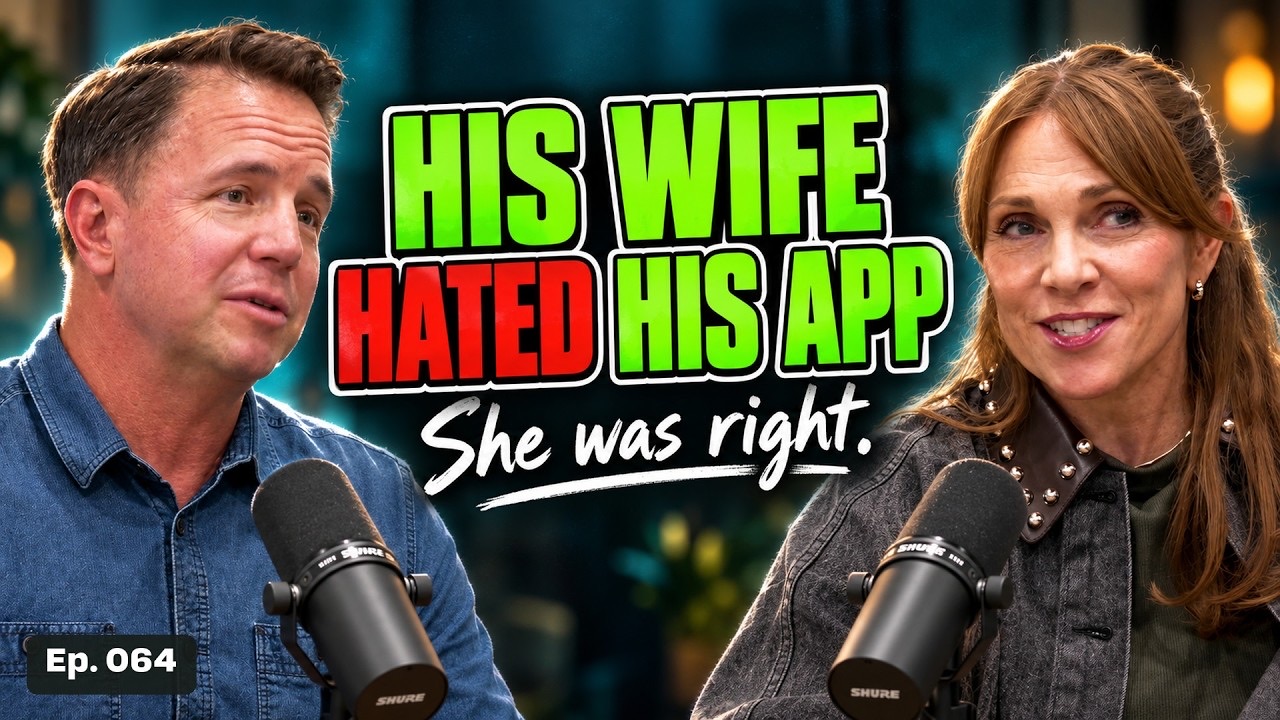
For three years Nate Quigley built a family-memories app called Just Family that almost nobody used. His own description of the method: "I'm not talking to anybody. When I am talking to people I'm not listening to them." His two real users were his mom and his cousin. Then his wife Vanessa came down the stairs and told him she didn't want to use it, her sisters didn't want to use it, it was ugly and complicated, and if he could just print her Instagram, that would be great. That became Chatbooks. Nate and Vanessa are the husband-and-wife co-founders of the Utah company that turns the photos on your phone into printed books. They have sold millions of books, raised more than $20M and grown past 150 people. Nate walks John and Tyler through BYU, McKinsey in Los Angeles and Paris, Harvard Business School, turning down McKinsey's tuition payback in what he calls "the decision to stay poor", a first startup that went from 60 employees to 11 after the dot-com crash and 9/11, and running JetBlue's LiveTV. Then the part that matters: moving seven kids from Florida to Utah because the talent and the capital were here, Kickstart and Peterson Ventures backing founder-market fit when there was no product-market fit, the dark night of the soul at 3am, Vanessa's intervention, and selling out their print capacity three days after launch.
About Nate & Vanessa Quigley
Nate and Vanessa Quigley are the husband-and-wife co-founders of Chatbooks, the Utah company that turns photos from a phone or an Instagram feed into printed photo books. Nate studied accounting at BYU and took an MBA at Harvard Business School, worked at McKinsey in Los Angeles and Paris, was an early employee and later president of a food-and-beverage software company that sold after six years, and ran LiveTV, the JetBlue subsidiary that put television and internet on aircraft, before spinning it out and selling it. Vanessa was a vocal performance major at BYU and the university's Young Singer of the Year in 1996, having started her working life as Pluto at Walt Disney World. She is the oldest of twelve children and a mother of seven, and it was her insight as the family documenter that redirected the company. Chatbooks has raised more than $20M from Kickstart, Peterson Ventures, Signal Peak and Ares Ventures, has been roughly cash-flow positive since 2018, and reached about $30M in revenue before COVID.
Key Takeaways
- Three years of building with no customers. Nate describes his own process as "build, build, build" with no listening: his only users were his mom and his cousin, which is the Mom Test failure in its purest form. Every time a launch landed to crickets, the answer was to build a hundred more features.
- The pivot came from one sentence, not a framework. Vanessa told him she didn't want to use the product, her sisters didn't want to use it, and if he could just print her Instagram that would be great. The team dropped everything the next day and had a working prototype within a couple of weeks.
- "Should" is the kiss of death. Nate learned that when someone says "I should totally do that", they mean they are looking for a way out of the conversation. The signal he was actually looking for arrived as "can I give you my credit card?" and a comment reading #shutupandtakemymoney.
- Investors backed founder-market fit before there was product-market fit. Kickstart and Peterson Ventures wrote checks in mid-2013 on the old product; the first Chatbook did not sell until spring 2014. Nate pivoted without asking them first, and they were thrilled.
- They moved the family from Florida to Utah for talent and capital. Nate went to RootsTech in February 2013, came home and said they had to move. Vanessa had said she would never live in Utah again. Design and engineering talent he had been following on Twitter were suddenly people he could take to lunch and hire.
- Product-market fit was unmistakable when it came. Three days after launch they could not print the books people were ordering. Growth went from the first $1M to $10M to $30M before COVID.
- Distribution was hand-delivered first, then automated. Nate took cookies and a stack of printed Instagram books to influencer Allison Faulkner's door. They later built Megatron, which scraped the open Facebook API, auto-generated a mockup of someone's most-liked photo as a book, and offered to mail it free. That carried them from $1M to $10M.
- Virality is a moment, not a strategy. The 2016 Harmon Brothers ad drew enormous views. The 2017 follow-up cost the same and did nothing, because Meta had started suppressing long-form engagement content after the election cycle.
- Platform dependence was a known risk they defused in time. At one point 90% of printed photos came from Instagram. By the time Instagram revoked API access for everyone, it was under 1%, because they had already moved to the camera roll.
- Growth plateaus are normal and require a new hero product. After the venture-fuelled run they stopped raising, got profitable, and spent a few years searching. The answer was Month Books: $15 a month, 60 photos from your camera roll, now about 75% of revenue.
Topics Discussed
Notable Quotes
"I don't want to use that. My sisters don't want to use that. My friends don't want to use that. If you could just print my Instagram, though, that would be great."
— Vanessa Quigley, the intervention that became Chatbooks
"I'm not talking to anybody. When I am talking to people I'm not listening to them."
— Nate Quigley, on three years of building the wrong product
"Should is the kiss of death."
— Nate Quigley
"This is the decision to stay poor."
— Nate Quigley, on turning down McKinsey after Harvard
"Don't quit, don't run out of money."
— Nate Quigley
Frequently Asked Questions
Who are Nate and Vanessa Quigley?
Nate and Vanessa Quigley are the husband-and-wife co-founders of Chatbooks, the Utah company that turns phone and Instagram photos into printed photo books. Nate studied accounting at BYU, took an MBA at Harvard Business School and worked at McKinsey before a career in software and at JetBlue's LiveTV subsidiary. Vanessa was a vocal performance major and BYU's Young Singer of the Year in 1996. They have seven children.
How did Chatbooks start?
It started as a pivot from Just Family, a complicated family-memories app Nate had built for three years with almost no users. Vanessa told him she didn't want to use it, her sisters didn't want to use it, and if he could just print her Instagram that would be great. The team rebuilt around that in a couple of weeks and sold the first Chatbook in spring 2014.
What is the Mom Test and how does it apply here?
The Mom Test is the lean startup principle that opinions from people who have a relationship with you are bad data, because your mother will tell you anything you build is brilliant. Nate's two real users for three years were literally his mom and his cousin. The related lesson he draws is that when a prospect says "I should totally do that", should is the kiss of death and means no.
Why did they move from Florida to Utah?
Nate attended RootsTech in Provo in February 2013 and came home saying they had to move. They could not find the design, engineering or marketing talent they needed in Satellite Beach, Florida, and Utah had both the talent and the early-stage capital. The family moved on 1 July 2013, and Kickstart Seed Fund and Peterson Ventures invested that summer.
How did Chatbooks get its first customers?
Through hand-delivered influencer marketing. Nate took a plate of cookies from the Provo Bakery and a stack of printed Instagram books to Allison Faulkner's front door. Her post sold more books than they could print within three days. They later automated the same idea as Megatron, which scraped the then-open Facebook API, mocked up a book of someone's most-liked photos and offered to mail it to them for free.
What is Chatbooks' main product today?
Month Books. For about $15 a month you upload 60 photos from your camera roll and receive a printed book for that month, with Smart Select picking the best 60 photos using a model trained on which photos people have historically chosen to print. It accounts for roughly 75% of revenue and replaced the original Instagram subscription, which faded as people changed how they used Instagram and as Instagram eventually revoked API access.
What advice do they give founders?
Nate's formula is "don't quit, don't run out of money", and his caution is that every aha moment only unlocks one phase of growth: you have to reinvent the product and the go-to-market again the next year and the year after. Vanessa's advice is to pick your partner carefully, since running a company together only worked because they had already been married twenty years and knew how to solve problems with each other.
Listen & Subscribe
New episodes drop weekly. Subscribe so you don't miss the next conversation.
MORE EPISODES
Ep. 63
Peter Harris
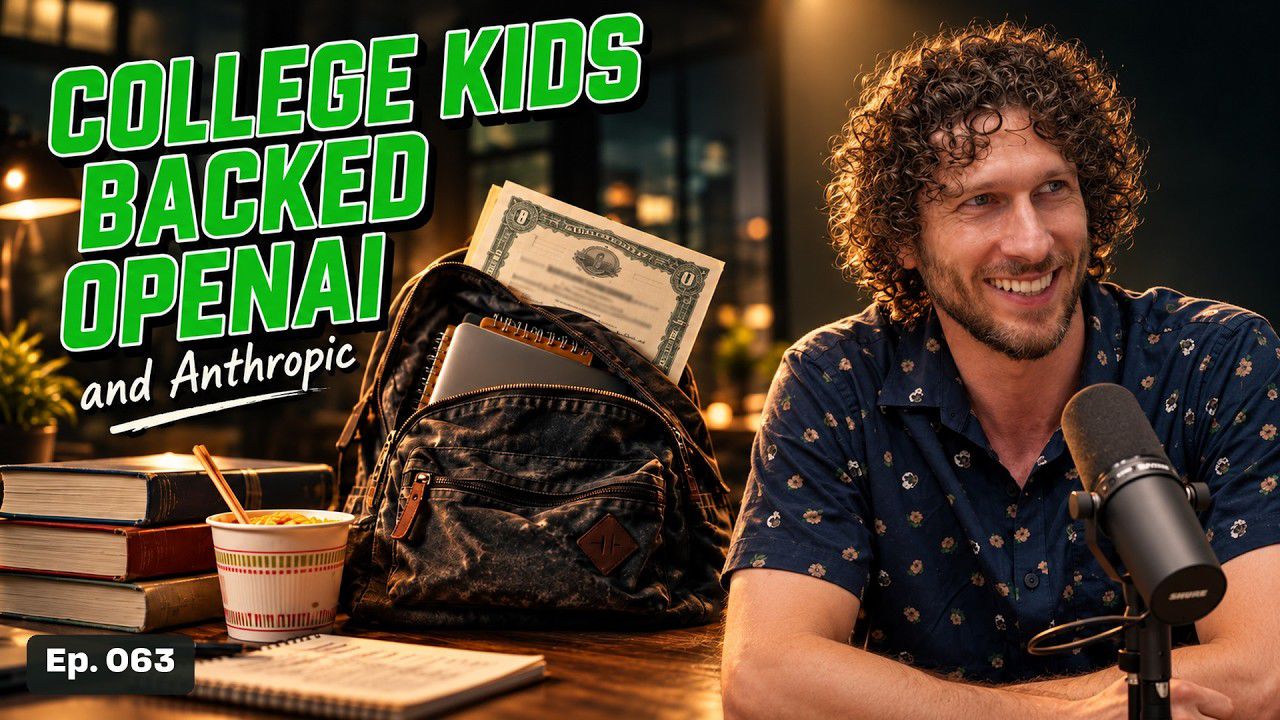
Running the largest student-run venture fund in the US, passing on SpaceX at $20 billion, how students source and diligence deals into OpenAI and Anthropic, raising Fund I and Fund II, what Tiger Global got wrong in 2021, what AI does to venture returns, and why he tells founders not to raise venture capital
Ep. 62
Bubba Page
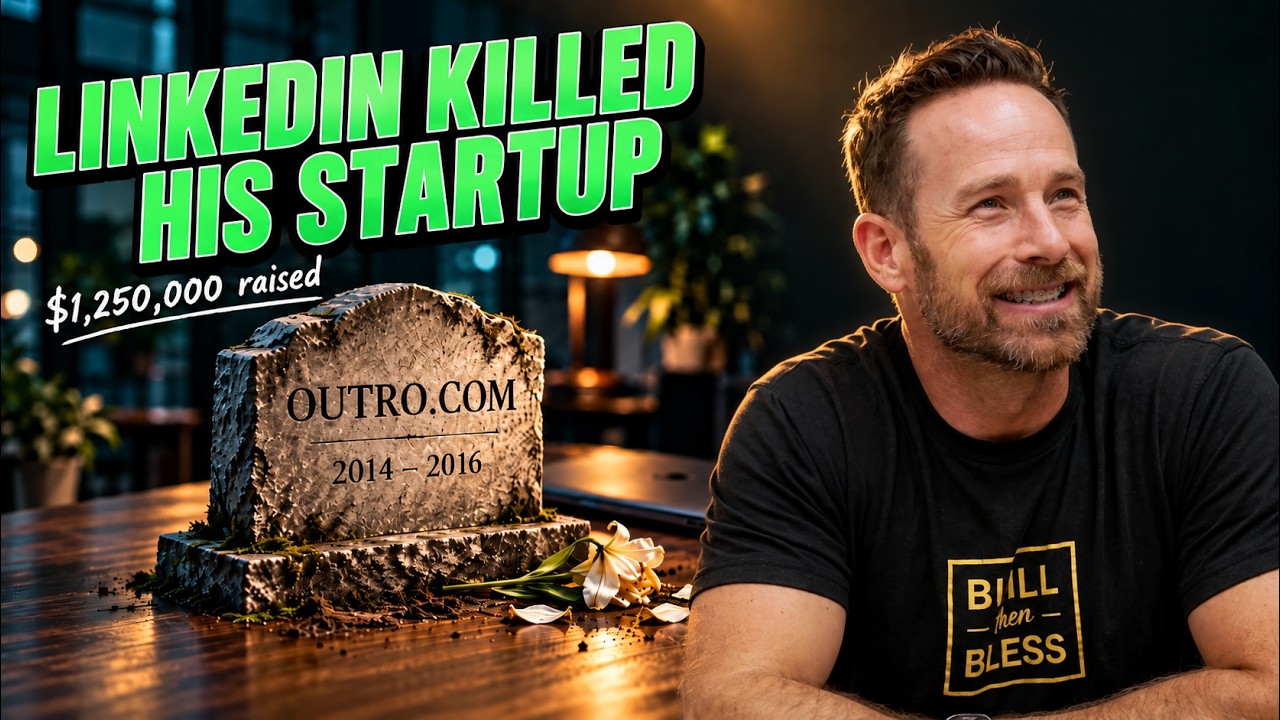
Bootstrapping to multiple millions, taking no paycheck for a year, winning a startup weekend and raising on it, why Outro failed, building on someone else's platform, depression after failure, faith, angel investing through a syndicate, raising eight kids

Ep. 61
Arian Lewis
Building a coworking company that works, real estate vs venture financing, what WeWork actually got wrong, surviving the pandemic, leveraging gifts over passion
