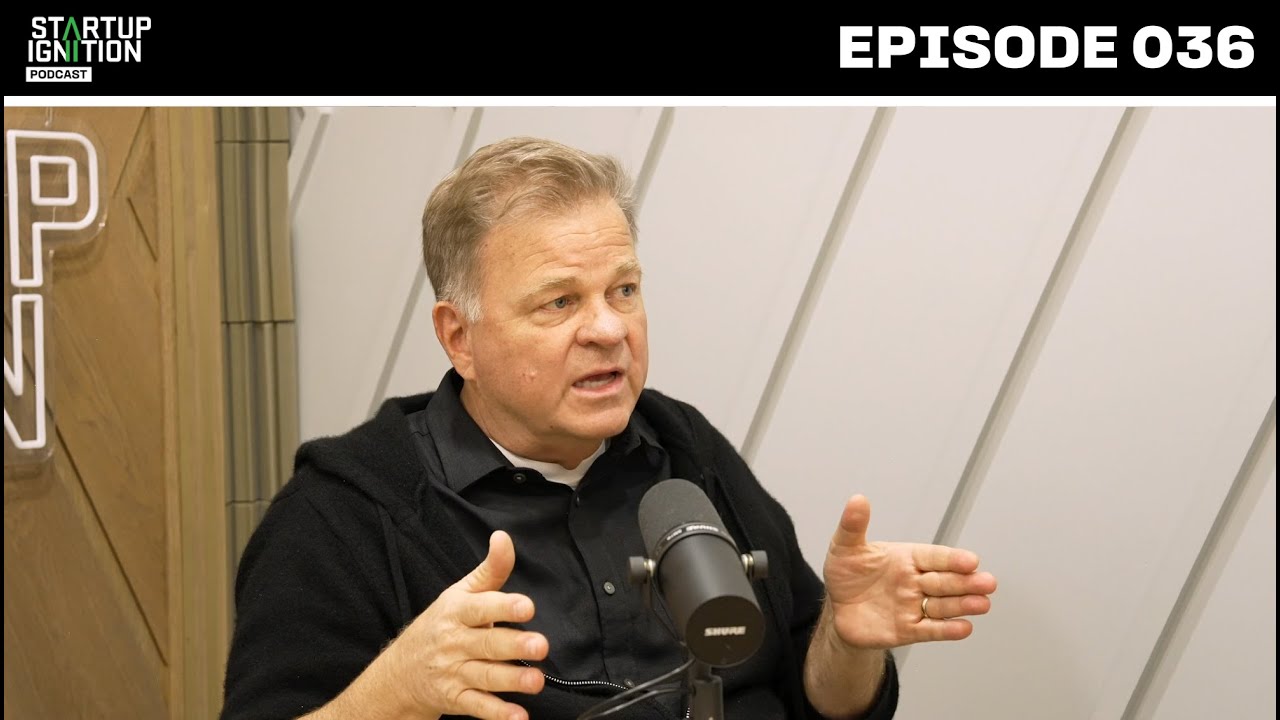
Paul Ahlstrom shares the origin story behind 'Nail It Then Scale It,' his influential startup methodology book, and discusses 30+ years of venture investing across 125+ companies, founding four VC funds, and why market timing is the most underrated factor in startup success.
Paul Ahlstrom is the co-author of 'Nail It Then Scale It' and co-founder of four venture funds: vSpring Capital (2000), Kickstart Seed Fund (2007), Alta Growth Capital (2007), and Alta Ventures Mexico (2011). Over 30+ years, he has raised over $1B and directly invested over $500M in 125+ startups. Previously founded Knowlix, which was sold to Peregrine Systems (later acquired by HP). Board member for Ancestry.com, Altiris (NASDAQ), and others.
Show full transcript
I had created a little small software company. It was doing great and then we had a a bug that just had a massive data corruption on the database and thing went out of business overnight. It was game over. When I was a millionaire in my early 20s on paper and then it literally killed the business overnight. Um we would see Microsoft would come out with a big announcement and everybody goes, "Oh, we're dead. Micros Microsoft is doing this." And all Microsoft did was validate the market. >> Yes. >> And it created lots of opportunity for lots of small motorboats around the edges. I think this is going to last 10 years. The segment we're in right now is moving so fast. We're going to move to the next phase within within about six, seven, eight, nine, 10 years, which is the um autonomous economy. It's a gentech. So, no longer are people cuz we're still getting paid for doing things even though we're leveraging knowledge. The next phase is people won't get paid. It's robots that get paid. It's the autonomous agents. And so, the value that's going to be created is not going to come from labor. It's going to come from this agentic AI. Then the value flows back to the cap table. So the cap table and the investors are going to make all of the money. So money so wealth is going to be hyper hyper hyper hyper concentrated because humans aren't going to be working in many of these industries. And you say it's not going to happen. It's already happened. Rock next rock. [music] >> Welcome back to the Startup Ignition Ventures Podcast, Boot Camp podcast, and Toolswuite podcast. We are very excited to have you today. Thank you for tuning in. If you watched last episode, we really, really appreciate it. We've had amazing guests on this podcast, so you're not just bored of me and my dad here every episode, episode after episode. Today, we have a very special guest. We have Paul Alstrom, who is someone I am very excited to talk to and learn more about his background and his history cuz he goes so far back and deeprooted into the VC uh ecosystem here in Utah and also just the tech community abroad and even going down to Latin America. So, today we have Paul Astramm on the podcast. He is a serial entrepreneur, investor, and author who has dedicated his career to helping earlystage startups just succeed. He has founded multiple high-tech companies and venture funds across the US and Latin America, including Vspring Capital, Ala Growth Capital, Alta Ventures, and then we just talked about Northgate Fund, which is a $225 million fund of funds down in Mexico, and Crayo, which is Peru's first corporate venture fund. Through these funds, Paul has raised over $1.5 billion in capital, invested in more than 90, probably over a hundred startups, including >> 150 >> 150 startups, including Ancestry.com, Landes, Alurus, and many, many more. And especially down in Latin America, very >> one of the great OGs of Utah. I mean, he one of the first guys I met when I came to Utah. >> Yeah. But before [laughter] being an investor, Paul was even an operator and entrepreneur himself. I learned about this with Nollix, which was an awesome venture-back software company that you started and exited. You've also co-authored the foundational startup book, Nail It Then Scale It, and you continue to mentor founders all day, every day. That is what he's hyperfocused on. Paul is undoubtedly recognized as one of the key architects of Utah VC, Utah Tech, [clears throat] and all over the country and abroad. So, >> our listeners and viewers are in for a treat. >> Yeah. So, welcome Paul to the podcast. Thank you so much for coming. We know you're a busy guy. You just got back from Latin America. What, like yesterday or the day before? >> Saturday. >> So, you're you're experiencing probably a little bit of jet lag here. >> Yeah, I landed um at 10:00 in the morning. And then I um showered and went to the game. [laughter] >> Yeah, there you go. That was an important thing to come back for. >> And a and a good game. >> Yeah, he's talking about the BYU Utah game. One of the biggest rivalries, the holy war of Utah. Um but yeah, again, Paul is seriously one of the most kind of starstudded VCs. We were just talking before we started filming about your history in so many of the VC venture capital groups and funds here locally in the state. You were there when a lot of them were formed investing and heavily involved and but prior to going into VC I want to go all the way back to your background and your operations and your actual entrepreneurial pursuits because I didn't even know about NLEX here and it apparently was an amazing success for that's how you got started. So, but before we do that, I do have one thing I want to do with I want to spring on you a little bit, Paul. We do an icebreaker on the podcast, which is just something we do real quick before every episode, and it's just something I'm going to spring on you. We're going to play pivot or persevere. How do you feel about that? I'm going to give you a startup scenario, okay? >> And you tell me if you would pivot or you would persevere. Okay? And you I want you to participate, too. I got two lean startup Googers here. How could I not take advantage of this of this situation? Okay. Here's >> is this a real life scenario? >> No, this is a madeup one. So, I I reviewed these. I think they're pretty good, but we'll see. Okay, here we go. >> Right. >> Here's the first scenario. Okay, where we have paying customers, but it's not really scaling. So, you launched a startup 6 months ago. Your MVP has 20 paying customers who really like your product. They give you glowing testimonies and they would be devastated if it disappeared. But they're all small businesses. They're not gener they're not generating you a lot of revenue. Your total addressable market is smaller than you thought and every new customer requires a very hightouch onboarding to your software. Are you pivoting away or are you persevering? >> Easy pivot. >> Why are you pivoting? >> I've already been there and done that multiple times. [laughter] >> Too small of a market is a no no. >> Um yeah, we did a a company called Screeny in Mexico which was the first applicant tracking system. great entrepreneur, great team. Um, we got out to about 100 customers. Um, but the cost of closing the sale and versus the cost of revenue from the customers versus the retention um and um it wasn't it wasn't scaling and Mexico a category that existed in the United States >> that was flourishing too probably >> major category hundreds of competitors. So brand new category doesn't exist. So we think oh let's go create that. Turns out the US category is created by regulation. There's other factors um that were cultural. While this wasn't really working. So my only customers were Lowe's and Home Depot and Coca-Cola. So I had big customers, >> US companies, >> US brands. Of course, we want this here. Absolutely. And I couldn't get the Mexican companies to buy. Yeah. >> And so we ran out of runway. Um and so we've we've done that a couple of times. I had another another company >> um that was generating revenue. It was we created a fintech app in the US and and we had a few customers um but the cost of sales and onboarding was so expensive. >> Yeah. >> It um it wasn't scaling. So >> yeah. So >> kind of the lifetime value to customer acquisition cost the LTV to CAC was not it didn't work. >> It didn't pencil out. >> So we ended up just pulling the plug. >> And my answer is pivot as well for the same reasons. >> Really small the small market won't do. >> Yeah. I mean, if the that entrepreneur wanted to have a lifestyle business and have a couple employees and he owns the whole thing. >> Okay, let me throw another scenario at you. I like this one. Okay, you ready? You've been building for a year. You raised $500,000 in a preede round and have early traction in a very niche workflow space. Okay. Then one morning, you wake up and see that a well-funded YC startup just launched a nearly identical product. Slicker brand, bigger marketing budget, overlapping features. Your current customers aren't leaving, but new signups stall really, really hard. Your team's morale dips and your lead investor says maybe it's time to rethink the niche. What are you doing? Are you pivoting or you persevering? >> I don't I don't buy the scenario. >> You don't buy the scenario. You don't think any an entrepreneur would be shaken by a competitor popping up like a YC backed wellunded startup. I think that's pretty real. >> I want to hear more. >> I don't I don't buy it. [laughter] So, hey, so a competitor comes in the market. If it's a good market, it's a big market. There's lots of room in the marketplace. There's a validation back in the day. People, this happened all the time to us. We were um we would see um Microsoft would come out with a big announcement. >> Yeah. >> And everybody goes, "Oh, we're dead. Microsoft Microsoft is doing this." And all Microsoft did was validate the market. >> Yes. >> And it created lots of opportunity for lots of small motorboats around the edges. Now, why Y why YC great company uh I mean great accelerator probably great accelerator probably going to create you know good companies out of there >> but they're not going to own the market 100%. What company owns a market 100%. Zero >> 0.00 00. So, you know, you have validation in the space by willbacked company. You're out ahead of this and you know, you just need to find your area. And this literally happened to me in a company I'm working on right now. >> Yeah. >> Sequoia came in and funded a $30 million round. >> We were celebrating >> cuz it's it's validation. So, you're saying persevere. You are pushing through. >> Well, you just got market validation >> and a sector that you're that you're building a company in. Unless you're going to be a um a snowflake and just tip over. Yeah. You know, lean in and find find your niche and your your purpose. And that's >> and I'm persevere, too. And what that tells me is other smart money is chasing the same customer. >> Yeah. >> I'm now going to go win in the field of competition. I'm going to have a better product and I'm going to win. I think this is a learning this is a learning um lesson for a lot of entrepreneurs are listening because I feel like a lot of entrepreneurs especially my generation and below like whenever we were building and it's a new startup came out oh they just raised $20 million like and you just think okay now I'm just fighting for my life no I think your guys' mentality of that's validation that smart money is going into the market and actually pursuing what you're already pursuing >> it's a slide in our boot camp but I said hey you go to Google and you find there's four competitors and they're better funded than you that's showing there's a market Cool. [laughter] I like it. That's great. Both that's >> And if you know if your investor is you know nervous because somebody else invested in the same space, you probably got the wrong investor. >> Yeah. If they're pushing you to get out of it. >> So go trade up. >> Yeah. There you go. There you go. >> Okay. Well, I guess >> you have one of the old Utah Angels. [laughter] >> Those guys were cutthroat. That's what I heard. >> We were mean. >> Yeah, you were mean. People were scared to get in a room with you guys. [laughter] Um, okay. Last scenario because I'm liking this. Okay. I'm going to do one more. Is that okay? >> This is free consulting day. >> Yeah. Yeah. [laughter] I wish these were real startups. I should have gone to our community and actually grabbed real scenarios. Okay, here we go. Last one. Third scenario. Here we go. You spent months building a product based on customer interviews. So, you did some validation. When you finally launch, you get a rush of signups from a big influencer shoutout. A,000 users in 2 days, but within a month, only 5% of those users are still active. No one's paying. Feedback is all over the place. Love it. But dot dot dot your team's debating whether you hit the wrong audience, bad onboarding or flawed core assumption. What are you doing? Pivoting or persevering? >> So, how many customers I have? >> So, there was a thousand people that onboarded from a big influencer shout out and only 5% of those users are even still active. >> Great. What What's going on with them? >> Yeah. So, you would dive into the 5%. >> Well, if I have 5% of the users, so I accidentally got a thousand people. >> Yeah. We found 5% that like us. Then I would just I would just do a reverse analysis on the 5%. Go deep. Why are they using us? Yeah. >> What's unique about this? Is there bigger niche out there or did I find, you know, >> something unique, too? >> Purple hair, you know. >> Yeah. I essentially agree with Paul because I don't think you're at the pivot or persevere question yet. You have to say why is 5%. What's going on with them? What do they say? So you have to do more validation before you can decide pivot or persevere. >> I like it. So So this is not pivot or persevere. It's keep validating talking data. >> Oh, that's just you just got going and you know you had some fluke that happened. Great. >> Yeah. >> Um but but but understand why the 5% stay. That's interesting. >> Yeah. >> Cuz getting those first customers on board is >> is is gold. So if they're staying and they're paying >> Yeah. Yeah. >> That's 50 customers. Let's go. >> Yeah. I love it. That's awesome. I love it. Okay. Hey, I would probably change my narrative. We just started. We got 50 customers. >> Yeah, exactly. [laughter] A thousand only 50. >> You got to spin it in the entrepreneurial way. [laughter] Okay. So, okay. Thank you for playing my icebreaker. That was great. Yeah, that was free consulting for fake scenarios. Um, [laughter] but hey, I loved it and hopefully the listeners and viewers enjoyed it too. Okay, so let's go let's go back because you guys were just talking before the podcast. I said, "Save it for the podcast. Save it for the podcast." how you guys met and where that was cuz my dad made a comment. I was Tyler's age when I met Paul. >> Yeah. >> So, I I I think I remember the moment, but you might you might remember another moment, but we were at the BYU e entrepreneurship uh in eBus center. Kevin Rollins had just put some money in with his wife. Yep. >> And uh what was >> Kevin Rollins, the former co-CEO of Dell Computers? >> Dell computers. They just put some money in. They rebranded this the Kevin and Deborah Rollins E-Business Center, right? >> And uh and I was asked to be on the advisory board advisory board of that and I would sit in the back of the room with Mark Bonham >> and Sid and um and we would just make fun and we like be like school kids in the back of the room shooting spitballs >> and then John was trying to keep control of the room. [laughter] >> I remember that. >> Wait, as a as a student? >> No, no, he was on the advisor board. Sid Tetro, him and uh Mark Bonham who's a Wilson senior attorney. >> Top I like one of the top the top attorneys in Utah and uh and we were just sitting the back you know >> and all of you guys were on for years on that advisor board for me. So that was great. >> You know making fun and pretending we were in high school. >> So as you know you were 14 moved here. So my company went public. I retired quote unquote. BYU calls them says come down and help us do stuff. And I came down here met great people like Paul. And Paul's Paul's been >> super helpful at BYU. Everything we did, totally supportive and has always been supportive of anything I've ever done or what we've looked at. And vice versa. I think I've supported you. >> We have. We've we did a lot of crazy things together over the years. And I remember walking across campus one day, Yum, and Josh James. >> Yes. >> And Josh James was still mycomput.com. And he's like, "Would you guys mentor me?" And I just remember that moment. We're walking around. [laughter] >> Yeah. Yeah. >> Did you tell him yes or no? >> Yeah. I'm sure you said yes. No. No. [laughter] No. Yeah. Josh was great. Yeah. >> I went to his office a few times and uh >> until his CFO would was would mock me and I'm like [laughter] >> he went through a few CFOs by the way in the early days. >> So you guys you guys met at the entrepreneur the E- Rollins Entrepreneurship Institute or center? >> The center the center for here's what's funny. We talk about this all the time. Every time there's something new colleges make a new center for it. But it's funny. The e-business center was hot and heavy in the dotcom era. But a few years later after the dotcom era, everybody goes, "Well, e-business is business. Everybody's going to do e-business." So they merged it into the entrepreneurship center and it all became one. And that's the same thing like right now it'd be silly to make a center for artificial intelligence because every single company in the world is going to use artificial intelligence, right? So >> Okay. So, [snorts] so then take me back even earlier there like how do you get to that advisory board and you know what do you do earlier in your career with knowled like we talked about in your bio? Like what what was that? >> Yeah. Were you a student entrepreneur when you did that or later? Okay. >> Yeah. Yeah. No, >> but you did a lot of entre things as a student. >> Where did you go to school? >> BYU. >> Yeah. And what did you study? >> Uh >> what was your undergrad for not to say? [laughter] >> Hey Josh James was a theater major. >> I'm just kidding. I'm just I'm just [laughter] kidding. Um I was a communications major. Oh, >> cool. >> Yeah. PR and advertising. >> Cool. What are some of the entrepreneural things you did in college? Because I remember some of those stories. I I got to BYU and I was very disappointed because I was expecting this this entrepreneurial Well, I was expecting certain things to happen at BYU. I I was hoping there was going to be an entrepreneurship class, which there wasn't. >> Yeah. Um, and uh, and so going back before that, every two years since I was a kid, I would create a I was one of those kids that just, you know, I had the lemonade stand, then I had a skateboard making business, then I had a window washing business, then I had a land lawnmowing business, then I had a >> then I I just every I would just basically and I built up a I bought a pool service uh, business when I was 17. >> Uh, sold those when I went on my mission at 19 and um, [clears throat] graduated from high school early. I just had two two companies, the landscaping and the pool and well actually had a sprinkler uh company and uh sold those came off my mission and then I came back to BYU and and I was really disappointed like I was expecting certain thing and it just wasn't there. So I spent my time in college fixing my college experience. So Mark Tullus and I we created and and uh and Bill Kelly and Roger Leechman uh they created the student review newspaper. Ah, >> and uh so years later when when I just there was no nobody covering tech in Utah, I called Mark up and a friend of mine sold this company for a billion dollars. Um and Finicity um [clears throat] Nick Thomas and his he was a co-founder there. And I said, "This is ridiculous. You got a billion dollar exit and nobody's covering this thing." And so I said, "Mark, we need to get the band back together and go create tech buzz." And so that's Mark and I were back in college, very good friends through all of college and then we got the band back together. >> So you guys did a news thing in college and now you're doing it for the tech world in Utah. And by a big shout out, techbuzz.news is the URL and we're super believers in it and I was so happy when that started up and I think it covers things really well. >> Mark does a fantastic job, doesn't he? >> I forgot to add that to your bio. Another thing to add to your bio. >> Yeah. So we just changed the URL. It's techbuzz.newworks. It's also techbuzznews.com. >> Oh, okay. Okay. Techbuzznews.com. >> Took a long time for Google to pick up the.com. So, okay. Got it. >> But it did. Uh, and so I just did startups and so I did uh I did we did this newspaper. I did a dance club called Ivy Tower. >> That's what I remember. The dance club. >> I I dance club. >> And then Yeah. It was fun. >> Was it disco? [laughter] >> Uh, this was after disco you're later than disco. >> You were into grudge. [laughter] >> Yeah. Yeah. Banana was like one remember that was one of the songs. Uh um um but um Ball of Confusion we had, you know, it was the '8s. It was the it was the best dance music >> in the history of the planet. >> Yeah. >> Uh and people actually danced back then >> and we had bands come in. We had Book of Love come in and play. Um and then we did um then after that I created a college hangout created a comedy club um called backstate and a jazz club comedy club called backstage cafe and it was an absolute blast. Um and then what did I do after that? Uh well I don't know. I >> How old were you when you started know? >> Um I was 30. >> Okay. So you had your So you were going to school. So you spent about 5 years after school or so and then >> did how did you make that jump from all these kind of honestly like you know very mom and pop kind of services-based companies into technology. >> Yeah that's a that that is a great question. I had a water purification service business in Southern California. I was making about 120,000 a year servicing these units of a company called Pure Water International. And then Bob, the CEO of Pure Water, the manufacturer just said, "Listen, I was in his office one day. He goes, "You seem like a really bright kid." um just you know making stuff up but he said this is not ever going to take you anywhere. Yeah, you know that right? >> I said what do you mean? He goes he said you have 24 hours in the day you can build rocket ships or you can build um dig ditches. >> Yeah. >> Wouldn't it be more fun to go to the moon? >> I said I don't know. I don't know what you mean. He said cuz I'm like rocket ships. I mean back in this is this was in the you know the 80s. You >> great mentor advice. >> Yeah. And no, nobody was talking about Billy Rockish just back then. And now we're doing it, right? Uh but I just said, "Uh, what do you mean?" He said, "Well, you can spend 24 hours a day doing something. Why don't you work on something that's meaningful?" And I I'd never been given permission to think big. So, I had a string of really small, uninteresting projects, one after another. Well, I mean, the dance club was great because you got to meet girls. [laughter] >> Had some ulterior motives there, but >> it's a great college thing. >> Yeah. Uh but after but other than that there was no real purpose to those. Uh lots of interesting small business lessons learned. So I went home from there. I gave the keys to my brother Marv. I said this is your business. You can keep it, kill it. I don't care. And I had two classes I needed to take to go back and graduate from BYU. Um because I had taken Southern California, but for whatever reason they wouldn't accept my transfer credit. So I'm like it was just hanging over my head. So I got went back to BYU. And while I was there, I started a 501c3 nonprofit, Provo's first uh recycling company, and I was recycling homeless people and aluminum, paper, wood, pallets, and all. So, we had we had home hired homeless people to recycle. So, we had a crew of like 40 homeless guys that were my crew for our recycling business. And uh it was super fun. Um that's when I met my wife. She's like, "All right, get let me get this straight. You're almost 30. You don't have an undergraduate degree yet. You've I don't I have no long I have no long I have no idea how long you've been in college. You haven't graduated. You don't have a job. You hang You hang out with the homeless all day long. >> So, what did she see in you then? [laughter] >> Potential. Sheial. >> She actually never said that. She hates when I say that, but that's what was going through my mind. So, then I took my I said I I need to get a job. >> Yeah. So, uh, we were just dating and, um, Mark Wolfgram, who was, um, a friend of mine, said, "Hey, we need a product manager at our software company. Want to come interview for it?" And I had created, um, I said, "Sure." So, I went and I I had created a little small software company in California right right around that same time that didn't work out. It was it um, it was a tax office manager and it was doing great. And then we had a a bug that just had a massive corruption data corruption of the database and thing went out of business overnight. >> Wow. >> I I shipped a a critical bug to all of our customers. >> Oh my gosh. >> So yeah. [laughter] >> And in those days it was not easy to fix like today. >> It was game over. We had shipped a patch and and then basically the I had OEM deals in place and I was a millionaire in my early 20s on paper and then it literally killed the business overnight. >> Wow. So I came back to school. I said, "I don't know what I'm doing." Um, and I decided to go work for a company to go figure out the software business. And I worked for a company called Folio, which was the very first uh tech, >> very first text retrieval company. Technology came out of BYU, was invented in Utah. Kurt Allen was the founder with um Brandt Red and um Mark Wolfcram and uh and it was it was Google before Google >> gamechanging search technology. >> Yeah, it was it was amazing. And they they were on DOSs and they hired me to be the product manager for Windows. How I got that job, I have no idea. Kurt, I will ever be grateful uh for that opportunity. Thank you. Kurt was on our Ebus advisor board and helped do a lot of cool things too. >> Yeah, he he was a visionary. >> Yeah. >> And so I ended up working with Kurt and those guys and we um um owned reference publishing legal and and financial reference publishing in the world. We own the complete own the niche. And the theory that I came in with, the reason they gave me the job was you just got to focus on something. You got identify something and go deep on it. Find a niche and then find the next bowling pin and the next one, the next one. and um because they had they had a horizontal technology and they're all things to all people. So I did analysis at the company where we identified all of the markets they sold into and all of the applications and we came up with over a thousand boxes of um niches, verticals and applications. And then I went back to all the historical revenue by market and application and I ranked it and the number after reference publishing the number two niche we had was IT knowledge management and we owned the category and the company really didn't even know we were playing in the space and so I created a business plan inside the company to go own this next niche and at the time the company was being sold for the third time um and uh they said uh it was not interesting to us and I said, "Can I spin this out?" And they said, "Sure." So they gave me a license in technology, um I took one of my team members, Don Lingen, came with me and uh and then Darren Lee, who was um in sales there and we we founded Nollix and um we raised um money from Utah Ventures. Uh Jim Drive is his first fund that he raised himself is Utah Ventures fund too. And then Dominion Ventures uh Mike um [clears throat] Mike Lee who was Darren's brother got gave us the intro to Dominion Ventures and we ended up u raising $5.4 $4 million of a series A round back in the day, which was groundbreaking because there was when I when I founded knowledge before Jim closed his deal, there was about 14 million of total capital under management in the state of Utah. >> Mhm. >> And then Jim closed his his fund which was about 60 million which would which was the biggest fund Utah had ever seen by that point. >> Yeah. >> So I was the first deal out of that fund and I was the first exit in that fund and Utah Ventures fund too. because you exited quickly on that one. >> 19 months. >> Yeah. >> From launch. From launch to um sell to we sold to a public company in August of 1999. >> Paragrin Systems. >> Yeah. And then the stock doubled and then they split and then it doubled again and and so if you held the stock, which I ended up doing because I was in a lockup, you quadrupled your exit. >> Yeah. >> So it was kind of a an interesting exit. Became a really interesting exit. >> Wow. And I ended up um going to cash in March of 2000. >> It was the dotcom era. >> Yeah. >> And you went to cash in March of 2000 because that was a perfect time. >> March 1st of 2000. >> Oh, March 14th was the first day of the crash. I know that day. Well, >> so March 1st of 2000, I sold everything I had and went to cash in the market. And uh >> you're a genius. >> Well, [laughter] it's embarrassing why I did it. Um you know, a couple of reasons. Um uh my dad who I love dearly said he was becoming a day trader [laughter] and uh he's thinking about it and I said, "Dad, we never actually owned any stock in our family, have we?" [laughter] And I remember this saying from John John D. Rockefeller said, "When the shoe shine boys outside the stock market are giving you tax stock tips, it's time to sell." >> Yeah. >> Yeah. You know what? That's how what I learned in the dotcom era because I the newspaper boy and the guy Kylie Long were starting to trade Qualcomm stock. >> Time to get out. [laughter] And then my and then my CTO Ian Styles um at Nollix uh we had a lot of fun. Um he said I I'm a day trader now and I think the market's topping and this is my this is my gift to you. And so I looked at looked at those two things. I thought well I have quadrupled my position. I have more money than I ever thought I would have and it's it's not real. >> Yeah. >> And I just said I I am just >> I don't care. I mean, it's going up like crazy, but I'm just >> locked it in. >> Yep. >> And at the same time, I was talking with Greg Waro about creating a fund in the state >> um to focus just on Utah. >> Yeah. >> And really just focus on Utah and not be embarrassed about Utah, but be all in on Utah. >> And what what month and year did you So from Nollix and that great thing and then when did you start Vespring? >> So that was Vespring. That >> that was Vspring Capital. >> You and Greg Waro at Extra. So, well, here's here's the early the early days was so I sold in August. I had a say I had a lock up. So, I was done basically in January. >> Yeah. >> And so, Greg and I went skiing at the Wayne Brown Institute event uh which is what I pitched my software company at years ago. So, I was >> we went to that event and Wayne Brown was the founder of Utah Ventures. Um he was the very first VC in the state of Utah and Jim Drifus was his associate at his fund and then Wayne died in a plane crash and Jim took over the fund and inherited the fund >> and then he raised a little bit more money into that fund. So it ended up around 12 or 14 million um total. And um and then at the same time there was Wasatch Ventures which was founded by Todd Stevens. And so he had those two funds in the state. And then the third source of capital in the state was Steve Griselle at Utah Technology Finance Corp. UTFC. >> Yeah. >> And so I raised money from Utah Ventures in UTFC. Um I got turned down from uh Wasatch and then uh Dominion Ventures out of San Francisco. That was my that was my uh software company in Hollix. And then um yeah [clears throat] anyway >> and then VSpring. But how from what month and year did Vespring start? And and who were the founding? >> It was Greg and it was start with Greg and I. >> You and Greg. Okay. >> Where um Greg didn't believe I had an exit. Well, he invested my company knows. He knew I had an exit, but he said, "Nobody believes you had an exit, Paul." I said, "Why?" Because you don't have a nice car. [laughter] I drove a What did I drive? Hey, Nissan. Oh, Nissan Alultima with no with no air conditioning and no up windows. [laughter] And he goes, I will not be seen in any of your vehicles. [laughter] He had this nice BMW 7 series gold. And so we drove in his car until I bought a car that pleased him. [laughter] Um, and so I'm like, is this is this car good enough or? I just sat on my money for a year. I didn't do anything. I just basically I didn't want to I didn't know what I was doing. So I just basically did nothing. So Greg and I went and just started meeting with everybody in the ecosystem, anybody that would talk to us, trying to figure out what the whole, what the niche, what the strategy. We did 140 meetings in the Utah entrepreneur ecosystem trying to define what what is the strategy that we should create, what was the need in the marketplace. So which so think of Vespring just as another startup. >> Yeah. >> And um in fact, most of my funds were just another startup identifying another problem in the marketplace and putting a product in place. So we end up raising um we did an SBIC and we raised $40 million of capital and the government we got 2 to1 matching from the SBA. So it ended up being $119.5 million fund effectively $120 million fund. >> Wow. >> And then our and then we had many great companies out out of there. We did Alterus, we did Landis, we did Comscore, we did Metaconnect, we did ancestry.com which was my first very first investment and then um Control 4. >> Wow. So we had, you know, six big hits out of that fund. >> And that was that the largest fund at the time then being raised out of Utah? >> It was 100 million plus 120 million. >> And you also saved Alian right back in the day. >> Oh my gosh. Well, we were the >> Yeah. I'm just saying you're that fund still that fund has to still be alive. I'm guessing >> distributed stock. >> Oh yeah, that fund's done multiple. I think Aliance came out a second fund. >> Oh, it did. Okay. >> Yeah. Yeah. because I because because it was it was a BYU business plan comp. >> How many funds did you do? Three. >> We did we did three funds in Utah. >> Yeah. >> Yeah. >> Yeah. And so Yeah. Okay. Great. >> So, Alonzo was um I think fun too, but it was a BYU business plan competition >> and I just funded Brian >> said I believe >> on this idea and then we went travel down to Mexico and we were going to do voiceover IP in Mexico. End up selling that company to I think AT&T in Mexico. So, the first version we sold to AT&T, then we came up with another idea. And um, by the way, Brian, if you're listening, I just remembered you owe me for this the the the Jazz Suite when I brought the Mexican investors up for Aliana. [laughter] I just remember that you never paid me. >> He's been on the podcast. Watch. He's He's a great friend. He's done such He's such a good guy. >> I love Brian. >> Yeah, Brian's so great. >> No, it's it's it's it's beyond good. He has this deep grit and it's it is like he will not give up. It's like the Harmons. They will not give up. >> Neil and Jordan, that's it. Do not ever bet against the Brian Butlers and the Harmon brothers. >> Never bet against them. They will keep going until they win. >> Yeah. >> Um so my question is that back when you started Vspring, what was in existence? Was it just Utah Ventures was the only Utah >> and uh >> you said that why Vespring? Why did you name it Vespring? What was Vespring? >> The do was available [laughter] >> but but I I want to say something >> venture venture spring. The idea was just >> like a launchpad. So I'm coming off a massive success internet company moved to Utah and Vespring to me was really really all about Utah and building the ecosystem here. And so I tip my hat to you for what I think VSpring, >> even the ones you didn't invest in, just the stuff you did to support the ecosystem, I think is a big part of why Utah is what it is today. And I really >> That's very kind of you. >> Yeah. >> Um, yeah, it was super fun. Through that process, we met uh we were in the governor's office, Governor Levit, pitching Governor Levit the idea, and he brought his consultant in, Ed Extramm. And Ed was super annoying in the meeting cuz he kept finishing our sentences. [laughter] Then I thought this guy's pretty smart actually. So we invite come on in. He was he was a senior executive at Intel. He joined us and then um and then my college fraternity Scott Petty was in TA signal like you, Greg, Scott and Ed. >> Yeah. And then we met D then Ed introduced us to Nash. >> Yeah. Desh. >> And then uh we met with Desh and he agreed to invest and then we thought yeah maybe we'll pick up biotech. You want to want to be our biotech partner? He goes, "Sure." And he had sold um his company, Theritech, uh for 350 million and he was and he was doing angel investing and one of the kindest men you'll ever meet. >> Oh my gosh, Danesha is amazing. >> He is. And he he and his wife Kana are amazing and they're um they support so many good initiatives. They've built us um schools back and hospitals back in their home country of India. >> And uh so anyways, it was a lot of fun. I learned a lot from Desh >> and that was our that was our team. We were way way topheavy five five uh >> GPS >> GPS and the idea was you're going to be able to layer multiple funds and keep going and have lots of capacity. >> How how was that? How was the early the first fund one and two or three? >> Fun one was magic. We did really we did we made great decisions. I was the optimist and Greg uh managed the downside. >> Yeah. and uh and but we made really good decisions together and and so like consistently our we had the magic going of that investment committee. We were able to see deals, argue about them. They're they're collectively the funds deals everything worked about that fund. Um and uh and that was it was it was so fun. It was just so fun. And and most of the companies we invested to if not all of them had not taken any venture capital there. Most of them were bootstrapped >> and had not received any VC finance except Ancestry. they had taken some rounds >> but a lot of these were just bootstrapped plays that so >> we were coming in to a cash starve market and our theory was Utah had the innovation capacity >> um you know in terms of in invention and great technologies come out of Utah but they were all taken to Silicon Valley because there's no money here like the whole um uh graphics industry came out of the University of Utah and and the company Evans and Southerntherland here but then the the companies were just you know send micros systemystems that was that was invented here. Um so Ed Ed Catmill was a student at at University of Utah founded Pixar. Um so you have huge inventions but there was no capital. So in innovation capacity the next is entrepreneurship activity. Everybody in Utah has a startup in their garage and so you have the highest top five in the United States new business starts per capita. >> Yeah. >> Top five in the United States. And so what was missing was the investment capacity and you had a great business environment. So that was the thesis of the fund. And when we try to raise money, zero people thought it was a good idea in terms of institutional investors cuz they they drive in the rearview mirror. They want to see that it's already happened. And so this was a new thing. >> You commissioned a a report one time VSpring did. I don't know if you remember it about Utah and the ecosystem pioneering spirit of Utah and how that contributes. And I read that report when I first kind of got to Utah. I don't know if you remember that report. I do remember it. And that report kind of informed me a lot about how to think about venture and entrepreneurship in Utah because it was a very good report. >> Oh, thank you. Well, the the idea was just add capital and it should grow and it did. So, we just basically gave anybody um a chance to pitch us. >> I was going to I was going to say how how did you determine what investments you were actually going to invest in? I know that you had the committee and all five of those GPS were kind of sitting around a table and saying, "Hey, let's do But like >> we had theories about where we're going to invest, but we just basically followed the deal flow in the market. >> Yeah, I was going to say like back in the day because capital was so scarce here in Utah, specifically within the state, like I I would assume you you saw basically everything within the state and you know, you were probably one of the top players in the state at that time with $120 million fund. like you basically >> when you say until Omnature went public and then was acquired by Adobe in that frame before that it was an investor had more leverage in to compared to entrepreneurs and then all a sudden >> oh there was there was a famous moment in the fund >> um Greg said we have oxygen they need oxygen [laughter] >> there's a big fight like who's your customer is it the entrepreneur or the investor >> and uh and so you know and so there's a big argument about who because we're still figuring this out. We nobody nobody should have given us any money. We didn't know what the heck we were doing. >> Yeah. >> And they say it takes like 5 years and $50 million to train a VC. >> Uhhuh. >> So we were a bunch of operators and we knew how to build companies but in terms of deploying capital that was that was new. >> Yeah. >> Um and so we you know we settled eventually it was it was the entrepreneur um that was the that was the customer and we basically you know needed to be friendly but you had ability to write your terms. you could do 2x liquidation preferences participating >> and and people would say okay. >> Yeah. >> And it wasn't it wasn't until some of the Silicon Valley funds started coming along saying which is what we wanted to happen. >> Yeah. >> But it also changed but >> we had we had to play catchup because we should have been more entrepreneur friendly. Um but you had some DNA in the fund of like you know we're going to make money for our investors and we have to return this capital. So, uh, we didn't know, but we're, you know, we're >> coming out of the Great Recession though, it flip-flopped. I mean, to where there was so much money coming into Utah that >> there was there was, um, you basically write your terms in the early days if whatever you wanted to do. >> Yeah. Yeah. And then, and then it became very pro- entrepreneur coming in 2012, 2013, >> which is how it should have been in the beginning. Had we been smarter. >> Yeah. When did when did you when did uh Vspring went you left and it became Signal Peak, right? What when was that era? >> So I I u we raised three funds. >> Okay. >> And um and then um during the second fund um one of the investors said, "Hey, any strategy any place in the world, where do you want to go?" And we so we put a one of our team members on this this thesis of researching another strategy outside the United States. And we came up with Mexico as our thesis. And so we created a growth equity fund that the Vespring Partners sponsored in Mexico called Ela Growth Capital. And we ended up launching that fund. >> I remember and I I went on a trip with you one time to Mexico. >> We did. We went to Mexico, >> Mexico City. >> We took the carry >> Yeah. >> some of the care we got on the ancestry exit and we paid for a trip of mentors to go down to Mexico to mentor um Mexican >> about 40 entrepreneurs >> students. Yeah. 30 or 40 and that were um >> Ablamos >> Espanol [laughter] >> and it was that was a fun trip. We took a lot of guys down to mentor some entrepreneurs down there and we did a a one-year mentor program of students that had received money from their perpetual education >> for years. I had some of those people I mentored on that trip still contact. >> Me too. Me too. I'm still friends to this day. >> Yeah. Wow. >> So that was a lot of fun. And we and we did a lot of things in building the ecosystem back in the day and sponsored a lot. >> That's what took you away from Vespring was this new initiative down in Mexico. No, that was that we hired Scott McDonald went down there. We hired two partners in the country and I was on the investment committee representing the fund and then during that process I got an invitation from the Mexican government to create the first venture fund in the country and that's different like you have that is local knowledge you got to be on the ground. >> You put a lot of effort into that >> and u so we ran the same process that we ran to get the Utah fund off the ground. I went down to Mexico and >> you live there. Yeah, but I put up we did 100 plus meetings to figure out the strategy where we should go and we ended up creating the office in the northeast of Mexico in in Montter and we moved my family there in August 200 >> n August. I remember when I brought that Mexican team here and I met with them and had that was really cool >> and we would do these ecosystem tours. We bring the Mexican government officials and entrepreneurs to Utah >> and get them let them experience the Utah ecosystem so they could see what they're what we're building. So we went from one venture fund in Mexico to over 100 venture funds now. >> Yeah. >> And then we helped change the laws so the pension funds could invest in the asset class because that's when the US venture industry took off in the 70s when the pension funds could invest. So we just we we changed the rules and then we went and created the first fund of funds in Mexico called Northgate Mexico with my good friend uh Jared Stone and um Brent Jones, Tommy Vardell and um Mark Harris. >> Give us a sense for time. So, so >> 2009 I I moved there. >> Okay. >> We did the first venture conference in Mexico. 2010. Um, >> no, excuse me. 2010 I moved there. I lied. >> So, when you moved your family to Mterrey, did you step down as a GP of Vspring? >> I did not. >> Okay. So, you were doing that. It was an initiative of Vespring, too. >> It it was. And then uh and then and then uh Vspring um there was let's just say uh we kind of disagreed on direction. >> Okay. And uh and so I ended up um buying all of the Mexican uh funds out and um and uh and I just basically I picked up the their position and out. >> Is that about the time Greg went with Allen Hall to Marcato? >> No, he went before that that he went >> Oh, he went before that. >> Yeah. Yeah. Yeah. He he was he helped to raise fund two and then he left right at that point to go create Marcato. >> Okay. >> With Alan. Eventually you did leave cuz then Ed and Scott stayed and it became Signal Peak at some point. I just don't know the story. >> So So I left. So I was I was thinking I was going to be sticking with it and you know practically speaking the partner said you can't do both. And uh and so um we ended up splitting at that point. >> Okay. >> And uh and so August 2010 we split. And um and then um we had just we had just raised fund three. So we were not we hadn't really fully deployed. We raised like 165 million in fund three. So they they ended up deploying fund three without me mainly. Okay. >> And I came and then I then I then I managed the growth fund in Mexico. We ended up raising another growth fund and then I did the venture fund in Mexico. >> So in summary, I mean incredible thing you did in Mexico and I I don't know if the listeners the full grasp of how you kind of really brought a lot of change >> pioneering in Mexico. Before that, I had dabbled in Mexico with Steve Gibson and other things just looking at and I was really frustrated in Mexico because it lacked >> the layers that we have in the United States to make venture work. And what I view you as doing, and you tell me if it's right, is you were helping to create the necessary layers so that anybody, any inventor, any uh ambitious person could have a chance, you know, because it seemed like it was there wasn't that structure where an ambitious young person who didn't have the right connections could make it. >> Am I saying it right? >> That's absolutely true. I remember reading an article when I was younger about this entrepreneur in Mexico who had no place to turn. Nobody was going to fund him. And I just remember thinking someday I'm going to go fix that. And when I got the invitation, I told Jamie, I said, "We just got an invitation to go create an industry in Mexico that doesn't exist." And I said, "It sounds fun. Make it'll make a great story." >> And [clears throat] so we ended up moving down there and I sold my house in Utah. We went we went all in and um and we we identified five areas that Mexico needed to address and then 30 specific recommendations. We did the same thing for Utah. Our list was 13 in Utah. So Mexico had 30 and then we just got after it one after another. We just started look going down the list and saying, "Okay, like in the early days in Mexico, you couldn't have um minority shareholder rights. How do you have a an investor that doesn't have minority shareholder rights? It wasn't a thing. And so Mexico changed the laws to create minority shareholder rights >> in structures. >> That's the kind of thing amongst many that needed to happen. >> There was 30 >> Yeah, >> there were 30 things that needed to be fixed. And and we started we met with I started with President Fox. He flew out to Utah. >> We met with him here. And uh and then when we went down there, I met with um Mik Penetto who would be the next president. He wasn't president yet. We changed the category name to capital prenador uh from um it didn't really it was called capital deesco so it was called risk capital and we changed it to entrepreneur capital because the families didn't want to associate with risk capital. >> Yeah. >> It was like you could have called it nuclear waste capital and you would have been better off. >> Yeah. >> Yeah. >> And that and so changing the name rebranding it creating the first venture conference helping organize the ecosystem. And we took a playbook from Utah. A lot of things we did in Utah we just took it down to Mexico. And remember we did the V 100. >> Yeah. >> Yeah. Yeah, we took we we created the E100 in Mexico identifying the top entrepreneurs in Mterrey and Guadalara. >> V100 literally the best networking event I've ever seen held in Utah. Yeah. >> Yeah. That was that was all um Greg and Gavin and Dennis Wood. >> Yeah. >> Yeah. They put that I I thought it was a stupid idea, [laughter] >> but it was good. >> But I adopted it wholesale. >> There you go. So So you do the Mex There's so many other parts of your life. I don't know what you want to go into, but um I also know I I participated in something you did in Utah Jewish relations at one point. >> Oh yeah. >> Also your personal story a little bit with Jenny and what you did to >> in an entrepreneurial way attack a very >> bad disease. I mean I you tell me what you'd like to get into. >> I would I have something I'd like to get into. I like I'd like to get into your your your authoring of Nail It and Scale It and how that came to be and where that came It tie it ties in the question that John just asked. >> Um, so we moved down there. We were down there one year and then um we went home for the second summer on vacation and then Jenny was diagnosed with a cancer called multiple myoma. >> It's a bone cancer, a blood it's a blood cancer that affects the bones and there's no there's no cure. So I when I first looked it up, she had 22 months to live and the median survival cuz she had a aggressive form of it. And the median survival, that's what I thought anyway. And the median survival is 5 years of the cancer. And so we um decided I'd stay in Mexico with the kids cuz she had to go through these tandem backtoback bone marrow transplants and had couldn't be around anybody cuz she was neutropenic for seven, eight months. Like her immune system was nothing and you can't we had six little kids. They said they live in a bubble. >> Yeah. So, you can't you can't tell a little two or three-year-old they can't go see their mom or hug her for 9 months. >> Yeah. >> Yeah. That's not a thing. So, I stayed in Mexico and it worked out beautifully. I I wouldn't have planned it this way, but I would go back and forth and Jenny was in set up a clean house in Utah for Jenny and she had a caregiver around the clock and I go back and forth. And so, you know, I'm freaking out, right? my wife may not make it and and uh and I'm trying to get this venture industry off the ground and and so um I couldn't sleep and so I wrote a book. So that's how that's how the first draft got written. >> I'd been working on it previously um with Nathan Fur. Yeah. >> Gavin Christensen introduced me to one of his good friends, Nathan Fur, who's a entrepreneurship professor, a >> colleague of mine at BYU. And uh and so I said I have this theory thesis on a book and I've been given this speech for a while um on this this observations of this and this observations of why companies succeed and some companies have this habit of winning over and over again. And so I I documented what I had observed and I started and I we used to vacation next to Steven Cvy and I said asked him how he wrote his books. He goes, "Well, I just basically give a speech and if people want to pull the speech out of my hands, then I turn that into a an article and then if that works, then I write a book." And so I started giving this speech and then we wrote it up and documented and create articles around it. And that was actually how I ended up coming up with the b the bones of the book and I gave it to Nathan and he did you know the heavy lifting on putting wrapping stories around it and uh and making it credible with real grammar that he was very talented writer and so Nathan um really really really did a nice job. Then he gave me a black cover version of it which had lots of embarrassing stories in it. So I had to go through and edit and take all this stuff. I would get killed by telling the backstories of stuff. >> Yeah. And um and then we and that that process that back and forth process with Nathan um was right around when Jenny had cancer. So um then we published the first self-published the first version on Amazon and haven't touched it since. I can't believe it's still selling. >> Wow. >> Yeah. So Nathan uh Fur coming to Utah is a seinal moment in the theory and practice of entrepreneurship in Utah. I believe when he >> he was, you know, a protege of Steve Blank at Stanford as an Steve Blank as an adjunct professor and then he gets his PhD and BYU lands this allar. He's an all-star. I mean, >> he is the guy. >> Yeah. Yeah. An all-star PhD academically. But for the first two years, he didn't tell anybody about Lean Startup and and Steve Lank because he was worried about, you know, pushing it at BYU too heavily. And the day he told me about it, after he'd been there like 18 months, I go, "Nathan, what did you tell me about this before?" And I back tested my entire career against the theories he brought to BYU. And I go, >> "Uh, this explains every single success and every single failure." >> You know what I mean? And and and [clears throat] so that's why I went hog wild and became completely and that next summer I had BYU throw out all its curriculum and go all in. >> What years were those? 20 2009 2010. >> Yeah. Those are the exact times we're writing the book. >> Yeah. And that and that and and he finally I said he he actually as a new professor you don't want to come in and tell people that have been there 10 20 years here's how it's done. Right. But he needed to. >> Yeah. [laughter] Well, it was interesting. I hadn't heard about the lean startup. It wasn't the book was not out. >> Yeah. >> We actually published our book before Lean Startup came out. >> Yeah. >> If you look at the dates [snorts] of publishing on Amazon, we were earlier. So, I didn't have a copy of it. I didn't see it. >> And um >> we write the book and then and then um hit the first published version of it and then Nathan gets an early copy of Lean Startup. He goes, "Oh crap." >> Yeah. But guess what? >> He was like, "Guess what?" I said, "What?" He goes, "It looks like we copied their book." I said, "Well, good thing we published it first." But [laughter] but but lean lean startup by Eric Reese is a conceptual book and nail it and scale it just like Steve Blank's later book the startup owners manual are how to do it books and it's processing nail it and scale it if you want to do it you get nail it scale it Eric Reese's book is sharing the concepts >> well up until Nail and Scale It was written every single startup book was a theory book yes of theories and practices around this and I I'll tell you the history. >> And that's why Nate I just want you to know Nathan told me he's so excited to be doing it with you because nobody had done a true how-to book >> and and and here here's how it came about. So, um I was working with Kurt Allen at Folio and the internet comes along and um my brother my brother Marv tells me about the internet. I'm like, "Oh, that's pretty interesting." He goes, "You should look you should check out this thing called the worldwide web." And uh and so I was the product manager and we're just we're just basically getting to Windows, >> right? >> And this thing comes along and it was the early '9s. So um there was an article in Forbes magazine that said the first victim of the internet and it has a picture of the chairman of Reed Elsair, Nigel Stapleton on this article on this article and you can look it up on the internet and he's and uh and so we get a call and he's he's the parent company that bought Lexus Nexus purchased us. So, we're three levels down. So, we get a call cuz we're the only PC company that has any knowledge about this internet thing. We get a call. What the hell is the internet? And why am I a victim? [laughter] So, I'm like, so he gave us $7 million to go research this thing called the internet. And how are they going to not be a victim of it? So, Kurt and I put a million miles on Delta in that next two years. And we literally were a million miles in two years. We're all over the planet meeting with everybody trying to figure out what this thing, this new thing called the internet meant and how are we going to respond to it. And so at the end of that, we had $3 million left over and we got a phone call from Bill Gibbons, our CFO. I said, "I got a call from the office. They said, "Get rid of the 3 million by year end." What does that mean? Get rid of it. I commit it. Spend it. Just get rid of it. So, I got to go hire anybody I wanted on the planet because I had Brewster's millions and I had to get rid of them. >> So, I called uh Regis uh Regis McKenna. We we hired the McKenna group, Jeffrey Moore, who had created the book Crossing the Chasm and then Inside the Tornado. >> Yeah. >> Um and his secretary's named Angelique and and she would not give me access to him. I said, "Listen, Angelique, I got a problem. I have a truckload of cash I have to get rid of by December and I want to give as much of it to Jeffrey as humanly possible. She goes, "Yes, sir." I had his I had his phone number up in Tahoe at his cabin. I had [laughter] I had his mobile and we met in Sky Harbor Airport in Arizona and we started a friendship and I was to tell to he said, "Okay, what is the process to get across the chasm? Like I have unlimited budget if you can just teach me." And he goes, so he comes out to Utah and he goes, I don't know. [laughter] Crap. If you don't know, nobody knows. He goes, and he said, I think it's a management problem. I said, no crap, Sherlock. I mean, but what's what's the process? >> Yeah. [laughter] >> So, so we didn't spend much money with him because he didn't know. And we went to the next group. We went to next group and next group. And I literally burned through everybody in the planet that claimed to be an expert and nobody knew. So I said that is my new mission. I'm going to figure out the process of how you get from point A to point B. And so that was my thing. >> Yeah. >> And so based on all that research um I we used um I pieced together all of that into a model from and I used Regis McKenna's relationship marketing book and this stuff that nobody's ever read and we basically pieced it together to say okay this is my hypothesis. Then I quit and I used the hypothesis to go create knowled and it worked beautifully. >> Yeah. >> The most fun that any of us have ever had in a startup was that process. Steve Griselle said it was the best business plan he's ever seen in his entire career. >> And I don't think he's blowing smoke out of me cuz I ended up becoming the godfather of his son Silus. I mean, we became really good friends. >> And and so that all those theories packaged up and observations we just basically packaged into a book. So I had that in my hand when I met Nathan and I said I this works and he goes that's remarkably like stuff that Steve Blank is doing but except it wasn't a process. >> Yeah. Right. >> And so that was that that was basically so I had the skeleton and then Nathan did the yman's effort on it. I'm not going to lie. I mean I'm an okay writer but Nathan's a brilliant writer. Right. Yeah. >> And uh I was I was amazed by his ability to just put that thing together. >> Yeah. And uh when we adopted at BYU and and throughout the old curriculum went all in on lean startup na nail and scale type processes. BYU was good before but right after that if you look at from 2010 through 2015 the companies coming out of BYU with student entrepreneurs were amazing. >> Well all the unicorns in Utah are out of BYU. >> Yeah. Yeah. It's crazy. I mean >> and it's not it's not the tech commercialization office. It was the entrepreneurship school >> students and it's undergraduate students. >> I remember [laughter] >> and it's you have a one in 66 one in 66 chance of launching a unicorn in Utah. So out of every 66 ventureback companies one turns into a unicorn. Stanford did a study. We're the number one in the United States. >> Yeah. >> And that's all out of BYU. >> Yeah. Crazy. >> I just remember going to school and nail it and scale it was like a bible a little bit when Nathan Fur was there and I was learning before the great recession. >> Yeah. It was [laughter] >> that's a great time to go to school, man. >> And I came out of school and I just remember learning all these principles like they were just around for decades, hundred years. Like, oh, this is just how you build business. No, that was literally being created. >> But imagine being let down by all of the gurus in the space. You're thinking, these guys are it. Yeah. >> And then I was like, I will pay you unlimited money. >> And they couldn't do anything for you. >> They would we couldn't spend all the money, so we'd have to give it back at the end of the year. >> Tyler didn't raise a penny for Dev Mountain. four years the principles were okay. So [laughter] to summarize this whole nail it and scale it segment of the podcast, >> what what are you telling the early entrepreneurs like the main principle in the book? Like what what do they need to know? Like what will intrigue them to say go and read this book? Cuz I read it. I loved it. It was amazing. What what >> you have there's basically the number one cause. So this this came out of the startup DNA project. Again, thank you Nathan. >> Yeah. >> Um but the number one cause of startup failure is premature scaling. Startup Genome project if >> startup genome I was a data collector in two of the startup genome. All right. And it's still going by the way. The website's still out there and it's a great resource >> and their white first white papers found. Yeah. Go ahead. >> So premature scaling it was the number one cause of failure. >> What I learned later is the number one cause of startup success. Yeah. Okay. I'm going to quiz you guys on this. What do you think the number one indicator of startup success is >> from the start? I should know this from the startup. Uh I know that >> I got to I got to I got to say customer discovery and customer research >> reasonable answer. >> Yeah. What is it? Tell us >> it is pre- so premature scaling failure. >> Timing. >> Oh timing. Yeah. That we cycles. >> So >> Oh my gosh. Timing. Yep. >> Yeah. So Bill Gross did this study of all these startups and then it was like a really bad idea in 1985 and 1992 was killed it and he's just like >> we teach this >> it was timing. >> It was timing and so just knowing you know when you know getting getting that timing right and those because one of the great questions investors ask is you know why now? >> Yes. >> Why now? Oh because and you need to understand how these factors came together. So why why can it work now when it didn't work later? >> Yeah. So why now is the question and timing is the answer. And um now somebody gave me a better answer this week and I think I like this one better. It's it's the founder. >> Yeah. >> And because if the founder doesn't quit, timing doesn't matter cuz they're just >> they'll last through the cycle. >> They're going to power through it. >> Yeah. If you look at it though, I I Here's my view. The cycles like this, right? >> If you shifted a mega successful company one half a cycle shift, it might not have made it. >> Yeah. 100%. >> Yes. >> Over and over and over again. >> Yeah. So it is the these factors came together. My software company knowled the reason it worked is because the 486 processor be became [clears throat] a thing >> and we could do a sub3 second search on the desktop to find an answer to a help desk >> and it was it was too long before and they wouldn't wait for it. Soon as the 386 486 processor came along, we could do a 3-second search and it was fast enough and we could take it from a quarter million dollar spend to create a knowledge management system for our company to $179 for the desktop. >> Yeah. >> Orders of magnitude cheaper and faster. And it was it was hit the CD, download >> versus 6 months and a4 million. So we we had orders of magnitude value creation and it was it was the processor speed tied to the folio technology that made it fast. >> Yeah. So what are the indicators that you're seeing when now timing is right? Like if I'm building something some kind of innovative technology or some kind of software um what what do you what would you give to the entrepreneur advice of here's how you know when timing is right versus when timing is wrong? Because I feel like there's so many different factors that play into what you that example you just gave. You just have to be in the know. You have to be in the market. You have to be on top of technology. You have to >> That's the definition of luck. >> It's luck. >> It's when preparation meets timing. >> Yeah. Yeah. Yeah. >> That's my favorite definition because you don't know. You're just like you're going to shoot. You think it's a good idea. And sometimes there's a there's something that's just missing in the marketplace. >> You know, usually if something's not working, I say is you go to the team. Is there a is there a hacker, a hu? Is there a visionary? Is there a salesperson? Is there an engineer? Are you missing some capacity on your team? Um and then and and that so if I'm not getting traction then sometimes there there's a there's a broader you know macro or technology question but the the question you know that I'm thinking about right now is I don't know if nail scale is relevant anymore like I think it is but the market changed you know for 10,000 years we're an agrarian economy. >> Yeah. And then it became so value came from our labor on the ground. And then then it shifted to industrial economy. Value came from machines driving it not from our physical labor. >> And then we shifted to a services economy. Value came from not selling things but from providing services to people. Then we went to a knowledge economy. Value came from the brain. >> Yeah. >> Um and um and that that seemed like an unlimited, you know, because our brain is not limited. Well, now we're in AI space and that was like a thousand years, 200 years, 50 years, 40 years and now we're in the AI AI space and so it's leverage. It's leverage what you know and leveraging this capability. I think this is going to last 10 years. The segment we're in right now is moving so fast. we're going to move to the next phase within within about six, seven, eight, nine, 10 years, which is the um autonomous economy and where it's it's a gent. So, no longer are people because we're still getting paid for doing things even though we're leveraging knowledge. >> The next phase is people won't get paid. It's robots that get paid. It's the autonomous agents. And so, the value that's going to be created um is not going to come from labor. is going to come from this the Agentic AI or and that's going to create then the value flows back to the cap table. So the cap table and the investors are going to make all of the money. So money so wealth is going to be hyper hyper hyper hyper concentrated because [snorts] humans aren't going to be working in many of these industries. And you say it's not going to happen. It's already happening. >> Yeah. you know um major law firms are hiring onethird less this year because of AI of their new their new class right >> um just just look at what um uh you know major top [snorts] titan tech companies have lowered thousands on their hiring because yeah so that's happening people are still working but now the ne that next move is going to make a shift >> so if that's going to be the world we're living in what is the model for that world I I still think these principles apply Okay. But um so we just took a company public a few weeks ago called Angel Studios and I've I've looked at what Angel has built and their model um it's pretty amazing. Um they build quickly basically generate the hypothesis because you can build so fast now they just get in front of a customer and they just listen and iterate listen iterate listen iterate. So my son built an application. Uh my he's 18 years old, never coded a day in his life. Has an idea. I offer him a family startup grant. He turns it down because I don't I don't need a dad. He goes and learns how to use Claude um from Anthropic. >> Mhm. >> Cloud 40 and now 45. He builds an application in two weeks. 10,000 lines of code. Amazing. Amazing app. Um never having coded. Yeah. So, he didn't need a nickel. So, if you can do it that fast and that cheap, then you can put something in front of a customer and get them to to respond to it. That would have been a4 million and a minimum of six months. Minimum. >> Yes. >> Under two years ago, probably eight months and more, maybe half million bucks to get where he got with one coder never doing it and building it and prototyping. And it's not prototype, it's a finished product. >> It's unbelievable. >> Yeah. So our our ability to iterate has never been cheaper and faster and we have all these stacks, you know, of infrastructure building on top of, >> right? >> This one is is um is mindbending. >> Yes, it is. It is. I agree with you on a lot of that. I I think that it's going to be definitely a transition, but whether it's 6 years, 8 years, 10 years, 12 years, we don't know that. Yeah. >> But it's going to happen. >> But it is timing. That is what we've learned. >> Yeah, timing. >> Okay, Paul. Wait. Yeah. We We're Do we got to end it? >> Yeah. We're over No, we're over time. I just I wanted to just thank him for being on here because it's such good We could have spent five hours. >> Yeah. [laughter] Yeah. No, Paul Paul's story is about, you know, proving a markets there, listening to timing, building internationally, going global, taking advantage of opportunities that you see within your own ecosystem, uh being investor ready, everything. You are an OG. You are literally one of the ground lane persons of Utah Tech, Utah VC. >> I I I >> have a grain of rice to put on the heap. >> And and obviously for early founders, I think the lesson is clear. Obviously, nail and scale it is still very relevant to today, but pay attention to what's coming down the pipe. There's a lot of new technology, a lot of innovations, and we are in an AI era that I do think is going to last. The next era I do think is going to be automation agentic like you said and we got to look for opportunities around that corner >> and look at the DNA of the Utah startups. You have I just did analysis of all the the 20 plus unicorns in Utah and 80 90% of those are global. >> Mhm. >> So think big, think global. >> Think globally. >> None are Utah centric. >> Yep. >> There's a few that are US- ccentric but most of them are are multi-country or global. >> Yeah. Building operating global building huge ecosystems. Okay, so thank you Paul. We really appreciate you coming on the podcast and this is it for this episode and thank you for Paul for dropping all the knowledge that he has and go read his book. Go look him up. Go follow him on LinkedIn. He drops awesome wisdom and knowledge. Go read techfuzz everything that he's doing. Support Paul and everything that he's doing. And thank you so much and we are out for this episode. Rock [music] next to Rock next to Rock.
New episodes drop weekly. Subscribe so you don't miss the next conversation.