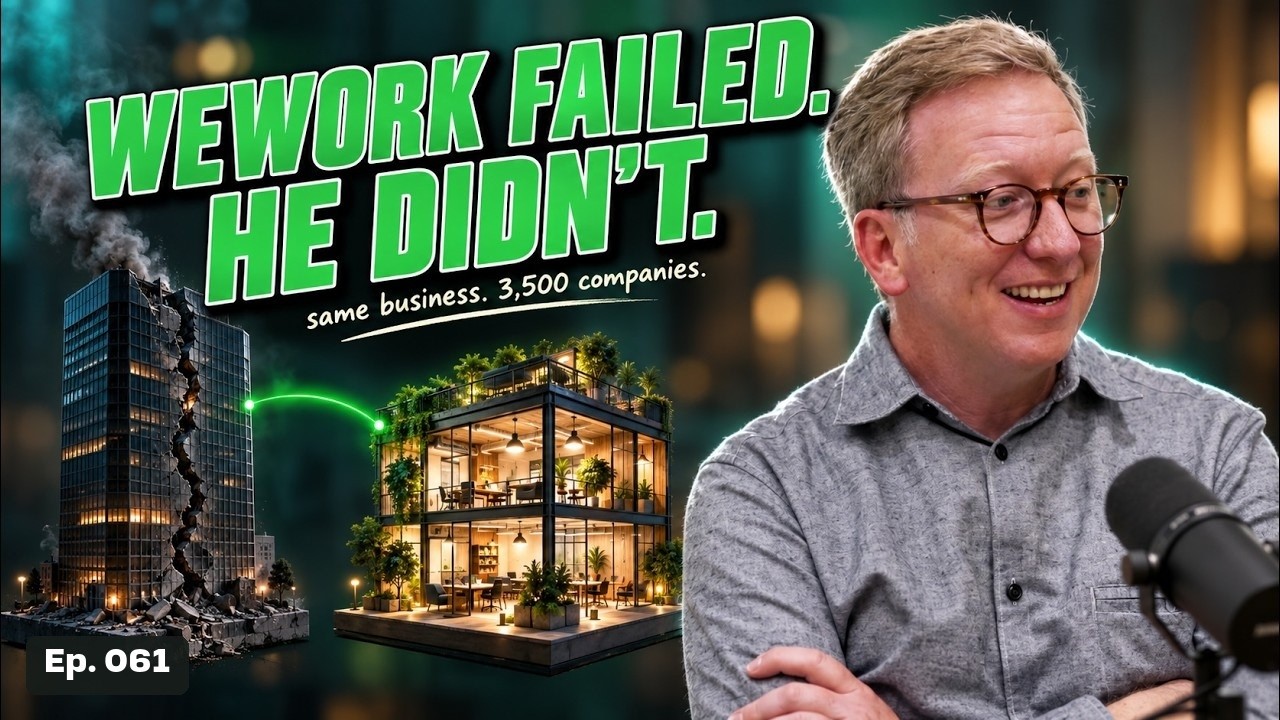
Ryan Westwood tells the story of building Simplus from zero to 600 employees, acquiring seven competitors along the way, and selling the Salesforce consulting firm to Infosys for $250M. He shares his philosophy of slowing down to speed up and the playbook behind strategic acquisitions.
Ryan Westwood is the CEO and co-founder of Simplus, the Salesforce Platinum Partner he grew from zero to 600 employees in six years before selling to Infosys for $250M in 2020. Named Comparably's Best CEO two consecutive years. Also a Forbes and Wall Street Journal columnist and venture investor in 30+ technology companies.
Show full transcript
We're super excited to have Ryan Westwood on our podcast today. An entrepreneur, investor, and philanthropist. Now, you are the CEO of Fullcast. I saw that you raised $34 million last year, which is awesome. You scaled Simplist from 0 to 600 employees. You sold it to a publicly traded company, Infosys, $250 million. So, you have been around the block. My grandfather was a prolific entrepreneur, but he was also an alcoholic and it killed him. had successful businesses. He was a millionaire and he lost it all because of that vice. >> Recently, I'm like maybe it was like unfinished business from my grandfather. >> I've come to the conclusion that I just had this innate desire to do this that I couldn't explain just this engine within me to build at this young age. And I think I was continuing a mission that my grandfather had. That's what I tell myself. People would have laughed if they would in my 20s heard me say this, but slow down to speed up. I've been going so fast and had a certain level of intensity that I've realized my direction is far more important than my speed. And taking the time to live deliberately and think what I want to create instead of react to in the world has changed everything for me. Rock [music] next bike. Welcome back to the Startup Ignition podcast. Thank you for watching last episode. Thank you for tuning in to this one. We're trying to provide you guys with amazing content, amazing guests, and we have another banger today. I'm so excited to for everybody to meet Ryan, Ryan Westwood, who I recently connected with at an annual meeting at a venture cap venture capital fund. We ran into each other and Ryan was like, "Hey, how's the podcast going?" I'm like, "You should come on it." And he's like, "I I don't know if I have time." I'm like, "And we found a time." So, we're super excited to have Ryan Westwood on our podcast today. and we are so happy to get into it and I have a bio for you Ryan so I'm going to read it for you and then I can't wait to dive in but Ryan Westwood is an entrepreneur investor and philanthropist and I know you want to talk about a lot all of the above today and I'm excited to dive in and you are mostly known for recently uh or within the last few years your simplest adventure but now you are the CEO of a new thing called Fullcast which I'm excited to learn even more about cuz I saw that you raised $34 million last which is awesome. A TechCrunch article as well. That's cool. And you scaled Simplist from 0 to 600 employees. You sold it to a publicly traded company. Uh what's the company called again? It's uh Infosys. >> Infosys. And they're literally on the New York Stock Exchange I saw. And that was for that's obviously public knowledge. They're a public company. $250 million. So you have been around the block. But not only that, you have also done a ton of stuff. You're a family man. You're a philanthropist. you uh I know that you're an author, right? And uh obviously a husband and you're just an all-around awesome good dude. So we are so excited to have >> consistent track record. So our viewers and listeners, this is somebody and he's got some tips for that consistency today, I think. Right. >> Yeah. Thank you, John. >> So yes, so thank you Ryan for coming on the podcast and for talking to our audience. I am sure this is going to be an awesome episode. So but before we get into it, I know you've watched a few episodes of the podcast. I do have an icebreaker for you. >> So, we're going to play a really quick game. We're calling this Startup Mad Libs. Are you ready for it? Do you remember Mad Libs? Come on now. You remember Mad Libs? Let's just go. >> You know when you you know when you you had like the blank line you give have to give a noun or a verb and you fill it in and it makes a story with funny. You never did a mad lip, man. You didn't You know what mad lips are? You don't know what mad lips are? >> Am I the only like old millennial that remembers that? I don't know. It's honestly after my time and maybe before his time. I don't know. You two, you two are probably >> You guys need to back me up here. Leave a comment if you know what a Mad Lib is. Come on now. [laughter] Um, but anyways, what we do, a mad lib is where I'm just going to give you a sentence and you got to fill in the blank. And you can fill it in with one word or a sentence or whatever. >> And it can be nouns or verbs or anything. >> Well, honestly, it's going to be sentences most likely because I'm going to want to have a story behind all these probably. But in the real Mad game, yes, it's like a paragraph and you fill in and it's like, you know, give me a verb. Oh, uh, running. Okay, I went to the store running, right? And so it's the surprise of the word, but this will be the surprise of the story with Ryan. So, here we go. So, you'll get it right when I say it and then you can do it, too. You want to participate? >> So, here we go. >> The dumbest startup advice I ever heard was blank. >> Venture capital is your enemy. Venture capital is your enemy. Wow. >> I'm a big fan of venture capital. >> Yeah. I I I was watching a video the other day and it's like stop having this mentality that venture capital is a uh crutch or like a pain or like being scared of it. It's more like it's an accelerator. It's an unfair advantage. Right. you raising VC capital is like yes it's pouring gasoline on the fire and that comes with a lot of like you know uh ties and you know responsibilities but at the same time it gives you another arrow in your quiver that's just like something that puts you ahead of the competition right and it was a cool perspective but yeah I love that >> I think I think the details and the nuances are the important question not whether you do or do not raise it >> yeah yeah [clears throat] how about you the world build it and they will come. So in other words, just build your product and see if they'll buy it. That's how you test it. >> Yeah. Yeah. [laughter] >> Build it and they will come. >> It's a very expensive way to do entrepreneurship. >> This is not the field of [laughter] dreams. >> Yeah. >> Okay. Next one. The biggest startup killer is blank. >> Cash flow. >> Cash flow. I love it. >> Well, that's absolutely on the death certificate of everyone is ran out of cash, right? And so that's good. So what leads to cash flow problems is just not understanding business finance. So in other words, I think that So what? Let me complete the sentence. Ray, say it again. >> The biggest startup killer is blank. The biggest kill starter is premature scaling. >> Premature. I knew you were going to say that. >> So that's doing things that are right that should be done later. >> Yeah. So too early. So scaling and hiring and spending way too early than you should. Okay. The one meeting I'll never forget was when blank >> uh Buckhead at King and Duke in Atlanta with David Northingington, CEO of Cloud Sherpa. It it changed the trajectory of Simplus and probably helped me cut three years out of the journey. >> Wait, say that. I didn't catch any of those words. What was So, it was one meeting >> at Buckhead >> uh in Atlanta >> at a place called King and Duke. Okay. >> And I had a few things in my head that I thought we had to do that were absolutely wrong. >> And he helped me so much that I think we got to where we needed to go 3 years earlier because of that one lunch. >> Oh wow. So just a memorable and just milestone of a meeting. Just >> advice from an excellent operator that knew what he was doing. What was the advice? I want to know the advice. Can you remember the advice? >> Yeah, I can remember. So, we were we were a Salesforce partner and we were hyperfocused on where we ranked in the ecosystem >> and we were trying to move up the ranking because we thought it would help our brand and we would get more business and we could drift off of the Salesforce brand, which is true to an extent, but he told me, "Stop focusing on that >> and hire very exper experienced salespeople that have already been in this ecosystem for a decade. just focus on that and not where you're at in their ranking. We switched gears and the sales just took off. >> Oh, it was such a big piece of advice, but I was hyperfocused on the wrong thing. >> Yeah. >> And that's why I I I'm such a big fan of find an operator that's exited in your space or an adjacent space. Do whatever it takes. Meet them anywhere in the world. You get on that plane, you meet them wherever they say, and reverse engineer what they did to get to where they were. He had sold for about 500 million. >> Yeah. >> And I was like, I want to hear exactly how he did it. And man, was that a great meeting. >> That's awesome. Um, okay, I'm repeating the sentence for you. The one meeting I'll never forget was when blank when Microsoft asked me, "What would you do with a billion dollars in the yellow pages industry?" So, I I was very myopic. I did a print yellow pages company. I didn't I you know, your first company, I'm going to work there forever. You know, that's my thing. And I didn't understand it's an asset and the value and all. But then when I said, "Hey, maybe this print business now I rec the internet's coming. I'm going to put yellow pages on the internet." Everybody got excited. And Microsoft invited me into several meetings. And at one of the meetings, they said, "John, we're really learning a lot from you. What would you do with a billion dollars in the yellow pages industry?" [laughter] Never forget that question. I think they heard me audibly gulp. [laughter] Okay, that kind of that kind of moves into our my next mad lib or my next question for you guys. Okay, you ready? Ryan, if I had $10 million to invest tomorrow, I'd back a company that blank. >> I have four rules for investing. >> Okay. >> So, number one, institutional investors already involved. >> Uhhuh. >> Because I don't want to babysit it. You don't want to be the support that Yeah. I want to support the founder. Number two, they have audited financials because of the governance. That's really important to me. Three, I believe in the CEO and that the CEO will do whatever it takes. >> It's a killer >> to get it done. >> And then I understand the business model. >> You need to understand it. >> Yeah. As long as those four things are true. And and by the way, from my failures, I've created those four rules because every time I broke them, I've had a problem. >> You lost. Yeah. And ever since I've I've kept those rules without any exception, it's been great. >> Yeah. Yeah. We uh we have quite the due diligence checklist at our firm and it hits all of those things and more. But yes, financial projections and financial workbook. If you don't have your financials put together, how can anything ever happen? Like it shocks me when entrepreneurs don't have that. >> I always like to say if you can't make it work in a spreadsheet, it's going to be that much harder in real life. >> Yeah. Yeah, [laughter] for sure. >> Yeah. Y >> How about you? If I had $10 million to invest tomorrow, I'd back a company that blank >> that has a solution that is solving a must-have need. In other words, that what what they're building or doing or a problem they're solving or need that they're fulfilling that it's a must-have in the customer's life. In other words, I don't want it to be just something nice to have. I want it to be something. They're going to have a that the class of solution and now you just have to be the best one to provide that solution. If you're just a throwaway nice to have thing, it's so much harder in entrepreneurship. It's the more must have the better. >> Yeah. I love those four rules, Ryan. Those are great. By the way, um have you been doing a lot of angel investing? >> I have. Before Fast I was very active. And now you're fullcast. >> I'm fully focused on building. >> So before we get to full cast and maybe even before we get into what you were doing with Simplist, >> take us like back. >> Are we are we done with the game now? >> Yeah, we're done with the game. >> Good job. >> Yeah. Okay. >> So, hey again, if you know what a Mad Lib is, kind of come on, back back me up here. I'm the odd man [laughter] out here. That That was a cool game. Okay. >> I had fun with it. >> So, yeah, take us back like where wherever you want to start. I want to go back because I don't I I met you when you were doing simplest. >> Well, when you grew up in I like to start where you grew up in high school and were you entrepreneurial as a youth? >> Yeah. Yeah. Very entrepreneurial as a youth. I only in the last year maybe come to the realization of why maybe I had this burning desire to be an entrepreneur because it didn't make a lot of sense. >> Yeah. >> Um I remember being really really young and I actually still have a report from when I was 11. I wrote a report called entrepreneurship and a like a detailed four-page document as an 11year-old >> for school and I was thinking to myself how did I know what that was? [laughter] >> How did I know the word and why was I so passionate about it? >> Yeah. >> And in the last year I've finally come to a place where I think I know where it came from. My father was a director of history for the state of Utah professor at BYU. My father uh has only worked for the state and the church. He's worked for big organizations. So for me to want to go the opposite direction makes no sense. >> Yeah. >> And I there was no entrepreneurs in my neighborhood when I was that age either. So I don't >> the only thing I know is my grandfather was a prolific entrepreneur. >> But uh he was also an alcoholic. M >> he was Catholic in Provo and an alcoholic. >> Yeah. >> And it killed him. In his 60s, alcoholism killed my grandfather. And he had owned a bunch of Greyhound bus stations. He has Westwood cafes. He had successful businesses. He was a millionaire. >> It was those >> in the 70s and very And he >> That's when a million meant something. >> Yeah. Yes. And and he lost it all because of that vice. >> Uhhuh. And so I watched that happen in his life, but I never I never really until recently I'm like maybe it was like unfinished business from my grandfather. Yeah. >> I've come to the conclusion that I just had this innate desire to do this that I couldn't explain >> just this engine within me to build at this young age. And I think I was continuing a mission that my grandfather had. That's what I tell myself. And so as a young young kid, I started out as an entrepreneur. I have a set of Nikes in my office on the wall. And it was the first time my parents were like, "We can't afford those shoes." My dad's like, "Look, I'm a historian. We don't make a lot of money." >> Or were they Jordans or >> They were They Yeah, they were 92 Air Maxes. And I wanted them so bad. And my dad's like, "It's off the table. We can't afford them." And my mom looked at me and she said, "You know what? if you can make if you can earn 50 bucks, I'll I'll I'll do the other half because they were $100 shoes. And so I started just knocking on doors and sweet old ladies took full advantage of my labor. I there was places where I made two bucks for five hours of of weeding and >> Oh, you literally just said, "What jobs do you have?" >> Yeah. What? I just went to the door and said, "What can I do? Can I weed? Can I You give me a job, I'll do it." >> Yeah. And I did it for an entire summer. It took me four months and and I got the $50 and I went to the mall and I got those shoes. And it was the first time that I was like, how sweet is the reward of hard work and creating something from nothing. Yeah. >> And that's when I think I got the bug of I can, you know what? People can tell me no. And as an 11year-old, I can get a fresh new pair of knives. You know, you know, that's that's literally the mental state of like a successful person is when they look at an end goal, they look at the reward or the end outcome rather than the path to get there. Like they say that a lot of more, you know, glass half empty type people are looking at, oh man, I'm going to have to weed the yard or mow the grass or do that to do that just to get the shoes versus, oh, I don't care. I'm going to do all that and I I get shoes at the end of the day. Like that's a different mental attitude towards, right? And so it's just interesting that you say, "Oh, I I saw the reward and I I tasted success." And that's the truth. That's that's how successful people look at hard work is like, >> "I'll do it. I'll do it if I get it at the end of the day." Right. >> So that how how old were you when you got those shoes? >> 11. You Oh, that was that year 11. >> That was that year 11. >> So how did you do in junior high in high school? Were you entrepreneurial then, too? >> Yeah. I just kept going with it and building all kinds of things through in my early 20s when I was when you knew me at Workfront. I had a vending business on the side and my wife vending machines and I was like apartment buildings and different things. >> Yeah. And I was getting used to QuickBooks and a profit and loss statement and reading it and working on it and my wife and I managed it and I had this moment where I was at this business filling vending machines during my lunch hour. At the same time, I'm an executive at Adtask leading the sales organization. And I remember hearing a guy from high school whispering, "Look where Westwood ended up." >> Yeah. >> And I kind of like just logged that inside and I'm like, "Okay, there's a rogue psychology, I think, inside of entrepreneurs of like that stuff's fuel for us." >> Yeah. There's almost like a gift when somebody is saying they can't do it. Why? Kind of like Marty McFly. >> We're down and out. >> Like McFly. Yeah. He from where? Yeah. What is it? Now I'm thinking to the future. He can't he can't do something. And he goes, "Oh, yeah. Don't you know I dare you or Yeah. I dare you. >> I am definitely in that court where that stuff it adds up for me." >> Yeah. And and so that was so before that workfront year that you mentioned or whatever you were at workfront for a while which is um was called at task in those days. You were five years at direct point. How when did you join there? Right out of college. >> Yeah. Yeah. Right away. >> And and that seems like it was a pivotal time in your life for learning about business. Is that true? >> It was very pivotal. Um, I'm grateful that Mike Proper gave me that opportunity and created that business because what I did is I started out in as a sales associate at the very kind of entry level role and I did every job in the organization until I led the sales and marketing effort. And because of that, I had a lot of respect from the team because they knew I did every single person's job and had figured it out and successfully created value in every role. And then I got the job. But there were seven people put in the role before I was given the opportunity because everybody looked at me and said, "He's 24 years old." >> Yeah. >> There's no way we're going to give him the reigns. And the revenue was around 15 million. And you know, they were thinking, "Someone's got to be 20 years older than this." >> Yeah. >> This young guy. >> Yeah. >> And so it one after another passed me up until finally they gave me the opportunity and we just had some blowout quarters. We were having great success. >> And you were over all sales and marketing. >> That's right. >> Of a $15 million revenue line. >> And I was probably 24 years old. >> Wow. >> You know Michael Proper? You met him? >> Yeah, I I've met Michael. And so, um, one thing I'm noticing here, just again for the viewers and listeners, it's kind of funny. Most of the entrepreneurs I know, they whether they start off on the tech side of the business, whatever side, most of the ones that kind of really rise to the cream, they kind of go over to the sales side a little bit more and they learn the sales side. And that's that's your forte is revenue generation. Is that true? >> Absolutely. I had I had and I had during that time I had a weird proclivity for the product side too. I I realized I was a little bit different than all of our sales team when I was at 7:00 trying to work in Sugar CRM and customize and do other things. So I do have a >> free open source CRM. That's cool. >> And so I do have a proclivity for the product side, but I'm I am a revenue first. >> See, this is interesting for me. I started in the tech side and I loved it. uh putting in I was in the era of the PC revolution putting in computers figuring out tech uh using graphics computers instead of the old way of making ads in a yellow pages book. I started off on the tech side and I all a sudden saw this sales side. I said I got to be more in the sales side. That's where the action is and that's so important. And I I moved my whole thing to focus on sales because other people do tech but not every do sales. You know, it's just interesting that you brought that up and I I'm seeing that where your success is because you're just been so good at revenue generation. So, so you're at that company and you're quarter after quarter killing it and you're 24 years old. >> Yeah. >> Like what did you learn? Cuz I I just I don't feel like that's common for an entrepreneur or even just a hired, you know, W2 worker to be put at 24 years old over that important of a revenue, you know, business. Like what what did you learn that? How did you get to that spot? >> The question would be why did Michael proper >> Yeah. like hire you and appoint you to that position? >> Yeah. >> Michael Proper is a he's a visionary and an inspired guy and he um >> he just believed in putting the person that could perform the best in the role. I >> meritocracy. He had a meritocracy that worked. >> Well, I guess I guess my question is, let me rephrase it. is what did you do and what attributes did you show and like what was your leadership style like were you just a hard worker or like what what cuz that's not common. That's what I'm saying. A 24y old doing that. That's not common. >> I think I would love to ask Mike proper that question. >> I know I'm self you're I'm asking you to self analyze here. >> Yeah. I think I think the advantage that I had over the seven people before me is I did every job. >> Yeah. And so I knew the business path. I knew how to prospect. I knew my outbound pitch. It was logged in my head and I could just give it to you at any moment. I knew how to close. I knew how to farm. I did the existing farm team. I set it up and built it out. I knew everything about the sales team and the value prop and what we were doing in such excruciating detail that by the time I was in the role, I could just do more. I knew more. I helped build the CRM. I knew how everybody did their jobs. So, it just positioned me in a way that I could get into the details and do things that the other leaders couldn't. >> And did that did that attention to detail and building out those systems and getting into the trenches on that revenue line fuel the rest of your career where you were like, "Oh, I I did this at with Michael and his company over here. I'm just doing this over here." Like was that really the launch pad to a lot of the success in revenue generation in in your career? >> Oh man, I'm so fortunate that I got into tech via Mike and Direct Point. >> Yeah. What was the product in Direct Point? >> He uh managed services and he was one of the first managed service companies on the planet and the company was on a tear. It was a lot of fun to work there. Uh Scott Johnson recognized the success we'd been having over a few quarters and I got a call from Austin Miller there had a talent at the time and he was very very persuasive >> and we've had Scott Johnson great episode with Scott Johnson. >> When did you when did you two meet then in your timeline? How how when did you >> I think it was about work about that time and as you were maybe at the Yeah. So because the direct point gave you a skill set to launch your own company after you worked for did you go to did you go to >> yeah I was so I told my wife my wife's like all you talk about is entrepreneurship and and but she's like you've got to have a runway here. >> You were always such high energy and you still are. >> Yes. [laughter] Yes. And so so because of that my wife's like you've been talking about this at just nauseium. So is when is this actually going to happen? Yeah. Oh, you mean leaving about work from Yeah. >> But but Direct Point, what what did make you going from Direct Point to Did Scott come and recruit you or? >> Yeah, recruited me and we doubled the revenue of Walkront in one year that you were there. It was amazing. >> Yeah. And then your wife's telling you, "When are you going to be your own boss?" >> That's what she was saying. She's like, "You don't you know you're going to do it, so just do it." Yeah. >> Well, the rule was is that if we saved 100 grand, so we shared a car till we were 30. I did not purchase a car till I was 30 years old. >> Wow. >> My wife, the car we got when we were married when I was 22, I kept. >> Wow. >> And we lived in a small home. I remember we had a little notebook with our expenses. Our total expenses for the month. This is wild. Mortgage, car, car insurance, everything. $1,450. >> Wow. What year was that? >> This is This was 2005. >> Yeah. >> But boy, does that personal financial uh [clears throat] strength and habits lead to good things. >> Yeah. >> And we and it was a discipline that we then later brought to the business and a rigor >> and a discipline of sacrifice so we could live in a much better way later in life. >> But we made some big sacrifices. One of my mentors in life has this slogan, live a few years like nobody else will live the rest of your life like nobody else can. Meaning entrepreneurship is not about sacrificing and working till you die and not having any fun. It's saying hey for a few years there's going to be sacrifice >> and then you'll get the rewards. >> Yeah. >> And I can say I've lived that and that is true and that you can live off of interest and live phenomenal life and not worry. I spent a lot of my career encouraging entrepreneurs, but I try to tell them it's not to turn you into a workaholic. You're not to be a workaholic that just works for 30 years and dies. That's not what it's about. It's about well for four years will you work your tail off in an abnormally >> That's right. >> you know allin way and then afterwards you have freedom for the rest of your life. >> Yeah. Y >> yeah. So your wife is like >> pushing you to do this. >> So you leave at task. >> Yeah. We saved a hundred grand. This is in uh 2009. And when we'd saved up the 100 grand, she was like, "Go after it." >> Yeah. So, >> what? First of all, let's pause on that. What a A lot of spouses aren't along for the ride. >> Yeah. >> You know, not talking man or woman, but spouse of an entrepreneur. They're not always that encouraging and they're scared. Yeah. >> Yeah. Some reason she believed in me. I don't [laughter] know why it it wasn't logical, but I appreciate that she believed in me and once I had the 100,000, we went after it and we needed every bit of it. I barely survived. >> I I got paid just in time before it ran out. >> Yeah. Wow. >> So, and that and so so at Workfront, you left after a year, you doubled their sales. And what's the company you started? Tell us about that. >> Called PCS. And it was SMB managed services. And I went back to my roots of what I learned at Directpoint. >> You were just like, I what I did at Directpoint, I think I can just do that. >> Yeah. I learned all the roles. Let's build something. And we built it. We bootstrapped. We built it profitably. And my first ever investor um invested $40,000 with no signed docs. He sent me a check, a FedEx check. Travis Johnson of Idaho Falls. >> And he believed in me and I'll always be grateful to him for that. He's my first angel investor. And in simplest, we gave him a big allocation and we made him a lot of money. [laughter] >> Yeah. And in full cast, we gave him a big allocation and we're going to make him a lot of money. >> Oh, that's awesome. >> And I appreciate it. He bet on me before anyone with 40 grand that was instrumental in the success. But that was the only investment we had in PC. >> You cash flowed it the rest way. >> We cash flowed it and it was a million and a half of IBIDA when when we ended when we sold it. >> Wow. And that's fantastic. And how long did you run that for? >> Four and a half years. >> Okay. And then when you sold that, where'd you go then? >> We created Simplest. >> Yes. >> And >> And I definitely You and I were meeting a lot then cuz you were telling me what you were doing and we would I remember going to Marley's. I can't remember where we were. >> Oh, yeah. Probably. [laughter] Yeah. >> And just talked about when you were getting Simplest off the ground. >> Yeah. We had uh You have phenomenal memory, but uh they had the sliders at Marley. >> I don't even know when we first met. So I I think it was during the Dev Mountain simplest days, but I don't know why or how I don't know why or how like he I don't know, >> but yeah. Okay. So you're going how did the simplest idea come about cuz you're in these managed services IT area. How do you get into this? >> Tell us the business model of simplest and what you thought. >> Yeah. So um we were we were processing credit cards in Salesforce. >> Yeah. >> And we had the realization that nobody really knew how to do it and there was no CPQ solutions. There's nothing that's configure price and quote. and there was nothing there for it. And so it was a big problem we had at PCS that I was like, if we have this problem and Salesforce hasn't figured it out, there's got to be other businesses that have this. >> So you were using Salesforce at PCS. You said, "Holy crap, we can't actually process or do any kind of credit card processing within Salesforce. There's got to be a solution out there." And there wasn't. That's how you fell into the >> That's right. And we started seeing that the margins of that business were better. And I got very interested in it. And one thing I've tried to do is from what I've learned, get into incrementally better and better companies. >> Yeah. >> And the gross margins were a lot better than than the managed services. >> Okay. So, I was going to ask you, what's an attribute of a better company? If I'm in a company and I find a better company, what what does that mean? >> Uh, I love recurring revenue. >> Yeah. >> I love high gross margins. >> Yeah. Bigger margins. >> Sounds like my list. >> Yeah. [laughter] >> Yeah. And and and I love to have a business that has a defensible kind of position. Baruri entry barrier to entry that's difficult. >> You're going literally down my checklist [laughter] that I teach in the boot camp. Yeah. >> Well, I I hope they listen to you because I had to do a few before it that were really hard. Life shortening businesses and and so now I only want to do those businesses. >> Yeah. So you go into Simplist, you're just kind of have this aha moment. Oh my, this is a great market, great industry, great idea. Let's go. >> Yeah. We tested it and it was taking off faster than our prior. >> Did you build that product then within Salesforce? That's what the original >> Yes. And it was a combination of helping productwise and services. >> Salesforce app. >> Uh yes. And a tech enabled services. We were we were as more services than product. What we figured out is that if we could customize Salesforce and we realized how much revenue was in customizing Salesforce. Yeah. It's a high margin business. At least it was at the time. And businesses spend tens if not hundreds of millions of dollars to figure out that core process in their businesses. Yeah. >> And we realized that that was a humongous opportunity. >> Yeah. >> Yeah. >> So you basically became like a Salesforce dev shop for people customizing Salesforce instances >> specific to CPQ. So the thing that we did different is the prior businesses just tried to be all things to everyone. Mh. >> And what we did is we pinned down one business process and everybody told us >> that painoint you just pain. >> Yeah. And we stayed in the pain point and we did not divert. And I had so many people, our sales team, our marketing trying to get do other things. >> Yeah. Everybody wanted me to do something else and I takes the eye off the ball. Why did you stay? Why? >> It was our bread and butter. It was highly differentiated. And I kept feeling like if we and this is the thing is if you keep doing it long enough, you build enough brand. It's a hack to build a bigger brand fast and build a reputation to where you get big deals. And here's what happened that was our big we had a couple things that were great luck. Um there were two businesses that were built building CPQ because Salesforce's was so bad. There was one company called Stillbick and one called Aptis. And one of them was this great entrepreneur called Godard Ael. And God built a company called big machines and sold it to Oracle which was CPQ the first CPQ software and there was this company called Aptus and everybody bet on Aptus. So all Deote and Accenture and all the big boys they bet all the money on Aptus and I sat down with the teams of both companies and and Aptus was was actually implemented at Salesforce. So everybody was like oh it's a foregone conclusion they're going to buy Aptus. >> Yeah. But when I met Godard, I'm like, "This guy just spent 13 years building a team and just sold for almost a half a billion dollars the same product to Oracle. Why isn't anyone paying attention to this guy?" >> Mhm. >> And I could just see a fire in his eyes and I'm like, "That's an entrepreneur that is going to win, but everyone is all in on this other guy." And so we bet the house on him. We stopped doing everything else. We only implemented Still Brick. We went all in. He invested in in Simplus. We went arm-in- arm together and we went on a run that was epic together and Salesforce acquired him. The day after I flew into San Francisco, Salesforce Ventures invested and we went on a rollup spree and we acquired our seven biggest competitors and we directed every press release at intimidating our competitors. None of them were about us. It was all how do we angle to make them feel like the earth is just shaken beneath their feet and we're gonna we're gonna take over. >> Yeah. >> So did Wait, did you say Salesforce Ventures invested in Simplus? >> Yeah. Because he the one he partnered with, they acquired the one he was partnering with. >> Yeah. >> Which gave him inside track to the ventures arm. >> That's right. So the day after the acquisition, I flew in and said, "Hey, you bought this great company. You spent all this money. No one else knows how to implement it but us. M >> so how are you going to how are you going to deliver now you have 5,000 sales people selling it who's going to deliver on it and they were like great point and they immediately put capital in and we ended up all in all raising about $40 million >> and you use that to buy up and roll up >> and we used a combination of Silicon Valley's banks venture debt equity and cash and what I realized in a meeting with a banker I actually think it's interesting to talk to bankers early on. A lot of entrepreneurs avoid them. >> But I asked them about some other companies in the ecosystem that had had success. >> And they told me that they showed me their decks and I saw one anomaly. The companies under 10 million were valued at one times revenue. Companies over 10 were valued at about two and over 20 were valued at about three. Like, well, this is really easy math. If I buy companies at 8 or 9 million, Yeah. for one times revenue. There were three the second we close. >> Yeah. Yeah. >> And so we just >> that's called arbitrage. >> It was a beautiful arbitrage model. And we we went on to roll up everyone >> and that between that and organic growth, we just what was that rollup process like? Was that pretty hard to grab other third-party companies, bring them in under one umbrella, you know, maybe even, you know, you know, fire some of the people that are doing similar jobs within all the different, you know, just rolling up and consolidating. Was that a difficult thing? >> It's very hard. >> I was going to say the cohesiveness, the the company cultures, like the respect and everything that you build with your own team, then on a whim just bringing in a full force of people. Oh man. >> I I have a couple tips that have saved me some pain from >> cuz it's a great model. The roll the the you know roll up and you know consolidation like what you just said. Oh, it's worth 1x the second I buy it. It's worth 3x. The revenue impact is amazing. But like >> also the expense side um you know when you consolidate companies like that the GNA expenses go away about 80% on the one you acquire. So that also flows to the bottom line. >> Yeah. >> Yeah. You take legal, finance and HR right out >> and bang, bottom line. >> How many So, how many companies did you acquire and how short period? >> We acquired seven in three years. >> Yeah. >> And during those acquisitions, there's a couple things I learned. One, be clear that you are getting rid of their brand day one. You know, if that's going to happen, if not, that's okay. But the middle ground and uh it takes really strong leadership. Mhm. >> Tell them uh after the LOI and before the close if you need to reduce staff, get it done then. >> Yeah. Y >> uh and then and then a major thing is just making sure if you're going to integrate or how and where the people go, you decide that right away. >> Yeah. >> If if not, if you're unclear about anything >> in that case, >> if you're not decisive and clear, there's going to be all kinds of problems. Yeah. And the other thing is is a lot of CEOs will acquire for revenue. That is a mistake. Acquire with a very focused strategy. That's where M&A gets a bad name. >> When the CEO of a services business suddenly acquires a software company. >> Yeah. >> And the two employee bases are like PTO doesn't work. The margins are different. I feel weird. That's when you hear horror stories. But if you're focused in a spot where you're really really good and you're definitive in your leadership, I think it's one of the greatest strategies to deploy for entrepreneurship that's the most underutilized strategy to scale. >> Yeah. But and it's just interesting. We're at that stage in private equity right now. Everything's cyclical. But right now, private equity is having a hard time because private equity that just buys without the strategy just for the revenue, they have to find the next buyer and then the next buyer and the next buyer. And right now, there's a lot of articles being written about it is current private equity companies that have done those kind of purchases are not finding the next buyer. It's like musical chairs. >> Yeah. >> They're running out of the chair and they're being left out because they can't find a buyer. So if they overpaid, they're in trouble. And I noticed in Financial Times, there's funds now that are even using their own next fund to buy the business cuz they can't find a buyer. Did you see that? >> Yes. Vista and others. That's got to be about that. >> Yeah. And the and just think of those investors a transaction between their own two entities. >> Yeah. And then imagine the problem because either one of the other side's going to lose, >> you know, whoever's in one of the other funds is going to say, "You paid too much. You paid too little." your allegiance to the LP. >> Yeah. >> Yeah. >> Hope hopefully another buyer comes down the road for that fun, too. >> I was going to say you've got to have that. >> Yeah, that's crazy. It's very It's an interesting time right now in that space cuz for about 10 years, it was a no- lose game. >> You buy like that and then you get caught holding the bag. >> So, is that strategy ultimately that got you to a point of acquisition within Simplus? Cuz again, I mentioned it in your bio in the beginning of this episode. simply sold for $250 million. Was that a big reason why was that roll up and that experience that you did and just building and piling on revenue >> after you start? >> Was the market that big? Like you didn't have like competing c like competing companies with the same similar customers or different customers like >> I don't know it's just >> well well what we did is we tried to buy them and take them out as they came but there were a few that popped back up towards the end >> uh of the journey. Yeah. because they saw our success and they tried to emulate it. >> Right. Right. >> The kind of interesting thing, Tyler, is this is that, you know, he just mentioned eight or nine million, it was way easier once he has the motor running to buy that eight or 9 million company than to take the time to go grow by eight or n million. Oh, yeah. That's right. And I think sometimes if you sit down and you look at the CAC for organic versus inorganic in some markets, like right now, I believe the CAC can be lower. >> Yeah. >> For inorganic. >> Yeah. >> And you've got to weigh out the two at all. You still have to be strategic and you have to buy at a good price. >> You basically mean organic meaning like in-house versus inorganic is like those acquiring. Yeah. The customer. Okay. >> Very smart. >> Yeah. That's a great model. >> Viewers and listeners got to be on top of it like Ryan is. >> It's just it's just capital intensive, right? Which is why you raised 40 million from Salesforce Ventures and or whatever the number was. It sound it sounds like you got debt you got venture debt from Silicon Valley type banks and then you got you had and then you had your cash but you also did you buy some of the companies with equity and you had you had to be careful there though because you know it's kind of interesting if I sell a company to you and then I get equity for that and you make the value go up to 3x from 1x I'm also a winner being the seller. >> Mhm. >> Absolutely. Yeah. >> And we did do that for many of them >> because every deal had a combination >> of and not all of them were the same. But we used currency of your equity cuz you don't want to overspend that either. >> Yeah, that's right. And so we we used both assets, the debt, the cash, and the equity depending on the situation and it fluctuated based on how long I wanted that CEO to stay to. Right. Right. >> And so there's a lot of strategy between how you architect the deal and how it goes afterwards. >> Yeah. It's kind of funny just as a footnote here when right after I went we went public with Infospace in 1998 in the first year we bought 25 companies all with our stock didn't spend any cash on it because it was la land on valuations public company and you can buy companies with the currency of your stock and if it's a hot stock going up the sellers will sell to you because they think they're going to make money afterwards and so 25 companies in one year >> then the crash but then the crash run and actually I remember you talking about that and I remember in our acquisition cuz I was acquired by a public company too. I remember negotiating for an allcash deal saying like I don't want to touch stock. I don't want any stock. I want >> In your case, you should have taken some stock. >> I know. And then looking back at it, it was when we sold our company and added value to the to that publicly traded company. They their stock tripled in like a year and a half after our deal. My deal would have ballooned by 3x if I just would have risk a risk. I was going to say I was we were happy with the cash but I'm just saying to the entrepreneurs out there like you know there's a trade-off for both sides. >> One of the things I think all three of us can say though and we've been on the seller side and this is for viewers and listeners just to know when you do sell your company a lot of times they have a concept called earnout where you get like 80 or 90% of your cash and 10 or 20 are held back and you've had this experience too. It's actually more often than not you don't get any of that earnout money. >> Yeah. >> Because of lots of different circumstances. I've I've had my own cases that one time I even had to file a lawsuit on the buyer because they did we qualified and earned our earnout and they didn't want to pay it. >> Wow. Well, >> that's that's tough, right? >> Yeah, it is. >> So, a simplest ends in an acquisition. Obviously, there was a huge path there. A lot of work, a lot of rollup, a lot of, you know, company culture things, a lot of revenue building. But take me to the acquisition part. Like, when did you know Simplist was like it? you're like, "Oh man, this is going to be an amazing exit for everybody involved." Like, at what point was that? >> I think there's a healthy u paranoia that comes with being an operator. There was never a moment that was like, "This is for sure." I'm like, I need to keep one eye open while I sleep. That's the >> I mean, until the cash is in the bank, it's always >> even to the last moment. I remember >> even the morning of >> Yes. [laughter] and and mine was particularly intense because it was the day that Trump announced the pandemic we funded. So I remember being at the Jazz game and I remember I was sitting with Clint and I'm like Clint, I haven't heard a word you've said this whole game [laughter] because I was so stressed cuz I knew it was going to fun and just a couple days it was going to fund and there was all this talk of a pandemic and the world shutting down. Yeah, we had signed on February 15th. March 15th we were going to fund >> and it was only a few days left and I >> was March of 2020 with the pandemic, right? >> That's right. >> And we were going to fund. I knew it. And I was just anxious every minute until that. >> Let me ask you this question. You know what the waterfall document is in act, you know, at the last things where the attorneys say, "Here's how the money's going to be distributed to fall down." It's called the waterfall document. >> And it's the strangest thing. You don't get that till like the day before or the morning of when the money is supposed to be wired, right? And then it's the you're always worried is at that point you're still worried if it's going to come. Are they going to make the wire at 2 p.m.? >> We were always in the back office doing our own calculations on our own spreadsheets [laughter] saying, "Oo, this is how much money in my piece of the company." >> And it's it's [clears throat] just a crazy process. It really is. Also, by the way, going public, I just fun to tell these stories because they're so similar. But like it was the morning of going public and I'm in Seattle. The market opens at 6:30 a.m. and so we're up at like 6 am at the office and we had bought a really expensive plasma TV to watch it in the conference room. The tickers start going by and like a half hour before opening I'm going I hope they don't cancel the IPO. I hope they don't cancel [laughter] the IPO because anything can happen. >> Yeah. >> Yeah. You you feel that paranoia every minute >> and I don't think I don't think you're a healthy entrepreneur if you don't sleep with one eye open all the time. >> Yeah. So maybe my my question my question was bad. My question was bad. Of course, you don't know for sure, for sure. Until it's for sure, for sure. But I mean, you had to have felt along the way like, "Wow, I'm building really good business. I'm piling on really great partners. I'm doing really great product. I have really good revenues." Like, Right. Like, you felt that. >> Yeah. When we did our series C, >> I was like, we're in a zone. Yeah. >> And and you kind of get this feeling like it's only ours to lose. if if this team doesn't execute on it, it it was our mistake, but we should win this market. And that's how it started to fill. And the winning was fun. >> Yeah. >> And we just were on a tear. And then they came to us, emphasis. And I had a conversation where I'm like, "Look, you can't afford us. It's not worth having this conversation." >> Oh, you're being hard to get. >> And it was it was a hard to get, but it was with reason. I'll tell you why. >> You can't afford us. Our series C investors had a 2 and 1 halfx blocker and they'd only invested 9 months before. So I said, "This price is not going to make sense for you guys." >> Yeah. >> And if it is, let's talk. Otherwise, don't worry about it. And they were like, "Hey, come to New York City and let's talk." To explain that to our viewers and listeners, I'm just going to explain. The blocker is saying that if your series C investor doesn't make two and a half times their money, there there's no sale possible. Yeah. and you would have to say no to Infosys no matter what if they didn't achieve a 2 and 12x return to that recent investor >> which I actually kind of love that provision that gave you a strong Yeah confidence I had nothing to lose negotiation cuz I thought if you don't hit it doesn't matter anyway I can't sell it there's no knock to you but you can't afford us like literally they were still interested >> and they were like we're absolutely interested we'll get to that number so I said give me put it on paper Yeah, >> let's see this on paper. And that's what kicked it off. >> When was that first discussion with Infosys? And >> it was in July >> of of 19. >> Uh-huh. And by February, we closed. The the decision-m process was unreal. I met with 20 different executives. There is seven at the time there were about a hundred billion market cap. They're about 76 billion market cap today. >> And I had to meet with everyone from the CEO to most the executives. Yeah. and and on down COO, CFO, in-person meetings, New York, Salt Lake, wherever it was. Let's see. It was it was at least 20 meetings I had to present to >> executive. Yep. >> It's a crazy process. >> So, but it took it took it took a little over half a year or more. It took like eight months. >> It's like a second job when you're selling, isn't it? >> It was. It was an absolute and I remember we had a we had a big white board in my office and I had it turned around and it was our war room kind of board and our CFO and I were just crossing off the list diligence and we were in >> Have you met Kayyn Sharp and his his co-founder Kayn Sharp? Oh yeah, of course. But he wrote a great article after selling cuz he was the first time they'd been through this and he wrote a great article about the whole process after like signing the LOI to close is literally like a second job and how long it takes to do the due diligence because they go through everything. >> Mhm. >> And we timed it to where we were buying a business while >> we were getting so we were buying a company and we were getting purchased and I was operating the dayto-day. >> Yeah. Uh so it was a very very busy time and and and what sold me most on it is then they pitched me with a reverse integration. >> So they said Ryan you'll be the CEO of your comp the Infosys competitive business and we'll roll all those employees under you in the simplest brand >> and that'll be the beach head going forward of the brand known. >> So how long did you stay there doing that? >> Was two and a half years. >> Wow. That's rare staying that long cuz most of the time the CEOs of the selling company don't last that long at the buying company. >> I'll tell you the moment I knew it was time to go. >> Okay. >> I sent an email to the CEO and said, "Okay, year's over." We did the the total number for the practice was 650 million 150 million in Ibida. And it took three weeks to respond. And the response was nice. >> Oh [laughter] my gosh. $150 million of evida and the response was nice. [laughter] >> I was like I need to find a new job really like right now. So that's when I was done and and when I resigned [laughter] it took months before it was granted. There was this thought that if they ignored it I would reconsider. >> Yeah. >> Really? [laughter] >> Wow. It's just an interesting way. Let me ask you this question going back because we talked about all the funds at the late fun at the later stages of simplest. What's one or two tips like the first 18 months of simplest? Do you what are like two pivotal things that you did or that happened that really were critical and because all this fun stuff after series C and all that and selling but what in the first 80 months cuz that's always a grind right so >> oh yeah those are your >> life what's kind of the pivotal couple things or tips that you would offer from that >> I think one was we drafted off the brand to Salesforce there is a lot of advantages to finding one great partnership that's reciprocal and building off of that brand that gave a lot of opportunity in companies and logos we would have never had access to. >> Brand association. >> So brand association I would say is one. >> Okay. >> The second was discipline around differentiation. Making sure that we had a differentiated value and we did not waver from that me too product. >> Yes. And and I think it takes a ton of discipline because as an entrepreneur you you just see revenue and you think I'll be all things to all people and it's not a winning strategy. >> What I learned from it is our brand became much bigger much faster. People recognized us all over the ecosystem because we didn't do everything and we had customer satisfaction. >> You were the best at one thing. >> Yeah. Yeah. And everybody and our homepage was the leader in the leader in in quote to cash >> and we had it there for 5 years. We just didn't change the homepage. We didn't try to do anything fancy. We were like, we're going to beat the drum on this one thing until everybody knows us for it. So, that was the other thing is just differentiation, how that impacted the brand. I would say brand awareness with the partnerships. That's what I was going to say is like I I know you're you're getting partnerships, you're getting brand association, you're getting a good product, but like how how are you actually getting access and getting into these deals and building revenue and getting your own brand out there and getting your own name for yourself even though you're building a brand partnership over here with Salesforce and you're associated with them and you have a good product and you're staying to your true north star over there within your own realm and market. But it's like you're a sales guy. I feel like you're a revenue builder. Like what what is the actual strategy or the tips you would give to people who are maybe going from like that 0 to $1 million or that even that $500,000 to $3 million? Like how do you pile on serious revenues that way? Cuz I feel like you've done it like three or four times in your career. >> I think that this answer most people won't love to hear it. >> Why? Because it's so general. >> No, no. It's it's because it's hard and it takes a long time. >> I would say that you know Gary Vee used to say jab jab right hook. >> Give give then ask. >> Yeah. >> Having the discipline in a new relationship don't ask for a thing for two years. You meet someone don't ask for anything for two years. Just give. And it's incredible what will be unlocked from you. Yeah. So when I think about those early stages, I've been given capital by angel investors. And it wasn't because it was when we started the business. It wasn't because of the business. It was because of something that happened 10 years before, 15 years before, 5 years before, and all of it added up. It was all the jabs that added up and and mounted up into momentum. >> Can that be summarized into like relationship building? Like >> it really absolutely. and with with customers and with investors, partners all. >> How do you do that with customers though? Like if I'm a business and I have a product and I'm trying to reach this big brand or this big person, this big kahuna in my industry, I want to sell them. How do you do that on a B2B way? >> If I've been sending jabs over to a CIO for 5 years, no matter what the product is, out of sheer guilt, they're going to try it. >> Oh, you mean you just mean like being a good person, being curious, and building a relation? want those first 10 customers. >> If you have been giving to people for the last 10 years, you will get them no matter what. >> They're going to be like, "Ah, >> this guy keeps helping me. I got to do [laughter] something." >> That's the way you're living, I think, is a great way to ignite a startup. >> Yeah, I love that. >> You know, he is living this. He's noticed that I drink Coke Zero on every episode. the viewers and uh he walks in today and says >> you watched your episodes here's some Coke Zero. [laughter] >> Yeah, here's your Coke Zero. So Ryan's just that guy. So I love that. >> And I won't forget that. >> You know, someone else who's a great business builder that was on our podcast said a very similar thing. David Bradford who's been around the block and he's built a lot of awesome companies, has one of the best networks ever and he literally said the same thing. is like truly care and be curious about people and yeah just be a good person and then yeah the the outcome of that will be at some point they will do something genetworked with us since being on the podcast. >> Yeah. Yeah. Yeah. >> So it's just it's the great tips from great successful people. Ryan, David, all of these guys are saying >> we've only got a few minutes left unfortunately. So I want to make sure we get to >> the fun years after selling something. That's what I want to go. you you took you kind of could choose what to do in life. Tell us what you did for a few years and then what you're doing now. >> Yeah. Yeah. So, I spent some time as a venture capitalist uh at Epic. Loved >> it. Epic Ventures, one of the great >> VC funds in Utah. Yeah. >> We love Epic, by the way. Shout out to Epic. >> Yeah. Watching Nick and Kent. Uh they're phenomenal investors, great guys. I just, you know, I appreciated them as an investor and their approach and was happy to be a part of the the firm. We did a lot of deals together. I learned a lot. I had a lot of fun. But I deep down I'm like, >> you're an operator. >> I'm an operator. And inside I'm like, this is so fun. But then when the deal would close, like what am I supposed to do right now? >> Yeah. [laughter] >> And so I I think you get there's a certain amount of adrenaline you get used to that you're hooked to after if you've done it for more than a decade. It's really hard. It's like an athlete. It if that drop off is really hard. I underestimated how hard it would be for me not to be operating in a business. It was really hard to transition out. >> It's building growing. It's there oper entrepreneurs have this innate drive to build and grow. Build and grow. And we've talked about it so many times on the podcast. Do you agree with this? That the climb up the hill is more fun than reaching the summit. >> Absolutely. >> The journey is the reward. >> Yeah. >> Yeah. So I did some venture capital then I joined some boards and one of them uh was called Lumry a healthcare SAS business in Australia uh in uh Adelaide and another was a testing automation software company in London cities I love to visit. >> Yeah >> uh and entrepreneurs that I love and could support on great businesses that were scaling. Um, and I found that chairing those boards was my favorite thing to do outside of being an entrepreneur. And the reason was I during my time after I wrote a 50-page document about everything I learned about being a CEO and I would share it with them and spend time with them and work through things and it made me feel like I was in it again. And that so that mentorship of the CEO as the board chair was my favorite role, >> but I still couldn't totally scratch the itch. >> Yeah. Yeah. >> And so that's when I was like, okay, I got to get back in. I started calling everybody, hey, you want to go do it again? And everyone's like, oh, I'm in. >> This is the team that has been with you since your early days at Direct Point. >> Yes. And so, >> and you've taken them through all these >> you've been with the same team since your very first startup at Direct Point. >> No, no, that's not his startup. That's where he worked. >> No, I'm saying that. Yeah. Michael. >> Oh, yeah. So, my CRO now was selling arm-in- arm with me at DirectPoint. >> Wow. >> And he worked for Josh at Domo. He went to Adobe. He's worked for all these great companies. And he worked for me at Simplus. And he's back with me at Fullcast. It's three times over 20 years. >> Wow. >> But six of our eight executives have 10 or more years we've worked together. >> So, you were telling everybody about Fullcast. Tell us about Fullcast. >> Okay. So, um, one thing that I've always really really I talked about Sugar CRM earlier and and and working on Sugar CRM. I've always loved operations around sales and marketing, the back end, the the the real meat of how do I carve a territory? How do I make sure that commissions are paid properly spiff like spiff, right? >> And I was fortunate to invest in in his seed round and what a what a phenomenal guy. >> I know. So that kind of side of the business I always enjoyed and I so I knew this is what we all want to do because we're passionate about it and we've been doing something in around that our whole career sales and marketing and operations of sales and marketing and so we looked for a lot of businesses in the space and we found this company in Seattle and >> where we're originally from Seattle. Okay. Well, these guys uh one of them was the VP of go to market tech at Salesforce and he lived through the big scale years at Salesforce and he was the guy building all the stuff behind the scenes to help them scale and he eventually decided he was going to go build it on his own and he started building lots of product but their forte was not sales and marketing. So I get on the phone with these customers and they're like oh this is the most important technology in our tech stack. We carve territories and they are organized and accurate and we we were able to do all these things that I've never been able to do and we love it, but no one's ever heard of these guys. And every reference call they kind of joked about how it was a teeny company and no one ever heard of them. But the thing I heard throughout all of them is how much they love the product. And I thought I can solve these other problems. >> Yeah. So me and my co-founders put $9 million up of our own cash and then we added some other investors and we bought the company and it was a million and a half in revenue. It's been seven quarters and we're north of 15. >> Wow. >> In ARR. So we we're we're doing it again. >> That's awesome. Wait, so you bought the whole company? >> We bought 100% of the business >> and you bought out the original founders. Uh yes, except for the CTO. We had him roll his equity and he is a partner and he's a phenomenal partner. He's our product leader. >> Did he take some cash off the table? >> A little bit of cash off the table. We were like, take some cash. Now, here's what's interesting. In this next round, he's he's doubling down with some of the cash. >> Really? >> He wants more in. >> You paid pretty good for that company, right? Didn't you? We did. Yeah. Cuz you they were making a million and a half and you paid nine. Uh, we paid more than that. >> Oh, wow. >> Yeah, it was about 15. Wow. >> We It was It was competitive. >> It was nine within your team, your partner. >> It was competitive. And I think that in the beginning people thought we were overpaying and I felt like we were underpaying. >> When did you close? What month and year was that? >> That was in 22. >> Yeah. Well, 22 prices were still >> 22. It might have closed January 23. >> But yeah, and and >> a year later, people probably would have thought you overpaid maybe because they got worse. quarters. You like, >> but you got in good and now you've 15 or well, I guess 10x the revenue. >> Yeah, 10x the revenue in seven quarters. >> We we felt like we had a tiger by the tail and we were like, you know, sometimes I think that people um when you know you have something great and you feel more than 90% confident, be flexible on the price. >> Yeah. I it was one of those moments where I'm like some people are going to question me but I think in 12 months and in 24 months we'll prove that this was right. >> So is this scratching your itch now? >> Our valuation is now 125 million. >> Yeah. Awesome. Yeah. There you go. There you go. So this is scratching your itch though. >> Oh yeah. Now now I feel like but you know what John I feel like the first six months I wasn't >> I wasn't in CEO shape. I wasn't the CEO that I needed to be. >> It's like going back to the gym. Yeah. Going back to shape and getting in shape again. >> Is that why you brought your team back together though? >> The team is my team is >> you can get it back together and go quick. Yeah. >> Oh, they just know what they're doing and we're in an operating I call it the operating rhythm >> and we have that rhythm of the business and I have this document. We all just know it. >> And what's great too is everybody just fills in for me. We have three prior CEOs that have sold companies for north of 100 million on our leadership team. >> Wow. So these people are red personalities that are whips smart. I get out of their way and just say, "What do you need?" >> Yeah. Yeah. >> That's awesome. >> Well, we I mean, should we just go to a concluding question maybe? >> Yeah. Well, I I I I do want to say one thing. This has been awesome cuz I know that you've done a lot of philanthropy and I know you've done a lot of giving back. I know you're involved on your personal website that I checked out before the podcast. You list a couple of uh you know, charities and things you're affiliated with. like what are you doing there? Because I know that's really important to you. >> Yeah. Share some of that. Yeah. >> Just uh thank you for that. One tip that has been life-changing. >> Our girls every year we all every member of our family, so my wife and my two girls and I, we all pick a charity to donate to. >> Oh, cool. >> And we we would have our girls just cut a check every year and they would pick a charity and it wasn't it wasn't uh >> meaningful enough. >> It wasn't meaningful enough because it was mom and dad's money. And so they were kind of like what you know whatever we contributed and they'd forget in a minute. >> Yeah. >> So we started to require eight weeks of service >> at the charity they picked once a week. >> What do you mean? So they so we said whatever charity you pick and and my youngest daughter we started this when she was four. >> She loves animals and so she picked best friends and the only job they'd let her do was read the cats. So she sat on a little box and just read for an hour to cats. I swear to you, she learned how to read [laughter] reading to cats and and I would listen around the corner and she knew she was contributing and she was a part of it. And what it's done for the culture of our family is now all year long we'll be sitting at dinner and my daughter's like, I think I'm going to do this charity. I've been researching this and I've been think I'm like what? They now are so invested because it's their time. >> Yeah. Yeah, >> they really really care. >> Yeah, they care about it >> because they know they're going to get dropped off once a week for 8 weeks at that location and they're like, I better pick the right charity. >> Yeah. So, you're literally doing like a local charity where they're spending time. >> Yes. Yeah. >> And they're really contributing. So, if it's if it's that it's a food bank, they're going and they're filling boxes. My girls are going Saturday mornings and filling boxes. >> So, >> so you're still giving a check, but you're also making them give time. >> That's right. So they give them a check and then they say >> I'm going to be here for the next >> How many kids do you have? >> Two. >> Oh, nice. >> And they're 9 and 12. And so that has been kind of a major cultural shift that I would just say, you know, when you have the opportunity to give back with your family, if you want it to be a part of the culture of your family, that's worked really well. not just a tax write off and just like saving this or whatever charity giving. It's like, hey, you actually make it mean something. >> You feel like I actually feel like it's having a generational impact and more of a legacy move than just a tax write off. It's become a part of our family culture. >> Yeah, that's really good. >> Um, last last question that I have for you before we wrap up this episode because we've actually already been talking for an hour, which is crazy. Anything else you'd like to cover about that? That's what I want to say is I say the last parting thing I want to leave with you Ryan is is like >> not if you were starting over and like what you would say to your 21-year-old self or whatever, but like now knowing what you know today, who Ryan is today, like what is the advice that you're giving to these entrepreneurs, like anybody within the reach of your voice right now that's listening to this podcast, like what are you telling them? What's a broad piece of advice that's like this is something that I feel like every entrepreneur could use? People would have laughed if they would in my 20s heard me say this, but slow down to speed up. >> Yeah. >> I've been going so fast and had a certain level of intensity that I've realized my direction is far more important than my speed. And taking the time to live deliberately and think what I want to create instead of react to in the world has changed everything for me. Everything's slowed down and I've been more thoughtful. My time is allocated only to the most significant things that are a part of creating the things I really want to create. >> You mentioned in meditation before we started the podcast. Comment on that a little. >> Lifech changing. >> Uh the first two years I was the worst meditator on earth. I just didn't give up. I I couldn't even lay down for 15 minutes without getting up. That's me. >> I couldn't and and I would grab my phone and I would have 10 ideas on my phone. And then eventually what I did is I left my phone in another room, sat a notebook by myself, and every time I'd get the impulse to get up, I'd write it down and then sit back down. And eventually I didn't need the notebook. And eventually I could sit quiet. And then eventually I learned a breathing rhythm that totally relaxed me and I became a third party to myself and started to actually be deliberate in my life. And it's changed my whole life having that silence. Now, if I can I can get an hour on the weekend, two hours on a Sunday to meditate, it's the greatest thing in the world. >> Yeah. See, to me, I am I am you before that whole process because that 2 hours on a Sunday sitting down meditating, that sounds like my actual living hell. I need to change that. I need to change that. That's what I'm saying. I I think I was you. That's So now you're making me reflect on myself and what I need to do for my meditation. Am I slowing down? Stop speeding up. Just slow down. And direction is more important than speed. >> This has been great. >> Yeah, it's been awesome. Okay, we're going to >> spend hours. >> Yeah, we're going to sign off though, but honestly, we can learn so much from Ryan. So, thank you for coming on. This is a journey of relationships, sales and revenue building, uh, and just doing it over and over, keeping those who you care about close, including team, family, meditation, philanthropy, everything. It's so great. >> Pack and packaging his thoughts and principles. He shared principles today that are very valuable. >> Yeah. So like, subscribe, share, reach out to Ryan. He's a nice dude, too. I I don't want to get I don't want to flood you with too much here, but Ryan is an amazing smart mentor, advisor. Look at this. He's He told us before this podcast filming that he's had to turn board seats down because people want him on his board. He's like, I I have too much on my plate. He's just a guy that everybody wants to be around. So, thank you for coming on, Ryan. We're going to sign off. That is That is our full episode today on the Startup Ignition podcast. Tune in next time and thank you. We are out. [music] Next rock. Rock. [music]
New episodes drop weekly. Subscribe so you don't miss the next conversation.