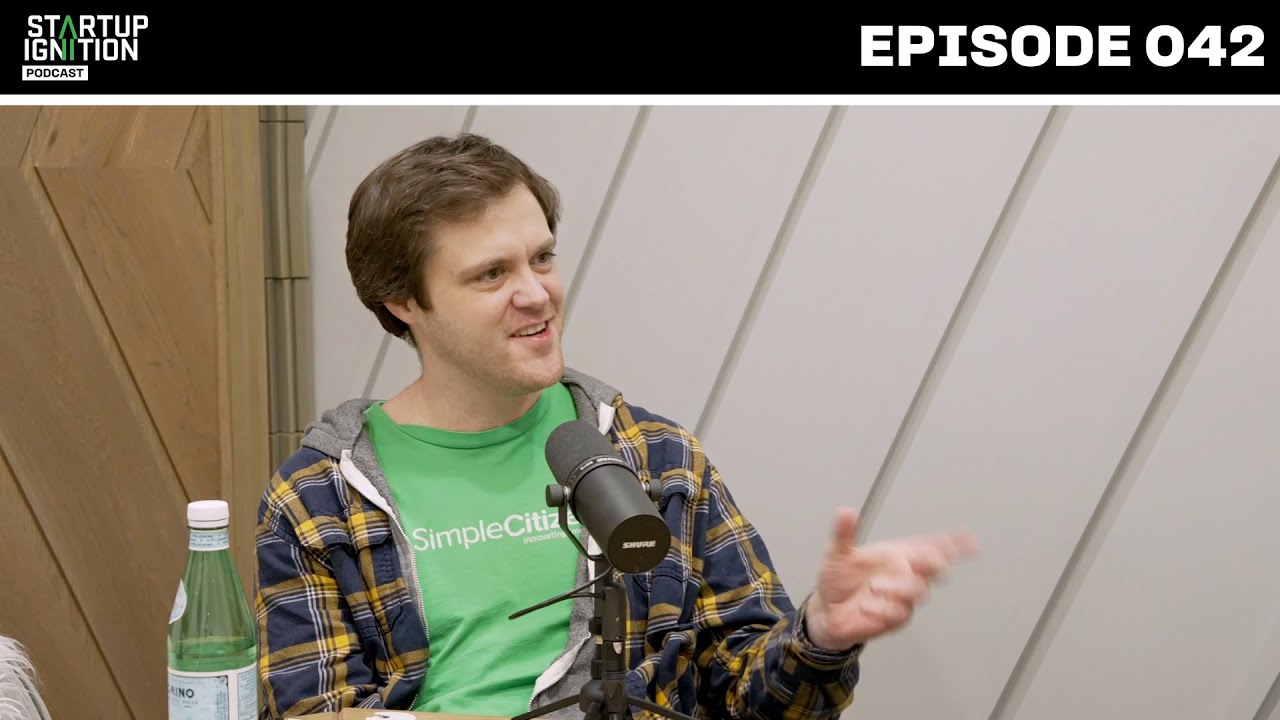
Sam Stoddard shares how a frustrating personal immigration experience led him to build SimpleCitizen, the 'TurboTax for Immigration,' through Y Combinator and ultimately sell it to Fragomen, the world's largest immigration law firm. He covers startup validation, VC fundraising, and what exits actually look like.
Sam Stoddard is the Co-Founder and former CEO of SimpleCitizen, an immigration technology platform he built after navigating the complex green card process for his wife from South Korea. SimpleCitizen graduated from Y Combinator (Summer 2016) and was acquired by Fragomen, the world's largest immigration law firm, in September 2020. The platform reduced the cost of immigration applications from thousands in legal fees to $249.
Show full transcript
Sam's story is one I completely distinctly remember. Student entrepreneurship is a huge source of entrepreneurship and entrepreneurial success here in the United States that way. >> Yeah. And and what really happened the first little moment was I was like I can't this is too much to deal with. There's got to be some whether it's Legal Zoom or some software or service out there that does this. So I started looking and I couldn't find anything. I had done the whole thing myself and went back to that immigration lawyer. she would review your petition that you had done yourself and give you a little bit of feedback. >> And so I'll never forget going into her [music] offices, you know, giving her the application um and she kind of flipped through it in front of us like and was like, "Okay, this is great. Uh I'm going to need $500. Rock [music] next to Rock. [music] >> Welcome back to the Startup Ignition podcast. Thank you so much for watching every single episode. This is now episode 42. Wow. >> We've been doing this for a yearish or maybe a give or take a month. I don't know how long it's been, but welcome back to the Startup Ignition podcast. I'm Tyler Richards. This is John Richards. Hello. Hello. >> Say hello. And today we have an amazing guest and I'm so excited for all of you to meet him. Sam Stoddard who is with Simple Citizen, the CEO and founder of Simple Citizen. And I have a bio for you Sam. And before I do the bio, would you like to introduce Sam because you're the connection to Sam? >> I'll just do this. So here's to our viewers and listeners. Um I have a long career in education in entrepreneurship. So when my company went public and uh I quote unquote retired at a young age, which is a dumb thing to say. Uh my alma mater called me up and uh I'm in Seattle and said, "Hey, why don't you come down to Utah?" It was Brigham Young University and said, "Come teach entrepreneurship. come work in entrepreneurship center and the e-business center and just help students um and I didn't know if I wanted to do it but I did it came down and loved it and spent 12 years there so 12 years of my life thousands of student entrepreneurs that I mentored and helped it was a great experience love all of them and uh today Sam's story is one I completely distinctly remember and I'm not going to take any of the story away but I just want to know student entrepreneurship is a huge source of entrepreneurship and entrepreneur success in the country here in the United States. Matter of fact, some of the greatest companies we have in today's world were started by students on a campus like Google, you know, and you think of how Apple was started and just all the different companies with young people and while they're just students, you know, sometimes, you know, they didn't know how to tie their shoe, but they started a gargantuan success, right? And that's really interesting. And so matter of fact here in Utah in the last 20 25 years there have been about 40 unicorn companies 1 billion market cap or higher companies created and for a pretty small population here in Utah and all of them have their roots being started as student ventures. That's really interesting. And uh by the way a lot of them from Brigham Young University which is where Sam's coming from. And we're gonna love that story. So that feeds right into the bio. >> Yes it does. But I Sam say hello. I I I want to make sure that the camera is cutting to Sam and that everybody gets to see Sam's face because we've just been talking talking and before I go to the bio. But anyways, welcome Sam. Thank you for coming. >> Thank you for having me. Thank you. Thank you. >> I'm super honored to be here. >> No. Yeah. Thank you for coming in. Like I again he was like, "Man, you guys have had some heavy hitters on the podcast." He's like, "Why? How did I get that invite?" I'm like, "Uh, cuz you're doing cool stuff and >> Cuz you're a heavy hitter." >> Yeah. [laughter] >> Okay. I I'll take it. I'll take it. >> Okay. So, I have a bio here for you, Sam. and I'm going to read it for you. If anything's wrong, you can correct me on the fly, but I I'm pretty sure it's right. I did some heavy reconnaissance on you, okay? Cuz I just don't I don't know you that well. My dad's the connection here, so I had to do some reconnaissance. >> You just did some deep You didn't just take the little blurb that we have on our website. You did this going to be like a yard experience. >> Yeah. I hope I didn't go too deep here, but Okay, here we go. So, before we dive into the podcast, let me give Sam a a correct and real bio here and let everybody know who we're dealing with. So Sam Stoddard is the co-founder and CEO of Simple Citizen, an online platform that streamlines the US immigration process for visas and green cards. Think like Turboax but for immigration, right? I think you guys say that somewhere online. Yeah. And he launched Simple Citizen in 2015 or was it 16? >> 2015. >> Yeah, summer of 2015. A >> but it was after experiencing this whole process, the daunting immigration process of the United States. And it was person a personal story with his wife, right? That's where the idea came from. Um Sam is a Brigham Y Young University graduate. Um you took Simple Citizen through YC. Is that correct? >> Y Cominator uh the following summer. So 2016 >> summer of 2016 batch. Okay, cool. >> And and being in Y Cominator in 2016 is a real accomplishment. I mean that's a big feather in your >> back when they took not like 200 companies a year. Yeah. >> Yeah. It was [laughter] uh Yeah. >> We're going to want to hear all about that in just a little bit. >> Yeah. 100%. And then raising obviously venture funding after your experience there. I think you raised from Kickstart. Did you rate Peterson or Pelleon or who who >> both of those syndicate was uh primarily the main in the lead investor was uh Kickstart and Pelleon and Peterson and a few other angels in Utah. Okay. And then obviously YC and some other investors we met out in the out in the Bay Area. So you've been doing it for 10 years, but you did you you I saw that you sold it in 2020. Is that right? >> Yeah. 2020 we went through an acquisition um that was structured in a way that we were both providing enterprise software for the now parent company of Simple Citizen as well as continuing our mission of the direct consumer business. And so over the past five years, I've primarily uh spent really the last three years focused on uh back on the direct to consumer where we where we started. Right. So >> yeah. And I I think you represent like the the pain and problem and bring a solution to a problem that you identify really really well. So I want to dive into that for all the budding entrepreneurs that are listening to this podcast. I think they'll learn so much from that story. Yeah. Um but also Okay. So yes, Simple Citizen was acquired in a unique way in 2020. Um, now you're leading the technology and the whole effort both on both the enterprise side and the consumer side. >> Well, uh, I'm sure we'll probably get, uh, I'm focused 100% on the BTOC business. >> Okay. Now, uh, yeah. >> Okay. Um, so before we get into your story, because I do want to take it way back, how you met this guy over here, >> even before where you grew up, high school, college. I want to go way back. But before we do that, Sam was like, "Oh, I'm scared for this icebreaker." He's like, >> "No, no, I am excited." >> You're excited for the icebreaker. Icebreer. >> Okay. Icebreer is gonna be fun. We always play an icebreaker, Sam. Every podcast, we just try to do something fun with all of our guests to kind of get into the mood of podcasting and get into the mood and get into >> know who you are a little bit better in a fun environment. Okay. >> All right. So, we're going to do a quick just this or that. It's really simple. Okay. >> And I'm going to say some uh a couple of things here and you just tell me which one you prefer. Okay. All right. Are you ready? >> Me or not? No. >> Yeah, you can do it. You can do it, too. All right. >> Equity or salary? >> Equity. >> Equity. >> Yeah. >> Equity. >> I know your I know yours. Okay. >> This is easy. >> Okay. Protein bar, protein shake, or neither. >> Neither. >> Neither for me. >> Protein shake. >> Protein shake. >> Yeah. Yeah. >> So, you'd rather have like a like a so easy on the run. You can take it. If I had to pick between the two, I would do protein bar because a protein shake, I just want it to be a milkshake. >> It's not gross. Yeah. It's like a slim. >> At my age though, I'm needing to take some protein. So, there you go. That's how I get my protein. >> Okay. Early bird or night owl, Sam? >> Night owl, thousand%. >> Really? >> Yeah. Night owl. Same for me. >> Yeah. I like the idea of getting up early and in the start on the day, but I am tough operating at 30% capacity. >> Here's why I'm a night owl. I when I You've asked me this before. I just I know like let's say it's 11:30 p.m. and I've got to get something done. I still have hours ahead of me and I can get it done. If I say, "Oh, I'm going to go to bed and get some sleep." I might sleep in until 7:30 and only have a half an hour before it's got to be done at 8:00. That worries me. So, I just get it done. That's how I think. >> I have failed so many times with that like bargain in my mind of, [laughter] oh, I'm going to go to bed. I'll get some rest and I'll wake up early and I'll get this done. Fails every single time. That's [laughter] hilarious. So, >> um, are you a work from home guy or a work from office guy? >> Work from office? >> Work from office%. Yeah, I know you are, too. >> Yeah. >> Um, how about this? Summer or winter? >> Summer. >> Summer. >> Hate the cold. >> Yeah, same. I'm I'm right there with you. >> Yep. >> Uh, are you an energy drinker or are you like grabbing a soda or you grabbing water? What are you drinking? >> I am uh energy [laughter] drinker. >> Energy drinker. >> Uh, yeah. in a not very healthy. So is Tyler. >> Yeah, it's all mine. I I literally just went on this retreat down with a group of guys, business guys, and I think I drank like three >> people know soda Coke Zero. Yeah. >> Yeah. I I They had energy drinks just to grab, right? All the food and drink was provided. Oh, I had like three energy drinks a day. It was really I mean [laughter] >> we have a obviously most a lot of startups have their little uh fridge that gets stocked >> and at one point somebody uh who was in charge of that noticed that I like to drink energy drinks and they they purchased from Costco [laughter] >> some of the some of the energy drinks and I had to tell him like you cannot do this like I need the tax of having to go pay for it myself. We're not doing this >> at an [laughter] expensive gas station triple the rate that they actually cost. Yeah. >> Yeah. That's funny. Um, okay. Are you a city life guy or a country life guy? >> City life a thousand%. That's why we're in downtown Salt Lake City. That's always been I grew up in Portland, Oregon. >> Oh, yeah. My wife. >> Oh, very cool. >> Grew uh She was born in Gresham. >> Okay. >> And then grew up in the Mount Taber area. >> Wow. That's uh >> very close to where I grew up. Yeah. In southeast Portland. >> Southeast Portland. Yeah. >> A little bit just >> north or south of Division. >> Uh >> you were south of Division. We were in right by Mall 205. >> Oh, really? Okay. Yeah. Yeah. Mall. >> David Douglas High School. >> Yeah. That was that Douglas. >> Did you go to Reynolds? >> No, she went to um Franklin. >> Franklin. Okay. My sisters went to Franklin. >> Oh, yeah. There you go. That's interesting. Yeah. >> Um >> not called the Quakers anymore. They had to change that name. Like you can't say My high school is West Seattle Indians. It's now West Seattle Warriors. >> And then um and then uh the Franklin Quakers because Ben Franklin was a Quaker. He can't go home quicker. So, it's now the Franklin Lightning. >> Oh, okay. >> We were the Scots guy in the in the kilt. So, >> yeah. Is it still Is it still the Scots? >> Still the Scots. Awesome. >> There you go. We'll see if [laughter] >> that one's stuck. Out of all of them, I guess that one's okay, I guess. All right. >> Um, bootstrapped or VC backed? >> H >> because I know you obviously raised venture capital, but like you doing it again? What are you doing? I mean this is maybe a a copout answer. Okay. But uh for the businesses that are compatible with VC funding, VC funding all the way. Yeah. >> Uh otherwise uh you know bootstrapped is >> I think the way to go. >> I like that. Maybe we dive into that a little bit more. >> Um okay, last one. Who you picking here? >> Elon Musk, Jeff Bezos, or let's give him a third option. Uh, >> Bill Gates. >> Bill Gates. >> Maybe another copout answer, but it would depend on picking them to do what? >> Yeah. >> To fight in an M MMA, [laughter] you know, >> I guess we could put Zuckerberg in there. Isn't he an MMA fighter? >> Is it jiu-jitsu? Is it, you know, building a company? What type of company? Because they all have, you know, >> areas where they shine. >> Do you follow any of them on social media? >> I do. Yeah. >> Who do you follow? >> I think all of them. >> You follow all of Yeah. Whoever whoever's on. >> So, so to so depending on what it is, you you follow and appreciate and don't appreciate their point of views on a multitude of things. >> Yeah. I think um for all of the guys that you mentioned, >> whether it's a long form interview where they're able to share some of their the things that they've learned, >> there are gold nuggets and principles you can glean from those conversations. Mhm. >> Um there's obviously it's pretty easy to from afar criticize, you know, >> whatever it may be, but um yeah, I I appreciate what each of those men have done. >> For me, it's Elon Musk because I like how he doesn't suppress his true feelings just to fit in or be conformist or make others happy. He says how he feels and does what he feels is right and he follows what he believes in his conscience. That's what I like. Like uh the other two, you know, I've seen a little bit where they just, you know, will conform even though they really don't believe it. They'll conform because of that. And that's why I think it's refreshing what Elon Musk has been like. I mean, he's he's called both sides of the ideological aisle, whether it's the liberal or the conservative side, he's called them on their baloney and doesn't take it. Yeah, both sides. I uh uh read the Walter Isacson uh book about Elon Musk and I thought that was very well written and had really good insights into the area. >> It's just an interesting refreshing take. Now, a lot of people say, "Yeah, that's because he's got >> money where he doesn't have to care what anybody thinks, you know, but that's I don't I think he was that way from his early days." >> Yeah. >> Yeah. Yeah. Because Jeff Bezos has a lot of money. Bill Gates has a lot of money, but yeah, they still conform in in ways. I actually like your answer because I if you if you didn't answer that way, I would have said one of my favorites. But now I'm thinking about I'm like, "Oh yeah, I do like Elon Musk when he says this. I like Jeff Bezos when he says this. I don't like Jeff Bezos when he said that, but I do like Bill Gates when he said this thing, but I don't like Bill Gates when he didn't say that." So I I think it depends too. It's like what's the scenario I'm thinking about? Look at what Elon Musk is doing with Neurolink and with SpaceX and how he's doing so much good and different things and then but Bill Gates too has got flaws but at the same time I like what he's doing in nuclear power. He's trying to I mean the real answer to >> Wyoming >> the real answer to it's in [clears throat] Keer Wyoming I think. Yeah. The real answer is, you know, maybe solar is going to solve some of it, but if we really wanted the smallest footprint, cheapest, easiest electricity, tap into the power of nuclear. I mean, it's we're scared and it's so different. And what he's done, he's he's making nuclear power plants that can't have a meltdown. That's awesome, right? >> Yep. [laughter] I uh I I think if I did have to pick the thing that's maybe top of mind for me, uh Elon Musk and in specifically his ability to cut through a process and just make it more efficient is unbelievable. something truly to behold and and having, you know, built a business that is focused around the idea of helping people navigate bureaucracy or complex processes. That's something that resonates with me. Warren Buffett made the comment once that Jeff Bezos was a unique entrepreneur because he became a leader in two gigantic industries at the same time which was he turned >> retailing and e-commerce with Amazon but then he also turned the compute world on its heads with AWS and did them both at the same time and created these monsters. Incredible. But now look at Elon Musk. I mean, he's Tesla, he's got um Neurolink, he's got SpaceX, and now what many are predicting will be the greatest biggest company in world history with Optimus and the robots, right? And so, you know, I just watched him yesterday and he thinks that, you know, everybody in the world is going to have a robot, a personal robot, just like we have an iPhone or >> The only question is when. >> Yeah. Yeah. But it's a it's an interesting thing, right? So, fascinating. the the the on the Elon or on the Jeff Bezos side. Uh the other book that I really really like is the everything store. I don't know if you've read that. >> No. >> Uh it's fantastic. It goes through the you know the founding and the building of of Amazon focused primarily on >> that was a contemporary man. I was in Seattle when he was doing just doing books. And the whole reason he was able to do it is because you could buy he chose books because >> if you bought five books or more, you got the same price as Barnes & Noble could get the books and all the big book committers. He got the same wholesale pricing just buying five copies of books. So on Amazon, people would put in orders and when they hit five orders for that book, then he'd order them and get them at the cheap discount pricing. That's the way if that book industry didn't have that economics in it, we might not have Amazon. It's really fascinating. >> Yeah. I I think specifically kind of uh springboarding off of that, his ability to be laser focused Yeah. on the customer and providing a good >> experience. Yeah. That laser focus is what I've seen so many videos and just quotes of him saying even when he was scaling from, you know, 10 to 100 to 10,000 employees, he was like >> it was all about customer satisfaction, staying close to the customer. And I think that's how Amazon has won at >> I've had two instances recently where I ordered products from Amazon. Didn't come right something didn't happen right and I went on to their system and it's kind of it pushed back gently a little bit like it wasn't [clears throat] going to refund me or take it back. >> Yeah. >> But then I kept saying well no and I put in an explanation and literally it's like >> all a sudden it just goes okay just you don't even need to return the item. Here's a credit to your account. Thank you. And I go I'm gonna keep shopping here. You know I mean that's the feeling. Yeah, right. those th the the the principles that they have established as a company that drive these decisions. >> Yeah. The consumer behavior >> cascade all the way down to that experience that you had. That's what makes the difference. >> Here's a big question on just it's so fascinating. U would you rather own >> Amazon the e-commerce business or AWS? >> Uh I think AWS. >> Yeah. >> That's how I feel. I say that >> unit economics are the margins are pretty great. And not only that, I don't know if it's still true of where Google Cloud and the other competitors are at, Digital Ocean and stuff, but at one point Amazon, >> which kind of invented that industry, but they were six times bigger than all of their competitors combined. >> Think about that. >> Unbelievable. >> Six times bigger than all of their competitors combined. Yeah, >> that's good market power. >> I know. Yeah, >> I wouldn't mind have owned Google Search before the advent of AI either. That's a I thought that was the greatest business model in the world, but you know, it's really funny now. >> Oh, it's it's it's kind of flattening out a little bit. So AWS is 31% of market share. Yeah. >> Microsoft Azure is about 20 to 25 and Google Cloud is 11 to 13%. >> Yeah, it's changed, but at one point >> they hired somebody from I think Oracle, they hired some executive a number of years ago. who >> uh Google Google did um because they were way behind and the person who came in, forgive me for not uh knowing who it was, uh took that from whatever teenytiny little market share that they had up to the 11. >> Did you ever did you ever um uh take the entrepreneur lecture series at BYU? >> Yeah, that was a Yes. formative. >> Did they have any influence on you? I because I used to teach that put that together and invite the speakers. What I would always, you know, there was about 100 to 150 in that class. I would always when I first got there in the early 2000s, I would or mid 2000s, I would say, "Who's using a yellow pages in the last 30 days?" And of course, a lot of listeners don't even know what yellow pages are. >> This class I remember you saying that >> and one person out of 150 would raise their hands and that's how much the Google search had changed that. And I said, "How many of you use Google to look up that information in the last 24 hours?" 100% of the hands go up. Yep. >> Do you know what's happening right now? I do the same thing with groups and crowds. I go and say, "How many have used Google search in the last 24 hours to look up a person or a business?" And about half the hands go up. >> How many have used Chat GPT to look up things about people or businesses? All the hands go up. It's that's a crazy change. And that's what cuz I sat there for 25 years going, "Who's going to knock Google search off its pedestal?" And now we know. It's kind of crazy, right? >> It's AI. Yeah. AI. >> Okay. So, um, >> Sam, >> yeah, >> let's let's dive into >> Sorry to meander through the I loved it. So, >> I I'm impressed how well read and and everything that you keep up on all these topics being a busy entrepreneur. So, >> I love these types of podcasts and staying up on >> news. Yeah. Like I wish honestly that our podcasts focus a little bit more on news because I I find it so fascinating as well. And it's like it's an easy way to consume news. just turn on a podcast and listen but >> depends on what news you got a little stress >> induced but I do find value in the stories and so hence let's dive into yours so take us back where do you begin like um you grew up where you said >> Portland Oregon >> Portland Oregon in the Mount Taber district a little bit close 205 >> mall 205 yeah southeast Portland properly >> that's awesome >> um siblings >> we won't talk about how Portland is today >> yeah let's [laughter] uh >> it's probably changed a little bit >> it has changed a lot >> we're from Seattle and it's changed a as well. So, very similar. >> My wife grew up literally by at 39th in Hawthorne. And if you know anything how that's changed, we won't talk about that, but it's a completely different environment than it was back then. Yeah. >> Yeah. We used to if she was 39th in Hawthorne, that would have been >> Yeah. She lived on Yeah. Colona Heights is close to there. She She lived um Exactly. on 52nd in Hawthorne. >> Wow. No, I know. Exactly. There's a Fred Meyer. >> Fred Meyer on 39th. Big dime. Yeah. Yeah. [laughter] There you go. That's so funny. Okay. So, and you went and you went to Douglas High and then you went to How did you just go from there to BYU? >> Uh, no. >> Were you entrepreneurial in high school as a young person? >> I in a way. So, I grew up uh loving film and and movies and being kind of a performer. I was the youngest of eight uh siblings and I'm I was adopted when I was, you know, a little teeny baby. >> Yeah. Um, but my siblings, the other seven, were much older than I was. So, I think the next closest in age to me is maybe 16, 17 years older than I am. And then it goes up from there. So, I grew up with them more like close aunts and uncles. >> Yeah. >> Uh, than like the typical, you know, idea or relationship of >> No, literally when you were conscious and probably started gaining memories, they weren't even in the house, right? Like if they're close, >> a lot of them. Yeah. Yeah. That's crazy. >> I'm having an interesting moment here. I think my wife has talked about Stoddard family. >> We have to follow up on >> Hill. Her father was Glenn Hill. >> Yes. Yeah. No, I know. Exactly. >> That's his grandfather. Yeah. >> That's unbelievable. [laughter] >> You know Glenn Hill. >> Uhhuh. Of course. Yeah. >> And Geraldine Hill. Jerry Hill. Glenn and Jerry Hill. >> That's his wife. >> Yeah. That's my grandma. >> I mean, I had >> But Glenn Hill you might have heard. Yeah. >> No, no, no. He What did he >> He was a leader. Yeah. He was a leader in the area for sure. >> Yeah. >> Yeah. That's interesting because I I've I think his grandparents, my parents-in-law were friends with Stoddards. >> Yeah. >> I I would >> How How old are your mom and dad? >> Uh my my parents are in their mid 80s. >> Yeah. >> Yeah. They live in Lehi now. They >> I'm guessing that they know each other. >> But you know that um his grandmother just passed away this last week. >> Just last week. >> She was 95. >> 95. Yeah. Yeah. >> Wow. >> Yeah. It was pretty crazy. >> That's incredible. >> I I I'm going to We'll have to show you your mother, my wife, and she I I'm I'm now remembering they've over the years talked about Stoddards in the Portland area. I know. I think we get Christmas cards from some Stoddards. >> So you [laughter] Wow. Okay. So you growing up kind of as a solo child almost like a single child. Is that >> Yeah. when I was so my parents did uh foster care. Yeah. um once the kids were getting a little bit older and were moving out of the house and we lived in the lads edition area of Portland >> um and they had a a fairly large house at the time >> um that was in kind of a dilapitated uh neighborhood and so to earn >> extra money and this is something my mom was passionate about uh was doing foster care and I think had overund 150 kids that they you know took care of over >> so they were probably well known in the area too by a lot of people. Yeah. >> Yeah. And >> because what a small world. >> That's crazy. It really is. Uh >> 150 kids over what amount of time? >> I I would I probably 15 year 10 15 years. >> Wow. That that's a lot of tur. >> But they didn't adopt them all, right? No. You >> I was the one who uh kind of ended the program, you know, and they were like, "We're going to keep >> We're going to keep this one." [laughter] >> Yep. And then no more. So when I was really really little, um it was kind of like I had siblings. Although I don't remember >> I was too young to remember when when I was adopted, right? >> Um but then uh yeah, so the first up until age six or seven, >> I remember lots of kids and and family in the house and then we moved to more east of southeast uh Portland. And from that point, I was um uh really an only child. >> So when you were in high school, did you was you planned to go to BYU Brigham Young University? You know, I was a pretty kind of crazy wild kid uh growing up and uh I think my parents kind of were were telling me uh discouraging or trying to encourage me to a either you know join the military or like get into the trades like and I did talk about maybe going to to university. They were like well I don't we don't know like you know [laughter] so I I I always had good grades or good enough grades. >> Yeah. Uh then what do you why do you say you were wild? Why why wild? >> I was just always getting into trouble, you know, going on adventures, mischievous, you know, mischievous, >> doing pranks, things like that. >> So you were an entrepreneur. Yeah. [laughter] >> In a way. Yeah. Yeah. I I I guess this was the point that I was trying to make is that uh I really loved uh making movies with my friends. >> Yeah. >> And so the the activity of you know bringing everybody together uh you know giving people a different job. Did you see the recent movie about how Steven Spielberg grew up and what his mother was like? >> Fantastic. >> Did you like that? That was that one. I can't remember the Fableman. >> Yeah, The Fable. It's about Steven Spielberg. >> Totally. Because he did all that. I actually made movies as a kid, too. >> You know, it's a crazy uh overlap of people who are entrepreneurs. Yeah. Or either in VC. >> I love movies. But I I had my little Super Eight movie. Cameron made movies. Yeah. Yeah. Yeah. Stop animation. >> Oh, that's very cool. Okay. [laughter] Yeah. No, I I dabbled in action, motivation, whatever it is. You know, you stop. >> Yeah. Stop motion animation. Yeah. And I would do it with little Play-Doh figures and then H or um uh Hot Wheels cars. >> Okay. [laughter] I tried to do it with my little Star Wars uh figurines. >> Yeah. >> Um so yeah, that was the entrep at some point I knew that in the future I would start some business or something and I always had that. So how did you find yourself that way where your parents were not saying maybe university is not for you? How did you find because BYU is not easy to get into. How did you do that? >> So uh I guess this is the part of me that is very you could point to as very entrepreneur entre entrepreneurial. Yeah. And that's the problem solving. Okay. So I uh saved money uh to go on on my mission. >> Uh got called to Soul, West, South Korea, >> and I was there from 2006 to 2008. >> How hard was that language to learn? >> Uh it's extremely difficult. It's in the whatever the the ratings of it's it's in the category of the top. >> Um but I had I had a blast um learning a new culture. Uh I I picked up on Korean fairly well. Yeah. Um and it was absolutely as everybody says, >> I've been to Soul. We love my wife and I soul. So when we went to Seoul, I'm just going to share this cuz you're from there. We happened to go by your accent while the Olympics were going to go and we went to the top of the hill in Seoul, the highest point. There's a hill you go up that's kind of a viewpoint. I don't I can't remember the name of it right now, >> but while we're up there, we had no idea. All a sudden, these big crowds gathered. We're the only non Koreans there. And big crowds gather. And all of a sudden, the Olympic torch is being passed from one CEO of a Korean company to another CEO. They called us out of the crowd cuz we were the only non Koreans there. Let us hold the torch. >> You're kidding. >> No, it was crazy. >> That's amazing. >> I have pictures and videos. It's crazy. Wow. I know. That was a cool exper they were they really like Americans. They treated us like gold in Korea. >> Yeah. I I maybe you can edit this out later, but I think that South Korea is fascinating for a number of reasons, but probably most uh fascinating for me because it represents a country that took the American >> out ofthebox system for creating, >> you know, democracy or using capitalism, uh the way that they approach religion, all of these things and just >> excelled. in taking that model and making it work and >> but a very homogeneous society, right? >> Yeah, absolutely. Very >> homogeneous. Yeah. Very homogeneous. >> I mean, seriously, we were It is crazy how we stood out and how they treated us so nicely. It was great. And what a magical moment. I will never forget that. Incredible. Now, the kimchi is a little too spicy for me. >> I grew [laughter] up I I love spicy food. >> Oh, you do? Did you like it? My wife was trying to I could I can't believe how hot they eat some of that stuff. >> Yeah. I I >> What's the What's the typical Korean food? Like what what are you getting served? >> Kimchi stew is like a pretty typical dish. >> Boiled kimchi. >> Uh yeah, it's it's a broth. Uh a lot of kimchi. There's usually pork or some type of meat, >> but spicy. >> Uh it's it's a little spicy. Yeah, >> a little to me. I'm a wimp. >> Yeah, he's he has no tolerance. [laughter] >> It's it's delicious. Um, yeah. There there the the variety of Korean food is is pretty surprising. >> So that and after that >> So wait, did you do that? Did you go to BYU for a year first? >> No, I just went straight to And then was it during your uh mission for the church in Korea that you decided to go to BYU? >> Yeah, that was a that was a moment where I because I knew I had to really focus and be serious about learning this language. Yeah. Uh, and that served me really well. Um, and I kind of learned that, oh wow, if I put my mind to, you know, focusing and learning something, it's it's it I'm better than maybe what my teachers might have said or or like the administrators in school would have said about goofball Sam or class clown [laughter] Sam. Yeah. And so, uh, yeah, I wanted at that point being with other elders who had gone to BYU, I was like, I want to go I want to go to BYU. Yeah. >> And we come I come back from the mission. And during that time, my parents did this thing where whenever any of the boys would go on a mission, while they were gone, they would move they [laughter] they would move to different parts of Portland. And this time when I was gone, they moved to Lehi. >> Oh, really? To Utah. >> So, you left from Oregon, went came back to Utah. came back to Utah. >> Okay. >> And >> I had not I couldn't qualify for instate tuition. Um and my grades from high school weren't good enough to go straight into BYU. >> So I started at the Salt Lake Center, the satellite BYU camp now. >> Um and got the best grades that I could like pretty close to straight. >> Smart way to go. You kind of back door into it. >> Back door into it and then transferred. And by the way, for our viewers and listeners about Lehigh, Utah, just uh for entrepreneur, Lehi, Utah was basically sagebrush 20 25 years ago. And now it's like amazing tech center, a huge was the fastest growing city for several years in the United States and it's the headquarters to lots of unicorn companies. It's a real tech hub and it's crazy. And so your parents moved Lehi. >> Yeah. What was the reason for your parents to move to Lehi? So my um sister uh and her husband after they got she married a guy from Utah >> uh Mike Extramm who they had lived here. You probably know Ed Extrom is who was >> well Ed Extramm. >> I know Ed Extrom from Vespring and Signal his younger brother. >> Really? Ed Extrom. Yeah. That's the one who Amy's working with. >> Yeah. >> Yeah. And [clears throat] so, uh, she married into the Extramm family and they bought, uh, they built a house in Lehi in 93. Oh, wow. 94 back when it was [clears throat] just Sage Brush. And >> and they've lived there ever since. And so when my parents, >> uh, >> were convinced by my sister to move close to them and their grandkids. >> That was the move. Yeah. So, um, yeah, I studied and then I got myself into BYU and and wanted to do business and really loved accounting, um, and went into the accounting program >> and BYU is the number one accounting school in the country. So, they recruit it's very successful to get students to choose that accounting path because the placements and the career path and all that. But you're how about your wife? When did you meet your wife? So I met her maybe a year into Korea being at BYU. She's originally from South Korea. >> Yeah. Because I thought I thought you Yeah. You >> I did serve there. But you didn't meet her. >> One of those situations. [laughter] Uh no, she's from Busan, the the southern he >> t Did you meet her at Was she going to BYU? >> She was going to BYU studying math. >> So she was an international student at BYU. Okay. Got it. >> Uh but like I said, had been here she graduated from East High. um had been in the country at that point for probably five six years >> and uh you know we met started dating for a couple years and then >> so how did you so BYU is a very entrepreneurial school for the students that hang around that so what was your first interaction with entrepreneurship at BYU because an accounting student >> might not they can choose to go to a lecture series but they can choose non entrepreneur lecture series and hear corporate people right so did were you an entre or an accounting student who just happened to choose entrepreneur lecture series or did you get introduced to entrepreneurship another way? >> Yeah. So the way that I got introduced to entrepreneurship and the I the startup ecosystem >> the realization that it's a real choice in life. It's a real vocation. People can do it. How did you kind of get introduced to that? >> Yeah. So I um one summer I needed to you know line up an internship and got connected um for accounting to Yeah. for accounting and uh we had just gotten married so we >> I needed to earn money for the summer and uh ended up taking an internship at Money Desktop at the time now MX >> um and I worked there >> uh until I graduated >> Ryan Ryan Caldwell I've mentored in many business and when he started doing founder >> money it's you call it money desktop was did you would so were you there before Ryan bought money desktop or afterwards and he turned into MX >> um I was there after >> before when he bought it and then he still called it Money Desktop before he changed it to MX. >> Yeah, I was there for maybe two years, a year and a half before they changed to being MX. But I was there when they made that switch over. >> Okay. Got it. Really? >> But but being >> What did you do there? >> Uh I was an accounting intern. Really? >> So I did uh I I helped the director of finance or the CFO with lots of uh financial modeling. So, the financial projections, reports, uh, you know, >> did you did you have any interactions with Ryan? >> Oh, yeah. Yeah. Yeah. He's such a pussycat and h you know, all that. He's not very tough, right? Yeah. [laughter] >> Yeah. >> I I I taught him for a lot of years, mentored him. I always said, "If I ever get dropped in a jungle and need somebody to lead the way out, I'm going to ask Ryan to be that person." >> Yeah. for his his leadership skills and also I think he was like a a Golden Gloves boxer. >> Yeah. And also and he transferred to BYU from the Air Force Academy. He's a >> Oh, he >> he went to the Air Force Academy. Yeah. >> Okay. >> Yeah. Incredible. Shout out to Ryan. >> Yeah. Yeah. Uh being >> he's he's he's a strong strong entrepreneur and strong CEO leader. Yeah. So you so that that experience at Money Desktop doing accounting worked like did you determine at that time like accounting wasn't for you or was for >> Well, I I have to say that when I would tell, you know, people, friends, family that I'm studying, I'm I'm majoring in accounting. Yeah. I would usually get something like, huh, that's you don't really seem like an accountant. Um, but I did love the idea of, you know, I think Norm Nimro calls uh the uh accounting, >> shout out to Norm Nimro, the greatest accounting professor in history, right? >> And a former mission president in South Korea. >> Oh, really? Another Korean connection. >> Yeah. What does Norm Nimro say? What did he say? >> Uh, uh, accounting is the language of business. >> Yeah. Yeah. Yeah. Of course. And so that that the foundation of learning how to understand financial statements uh how that >> ties back to different organs of the business >> and how >> in our boot camp we have them we say you've got to understand the financial statements you know the balance sheet income statement cash flow and the ratios you know entrepreneurship's fun and there's a lot of whimsical nature to it but not in this area you got to understand that. >> Yeah. >> Yeah. and and that foundation and then the the things that I learned in the classroom uh at BYU and then being able to apply them or see them uh in the real world at >> uh >> but did I think money desktop you were asking if that's when he kind of didn't like when did you start thinking entrepreneurship though >> yeah not accounting but >> it was there it was there when I saw that you can take an idea or something that you're passionate about or an opportunity you can turn it into a real company because at that point I think Ryan had started the company or taken the company maybe three for three years or something. It was called Madkey Internet. I mentored him a lot during Mad Internet while he was a student. He sold that for like 2.4 million. Okay. >> As a student. >> Wow. >> Yeah. Yeah. >> Um but it was still uh close enough to the founding of the company. Yeah. >> That you got to see all those interactions. Yeah. >> Yeah. And that that really inspired me >> kind of lit a fuse in you a little bit. Yeah. >> So then I was started to think through ideas and took the lecture series and and all of those things that >> So give us the birth of Simple Citizen. When did what caused you? >> Well, are you are you married yet? >> Yeah, at this point I'm married. Okay. Yep. >> He said that's why he took the job at Money Desktop because he need to support >> a family now. Yeah. >> And I really wanted I mean it it was it was an absolute blast >> internship >> uh to work there. >> Did you go into the next school year with it or just the summer? >> Yeah. No, I I I stayed >> say for two years you said I worked all the way through >> while you were going to school >> through >> So when did this idea happen? I I'm Now here's the light bulb moment. What's going on? >> Light bulb moment. Um >> we had we we got married, my wife and I. Yeah. And over the course of that summer, uh, I I I just assumed naively that because I was a citizen, she would like automatically become a citizen. I didn't understand that there was all of this paperwork complexity and headache associated with the immigration process. >> So teach us that. So in other words, she's an international student from South Korea, comes to BYU on a student visa. >> On a student visa. Is that what it's called? She came to uh >> oh she went to school in at East High in Salt Lake, but she was >> on some kind of visa then. >> Yeah. So her >> by herself or her family was there. >> So her dad uh was a high school teacher teaching English and came to the U for some English program to learn more English. >> University of Utah. >> University of Utah >> and East High's close to there. >> And East High's close to there. And so >> my wife and her mom and dad uh were living right around campus. And then um she graduated and had applied to BYU >> um and had also you know met with the missionaries and was baptized at that point applied to BYU and when she got accepted >> so joined the the Mormon church here in Utah. Okay. So what tell me a little bit though I think these laws are important to your story a little bit. So tell how does that exactly work? So when she's coming over like that she's on some sort of visa. Yes. >> For high school, is it a student visa or called something else? >> Yeah. So, her her f usually there is the primary person who is getting the student visa or the H-1B or whatever it is and then your immediate family whether it's your spouse or you know under the 18 children get a uh dependent visa. >> So, she was on a dependent visa from her father. >> Exactly. >> Okay. And then did she did that status stay the same when she then went to BYU for school? She went from student F1, it's actually F2. So if you hear F1, that means the student that if it's a two, that's the dependent. So she went from an F2 student visa to F1 as being the primary at BYU. And then you got married and you assumed when you married her, no issues. >> Yeah, no issues. I didn't even know that we had to file paperwork. >> What was the issue? >> Um, >> what could have happened? What's bad outcome? A bad outcome in the extreme case is that uh we don't file anything. Uh we just continue to you know >> think you're fine. >> Think we're fine and uh she could get deported, removed from the country in certain cases >> even though you're a citizen, your spouse could get deported. >> Oh yeah. Yeah. >> I think you have some friends from the United Kingdom that faced had to deal with that kind of thing. He's he was from the United Kingdom, right? >> Yeah. married to an American. >> Yeah. >> And he had to go back to get some a green card from the UK. He had to show that he was there and then he had to come back. He had but he got stuck there and he was there for a year and a half or something. I I can't remember the >> So that's on the more extreme end of of the bad outcomes that could happen. But luckily we we >> Okay. So you you you discovered this before anything happened. >> Yes. Yes. >> And you said, "Oh, we've got to do a bunch of paperwork." >> Yep. Okay, keep keep going. >> So then um there was a immigration lawyer who kind of had a corner on the market of you know BYU students marrying you know foreign uh students and she would hold these workshops where she would explain what the process was and what it entails and she used that as kind of a lead gen. >> So she's an immigration lawyer. >> Exactly. Yeah. that had a carved out because BYU is a very international school. There's people from over a hundred countries that attend there from all 50 states and stuff. And so yeah, and by the way, I as a faculty member there, it was a big deal when um international students married an American that caused >> several different things that had to be looked at all the time. Yeah. >> Yeah. So, um, learning about that with this immigration lawyer and also being a little bit DIY inclined and entrepreneurial, >> uh, and since I was majoring in accounting, specifically tax, yeah, >> I thought, you know, these forms kind of look like 1040, you know, tax forms, I should be able to figure this out. >> So, in between full-time school and part-time work at Money Desktop MX, on the nights and weekends, I was researching, you know, what the forms were, what I needed to fill out, Is it very arduous, very hard, very is it hard for the average person to do it right? >> Yeah, that was that was the the first light bulb moment. Uh even for me um you know highly motivated to get this done quickly being exposed to government regulation in the tax realm uh and being an English native English speaker even for me it was very confusing and it was confusing because you could generally get 90% of it like okay I'm pretty sure this is what I do but it's that final nagging 10% of, you know, if I do mess this up, is this going to result in my wife paper forms? >> It's all paper forms. Yes. >> Is it still that way? >> Well, he's going to tell us what he did to solve it. >> It is. It is. [laughter] >> So, it is. >> Okay. So, in other words, you're you have a tendency as an accountant and kind of just a curious individual to say, why is it this way? Why is it so hard? Can't it be easier? Is that Did you start thinking that way? >> Yeah. And and what really happened the first little moment was I was like, "I can't. this is too much to deal with. There's got to be some whether it's Legal Zoom or some software or service out there that does this. So, I started looking and I couldn't find anything. And so then what what ended up happening was I had done the whole thing myself and went back to that immigration lawyer because she did this special thing or this promotion where she would sit down with you. She would review your petition that you had done yourself and give you a little bit of feedback. Mhm. >> And so I'll never forget going into her offices, you know, giving her the application, um, and she kind of flipped through it in front of us like and was like, "Okay, this is great. Uh, I'm going to need $500." >> Okay. >> And it was [laughter] it was the the way and maybe it's it's >> So you did all the work to fill it out. >> Yeah. And it was just the experience of the way that, you know, maybe this was a bad day for her, but >> uh a lot of lawyers in particular, immigration lawyers, you know, it can be a a >> callous. Is that a word? Just like indifferent. >> Indifferent. Uh not really thinking customer, >> just pushing numbers through it. Okay. Let me ask you this. The $500 fee, was that her personal service fee and not fees paid to the government? Is there fees also to pay to the government? Yeah, there's about $1,500 of fees to the government fees [clears throat] to file. >> So that was in addition. So you have to pay the 1,500 government but 500 to the lawyer. >> Just like cough cough it up. [laughter] >> And yeah, just just the way that that went down was the uh you I think as entrepreneurs you need a light bulb moment. You also need a a little bit of a chip on your shoulder. >> Yeah. Inspiration. Oh man, we love entrepreneurs that get a chip on their shoulder by the way. >> Yeah. [laughter] So that was really where I was like, "Wow, I actually did not need a lawyer to do this." And I did get a little bit of peace of mind knowing that she had looked through it and she said like, "It's it's fine, but she didn't really look through it." And that was the the moment where it kicked off probably about a year of due diligence on the market, the uh legal process, you know, what competitors were out there trying to solve this problem, you know. >> Were there some >> uh Yeah. Yeah. Um, there were some at the time, but it was going through that due diligence process that the deeper I went down the rabbit hole, the more I was convinced that not only was it a legitimate big business opportunity, but something that I wanted to dedicate the next 10 years of my life trying to solve. >> How how much time do you think you put into that application and form process like to get to the point where you oh, you went to an immigration lawyer and she's like, "Yeah, this is great. You did a good job. >> Probably, you know, 20 hours. >> 20 hours of research, you know. >> Yeah. >> Filling stuff out, all that. Yeah. >> And so you're then you research there's got to be a better way and you're doing all this. What did you conclude where you said about that took about a year you're saying? >> Yeah. Cuz I was still in school. Um at that point I started to become more aware of like the startup compet. I think it was the first year they did start fest. >> Yeah. Oh. >> Which then became >> No, no, that was start SLC. Yeah. the first one that they did >> and and I I remember going to that and seeing these. >> So these are to our viewers and listeners all over the country in different markets especially the more techub markets and stuff there's a lot of startup competitions. Yes. And so you went and entered you entered a startup competition. >> Yeah. I I I sat as an audience member the first one watching that and then I think >> so there's other startups pitching Yes. >> to try to win a prize. Yep. And you watched that? >> Yeah, I watched that and I thought what a great opportunity to get non-dilutive capital. Yeah. >> And to refine the business plan >> because the prize money is you don't have to give them stock for the prize money or and it's not debt. Exactly. Okay. Got it. Okay. >> Yep. So that from going through that experience, I spent the next, you know, year or so uh continuing to refine uh and build out, you know, the the very early beginnings of, you know, what eventually became >> So tell us more about that. What were you doing? Were you were you creating form filling software or what were you doing >> a little bit? we were dabbling uh and and I partnered very early on with my nephew >> who's my oldest brother's oldest son. So we grew up together similar in age. Uh and and I always knew that I wanted at some point to do a company with him and uh he in the early days was was kind of helping cobble together the first versions of you know you fill out the forms you fill out uh >> what technology did you use? I'm curious. >> I don't remember what he used but it was very rudimentary prototypes. Uh we spent a lot of time uh trying to design the actual flowchart of what's the most efficient way to gather all of the information you need for an immigration application. So that rather than sifting through every single form and entering your name or address 50 times throughout all those different forms, >> it's all prefilled after you fill it once. >> This was your MVP or minimum viable product you were doing. Yep. >> And did the first version work? >> The first version uh well I I I have to say that uh in terms of answering a question and having it fill out in multiple parts in the in the PDF and being able to generate a PDF, yes, those things worked. >> Okay. >> And that proved to us that like, oh, we can build a minimum viable product to move forward. that just that first version >> let's say using your number of 20 hours how much would that have reduced the 20 hours down to >> two hours >> really 90% time savings >> yep >> okay >> and that that's significant >> and that uh metric has held steady for the past 10 years that we've been you know optimizing building uh simple citizen >> so from a rudimentary form filler PDF creator type of environment you cobble together some stuff >> yep So, where did you go from there? So, and you and you saw that Start Fest said, "I'm going to enter this." Did you enter it later? >> Yeah. So, uh they the maybe eight nine 10 months later they did the second one that was in Provo >> and yeah, we ended up taking first place in that. So, we won the audience choice and the uh judges choice. I think we took home like 150k. What what was the first model? Like it was like we're going to build this software that is like a form filling software for immigration >> and you're just going to go to consumers who have immigration issues and market to them and get them to come to your website and fill out the form. >> Yeah, I guess the go to marketer business model of acquiring customers. This is very interesting because um I was planning some of these things out uh before I had graduated and before we had built an actual real version like production ready version of the software we ended up uh partnering with Iseni uh at the same time that we found our our technical co-founder um who her name's ID uh storight she's originally from Mexico >> I have know ofeni but tell the audience >> uh was a dev shop uh based out of Provo, the Gunderson brothers, >> who have had uh a hand in and their DNA and and effort actually is in many Utah unicorn massive success stories and they are incredible and some and one of the brothers is still in venture but the other one's doing restaurants now. >> Yeah. Yeah. Yeah. Yeah. They are the uh kindest most uh ready and willing to help truly you know the backbone of the Utah tech ecos >> and >> it's people like the Gundersons and other folks that we met in Utah at BYU >> uh that helped uh you know guide us along the those early moments where just trying to figure it out and there's lots of resources but there's a lot of moments looking back like Oh, if we had have made the wrong choice here, that could have >> killed the >> killed us before we even started. >> Exactly. That happens. So, by the way, they had a CTO that was really talented. Did you work with that? Like, did you did they build software for you? >> Yeah. Yeah, they helped us build these. >> I'm just Who was your main tech guy that was I'm just >> We worked with Gabe at the time was um No, Jordan. Jordan and Gabe both were there. >> But didn't you say you had a you had hired on or brought on a CTO? We had started with them at the same time. We were maybe a month into development when we uh met our co-founder and she joined and then >> Okay. So So your version 1.0 you cobbled together with your cousin. >> Yep. >> Nephew, excuse me. Nephew. Okay. And then this was the first real version. >> Yeah. Because now we were going to actually launch. >> And uh we did this big launch. We got picked up by a lot of uh media like TechCrunch and Fast Company and USA Today. It was really exciting. We won that big topic prize. >> Yeah, it was uh >> that was it was pretty exciting. And the when we were pitching in these competitions because we didn't just do the the the big >> uh StartFest Yeah. one that we did. We also did the Utah entrepreneur uh challenge challenge. We did that. >> Yep. We took first place there. We won at BYU. So by the end of of that first summer leading up to when we launched the company, we had put together maybe 250k of prize money. >> Wow, that's really great. >> And what's what what what do you what do you attribute that to? Like what how did you go to all these different contests and pitch competitions and take first place? What what was the winning? I think we we I consumed a lot of uh you know material from like YC. I really leaned heavily on on the resources at BYU and uh we also benefited from the fact that immigration even back then kind of a hot topic. Yeah. And this is something that is nonpartisan, our solution to the problem. And uh my personal story and being able to to tell people about that, most everyone either knows somebody or has family members or friends who have been through they know that it's really painful. Yeah. And >> and by the way, people that like today all the immigration talk uh during the Obama years when you started the company and stuff, Obama actually deported more people than are being deported now. People just don't realize that, right? And so deportation and immigration is a real thing. It's a big topic. >> Yeah. Yeah. And at this point, you know, we've been through four different presidential administrations and so we've seen the different changes and approaches to immigration uh policy. >> But um anyways, when we were pitching uh and going through these contests, I always had this uh hypothesis. Our plan was that we would launch and our first early customers that uh use us and get all the value from the time savings, the money savings uh being able to complete this journey by using and leveraging our product and technology that that would be the seed for them to then go tell other friends and family about. We use Simple Citizen, you should use it, too. And I I did this uh I told this story in that competition where we won, you know, at StartFest down in Provo. And I talked about how and I was using a real our first paying customer. And I said, you know, this person who heard about us in TechCrunch, you know, they use us and they uh get their green card and then they have to come back and do their uh green card renewal and then two years later they renew again and then they apply for citizenship and over the course of that time, they're going to be telling their friend or or or somebody else in their family and they're going to start that journey and they're going to tell other people and other people, you know, this is what I hoped would happen. >> A lot of verality. Yeah. >> Yeah. And that is exactly what happened. That her name was Katie. Uh she was from Vietnam. Uh and we got maybe five or 10 additional customers from her. And then from those five, another >> I think two to three were super advocates or or super users and they told more people and they all used us through from the first green card application all the way to now. you were just charging per application that they were filling out on your website. So, it's transactional revenue. >> It's transactional revenue, which I will say um at the time there was two mistakes that we made. One >> we were charging way too our prices were pricing too low. Way too low. >> Um what was the first price for the like the that for Katie? >> $250 >> that Okay. So, but she still has to pay the $1,500 fees to the government. >> Exactly. Yeah. Yeah. >> So, but you cut in half the cost of a lawyer and also all the time. >> At that point, we were a tenth of what a lawyer would cost. Yeah. >> Why did your immigration lawyer only charge you 500 then? >> Cuz I did. She because she was just sitting down for 2 minutes and like >> Well, you mean usually what what's the average that a person would have to pay an immigration? >> Average uh you know, it depends on region and other factors, but uh today average is about5 to $10,000. >> Wow. Wow. So you brought that does simple citizen even today that 510,000 bring it down to a few hundred. >> Uh our we have different tiered packages. Our lowest package is 450. >> Okay. >> Uh >> but in other words a massive massive savings of money. Okay. For the that's very fast. So from that you got that virality going. Then what happened to the company? So you're starting to get not you got a lot of incredible free media because of the topic that you're doing and the cool thing you're doing. and then verality starts happening. keep go forward if >> yeah so um the other uh problem that we faced or we didn't quite uh understand going into it and the challenges of you know building and growing a tech company is that this was very different from other companies where you have SAS uh you know uh MR >> subscription >> subscription revenue >> we don't have that it is transactional and we needed to think about the unit economics of each customer as one and done. If they do come back, that's great, but that's going to be, you know, at a minimum two years from when they purchase. >> And so, uh, we your question, what was your question again? >> Just what happened? What happened? Where did you go from there? Yeah. >> Yeah. From there, we uh went through, uh, we had applied to YC. We went to YC. >> So, let's talk about that. So, how did you find out about that? What made you want to do that? you know, I had I obviously had heard about YC when I was, you know, at BYU and uh loved to uh the my first exposure education around startups and and growing these businesses was their startup school which was free. Yeah. >> Uh and it was just such great content and we I I think we had raised money from Pelleon Kickstart and Peterson. >> So let's go back. You skipped that part then let's come back. Okay. So >> you launched it. You had that one tell her friends 510 then they two of these become super advocates and all this. Had you raised money yet at that point? >> At that point right as that was happening we we had raised >> so basically you're getting a lot of good buzz. You raised 250,000 in prize money. Okay. You're getting a lot of good buzz. You're getting this attention from TechCrunch and national publications because of the topic that you're in. Okay. And then some local venture capitalists started noticing you. Is that right? Well, we had um >> or and they were judges in these competitions. >> Some of them were judges in the competition uh leveraging some of the resources at BYU. >> They started approaching you. Do you want some investment? >> Well, uh slightly different uh like uh through the entrepreneurship program at BYU, I was able to get connected to some of them. Yeah. >> Um they have like the connecting with a mentor program. >> Let's go. Yeah. Tell us. Yeah, that's great. So, because you jumped right to this YC, but before YC, you raised venture. We raised a priced round, a seed round. I think it was 750K the time like >> a ton of money. >> Uh things have changed obviously, but um >> 750k raised by venture capitals before going to YC. >> Not always the way it works, right? >> It's not always the way it goes. >> Yeah, that's an exception, isn't it? >> It is an exception. >> Okay. >> Um >> and we had our syndicate of those the three uh Utah firms, VC firms at the time. Um, and we also, as I mentioned, >> who's your favorite? No, don't answer that. Just >> Yeah, I can't. Uh, we I will say that we were incredibly lucky with the investors that we had the privilege of working with. You know, obviously sometimes entrepreneurs entrepreneurs will have horror stories or, you know, things can can go wrong or whatever it may be, but we we had our experience was absolutely incredible and just the best. >> What was it like so dealing with them and putting together that round and what was it like as an entrepreneur that had never been through this before? >> It was a learning experience. There was so much looking back that I thought that I knew and understood and had a good uh idea around that you know looking back now it's no clue [laughter] at all like >> so what motivated you to go to YC then if you had raised money yeah >> and you had kind of thrown out or come to the conclusion of 750k like what what was the value of going into Y Combinator if you had raised money and you were kind of on your way? Yeah, it was uh something that we had been chatting about as a board. Um given the technology that we had built um that was you know in a in a stable spot but uh customer acquisition and growing the business uh was >> some notoriety you would get from it. >> Yeah. Yeah. Yeah. And um they encouraged us to apply and you know we thought it was a good idea and we applied and not thinking that we would. >> Yeah. Back in that back in that era too I was this is 2016 2017 >> 2016 >> 2016 that era I mean I was telling everybody I they people would come to me all the time hey we got offered a seat in Y Comer. Should we take it? I go yes should take it. Yes. >> It the decision is not quite as easy today the same way. Um but it's still great. >> Yeah. It's funny. A lot of times people will reach out to me in Utah other entrepreneurs >> and seek advice and say should I do it or >> Well, it's funny. Yeah. before they have even applied or before they've been, you know, uh, given the offer. And I usually tell them like >> apply if if you're thinking like this is [clears throat] a good good option for your business. >> And then if you get selected then then yes, thousand%. >> Yeah, of course. >> There's a reason why people who have been through the program and have been successful on their second third uh venture, they go back and they do it again. >> Yeah. >> Yeah. It was incredible. the network, the things that we continued to learn about building, growing, scaling uh at YC. So, >> so what was it what was the feeling like when you realized you were accepted? That was awesome. >> It was Yeah, absolutely incredible. >> Was there like content and curriculum that they put you through during the program or was it just like heavy mentorship? >> Rank the benefits like what what's the most valuable thing you got out of YC? Yeah, the the most valuable thing that we got out of YC was number one the calling card of kind of as a student. If you're like a Harvard student, people take notice. They sit up straight. They listen to what you say just because >> you're a YC startup. >> Yeah. >> This that there's value there. The other thing that is the biggest value of doing YC is the alumni network >> and the other entrepreneurs that you meet in your batch that you >> like peer-to-peer mentoring and help. >> Yeah. all of those things. They have done an excellent job of building this community of people who have been through that program that uh you know at any point you know it's pretty easy to get connected with almost anybody in that in that >> here's a technical question. So you raised 750,000 from three great Utah based VCs and you like pleasant and you did a preferred round of investment was a preferred stock price round >> price round. >> Okay. But then you go into YC afterwards and most accelerators and I don't know how you handle it. So explain it to us how it works. Usually they're taking like six seven% for like $20,000. >> You know, you get also potentially a h 100red,000 later and different notes and different ways. But the core first thing is like 67% for about 20,000 pro. It was around there, right? How did you get around that valuation when you got a much higher valuation with the VCs before, >> right? Isn't that right? That >> No, that's exactly right. I think it was 120,000. I can't remember. My understanding back in those days would have been about 20,000 actually for the 67%. And then you got like a $100,000 convertible note or what also became a safe or something. Isn't that right? >> Yes. >> And I thank you for Yeah. >> Yeah. Something. So I'm sorry I just for but something like that. But back on the original core one which is round 20,000 for [clears throat] 67%. >> How how does that work when you did a round before for a much higher valuation? Basically the calculus was uh the benefits of this program and where the company is right now. >> We have >> you had VCs on your board. >> Yeah, we had V. Yeah, we had all three of them were one was >> each had one seat. >> There was only one seat for the lead investor so Kickstart and then the others were observers. >> Okay. Um >> so but but so you literally had to have these three VCs that invest in you kind of bless that you were going into YC. >> Absolutely. Yeah. >> Yeah. because they had to accept that YC was getting in for a cheaper valuation. >> Exactly. And the calculus was uh you know it's at a note so we don't have to figure all of that out right now and in the future uh when we raise again >> uh we'll figure it out. >> I just wanted our viewers and listeners to know that there's some things you have to Yeah. >> If you raise money before going to a program like that it's going to have some >> bumps that you have to get over. Right. >> And you need to understand that. Yeah. the implications and what that means for your cap table and for the valuation of the business. >> A much less of an issue if you hadn't raised money before. If you just had your prize money and no VC money, going straight into YC is no big deal, relatively speaking. >> So you so you exit YC, do you raise more money after YC? Was that an the intention of going to YC getting >> before you do that? I want I want to at YC let's pause I want to hear at post YC but during YC did you who went out there and you lived there for 3 4 months or how long how did that all work? >> So me uh and my two co-founders Brady and I uh we moved out to uh Mountain View California and we were there for >> five I was there for five months. Uh I went back kind of shortly after the spouses. >> Yeah. So her her husband and they had a little baby at the time. Uh, so she she moved uh out there. Uh, >> how was how was the rent cost? >> Did you? >> Astronomical. >> You rented? >> Yeah. Yeah, we rented. [laughter] Uh, but it was a beautiful place to be. And uh, >> how you like the traffic on the 101? >> We I [laughter] took Bart up to He was on the city when we went up to Yeah. Yeah. So >> um >> Wow. >> Yeah. We all moved out there. We lived out there and then one funny thing about being in YC is that they >> the the folks who run the program and Sam Alman was the president, the person the CEO, I don't know if he CEO at that time. Yeah. >> Yeah. [laughter] uh you know all of the people and the the folks who run that program uh have to they're in a challenging position of giving advice to a batch of you know 60 companies or 100 companies or at some point like a lot of like 200 300 companies and that can be really challenging and difficult and one thing looking back that I really uh if I could do it over I I think this was uh something that I would change the advice vice that that YC gives you is and this is true uh but how you apply it is different. They uh really encourage you to stay focused on building your company, stay focused on >> customers like growth is more important than meeting with investors and raising money. And they would tell us you know people are going to reach out to you all these VCs just ignore them. Don't talk to them. focus on, you know, growing as much as you can to to demo day. >> And I took that and applied that quite literally and all of these >> other ones were lining up deals. >> Yeah. Yeah. I I think I was a little too extreme and were were was ignoring a number of incredible uh you know very well-known uh firms and investors while we were in the program. Yeah. So that by the time demo day rolled around and they they got to meet us, they they would say, "Sam, you are it's so great to meet you because you are impossible to get a hold of." >> Oh my gosh. Really? [laughter] >> Uh looking back, I think uh >> maybe you were playing koi and built up some desire in that. >> That's what I like to tell myself, you know, in the moment. But uh yeah, I think there's uh the way what I learned is when you get advice from different mentors, be it you know like boom startup when it was here at at BYU or different mentors that you meet. >> Yeah. >> Uh the application of that is going to be unique to your situation and you need to understand. >> Did you know I was a founder of Boom Startup or not? >> I did know that. Yeah. Which by the way we did uh before we raised we also went through Boom Startup. >> Yeah. So that's even more unique of doing two accelerated history. >> Okay. So you were asking post now Tyler. I'm sorry I want to post YC. That's cool. Any other YC stories? What's another cool YC story? >> Um my favorite is we the power of that network. >> Um we raised from an angel who was somebody who did special projects for Sergey and Larry, the the founders of Google. Um, and he was excited about, we met with him once and he was like, "Yeah, I'm going to write a check." Uh, and he invested in the company as an angel. And this was before demo day. >> Before demo day. >> And, uh, while this was maybe a week before demo day happened, we were growing customers by spending lots of money in Google Adwords. And that's a dangerous game to play. Uh, >> being too dependent on Google Ads. Yeah. And uh sure enough uh we had run a foul of their policies and we had gotten uh our account had gotten banned uh and which is something that we face given that this is uh immigration is one of those sensitive areas where they're trying to uh protect uh a group of people that sometimes uh can be prayed upon. Anyways, um our account got suspended and uh because we couldn't run ads and that was our main source of getting customers, you know, our revenue went pretty flat. >> Yeah. >> And I we were really worried about it. We were working with all sorts of different people to try and get it turned back on. They had said that, you know, we had reached our three strikes and once that happens, you are uh you know, you can't >> that's crazy. >> You can't fix it. Um, and I was at my my wit's end. I had reached out to some of the people at YC running the program and they were reaching out to people that they knew and that was >> finance. Uh, anyways, they were reaching out to people at YC trying to or at Google trying to pull in favors and uh, they couldn't do it. And the last uh, person that I turned to was this person who we had taken money from. And I remember it was late on a Saturday, probably like 1 or 2 in the morning. I sent him an email and kind of explaining the situation and asking for his help and he responded within five minutes. And his response was, "Please rewrite this in two sentences and I'll see what I can do." And I was like, "Oh my goodness." And so I I rewrote it. uh sent it back to him and uh he didn't even respond. >> Yeah. >> However, the next morning it had been turned on. >> Yeah. [clears throat] >> And no one could figure out how that happened. >> It's on the inside of the tent. I I I don't know if you know, I went to Google for two years >> after BYU before start and I helped many companies in Utah have that turned back on when they got turned off. It's crazy. And I had to call up and the right person from outside. It's impossible. >> Yeah. >> You have to be inside. I can't do it now. When I was inside that tent, I literally could get people turned back on and they'd bring me gifts and I said, "I can't take a gift for that." >> Yeah. Yeah. [laughter] >> Yeah. That is crazy. That is really amazing. So, we've only got a few minutes left. So, um let's take Where was your revenue like when you >> won the prize money? You just had a few customers. Like when you closed the 750K, where was your revenue at? We we uniquely uh closed that round or raised that round before we lost no revenue. No revenue. Okay. And then and then when you went to YC any revenue >> when we went to YC I think doing like 10k a month maybe a month maybe maybe less >> less. And then you came out of YC now and then what happened? Give us the quick story and bring us to >> story. I'll bring you bring us to the present. >> Okay. Um we >> It's been amazing hearing this story though. Oh, I I appreciate that. We So, coming out of YC, um we were trying to grow this direct to consumer business and a lot of the alumni network from YC uh would say to us, look, this I'm an immigrant. My family get what you're doing. We love what you're doing, but we also face similar challenges trying to attract and hire international talent. We're not particularly fond of our immigration lawyers that we have to spend all this money uh with. We would love if we could use this software internally to navigate this process as a company. >> And from you know enough people kept asking that we started to build out an enterprise version of our our software. >> So you went from B to C to B2B. >> We pivoted to B2B. Um and through that experience and that journey um we started to win some enterprise contracts with starting with some oil and gas uh companies. >> It become subscription revenue now. >> It was subscription revenue at that point which was fantastic. >> Much higher value revenue. People need to know that right subscription revenue is better than transactional revenue. Yes. >> Yep. Um and very quickly uh we had uh leveled up in the uh companies that we were talking to and and wanting to partner with that, uh some of the big players in the immigration space, which uh coincidentally are the big four accounting firms. They all have these advisory services arms that do a lot of legal work and they all have a big global mobility or immigration uh book of business. And so we were on their radars and also the biggest immigration law firm in the world which is a a firm called Fragamman. And you know they all were interested in purchasing the company. And there were a number of unique circumstances and things to consider about that decision in 2020 which I get to relive every year with the folks from Pelleon that teach a MBA class about difficult decisions that CS have to make >> and we we talk through that with the students. Um but we ultimately decided to sell the company >> and um we're acquired we >> uh maintained our status as a as a separate company. So >> you were an operating entity under a parent? >> Exactly. Yep. And they >> did you get totally cashed out or did you keep any equity? >> No, we got to actually roll uh some of that into >> the parent company. >> into the Yeah, the parent company essentially. Um and uh from there I spent the next two years from 2020 to 2023, end of 2022. Um rolling out that software inside of that big immigration law firm. >> Y >> and then uh I shifted I got to go back to where we started which is growing that immigration direct to consumer business. And uh you know it it has been absolutely a blast. Uh we're we're growing. Um the the it's fun. It's you know all the things that I love. >> You're happy with your exit? >> I I Yes. I'm very happy with >> and and uh and so but right now So you've got equity with the parent company that you're doing. I've got equity. >> You're still working basically at Simple Citizen. >> Yeah. Technically I have equity in Simple Citizen. Yes. >> Uh I share ownership with a parent company because you can't >> have ownership in a law firm if you're not a lawyer. >> Yeah. Of course. Exactly. >> So let I have a question for you given all this now and in the last couple minutes. This is an incredible journey. Congratulations on everything done. It's so amazing to watch. So that you just it just you had the hockey stick after you went enterprise is what happened, right? You just had all this stuff happen. You sold big accounts and so >> Yeah. I mean we were able to we had hockey stick in terms of the technology that we were that we were building. Yeah. It was difficult to get B2B revenue. Okay. >> I I I would say a big thing that I learned >> um as I look back >> is >> the problem I chose to solve as an entrepreneur is a particularly challenging one. >> Yeah. >> Uh it's there's heavy regulation. uh there's these entrenched law firms that uh are able to keep out incumbents or able to keep out new entrance >> because of uh they are lawyers and they're uh you know only lawyers can do legal work and so there's a lot of unique challenges about um the problem that we chose >> and they're letting you live here in Utah still even though >> Yeah. Yeah. actually ended up opening a uh Utah office. >> Oh, really? >> That we share with them. >> Oh. >> And Yeah. >> That's awesome. Congratulations. What's your tips? >> I want to You want to do that? >> Yeah. Yeah. I was just going to ask you taking all of this into consideration your whole story everything that you've done from starting pitching raising >> YC >> YC uh you know hitting the VC route also going into acquisition and M&A and selling but then now still working going B TOC B2B like >> what's the one thing that you would say >> if you had to give a tip to my >> entrepreneur one tip like the one thing that like you would say okay here's Here's what I would say Mr. new entrepreneur, a guy starting out, startup founder going at it right now. What would that be? >> The advice that I would give or the thing that has uh I had heard early on, but only going through this experience do I know in my core in my bones now is focus on revenue and customers. M >> it you'll you'll along the way you'll encounter people and investors and mentors and maybe potential customers that will tell you this is such a great business, this is such a great software like I want this but until they actually give you money >> does not mean anything. That's >> so focusing on customers who will give you money. >> Yeah. >> And staying focused on that is uh will serve you well as an entrepreneur. Nothing else matters. Yeah, great, great advice. >> And that's at the heart of what we like to teach, too, is is the magic secret sauce of entrepreneurship is in the brains of your customers. You got to reach in and get it out. So, they tell you what to do. >> But I I like your added, "Hey, until they give you money, it's kind of just lip service, right?" Like, exactly. It's like the pain is real when they're willing to part ways with their dollars to solve that pain. >> Only when you can book those journal entries of revenue, [laughter] >> is it real? Yeah, that that's great experience. This has been great. No, seriously. Thank you for having you have a you have a great story. It's amazing what you've been able to accomplish at and at the same time I love your insights cuz like I I feel like you're very like meticulous in the way that you word things that that you think about things and you're a deep diver. I can tell you like to dive in and really fix problems. So, it's a cool episode. All right. Anyways, thank you so much for watching, Sam. Thank you for coming to the podcast. We really appreciate you coming all the way from Salt Lake City down to little old Provo, Utah down here. >> If you like this content, subscribe, follow us. Subscribe, like, follow, everything. Um, check out Sam. He's probably on LinkedIn. Give him a follow. He's a great dude as well. Simple Citizen. And we are out. This is 42 episodes, guys. So, thank you for staying with us and uh we'll see you next time. Thank you. Rock next.
New episodes drop weekly. Subscribe so you don't miss the next conversation.