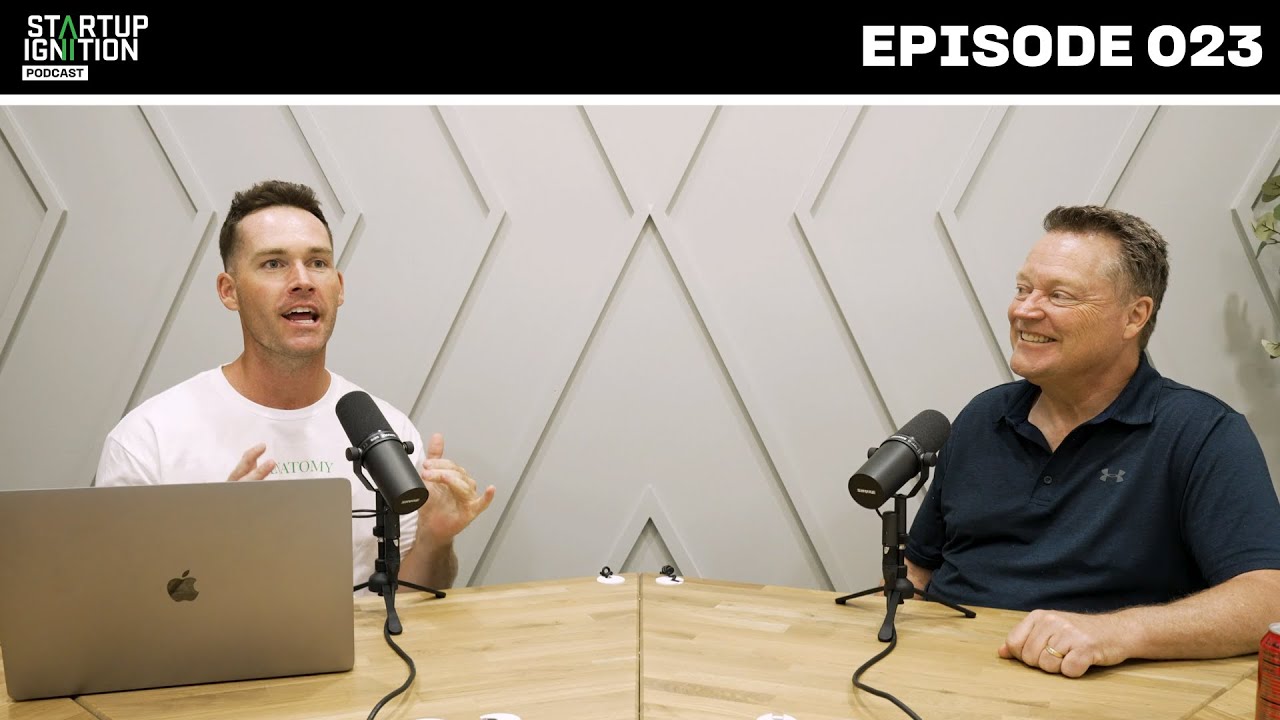
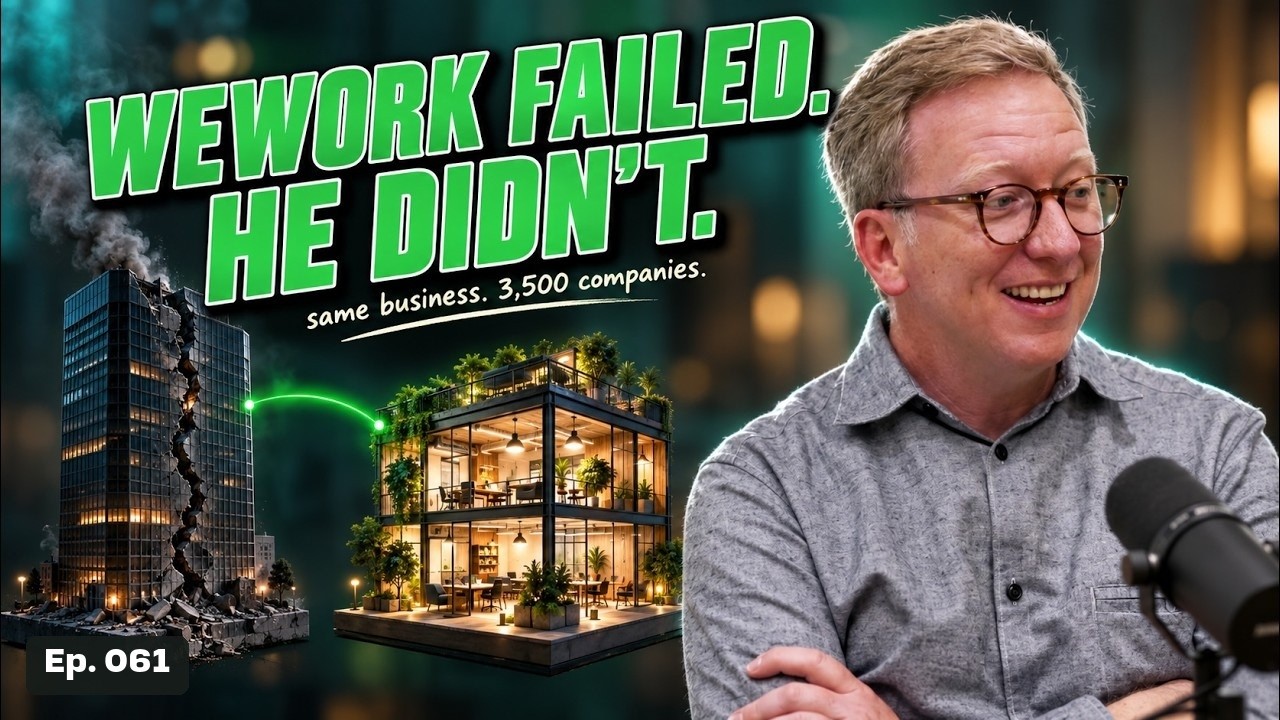
John and Tyler Richards lay out their investment philosophy: elephants over unicorns. They argue that a founder who owns 30% of a $100M exit earns the same as one diluted to 3% of a $1B exit — but the smaller exit is far more likely. The episode covers valuation frameworks, fundraising strategy, dilution math, and why capital efficiency is a superpower.
Show full transcript
How hard is it to get to a billion dollar valuation? The mythical unicorn. We have to remember where did that unicorn terminology even come from? It's because they were so rare. Whereas elephants, elephants are realistic. Like you can build a $5 million revenue business, a $10 million revenue business where you don't have to get a 100, 200, 250 in ARR. Are you trying to force growth by spending money or are you having organic growth because you have a great product? If you are a B2B SAS company and you get to 6 or 10 million ARR, that's 6 to 10 million of recurring revenue in annual revenue, you're going to start getting approached unsolicited by buyout offers. Create value by having a product that people rave about and love and they're not churning and you're spending very little money and your co-founders and first key hires are figuring how to sell and onboard and activate and retain customers. That's how you create tremendous value and you keep most of the equity for the founders and those key employees. And so you do that. Don't go stop at every step along the way and take in massive amounts of money before you figured a lot of those things out. Don't go raise as much capital as possible. Get your employee count up, get your burn up as high as possible to get growth at all costs. In fact, raise as little as possible so that you have as minimal dilution as possible and achieve profitability as quickly as you can on that money, but also to self- sustain to then slowly build really good business and revenue so that at the end of the day, yes, you're still achieving 5 million in ARR, 10 million in ARR, 15 million in ARR. Maybe it's not a flash in the pan. Maybe it's a 5, 10, 15 year game, but look, you're preserving 90% of the cap table for you and your co-founders. 10% or whatever for a minimal amount of capital. And you are on your way. And when you sell, you are the biggest benefactor. bike. >> Welcome to the Startup Ignition podcast. We are back with another episode where we go over everything in your journey in building your startup from idea to exit. That has been our motto for the last 10 years. I'm Tyler Richards. You know me by now. One of the GPS at Startup Ignition Ventures, co-founder of Startup Ignition and Startup Ignition Boot Camp >> and rival for the greatest moderator in the world. >> And we are the father and son duo. You know John. John is also managing partner of the startup ignition ventures fund. uh he is the founder of the content and curriculum which originated back almost 15 20 years ago in the university atmosphere where he spent 12 years as a professor teaching entrepreneurship. So we are just your all-around full journey full ecosystem early stage startup guys and thank you for joining us. Our last episode was super fun. We got to talk with Garrett G. It was an awesome conversation. So thank you for joining us on that episode. But today we have absolutely no guests. We have uh just me and my dad. We're going to riff on a variety of topics, mostly concentrated on the venture ecosystem and our thoughts around it. Again, because we had an episode a handful ago, about 10 episodes ago, where we just talked about a lot of the red flags and the dos and don'ts when it comes to venture fundraising and what we look for and the deal killers that we find within all the startups that we talk to day in and day out. and it went was received relatively well. So, we are guest list today. It's just going to be me and my dad and we're going to be talking startup all across the board. So, let's do it. >> Yeah. So, today I want to kind of set the table. I'm not going to do an icebreaker today cuz I feel like we went super long on our last episode. We went an hour and a half long. So, we'll try to keep this one relatively shorter. Hopefully, we keep this 30 minutes, 45 minutes here for everybody. all of our viewers and audience don't get bored of us and our voices. But I want to set the table today and kind of open the framework for what we want to discuss because over the last handful of years since kind of the postcoid era I think the whole startup ecosystem whether you're in venture or whether you're in um um uh financing or you're raising funds or you're building a startup there has kind of set in this reality of like the ecosystem and the type of uh actual uh uh you know >> approach appro not approach but the the the environment that we're operating in in today's postco era where we experienced the highs of the highs and now we've entered into these kind of lower less and I I don't even think it's postco I think it's really we had a zer period zirp which is zero interest rate period that went on for a decade the 2010s all of you young bucks lived through the 2010s where you had cheap money was easy, flowing like water. And that's one environment to do a startup and venture in. But then boom, 2022 hits where we do 11 interest rate increases by the Fed, the Federal Reserve of the United States, and it changes the whole ball game. And that coincided a little with COVID, but really I think it's more the Fed's interest rate is what gave us a black and white era. >> Yeah. And so, but I was just saying I think that there's a big difference between >> post2021 and pre2021, right? That's very obvious. It's glaring to every entrepreneur that's practicing and building and trying to grow right now, right? There's a stark difference between those two eras. and post the 2021 era, it took a little bit of time, I think for into 2022, 2023 that there was a reality that kind of set in where this growth at all cost unicorn type mentality is not necessarily the best strategy. Yeah. And but even that whole feeling of easy money 2021, the crazy valuations, all the investment activity, that's still not fully purged out. One thing that's even new for our prep today that I just read was Dave Mccclure just put out an incredible post. Um he's one of the most important angel and venture investors in the world. Uh founder of 500 startups and all that. He put out an incredible recent article in the last 48 hours questioning why are some companies clinging to these high valuations from 2021 when they haven't taken their write downs and adjusted their valuations. That's all kind of part of the same mix of us saying what is it we're really after and what are the valuations? Well, and and I I had a conversation with um Y Combinator's latest batch just via email. um one of the most recent companies that was in the latest batch of YC um was kind of hitting the road and doing a lot of fundraising work and had reached out to our venture fund and startup ignition ventures and I was asking a handful of questions and they were raising some astronomical nu uh number of evaluation for a pre-revenue and you know kind of post-product company and I'm I'm just like is that the going rate nowadays? is that the going rate of of postyc that's what they're trying to ship and sell themselves out and that's the terms and the deals that they're trying to do and I was a little bit shocked and we didn't get super deep into conversation again this was only via email so it wasn't like a Zoom >> I think that's what Dave Mccclure is talking about that's absolutely insane a pre-revenue pre-product company what's it really worth >> right and so and so what I'm trying to set the table for for this whole episode is this mentality I do feel like entrepreneurs and VCs are getting it sinking into reality a little bit more. It's taken a handful of years. And this concept between being a unicorn and growth at all costs and and growing and raising and fundraising and getting to these astronomical valuations >> and everything in your lifestyle that comes with that >> and everything that comes along with that same exact package in 2021 all the way through 2023 and now in 2025. I feel like the reality has set in a bit to where and at least something that we've been believing and holding on to for the last 10 years which is there is a different way to grow and there is a different way to approach VC and >> you want me to kind of summarize >> that and and so that's what I want to talk about today but you go ahead and tell everybody what I'm talking about. >> Okay. So here's the bottom line. I've always said it this way. There's kind of a fork in the road that an entrepreneur faces. If you're doing a scalable venture, most scalable ventures need external financing. Very few founders have the ability to bootstrap or have their own capital to take a scalable venture that takes a while to get customers to get to the point where it's cash flowing and you don't need investment. So almost every scalable venture, software, consumer product, electronic product, whatever it is, needs external capital to get through the cash flow cycle or to get through the J curve of entrepreneurship. So how are you going to get that capital? How are you going to pursue it? And what does that entail for and mean to you as founders? So the real issue here is that it's going to be you're going to be looking at do I just go raise a boatload of money and go for the gusto and sell a vision that's huge and high and that we're going to get to a billion dollar plus valuation and all the investors that come along for the ride are going to make a ton of money because of that growth. That's unicorn. So that's you can pursue going after being a unicorn. But what I've made most of my money in my career on and what I've been a participant on in terms of being an investor and investing in other entrepreneurships is much more in what was now being called elephants. And that's what we want to talk about today is the elephant pursuit versus unicorn pursuit. A unicorn startup is purposefully going for a billion plus valuation as fast as possible raising millions and tens of millions of dollars along the way. sometimes hundreds >> and hundreds of millions from VCs that have raised half a billion, a billion or multi-billion dollar funds. And it's not just happening in Silicon Valley. It's happening here in Utah and other markets. >> But that terminology is what's relatively new since 2021 is when the fir it kind of first came on the scene of elephant versus unicorn. But that's something that we've believed in from a long time. It just hasn't been as acutely defined. >> So what what is an elephant? Here's how we let's define it the way we defined it. And we're saying however the world is now a defining elephant is matching up with what we've done for much longer. >> Yeah. So I don't know. I'll take a stab at what elephant is first versus a unicorn which is >> highly focused around the durability and the profitability, the founder fit and the capital efficiency of a startup, right? It's like I are you burning to grow or are you actually capital efficient and trying to reach profitability to self- sustain and also get to a great outcome. >> So are you trying to force growth by spending money or are you having organic growth because you have a great product? >> Right? And again we've we've thought this way for a long time. Again, it hasn't been defined specifically as an elephant for but for the last 1015 years. We have always encouraged entrepreneurs that come across and even the way that I've operated my own companies. The company that I sold for tens of millions of dollars was literally bootstrapped and had no capital. >> Zero external capital. >> Like literally, if we didn't make money, I we weren't in business. So, it was like >> you had to eat what you kill. >> Yeah. And so that mentality is what we try to ingrain in the brains of all the entrepreneurs that would come across us as mentors and advisers and helpers. And we say look don't go raise as much capital as possible. Get your employee count up. Get your burn up as high as possible to get growth at all costs. In fact, raise as little as possible so that you have as minimal dilution as possible and achieve profitability as quickly as you can on that money, but also to self- sustain to then slowly build really good business and revenue so that at the end of the day, yes, you're still achieving 5 million in ARR, 10 million in ARR, 15 million in ARR. Maybe it's not a flash in the pan. Maybe it's a 5, 10, 15year game, but look, you're preserving 90% of the cap table for you and your co-founders. 10% or whatever for a minimal amount of capital. And you are on your way. And when you sell, you are the biggest benefactor. >> Let me summarize by explaining the full arc, the full gestalt of the experience of a journey an entrepreneur can take as an elephant and contrast that to the well-known unicorn path. Okay. So, you're a scalable startup. Let's take a software company, a B2B SAS software company, and you've got a good idea. You've devised a good solution, and you've done some lean startup work, and you've gone down validating a business model. So, what are you going to do? Well, what we like to see happen and what we invest in is we like to see the company in today's dollars raise somewhere in the, you know, 400,000 to 800,000 range. That's kind of a good range. And you build a tremendous amount of value following lean practices and lean methodologies. And you get that first money in like that, first real money in, and you get the company going. But are you going to then just raise massive capital really quickly after that and start your burn rate going crazy and hiring a lot of people and getting expensive office space? Our last podcast talked about it. Somebody who got forced into that, right? And so you should go listen to that. That's that is kind of a VC model because right the VC wants you to spend money. If you're a good business and they like you and they feel like you have legs and potential, they're going to encourage you to spend, spend, spend so that you have to raise, raise, raise and they can dilute, dilute, dilute. >> So, let's call that first step there the preed or early stage seed round of investment to give you some capital, some working capital so you can do some business. That's that's good. But then from there, you should take that money and just create value by having a product that people rave about and love and they're not churning and you're spending very little money and your co-founders and first key hires are figuring how to sell and onboard and activate and retain customers. That's how you create tremendous value and you keep most of the equity for the founders and those key employees. And so you do that. Don't go stop at every step along the way and take in massive amounts of money before you figured a lot of those things out. So here's our arc or path or way to go or a journey. So you do that and then don't take a big seed investment. Wait till you get a bonafideed series A and can justify because of your traction and your proof that you're a viable company and then maybe never take any more money after the series A. Here's what it is. If you are a B2B SAS company and you get to 6 or 10 million ARR, that's 6 to 10 million of recurring revenue in annual revenue, you're going to start getting approached unsolicited by buyout offers. And that's going to happen. It happens all the time. We see it all the time. It's what we're specialists in. And the magic number of 10 million, if you can achieve that, imagine getting to 10 million on just a $600,000 preceding investment. And people go, "That's impossible. You can't do that." No, it is. We've seen it. Matter of fact, my best investment of all time. We've talked about it on here and we had Evan Tishima, the CEO, 200,000 raised, got to that number, had a massive exit. And what are the multiples you get at that? At 10 million for B2B SAS, you're getting like 8 to 10x on your multiple. It's an incredible outcome. And if you still own as founders and key employees 75 to 90% of the company, guess what? You're going to make a lot of money. >> Yeah. And that's an elephant. >> Yeah. That's an elephant. And that that elephant terminology kind of was first, you know, being floated around back in 2021. I found that there was an article um that was written by a guy named Looney uh who is is an angel investor. He was a founder of a handful of companies, Africa Eats and a a handful of other startups. But he wrote an article back in 2021 entitled neither unicorns nor zebra but elephants. And that's kind of where this first originating terminology came from. And in that article he and I'll have Jordan link it here so everybody can see it and we'll flash a little uh picture of of the article up on the screen here. Um but that neither unicorns nor zebra but elephants article goes over the capital efficiency and the slow growth and the high profitability and the powerfulness of an elephant in comparison to the mythical unicorn. We have to remember where did that unicorn terminology even come from? It's because they were so rare. Yeah, >> it was so rare to be a unicorn >> and actually doesn't exist >> and doesn't exist. They're literally mythical, right? >> But elephants are real. >> But and that's the same approach as a founder should be taking is like how hard is it to get to a billion dollar valuation and warrant that billion dollar valuation in the right way? What's the kind of revenues you have to build up your revenue line to? What's the kind of an employee base and everything that comes along with that $1 billion valuation, let alone multiple billion dollar valuation and then the exit that comes along with that as well. It's it's such a hard it is it's a mythical creature to capture and kill, right? And so why Tyler and I are having this episode today is because what we're realizing is that we didn't have the terminology elephant, but back go back to 2010, 2012, 2014, 2016, that was we were >> teaching, preaching, and living and doing elephant. >> Yeah. >> But we didn't have the word. >> But we didn't have the word. We didn't have the unicorn to elephant comparison. Yeah. But then, you know, and there's tons of awesome quotes in that in that article that was written by Looney back in 2021. Like he says, uh, you know, critical, he was very critical of unicorns and the distortion that comes along with it. And and he's like saying not against innovation, but it's just he's like honestly I I'm pro-sanity. Like I want I want to be real and to go around the Silicon Valley or all these VCs having conversations with a bunch of startup owners saying like you're going to be a unicorn and you're going to have this kind of exit like that is very rare. Whereas elephants like he's literally saying Looney saying in his article elephants are realistic like you can build a $5 million revenue business a $10 million revenue business where you don't have to get a hundred 2002 250 in ARR. >> Let me ask you this. And I'll ask all the viewers and listeners, who would like to have a 10 million revenue AR company and you only raised max $2 million for it >> and you still own 75% of the company as a founding team. >> You and you and your team. >> Yeah. And your gross margin is a SAS margin of 85%. Okay. I raised my hand. I want to own one of those. >> And yeah, and yes, it is attractive to be a billionaire startup founder, right? like to be to be the owner and the founder of a of a unicorn status company that's great but you have to think about the actual outcome that's going to come with that kind of company. >> Yeah. Yeah. It's very rare even though we have seen it from some exceptional founders that we've mentored and known. It's very rare though to hit a billion dollar valuation and have the founders even above singledigit ownership. >> Yeah. Yeah. you got to think the amount of capital that you're taking and then the terms around that capital it's going to dilute. >> So it turns out let's say you get some huge hundreds of millions of dollar valuation exit but you only own 8%. Versus owning 75% as founders and you get a hundred million exit. You could and also what was your lifestyle like for five to eight years while you were doing that? That's the interesting point, right? >> Yeah. Yeah. So then fast forward to today where uh over the last 6 months to a year uh a lot of this elephant terminology has come back up. And that's be coming from an article that was written back in 2023 by uh Erica Winganger. I hope I'm saying her last name right. And so shout out to Erica and her article from 2023 that was entitled uh elephants not unicorns. So, she kind of built on what Looney wrote in 2021 and kind of brought it into mainstream VC. And over the last six months, she's been doing a ton of posts on LinkedIn. >> We don't know her, but great job. >> Yeah, cuz we appreciate her post because that methodology and that strategy is exactly what we subscribe to in building true real business, elephants, not unicorns. And Erica takes a different approach to it than what Looney did in 2021. like it's very comparable and she had the right thing but her hers was more like values aligned and durable and and often community-led entrepreneurs and businesses lifestyle comes into play and companies right I mean like the founders's life of pursuing an elephant and still becoming a multi-millionaire rich entrepreneur at exit the founders's life on that path is so much more enjoyable >> but what Erica emphasizes is intentional scaling not is scaling to scale. Yeah. >> Like intentional true real scaling and then early profitability, not pushing profitability down the road until, oh, we're going to raise more money to cover that up. She talks about in her article, Elephants Not Unicorns, intentional scaling and early profitability, which is exactly what I think encapsulates an an elephant. And so, >> let's talk about some of that unicorn pursuit that you and I have seen from 2021 financings. Countless are the number of companies that Tyler and I have sat down, talked to the founders of the situation's been aware of where they raised so much money, went to a high burn rate, it lasted two years, and then laid everybody off, company failed. We've seen that so many times, right? That's a epidemic that is caused by if you think going for unicorn is the only option for an entrepreneur, right? That's that's what we've seen. We've also, you know, just seen what comes along with that lifestyle. It's not fun to get a bunch of money, spend it recklessly, lay off a bunch of people, and come up empty-handed and maybe even have debt and owe money because you guaranteed it as a founder. Yeah. >> That's We've seen that. That's not a good place to be in life. >> Yeah, it's not. >> Yeah. We've also seen this. You and I have sat through presentations by some of these wouldbe unicorn pursuers. They're pursuing a unicorn exit. We know what it's really like in the company because we know people that work there. We know people that are invested there and all this. And they'll stand on a stage and say how great things are trying to pump their pursuit of a unicorn when in reality what they need to do is buckle down and be an elephant. >> Yeah. Yeah. There was there we we had this happen this week. We had a conversation with a startup founder who was trying to raise multiple millions of dollars that was trying to push his high burn and his high employee base and into, you know, into fundraising again and keep that hope alive. We were very honest and real with him about where he was at, what product he was trying to pursue, the vertical he was pursuing, the customer he was pursuing, the the the relatively low ARPA of of the customer that he was pulling in, >> average revenue per account, which is important. >> Yeah. Which is very important. And, you know, I think he kind of had an aha moment because we were one of the VCs that was being very real with him and telling him like, "Hey, dude, like this is what needs to happen. If you want this company to survive, you need to do X, Y, and Z, and this is what we would do. >> You've even become brutally honest like your dad. >> Yeah, we [laughter] I have. I think you're rubbing off on me. But and not that I wasn't brutally honest before, but I was definitely patient in in my and and kind of selectively anybody. But you got to understand telling somebody the truth is an act of love. It's not to help. >> Sparing somebody's feelings but misleading them is very dangerous in the venture ecosystem. But I think that founder took that feedback very well from our meeting. Literally the next day, I was told that he went and laid off a ton of his employees, cut, burned down, and basically made the decision, I'm going to go back to elephant mode. I'm not going to pursue unicorn mode. And the day before he was literally trying to push us to raise millions and millions of dollars. And so we see this all the time. You don't want to get caught in that moment where you are trying to raise to keep your company alive. You want I I think at Startup Ignition Ventures, we really love to see companies when they can show us profitability will be earned and achieved with the dollars that we're putting into the company. Like I I do think there's a rare occasion where we're excited and we're encouraged by an entrepreneur who comes and say here's the milestones I'm going to be getting or here's the user base or here's the revenues I will be achieving with your money. Maybe it's not profitability, but man, 95 98% of the time, we want to see profitability achieved with the dollars that we're putting into a company. >> Real [clears throat] stuff. You know what's interesting? I'm sitting here thinking this is a little crazy thought maybe, but um >> maybe because there was a recent movie about how unicorns were mean and killing people, but what was that? >> But but you think of a unicorn or a horse or a mule or just an obstinate animal. I think of a unicorn, you know, pretty looking on the outside, but maybe not that great to hang around, maybe not that great to be with. And you think of an elephant. Elephants are family oriented. They protect their own. They're super strong when they need to be, but gentle when they need to be. They know how to it. It's just the whole to me why this resonates so well with me is >> I like elephants. The whole everything >> more than unicorns. I like unicorns better. >> No, no. Everything about elephants to me resonates with a lifestyle and outcomes that I like. Um, since unicorns aren't real, it's and also, you know, I just to me it just I love the moniker of elephant for what we've been doing all along. That's all I'm saying. >> Yeah. No, and we have we have to think back to the unicorn perception. Like I'm trying to think back to like >> the IPOs and the wei work situations and all these crazy unicorn things that I think kind of put founders on that ideation of like I'm going to be a [clears throat] >> every ecosystem ecosystem like Utah and then you could say Austin, Texas, Raleigh. They're all going to have their little versions of Silicon Valley's you know crazy stories, right? >> Yeah. Where they see the successful unicorns pan out. >> Yeah. Or or the unicorns that fail in our facades. Yeah, >> you know, they're all they can all be there. And so, but all I what we can tell you is this for decades now. And Tyler himself as an angel investor for a decade now uh since he sold, we have mentored, helped, and pursued elephants, and it's been very good for us. Then when some of them sprout up, some of those elephants actually do and become a super elephant. And a super elephant's great, too. Yeah. >> Yeah. What we don't like about pursuing unicorn from the start is the pressure of like let's put it more into real academic terms is growing into a valuation. For instance, when you're saying what those valuations are if somebody's going out as a pre- revenue company and trying to raise at a 40 million pre- money valuation, I personally think that's insane. I that what justification would any company have to get a 40 million pre- money valuation? Are there some that could justify it? Yes. Is it one out of 10,000? Probably. >> Yeah. But but I think what it is, it's misaligned incentives from the VC returns versus the founder outcomes. It's just it's so misaligned and it's hard. And you have to just think about the actual percentage of founders and startups that get to the end goal going that route. They're it's so little. And that's what I think a lot of entrepreneurs and startup founders don't understand that are getting budding entrepreneurs that are getting into their startup right now. They're literally building today, starting today and they see these unicorns. It's like, man, I wish I had the actual numbers around how many startups start on that path and how many actually get to an exit. And not only to an exit, but to a a founder outcome that actually a life-changing outcome. >> Yeah. is worth all of that rigomearroll, right? Yeah. Yeah. So, you know, exactly. When you you take a look at the the founders and the decisions and where they have to pursue and what they have to go, lifestyle is an important choice, it's the the atmosphere of being in a startup and the years you have to be in it. Let's try to make it as pleasant as possible because it can be pretty unpleasant, especially if you're overpromising and under delivering. Your life's going to be miserable. >> Yeah. To to the unicorns that fail, that's literally what sums it up. You've overpromise and you are underdeling. >> Yeah. So, let's [clears throat] also talk about another group besides the founders and entrepreneurs also the new breed of angel investor. Let's take somebody that has had an exit, somebody has some money and they want to do early stage venture investing. They also are if they have not been taught or had experience, they're making big mistakes right now. For instance, going in and investing in a company at a 40 million pre- money valuation and slapping a $100,000 investment into that company, validating that valid value for a pre company, but you and two other guys gave them $300,000 at that high valuation. So much is going wrong with that. First of all, the validation and the misvalidation that's happening there. Also, you cannot make money if you are the first investor in a company and at a massively overpriced valuation unless it does become a true unicorn. You need it to get have a billion dollar exit. If you're getting a pittance of equity for giving them early money, it just doesn't work. And also, if you think about it, if they have no revenue, there's no multiple to apply. But you have even asked this yourself, Tyler. As you got into it and started investing alongside me, you started going, "Uh, this company's got $50,000 a year in annual revenue and they want a 50 million valuation. Uh, that is a multiple that is so high." And as an investor, >> am I even going to get a 10x return? Yeah. How can they ask for a 500x valuation and then I am only going to get a 10x someday if even that? And to get a 10x from that type of investment, it has to get to a billion dollars. It's it the the incentives for investors to invest have to be there appropriately. And when I see it today, I do not understand why some investors are investing chunks of money at such high valuations and getting so little equity. I don't get it. Yeah, it it it doesn't work. But at the same time, we don't fault anybody for doing that or or going and pushing those terms or and even investing in those terms. It's just I think as you're in the industry longer and longer, you do become more and more educated and smarter in the way that truly works. That's a very nice thing to say, but I'm going to be a little more bold. I'm going to say challenge to somebody out there. I'd love somebody to walk me through a spreadsheet, walk me through a hypothetical arc of a company's history and getting to an exit and how that pans out and how that turns out. >> It has to be bigger and bigger every >> I have to see how it turns out because that's what I just don't understand. It doesn't m the math doesn't come out right. Um it as a precinct investors Tyler and you and I put in very money in very risky situations. You and I are investing money in risky situations and there's no way to not say that they're risky. They're risky and we're going to be very diluted by the end of the day. Even if they are only modestly raising money after us, we're going in so early. We know the next round of investments going to dilute us. And if they do like three next rounds of investment, we're going to get really diluted. If we don't get enough in that early stage, it's not going to be a meaningful outcome for us. >> Yeah. It it it disincentivized [clears throat] the investor to actually make those investments if they're educated. If they're uneducated, they don't know that. >> Okay. Anybody, let's do this. Anybody out there that's invested $100,000 or more at a company with a valuation of 20 million or more as an initial before they have let's call it $100,000 of revenue. If you've done that investment, I want to know your thesis and what you've projected out in the future and what return you're expecting. There you go. >> Yeah. >> Challenge. There you Yeah, I I think the elephant opportunity is what will fit the majority of entrepreneurs. And I I think 95% of entrepreneurs should be pursuing an elephant route rather than a unicorn route. And I think actually right now in the current environment, it's flip-flopped. Most founders are trying to go for because that billion dollar route, that unicorn route, because that is what VCs say they want to invest in. Yes. And so what are entrepreneurs supposed to do as startup founders? you're saying I got I got to go to >> and if you're just reading some markets from Silicon Valley, that's all the input you're going to get. >> But even here in Utah, I mean, most funds here in Utah literally will say behind closed doors, if they can't become a billion dollar company, we cannot invest in them. Right? >> We've been told flat out if they can't get to 250 or more million in revenue, we're not going to invest in them. So, it's hard for an entrepreneur to hear that and say, "How how am I not supposed to be chasing those kind of numbers and that kind of path?" But let me persuade you out why you shouldn't be. Cuz I think elephant, and you addressed this earlier before, elephant equals freedom, right? You don't have that VC bre. Let's say that deal does get done and you've painted this awesome pitch deck and you've raised these funds and you've gotten millions of dollars in your bank account and you've sold them on this promise of getting to that unicorn type startup, right? The actual weight that comes along with that kind of deal and then what you're actually giving up delilution wise on your cap table to receive those kind of funds and then the pressure to deliver on the outcome they're expecting like your life changes as an entrepreneur. There are two paths as an entrepreneur. If you go down the unicorn path, there's a ton of expectation there. If you go down the elephant path, you truly are the dictator and your own boss. Let's even expand on that. I'm going to expand on that. Here's another very important point for our listeners and viewers to understand also. And quoting Steve Blank, the father of lean startups, somebody we respect in his writings and teachings very much. And he says, "Hey, somebody didn't tell you a little secret. If you think you're going to stay the CEO and in control of your company way down the road, you've got to do a couple things. First of all, you've got to have incredible management skills. So, you need to have your head up looking around as you're around all your adviserss, investors. Learn how to manage people, processes, and assets. That's one thing. But also, let me give you a little hint. You're climbing a much steeper hill if you pursue a unicorn to stay in control of your company because the management's expectations is what this is all about. Instantly when you say I'm pursuing the unicorn path, the hill that you have to climb all of a sudden becomes this steep. And if you falter, if you hiccup, your investors, your board of directors is going to be looking for a new manager. Yeah. Somebody to take over that company that can do it because it's not you. If you stay an elephant, keep control of your board, keep control of your cap table, have good patient investors that know the game, and instead of having to push to get to 250 revenue in 5 years, 250 million revenue in five or eight years, what if you only have to get to 10, 15, 20 million revenue in 5 to 8 years, and you've kept most of the equity for yourselves and your founders and employees, and you all have incredible outcomes life. So the life-changing experience can happen both ways which is the path. >> So let's walk through that. Let's do a little bit of exit math here. Okay. And let's do two examples. An elephant type path company versus a unicorn type >> ones that I know about maybe without saying who they are. >> Well, no. I don't think we should do real life examples. Let's just walk through the literal math that would have that is a realistic situation for both type of scenarios >> from from the investor standpoint or founder or both? from both. Let's let's just go through the the investor then and then go back to founders. Okay. So, >> and I've taught you this. >> When we do precinct investing, I instantly know whatever dollars I put in in an average outcome, I'm probably going to be somewhere diluted 1/3 to 2/3 with half being average. So, if I walk away with 12% with my first initial investment in a company as a prey investor, by the time it exits, I'm going to be down to 6%. But it can easily get down to 4%. Okay? >> Depending on how good the CEO is with efficiency and how they grow their company and how if they run out of money, have to take more rounds of investment, all that kind of stuff comes into play. So, there's going to be massive dilution, right, in a situation. So that also impacts the founder. So I'm constantly thinking that way. But if you pursue an elephant path, it's very possible that 12% could only go down to eight or 10% >> or possibility of staying literally at >> 10. Well, it could. Yes. And so very fascinating in that situation is that's and then it it's crazy what happens to the founders. Imagine a founder getting to a $und00 million exit and still owning a huge percentage of their company, let's say 30%. And they get $30 million. That's an incredible outcome in life and changes your life forever instead of going for unicorn and being more likely to fail and being more likely to be fired from your company and not achieving it and not having that outcome. But if you do hit it, if you do get that unicorn, you're that rare breed and it makes it, sure, maybe you end up with $300 million. Yeah. Okay. But how many people that pursue entrepreneurship do we know that end up with $300 million? You and I know some because we run in these circles, right? >> Yeah. I mean, we probably know more than most. >> Yeah. But still, >> but the percentages are still the same. >> The percentage 0.0 what percent? Okay. Or lower. And so, but how many do we know >> that built a nice company? five, 10, 15 million, exited and have 20, $30 million and are living the high life, right? A lot. >> Yes. And it's realistic. So, let me walk you through the founder side of these scenarios real quick here. >> Let's say you are a founder of a software SAS company and you are trying to go down the unicorn route. A realistic scenario here is trying to get to that billion dollar valuation, raising $150 million, doing about five rounds of investment to to to achieve that >> or more. And literally your founder equity cuz on average on average round of financing preede seed series A B C right let's say they investors VCs are looking to capture anywhere between 10 to 20%. on average. Okay. So let's say whatever your starting equity is going >> let's go over that real quick what you just said or do you want to keep going? I just want to teach that that's a touch important founders listen may not be aware of this professional venture investors don't really care about how much money they give you. They care about what percentage of the company for the reasons I've been talking about. So let's take that preede level is going to be in the 10 to 20% range. Okay. Uh seed level is going to be in the 10 to 20% range. every bite out of the nugget. Okay. >> Series A more 22 to 32%. Okay. So, >> yeah, bigger check sizes don't necessarily mean more percentage. It totally depends, but on average, that's why I said on average 10 to 20%, >> but the series A there there's not a series A investor around that I know of except in recent years, some have dipped below it because of this weird valuation thing. But most generally they're not going to want to go much below 20%. Uh [snorts] with a series A investment. Okay. So with that knowledge that you know this imagine if you stopped at every one of those stopping points. Let's go back to my unicorn example. Let's say you are trying to achieve a 15% 15% then 20%. >> Yeah. Let's say let's say on the high end you're getting 20% every round for five rounds. Right. That >> that's impossible. That's impossible. >> No no no. It's it it comes out with the way the math. You got to understand. So, let's do 15% in the preede. >> Yeah. >> 15% in the seed and 20% in the series A. >> Just three. >> That happens. But remember, you're getting the second one is getting 50% of the post money, right? So, bottom line is you're now diluted way down. >> You're you're you're honest equity at exit could literally be a single digit. >> And what happens here, if you're not aware of it, what happens there along that ride somewhere the founders drop below 50% control of the company. >> Yeah, for sure. and control the board and they're very susceptible to being fired from their own company which happens to many people every year that I know they get fired from their own company. Okay, so going back to this billion dollar scenario. Okay, walking through this unicorn example billion dollar value you're trying to achieve total fundraising 150 million five rounds to achieve that where you're diluting like crazy. You're getting down to singledigit equity numbers at exit. Let's say your founder payout at the end of the day is >> if you make it let's say let's say you're at 9% okay after all that delilution but you get to a billion okay so you're making $90 million at exit okay so it takes you 8 to 10 years to do that >> no no that I got to correct you on that cuz I can talk to all the people that know that have done that very thing you're saying 10 to 15 >> it's 10 to 15 or sometimes 18 >> okay >> to 20 let's say that exit it has to be a very strateic IC high valued exit or IPO, right? Like that's the only people really buying billiondollar things. It's by way no the more verticalized you are, >> they're not going to pull that off. Those companies that have this happen to them are very general companies. >> Very generalized companies, right? >> So then, right, the whole way you've been dealing with the VC pressure, every round you've raised, your life is very stressful. your team is probably massively huge. You're burning a ton. You're always thinking about scaling and rap the rapidly scaling and that's your life, right? And that's outcome. Okay, let's let's put it there. 9% 90 million. Let's say that's what happens. Now, let's go to the elephant example. Okay, so can I just make one comment though because the people I know is less than that. I know people that sold for two, you didn't want real life, but I know people that sold for two billion ended up with like 80 million. Okay. That's what that's like >> point That's like 4%. >> 4%. Yeah. >> Okay. Okay. So, just so you know, it's rarely as high. You're stating very high, >> which is lifechanging money. No doubt. Everybody would love to have an $80 million exit. Of course, >> and 15 years of grueling life. >> Yeah. But that worth the pain. So what? Right. But here, let me paint this other picture for you real quick. The elephant example. Let's say you're trying to sell for 50 million. Okay? Not a billion. Let's say you total fund raise $2 million. Okay. And you go, you do that $2 million. >> You gave up 20% total. >> One or two rounds. Let's say one or two rounds to achieve that $2 million. Let's >> say gave up 25%. Okay. Yeah. >> And your equity at exit is probably sitting around 60 to 70%. >> As founders as founders. As a founder. Okay. So let's say you sell for 50 million 60 or 70% you're making 30 to $35 million at that exit >> and and and within 5 to 10 years. >> Yeah. And so less time 5 to 10 years, four to six years, whatever it is. An average exit I feel like is like 7 to 8, but let's say 5 to 10 years. That exit probability, the exit type, it's not an IPO. It's not a highvalued exit or acquisition. It's a realistic buy. >> It is a very realistic buy. You are founder led the whole way. You're holding on to majority. You have no one to report to or you if you do, you have those one or two rounds of VCs that are probably very patient and know the game, right? And your growth is probably slower. You know, you're you're trickling up, but the end goal isn't pressuring you to get to a billion. The end goal is to get you to a 50 million. Let's also inject a little finance into this return on investment calculation. By the way, >> making only taking in $2 million investment and you personally walking away with 40 million in six years versus 18 years, walking away with 80 million. >> Okay. and having taken in 400 million of investment and what it took to get there and those 18 years. If you actually start doing the ROI calculation on what your annual rate of return is just keep or your compounded annual growth rate whatever you want to call look at it to analyze it with financial metrics >> and then you take into the esoteric issues of your lifestyle. The funny thing is is I just think elephant almost universally for most people is a better lifestyle to pursue. Now with that said though, I want to make it very clear if you're doing a if you got a change the world general solution for an entire industry or sector or piece of the economy and you feel you can do it and you get investors rallying behind you and you go for it, which that does happen, go for it. That's unicorn material. But if you think you're going to do a little verticalized piece of an industry, a sliver vertical in an industry and supply some scalable solution there and you think that's going to get you to unicorn status, not going to happen. >> Yeah. But it can get you elephant status, right? >> Oh, elephant. >> So, you just have to think also of the acquirers in these situations or these exits, right? It's like how many people can pay a billion dollars for a startup, right? the Googles, the Nvidiaas, the Microsofts and going public, right? >> How many people can acquire a $50 million business doing5 to$10 million? >> All all I I can tell you so many more. >> Let me give you a hint. My company went public in the late '9s. First year after going public using the currency of our stock, 25 acquisitions for 10 million here, 20 million there. No name acquisitions. Nobody ever knew about it. Google every week acquires a ton of companies. Yeah. Okay. And I one time looked at this was a number of years ago, call it 10, 15 years ago. Google at one point was acquiring five to 10 companies every week. >> But not 10 billion or 5 billion or 1 billion companies, 10 million here, 20 million. It happens all the time. And that is still life changing. >> A little elephant company had done so well in one year they got 10 million from Google. And then Google one year later also shelved it. Okay. Yeah. H but you how about this Instagram Instagram really was on its way to being a unicorn but they got taken out and they did make a billion dollars early. So those things happen but what but when I talk to most entrepreneurs I have to remind them you're not Instagram. >> Yeah. >> Okay. >> And Instagram is a bad example because they actually were a billion dollars. >> A billion dollars with 13 employees only about a year old. Okay. Whatever the numbers are people can look up the details on that. But the point is is that can't happen. But you got to look at the traits of what was going on there. They were doing something very general. Their target market was every person in the world. Yeah. >> Okay. They got the good fortune and this is a lot of serendipity to become the fastest growing company in history. Not now, but yes. No, but that I'm saying then at the time and that's what happened. If you want to bet your entire life that you say, "Oh, I want to be an Instagram." That's great. Go do it. And if you can be that, that's great. But literally, that is like trying to predict where lightning's going to strike when there's this whole other elephant world where I can very well predict to get to 6 to 10 million in revenue, exit for a 10 multiple on that revenue and become a multi-millionaire. >> Yeah. And there's like we can literally apply almost a science to it. It's like here's the patterns, here's the path, here's the science, go do it. Where unicorn is a lightning strike. So to to maybe wrap up or even just kind of conclude on a lot of this, like the elephants may not make you headlines and you're not going to get this amazing Instagramesque moment where you're being acquired and making hundreds of millions of dollars, but the elephants are predictable. They are achievable. A $50 million exit at the end of the day is a great outcome. I don't know what your goals. So, we're not here to talk you off of the unicorn ledge. Like, like if you're there, if you have that kind of potential, >> one, we'd love to talk to you still. It's not like we don't want to invest in unicorns or be associated with the unicorns or help unicorns. It's just like that's not the majority of outcomes most people are going to >> Yeah. But don't foolishly think you're unicorn when you have no chance. >> Right. That's what I'm saying. So, just be realistic with >> Let's do this, too. We also invite challenges to this talk today. I would love to hear from anybody that can challenge like I gave a challenge to an investor to show me the thesis for how they're investing. I would love anybody to challenge me on anything we've said. I want to learn and pick this up. This is a fastmoving environment. Uh the look at just the last decade coming out of the great recession from 2008 to 2012 and then from 2012 to 2021 was an incredible runup and it went crazy and it was fantastic and we made a lot of money. Okay. And then from 2021 to 2024 was straight down doldrums, a suppression, a trough and all that. And through these periods and then COVID hit. Lots of changes, lots of things coming in. So here we're in 2025. I think we're going to be heading into a nice positive upcycle. Let's let's talk about this a little bit. Challenge us and our thoughts and what we're doing. If you disagree with us, I want to hear from you. I want to learn from you. >> Yeah, I I I I would assign that same challenge. I we love being pushed and and argued on our stances and the way we approach business and startups and venture. >> Um but I I do want to hit this one more time like >> again we're not here to talk bad or or or uh talk negatively on the unicorns that have come in the past or coming down the pipeline or the investors that are doing that. Right? That's not the point. We're just trying to paint both sides of the picture for you of saying there are two options here and one is very realistic and one is great to pursue but the percentages who actually achieve it and get there. One thing I wanted to bring out too that we didn't bring out is there are multiple funds like Erica Wgner, is that her her name? And other ones you and I know from people we've known already are starting funds specifically only to invest in elephants and nurture and mentor elephants, which by the way is what we've done for a decade. Yes, we have. But again, as an entrepreneur, don't get in this ego trap of thinking if I'm not a unicorn, I'm a failure. That's not what this means at all. Because I think we had a conversation with Adam Edmmonds two episodes ago where he literally talked about this public praise and like the headlines and being compared to these billion-dollar entrepreneurs and like public praise is great but private happiness is like greater >> greater I promise you. And so don't be the founder that feels like you have to go and chase this billion dollar status or this unicorn path just to be successful because that is not true. I promise you Evan Tashima a ton of other people who have been on this podcast. They are sipping pina coladas on a beach in Hawaii saying how great their life is being an elephant. And it happens all the time all over the United States every day. So don't don't don't let this this again that ego trap take over and get to elephant building. That's my message. So >> all right, great. I think that wraps it up. >> Yeah. So thank you for joining us on the Startup Ignition podcast. It was just boring old Tyler and John today. We hope you appreciated it. But seriously, take John's challenge. Push us. Take an opposing view. Message us, email us, you know, shout us out on social media. We want to hear your stance. If you disagree, great. Let's have a conversation about it. back with facts and academics. >> John loves a good numbers and numbers. >> My dad loves a good argument and he loves a good spreadsheet. So, be prepared. All right. Thank you so much, Startup Ignition Podcast. We're signing out. We'll see you next week. [music] Rock bike next rock next rock. [music]
New episodes drop weekly. Subscribe so you don't miss the next conversation.