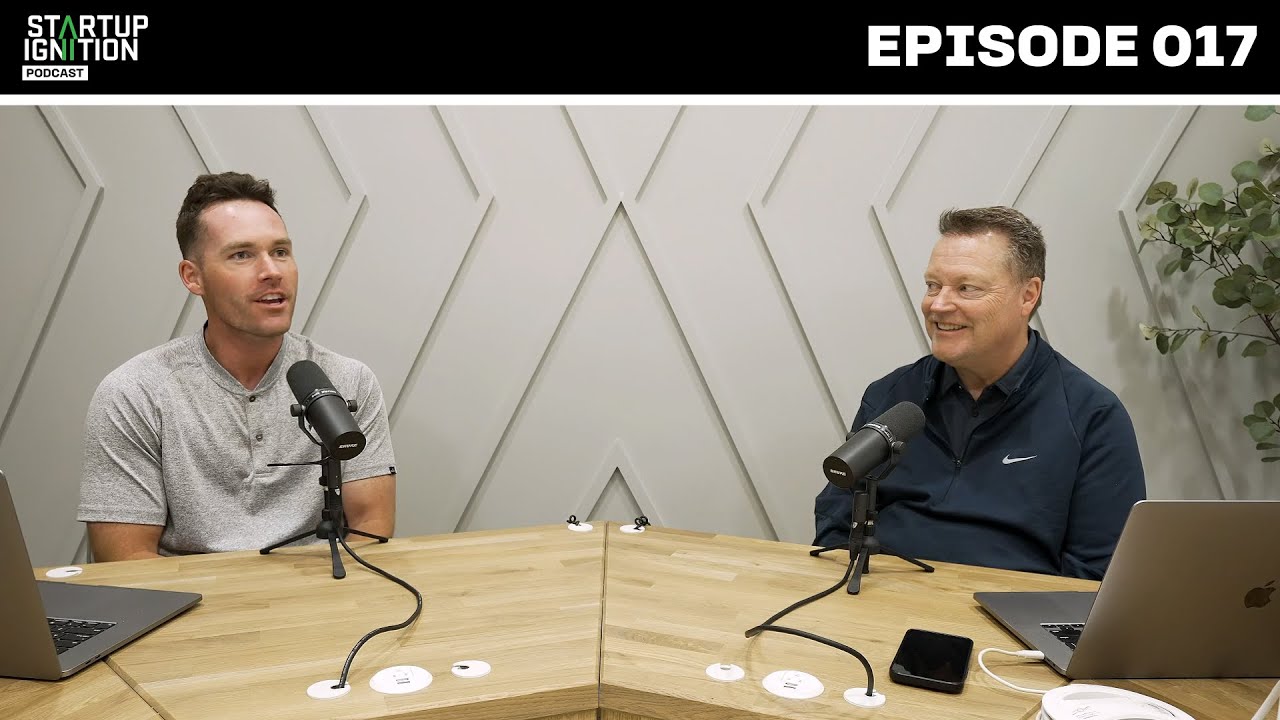
John and Tyler Richards walk through their pre-seed due diligence checklist, revealing the specific deal killers they look for in cap tables, 83(b) elections, founder equity splits, and legal structures before writing a check.
Show full transcript
that to our venture fund is a deal killer. It's very common that preede companies are messed up in many legal and financial ways, right? If they have done incorrect, inappropriate legal maneuvers or financial maneuvers or capitalization maneuvers or co-founder maneuvers, it could be so broken that we don't want the brain damage of that situation. Now, we spend a lot of time mentoring and helping people to get over those problems, but sometimes they're so bad that the legacy that's been left in the company now makes it uninvestable. A very simple onepage form. You file with the IRS within 30 days. If you miss that 30-day window, the IRS has never forgiven anyone for missing that window. Usually, to fix this problem, you have to shut a company down and restart a new one. So, one of the ways we encourage people to test if their attorney is really the right attorney is to look them square in the eye. Don't let them have a chance to look it up and say, "Hey, do I need to worry about rule 83b?" And if that attorney says, "Uh, what's that?" You don't have the right attorney. One of the most nefarious problems that entrepreneurs have is they actually raise too much money at too high of a valuation. And that may seem, "No, you want that. I want that." And that's the great success. No, it's not. It next to bike next to rock. Welcome back to the Startup Ignition podcast. Thank you so much for watching and thank you so much for tuning in. Thank you so much for all your comments and for the audience that's been with us. This is now episode 17. So, we are cranking on the episodes and we're having a great time doing it today. Unfortunately, you just get John and I. I'm your host, Tyler Richards. This is our other host, John Richards. And it's just us two today. We have no special guest, but we're excited for this episode nonetheless. Hey, last time we got a lot of views on the episode with just us two on it, so we're excited. Yeah. Hopefully we actually talk about things that's relevant to what you're doing and what you're working on. For the budding entrepreneur out there, for the early stage entrepreneur, this podcast is for you. And yeah, for those who are new to the podcast, the Startup ignition podcast is, you know, coming from our ecosystem of the boot camp, from the content and curriculum that we're doing from our venture fund. So we we provide a unique perspective for the early stage entrepreneur. So, but before we get into this episode 17, I also have another icebreaker for my dad and I to do. All right. And I'm springing this one on him, too. And it's going to be an awesome time. Okay. But this is really simple. It this icebreer we're just going to do 5 minutes. It's literally just quick questions. Okay? And I'm going to participate, too, cuz I rarely participate. It's usually the guest and my dad. But this time, you're going to get my perspective and my dad's perspective on a few questions. Let's do it. Okay. So, number one, what's one book every entrepreneur should read? One book every entrepreneur should read. Yes. Uh there's a lot of them, but I would say the startup owner's manual is probably my number one. Number one, I knew that one was coming. Why? The startup owner manual owner manual is written by Steve Blank, the father of lean startup. And there were other books before it. Eric Reese's Lean Startup. There's even nail it and scale it at one done here in Utah. and they're all good and have good concepts in them. I think the common answer is usually the startup the lean startup by Eric Reese. Yeah, the lean startup by Eric Reese. But but that that's conceptual in nature and it's a good book. But if you want an encyclopedic howto stepbystep manual, Steve Blank's book uh the lean the startup owners manual I consider on that topic a masterpiece. Yeah. My book would be the mom test by Robert Fitzpatrick. It's such a good one. If you're validating your startup and you're talking to people, you This is just a really good tactical guide of how to do it and to get unbiased opinions. Even as the book title says from your mom who's going to tell you, everything you're doing is great and beautiful and amazing. Because if entrepreneurs suffer from confirmation bias and only listen to the people that love and like them, they're in trouble. Yeah. So it it teaches you how to get real honest good feedback from even those closest to you. So that's a great tactical book. Yep. Um okay, next question. Favorite productivity tool, app, or anything to keep you on task? To keep on task. Favorite productivity app, or tool? Anything. Yeah. Well, I mean, I don't know. I spend a huge amount of my time in text and email. So I So text and email. Yeah. I mean Gmail and IME messages. I I would probably say the number one most used widely used is obviously email. Yeah. Mine and I while coming up with these questions, I was also answering them in my head. Mine is honestly AI chat GPT. Like Oh yeah. Now. Yeah. Yeah. Like it's just become my go-to sidekick whether it's But it's it's kind of funny though. I'm using I take all I take four or five and I go to them for different things in different versions. Like even Gemini 2.5 Pro is so good now but it takes a long time and does deep research and deep thinking. If I want a quicker answer, I go to 2.5 flash and 2.5 flash is fast not and but it's not as deep thinking, not as reasoning. And then I like Grock because Grock Gemini has a problem where it won't go read URL. Sometimes 2.5 pro will but grock alas will read URLs and it will read documents and gro is really good and then claude gives a different look at things um but chat to be gemini and then uh you also have to go to um uh you know the different ones to say what am I using this for so yeah in aggregate I'm using four or five LLMs or so all day long would you say AI trumps Gmail or email for you. Well, there's Google search would have been in there before, right? But I cannot believe how much of my Google searching has gone over to AI. I So, I'm still using chat GPT pretty religiously. Like I I am using the other other models, but my go-to literally is chat GPT. Yeah. But I was asked for an interview question just recently, and they said, "What what was your biggest surprise of 2024?" And I said, "Personally or like with business?" And they said, "Personally?" And I said, "Well, I built a home." And that was that bill was kind of a surprise. That was a big personal surprise. But also business-wise, it's how much AI has integrated into my everyday workflow. How much I'm literally in personally and business-wise. Yeah. But I'm just saying from everything. I'm literally I'm I'm going through ideas. I'm drafting content. I'm pinging it for questions. I'm literally putting pitch decks in there. And like it's like it's it's almost like a it's becoming almost a crutch for me. And I'm kind of worried about that's where we're going in 2025 and 2026 of like like a lot of thinking is going to be done in AI, not even our own thoughts. Do you want an OG comment on that? What? An old guy comment? That's what I call an OG old guy. The transition from slide rulers to calculators. And you don't even probably know what that means. I don't even know what a slide ruler Slide rule was used pre 1970s to do mathematical equations. It's a slide ruler type object that you would manipulate in order to do uh math calculations. Okay. So before the advent of the electronic calculator Yeah. Okay. You used a slide rule. So when calculators came along it became very interesting. You go, is this going to make students lazy? Because they can't do the hard math on their own without a electronic calculator doing it. And when the Texas Instruments, and many of you out there that are a little older remember Texas Instruments came out with an incredible calculator. I can't remember the model number right now. 40 was in the number, but it revolutionized calculators and you could do calculus, derivatives, integrals on it, and it changed math. And so then the question was, can you bring your calculator into your math um uh into your into your tests at the testing center at a college and things like that? So I my question and the thought for you Tyler is this was it was it like the abacus is that abacus earlier that's from the other parts of the world. Yes. But right right now the the whole point is this. We went from abacus and slide rulers to electronic calculators and then com full-on computers, okay, and spreadsheets and doing very sophisticated math. That doesn't make humans lazy. It just means they're taking work that was laborious and drudgery work and having machines do it just like the industrial revolution, but now with mental projects instead of physical projects, and we adapt and we're not going to be lazier. we're just going to be able to do better and smarter things and can spend our times time on only things humans can do. So as AI takes all this work that is boring drudgery pouring through data and all that type of thing we humans can be more creative think of better companies better ways to solve problems that only a human can do. Yeah. So as we move into 2025, you're saying utilize AI in the things that are research related data drudgery going in and doing a lot of that kind of thinking, not opinion thinking. And your competitors are going to do it. All of you right now, whether you're in school or in business, your competitors are going to be leveraging these tools and you will fall way behind if you don't leverage them. You need to leverage every new technology tool so that you can stay ahead of your competition. Whether it's competing for scholarships, whether it's competing for revenue and customers, whatever it is. So, yeah. I So, in other words, there's a fear like you and I have made some incredible tools for entrepreneurs and we're saying, "Is this going to make entrepreneurs lazy?" Well, the answer is no. It's going to give them a leg up and a head start and make them efficient. Yeah. Yeah. Okay. Moving on to question three. Here we go. Most memorable pitch you've ever heard. That's out of all of them. Most memorable pitch I've ever heard. Two things come to me. One really good and one really bad. Oh, so okay. What was the good one? I was thinking the good one was on our recent podcast with Brian Butler. I think back again just a young kid in college with an idea and a two-hour grill session with six to eight. That was one of the best pitches you've ever heard. He just pitched it, told his story, made sense, he answered every question. So, it's not just the 10 to 15 minutes of going through the PowerPoint. It's afterwards during during Q&A and does he pull up backup slides? Does he answer the questions excellently? And he was like on top of it. Okay. So, what was the bad one? What was the bad one? The bad one is one I don't name names. I won't name names. Okay. Well, it's hard not to, but you can I guess you can guess unless they unless they'll they'll they'll own it. Yeah. So, Well, I I think they will. So, I'm going to just talk. So, there was a company in Utah that did edited films um called Clear Play. So, they had a DVD player that when you put the DVD in to play a movie on the fly, it would edit the course language and uh obscene scenes that a family might not want in if they're going to watch all the timestamps or something and it knew where to edit. Yeah. So, on a DVD there's three streams. There's two audio streams and a video stream and you can manipulate those streams as it's playing and not making a permanent record. It was legal. Okay. So, but Clear Play, I gathered 22 investors in a room in Seattle, Washington area for Clear Play out of Utah to come up and present and pitch. And they came up and presented and they were getting 45 minutes total. At about 40 minutes, he was only through the problem statement. Oh gosh. Okay. Which we know he should take 10 to 15 minutes for the full pitch and leave a half hour for Q&A. Yeah. So at 40 minutes, 11 of them walk out and leave. And this is incredible. Now, and it was just incredible. All this time of problem, not even fully to the solution and not even all the rest of things you need in an investment pitch. And the funny thing is is the problem was easy. Hollywood puts in things into movies that families might object to. Yeah. Um, we take them out according to your wants and needs. Here's an example. Yeah. Play a 3minut objectionable material clip out of any Hollywood movie that's R-rated or whatever. And then show how Clear Play does it if the if the product was built. That would take a few minutes to do that. You could do 30 seconds. A demo makes sense if it was built. Was it product? Totally working and running. Oh wow. It could have I So I had to sit him down teach him how to do that after that. I said, "Guys, you blew it." And then I said, "Cuz if you just show literally 30 seconds of objective material and then show how that 30 seconds is edited very nicely and you go, "Oh man, there's I my I'd fine with my nine-year-old watching that." That would have went over all those investors and they would have raised money. Yeah. But they completely blew the opportunity. when you have time with investors 10 minutes max 15 on your actual pitch the rest is Q&A that you went over the investors in Q&A not during the pitch. Okay. You want to hear my most memorable pitch? Yeah. Yeah. So I this was and I'm going to tell it because I felt like it was a great pitch. So it was uh Thunder Biotech. I feel like that was one of the most complicated solutions. they were working on a a cancer saving technology basically where they would send and manipulate your own uh you know immune system imunotherapy to attack cancer cells. And I remember sitting through that pitch and it was like one of the most insane topics and hardest topics to understand and they complex microbiology and they pitched it so perfectly to where I understood it and felt like it was the most learning experience I've ever had in a pitch and I like was like yeah where like where do I sign like this is insane because the technology was right the pitch was right the understanding was right the science was right the founder at that company it could talk and garbbley goth, but he's also talented in dumbing it down in putting it down so we could understand. Yeah. And that that it it was an amazing and yes, that company ended up raising money from me and you and I wanted I wanted to hate it and I went in and go, "Holy moly, it was a great story." Yeah. Um we'll see how that pans out. But yeah, so Thunder Biotech, uh great pitch. Uh it was a biotech company, which is usually out of our lane. So that was interesting. Um, one piece of advice you'd give to your younger self. Um, well, I could be flippant and say, uh, invest in Apple and Google and all these companies at the right moment, right? Okay. Investing advice. Well, I mean, I could do that. Okay. Go to startup advice then. Let's start. Oh, start. You want just do startup advice, not personal thing. Okay. Well, or yeah, personal, but like so like you know, well, I would say the first 10, 12 years of my career, I didn't understand businesses as an asset and a tool to create wealth and all that. I just was an entrepreneur that wanted to make a living and do good service to my customers. So scalable and really good, but I didn't understand how to think to work on the company as much as in the company and and that I should think about scalability. So that's that that took me a good dozen years to learn in business. So mine is um confidence. Like as a younger self, I remember going in and thinking that the big dogs own everything and they have it all figured out. Whether that be money or entrepreneurs or Silicon Valley people or, you know, those that have big better business models or markets or deeper pockets or whatever. And I think when that clicked for me was when I sold Dev Mountain, which was, you know, big dollars. And I realized, oh my gosh, like any anybody can do this. It's not about who you know in New York City or who you're connected to in Silicon Valley. If you just build good business and stay in your lane and generate traction and get to revenues, like you can earn a lot of of financial wealth in this world and there's so much money for you to grab. Basically what you're saying is you learn not to be intimidated by these other folks because they're just like you. You know who has a great story on that? Josh James. Josh James, the founder of Omnature, one of the co-founders of Omnature. We had his his co-founder John Pastan on earlier on the podcast. Josh James uh and also now doing Domo and has created billions in value. Okay. And I mentored him in his early days. But one time he told me, he goes, "It took me a few years to learn this, but I was meeting with all these titans of industry inventor and all that, and I was so nervous and intimidated." This is Josh Shame saying it. And and he said, "But then all a sudden I realized they're no different than me. They have to go to the bathroom. They wear a pair of pants. They they you know, they they they're no different than me. And when I started realizing, yeah, that I was just as smart, just as capable, and could achieve just as much as they achieved, all of a sudden I calmed down and I just had that confidence. It took it took me to get through an acquisition and that kind of status to realize that. But to the younger entrepreneurs out there, confidence like you belong in the room. Like don't think you don't belong. You know what gives confidence? Knowledge. Yeah. So what happens is what if you learn everything by just life experience and trial and error, it will take you a long time to learn certain things. If you go get a mentor or purposely educate yourself, you will get that confidence earlier. Yeah. And there's so much knowledge out there and there's so much wealth out there. So go grab it. Um next last question of this icebreaker and then we'll get to our first segment of the podcast. So um let me see. I just lost my place here. Oh, here it is. What's next on your adventure list? Adventure? Not venture, but adventure. Adventure. Adventure. Adventure. Yeah. Well, um, what do you want to do? Uh, let's see. Well, I got some things I thought about. One of my ones is I want to go in that plane. I don't know if it's a 737 or what type. The one that does in no gravity. So, another I want to I want to uh How much is that? It's like 12 thou 8 to 12,000 to be a passenger with 40 people. Or if you want your closed group, it's a little more. But if you want Yeah, it can be just for the flight or per person. Per person. Oh yeah. Yeah. I was going to say 12,000. Let's schedule that right now for the 40 people. Per person. So it's like around there. And then there it can get like if you want to bring you in your group of 20, it's like 120,000 or 200,000. But they take you up and they do, you know, I can't remember if it's half an hour to an hour of doing these loops, you know. Yeah. where you get anti-gravity. I Yeah. And it's out of Texas, I think, and there might be one in California. That's one thing I really want to do. I've looked into it. I've researched it. I haven't done it yet. That'd be so crazy. So, that's one that's one adventure cuz as far as travel, as you know, I've been to over 100 countries. There's very few things left on my puck bucket list geography wise because I've had the freedom to do that. And I do have some other places. There's a few pockets in the world that I want to do. But as far as a real adventure, it's that no gravity flight. That'd be crazy. Uh, mine is something you've already marked off your bucket list, which is going to the Masters. I really I'm a huge golf fan. I love the Masters, and I had a chance to go back there in 2019, but I didn't do it. And you did go and you got to see Tiger win the Masters, but I just want to go and attend and have the Masters experience. That's that's next on my list. I'll say something to you right now. I'll take you, your brother, and your two brothers-in-law. When we hit a hundred,000 followers on this podcast, we're going to the Masters. Okay, I'll I'll treat and take y'all. Okay, subscribe. Subscribe. That's going to be a while. Um, no, this is So, yeah, the M I'm a huge golf fan, so I love golf. I love the Masters. I love the feeling of the Masters, even on Help Tyler out. Follow, subscribe, help Tyler out. We'll see if that comes to fruition. Uh we'll do a podcast from the Masters. Just kidding. I don't think you can do that. I've been twice and the last one was 2019. I was on the 18th green on the final day when Tiger came back and won. It was awesome. Okay, so there we go. You know, you learn a little bit about more about me and my dad here uh and what we want to do and and our thoughts around a couple of questions. So, the first segment today, we want to kind of position this whole podcast around preede due diligence because we do run a venture fund. Um, you know, we run a a startup boot camp and a lot of the boot camp is geared towards starting out and starting your venture and obviously a a natural path if you think about the startup ignition framework is obviously starting and s getting off on the right foot foot what to do and what not to do in like the first 6 12 18 months of your venture. And in that timeline, there usually is a good push towards venture capital and investment. And a lot of people think that in the preede realm when you're raising or trying to raise that first check that there's not a lot of due diligence that can be done on a preede venture because they're just starting out. and whether they're a napkin idea or whether they're into their first trickles of revenue or whether the startup is progressing to a more mature revenue uh line. There is always due diligence that you can do and be a smart founder and on the other side of the table being a smart preede investor and do a lot of due diligence to make sure you're doing it correctly. And that's what I wanted to gear the whole podcast around was around, you know, what what is it that we're looking that we look for or that we communicate to um what makes for a great preede company. Yeah. But from both the what we expect from the investor side and also what the the startup founder can also do. So the entrepreneur might think there's not many things that can be put forth as evidence or proof of uh investability or fundability or traction that attracts investors or and the investors may not be trained or know like angel investors that aren't really professional investors often don't know how to do due diligence on a preede investment. So I'd be fun to really go through what we do to do due diligence on preede investments. So we we talk to thousands and I'm not exaggerating when I say thousands of startups a year being a preede venture fund because if you think about just the numbers within the startup industry if you work backwards from you know IPOs and public companies all the way down to C series and B series and A series and seed deals and then preede deals. The earlier the stage, the more volume of companies that exist within that stage because it's it's kind of a self self it's a filter filtering you know concept of the obviously the more mature and the more successful you become call it a gauntlet to go from preede to IPO exit is a gauntlet right so you just think about it logically right how many IPOs that are happening within a year versus how many preede companies that are starting within a year right so the numbers are obvious the volume a million to one Yes. And so as a preedstaged investor, we talked to a ton of companies cuz there's the pie is just that much bigger than series. Let's get into it. And so what we want to do is we want to obviously find the best of the best. And to do that, we have to set kind of a standard and we do have a standard within our venture fund and even that you know methodologies and strategy you've developed over 25 years. So if we talk from the perspective of though what should an investor look for, it probably would train the entrepreneur how to beat that kind of company. Yeah. So maybe we'll go from that perspective. Should we get started? Yeah. Because we do have a requirement and even like this checklist that we like to work off of for every deal that comes through. Not every single opportunity or startup or founder is asked to to do this due diligence that we ask for, right? There's just a lot of firststep meetings and get to know you and you know hey what is your business model what is the problem solution but if it's something interesting usually the second or third meeting we are asking startup founders to to to step into d to to perform due diligence with them and so that we can understand more about what they're doing and so maybe there's a few things that you could go over of yeah what's included in that and what are we looking for all right so let's get started so due diligence for preede companies First consideration is obviously if you're an investor, it should be in an area that you're comfortable and familiar with. So let's assume though that you've already filtered for that that it's the type of business that you're interested in investing in. And let's say you had five of them that you've uncovered and you're going to look at all five of them. How would you do due diligence to see which one you think's the best? That would be interesting, right? Yeah. And so what do we look at? So, let's let's we're going to go down and these aren't necessarily in any particular order, but we actually get into the nitty-gritty on the legal and financial side pretty early. Yeah. Because it's uh very common that preede companies are messed up in many legal and financial ways, right? If they have done incorrect, inappropriate legal maneuvers or financial maneuvers or capitalization maneuvers or co-founder maneuvers, it could be so broken that we don't want the brain damage of that situation. Now, we spend a lot of time mentoring and helping people to get over those problems, but sometimes they're so bad that the legacy that's been left in the company now makes it uninvestable. Yeah. So maybe we should even simplify that a little bit more for the listener. Yeah. And and even talk about maybe examples of what some of those really broken pieces. Well, first of all, let's start at the start. Okay. Have you formed an entity yet? Yeah. Okay. And we say, what type of entity have you formed? Okay. And then we'll find out. And it takes a lot of probing to really get the answer because sometimes they'll tell us yes when they really haven't done it. Y sometimes they will not even understand what we're asking and they think an LLC, a limited liability company, is a corporation. So they say, "Yeah, we formed a corporation." Okay, what kind of corporation and where did you register it in and what are you doing and how's it set up? And so, uh, there's just a lot of issues around that. As a venture investor, we want it to be a Ccorporation more often. The most common though are LLC's and CC Corps. Yeah. So, one of the things though is a big change over the last decade or so is that we want to get holding Ccorporation shares as investors. So, let's say we like your we we like the space your company's in. You're getting to a second meeting with us. We must have liked the first meeting. Now, are you set up correctly? And a Ccorporation is attractive over an LLC for us because Ccorporations can take advantage of what's called the qualified small business stock exemption or the section 1202. This means that founders and investors early in a company that qualifies under section 1202 of the IRS code which is called the qualified small business stock exemption. they can hold the stock in that company for longer than five years and then when it there's an exit, somebody comes in and buys the company, all of its shares or whatever happens to that company in terms of having an exit, the first $10 million per shareholder, per each founder, per each individual investor is completely tax-free at the federal and state level except in the state of California. Thank you, California. Is that the only one? It's one of the few ones the states can elect to follow the federal ruling or not and so this is a this is a tremendous benefit. So viewers and listeners let me explain what this means. This means that if you for instance invested $100,000 into a company, held it for let's say eight years and the company exited and your piece of the company gave you a $2 million g proceeds. That $2 million would mean you got $1.9 million in gain, which normally would be taxed at a long-term capital gains tax rate of 20%. Plus your state tax rate here in Utah, 4.95%. And then maybe there's an AMT calculation that puts it from 25% up to 27%. So like a quarter of it. A quarter of it. Yes. Okay. Under QSBS, qualified small business stock exemption, none of that. Zero tax. Yeah. So you're saving on $2 million gain on a $100,000 investment, you're saving $500,000 at least $500,000. So the import of this is very high because if you think about that in order to get a net 1 a.5 million out of 2 million let's say okay I to get one half million that means with a normal tax consideration and especially let's say I didn't hold it 5 years and it's now taxed as short-term capital gain which is the same as ordinary income then interestingly enough what I'm facing for to get 1.5 million when the tax rate might be 38%. So let's say more than a third 40% or something I to get one and a half million that means I got to make like proceeds of three and a half four million whatever the numbers calculate out to that's a huge difference for the same net outcome to me as an investor. So that means this company doesn't have to get quite as valuable doesn't have to be quite as good and I can have a better outcome. So that's that's why re first thing we're check checking for are are you an LLC or are you a CC corp and it's really important and are you willing to go to a COP yeah and and is the entity structure in shape so that we can do that easily or is it a burden or and is there issues is there problems in that conversion and does your is your industry qualify under the QPS rules to get it so if no you're dead to us so you're so so First step first is we're checking the entity. There's very few that disqualify. But then as part of that entity structure, what maybe moves into bullet point two on our due diligence and what we're checking for is the capitalization of the company. What does the cap table look like? What's the entity structure and who are the owners of that entity and what does that look like? Because I would say cap capitalization and ownership of the company is probably one of the biggest problems we run into that makes a company uninvestable. Yeah. So, another consideration is where is it registered? This Ccorporation, it used to be more important than it is now, but still we prefer Delaware um to make a launch. Why is that? Long story short, Delaware has a third type of court. All other states have criminal and civil courts. Delaware has what's called business court. Has no jury trials. Only has a judge making a sound and wise decision based on very, very developed law. So, you know how lawsuits will turn out. So, we want companies registered in Delaware just so that we can know what to expect in case any legal matters come up. And so, that's why it's a preference. Now, if you're a Utah Corp, is that the end of the world? No. But it's better to be a Delaware CC Corp, right? Okay. All right. So, other things that we look at that's really important is well, what I was bringing up was the was the cap table. Yeah. Was ownership. There's another legal thing that we talk about very big. So, let me go into that first. Okay. So, 83B. Yes. So, let's talk about rule 83b. Rule 83B is important. So let's say they formed a company and they had the founders issued themselves stock in that company like which is normal. We say did you do your rule 83b election? This is a very important question. Rule 83b election is and and before preceding that we say they go what is the rule 83b? Well first then I go well did you do founder vesting? So in your company when you set up your founders did you do founder vesting to protect founders from one another? What that means is you don't want to have a company start with three founders. They get their initial equity and then 30 days later one of them leaves and gets to keep the 20% that he got at the founding. That would be a disaster. So we have the technique called founderve vesting that says when you start a company all three founders subject their shares to founderve vesting over a 4-year period with a one-year cliff. That means you don't invest anything for a year and then you get 25% and then the rest over a three-year period. And that protects everybody for some founder taking off early and keeping all his stock without contributing to the company. Well, that founder vesting unfortunately triggers a nasty tax law. In rule 83b of the IRS code says if you do founder vesting the day that stock vests under that founder vesting makes it taxable. So at the beginning your company's worth nothing, but a year later when you vest your first 25% under founder vesting, let's say the company was worth $5 million by that one year later. So now and you've got and you got 20% of it. So that's a million times 25% of that. Now $250,000 of income gets reported to you and you have to pay tax on $250,000 when you have no cash to pay it. Yeah, that's a disaster. Yeah. Okay. So, rule 83b is a very simple one-page form. You file with the IRS within 30 days of you receiving that stock in the company, which as a founder is usually day one. And you fill out this onepage form, send it to the IRS, and say, "I'm asking for an exemption for rule 83b." Now, why this is important is because if you miss that 30-day window, the IRS has never forgiven anyone for missing that window. Usually to fix this problem, you have to shut a company down and restart a new one or some type of big maneuver like that. So we don't want to go through that. And so that basically delays the tax for the shareholder. That that means instead of it being taxed on the vesting of the shares, it's going to be taxed on the liquidity of the shares on the time that you actually have cash. Get liquidity. Yes. Yep. And you're able to pay that tax. So this is very important. Our next question around these realms as we get into some of the stuff you were talking about is also we want to know who their attorney is that set them up. Who is it? A skilled venture attorney? Usually, if they've taken care of founder vesting, rule 83b, and understand section 1202, they probably had a good venture attorney. But when you have your company set up by a non- venture attorney, they probably don't have those things. That's a problem. Just like in the medical world, we don't have a neurosurgeon fix our knee and we don't have an orthopedic surgeon take out our brain tumor. In the legal world, we don't have a generic attorney or a personal injury attorney or divorce attorney or divorce attorney set up our venture. Okay? because there's always new laws, new ways to do things. So, one of the ways we encourage people to test if their attorney is really the right attorney is to look them square in the eye. Don't let them have a chance to look it up and say, "Hey, do I need to worry about rule 83b?" And if that attorney says, "Uh, what's that?" you don't have the right attorney. Yeah. And if you ask, "Hey, is this going to qualify under section 1202?" And they go, "What's that?" you don't have the right attorney. So, you need to get a good venture attorney. Exactly. Okay. So, we've gone over entity and entity type state of state of registration and the state of registration matters. Not crucial section 122 and like we wouldn't not do a deal because of it's Utah or Delaware. But we would not do a deal, but we might have them switch as we put money in from Utah to Delaware. But what I'm saying is is we would not do a deal if it wasn't a CC Corp. That's for sure. if they were adamant that they had to keep an LLC or a nonprofit or whatever other entity structure there is, that's a deal breaker. We don't want to get a K1 from the LLC. Y Okay. And then you went over 83B and section 122. Section 122. Yep. Now what what's the next bullet point? Um we want to know if they've been in business for a while, whether it be 3 months, 9 months, a year and a half, or two years, have they filed their taxes each year? Yeah. their tax return. A lot of people think they don't need to file taxes because they haven't had a lot of activity. And some people will tell you that and the chance of you getting into trouble over it's not that high, but if we're putting money into it, we want to make sure you filed your taxes. And so, every entity that exists needs to file its taxes by the proper date each year. And we want to know that that's been done. We also want to know if they're doing bookkeeping. Even if they don't have revenue yet, they need to have the system set up, their general ledger of accounts and their bookkeeping and that they are at least closing bookkeeping once a year. Every quarter would be better and we prefer monthly bookkeeping. But again, those two things are also not dealreakers, are they? Not deal breakers, but we need to whip them into shape to start doing it. Yeah, I would not consider those deal breakers just cuz you're not getting bookkeeping done. But it these definitely position you better against the other. Tyler, you've been with me when we've done due diligence just on what we've talked about so far and there's been big massive problems in those areas and the temperature of our interest in the company starts going down. Yes. Okay. Now you've each of these are a little knock on the ladder. But how about just with what we've talked about so far? Let's say if we sell through this in 60 seconds with a company and they did everything right. How do we feel? Yeah. Ding ding ding green light go. And also how do we feel is that a CEO who's on top of his game and probably in all other aspects is doing better. Yeah. Yeah. The due diligence that we perform Yeah. directly will tell us how on top of your startup and your venture are you versus how you know unattuned you are with what's going on in your realm. Right? So it's like the these things matter but there are there's a difference between deal breakers and things that are just giving you a negative point. Yeah. So I think the next one which you wanted to get to then is cap table. Cap table. We always ask for the cap table. So in the venture world we have a term called messed up cap table. I don't know if that's an official term. Yes it is. We use it all the time. Messed up cap table means something's broken and wrong with the ownership structure of your company. And there's a zillion things that could go wrong. I could spend five hours teaching about this. And you've seen me do that to some degree. And so the cap table has to be pretty pristine. We've got to understand it. You and I just spent two hours today going through a cap table and understanding a cap table that's barely getting a revenue. And have mistakes been made? Yes. Well, so I think we need to give sample or examples of what this messed up cap table terminology includes because I think that's pretty vague for the listener. Okay, there there's so many I'll just wrap. How about the big ones? Yeah, let's go with the big ones because and again the importance of a clean cap table and so give an example and then also why that matters what we might discover and preede. We say this company's in the right kind of industry we like. This company seems to have a good pain and solution. Yeah. Okay. But what could be a negative here on the cap table? One of the first ones undocumented promises. What does that mean? That means three founders. Founder number one formed the company, owns 100% of the company. They've been working for nine months on it together under the promise that someday founder one is going to fix the cap table and give 10% to founder three and founder 2 is going to get 30%. He'll end up with 60. So it's supposed to be 60 3010 but right now founder one has 100%. Yeah. So undocumented promises promises and there's in regards to ownership and equity holding. I've run into this countless times and it needs to be immediately fixed. There's a problem some of you might not understand that if you start on day one with one person own 100% and the other two founders haven't got their ownership yet and now you're 9 months into the company on the verge of revenue and you've built a product, that company's not worth zero anymore. It's worth something. And to give stock to that person then is going to be a taxable event, right? Yeah. Right. So, taking care of your cap table and ownership again is not a deal breaker because that can be fixed. Yes. So, what's the biggest cap table deal breaker? 50/50. 50/50. Yes. If a company if two founders come in and they say we're 50/50, you will not invest. Yeah. And let's even say what we prefer and we get down. So 50/50 or four at 252525 or three at 33 33 33 is not great either. We like to see the pri we we segment the co-founders into primary, secondary, and tertiary. We want to see the primary founder with the majority control. Yep. 51%. Okay. But obviously 55 to 65% is a better range. Our dream, my dream would be with three founders to be 65, 25, and 10. Yeah. Okay. That's like a dream percentage, right? because then that 65% will also last throughout the rounds of financing to keep that primary founder with control. If you notice, one of our recent podcast had Craig and Shaw, a legend in investing uh here in our uh ecosystem. He was on the podcast. The leadin to that podcast was this exact issue. What did he say? He said he has to grab those founders, say, "Go in that room and figure this out. You can't be a third third. You can't be 50/50." But again, unless that's an unmovable piece of your company that you are not willing to change, this is not a deal breakaker because if you're can't be a dealbreaker because what happens a lot of times and I've seen so many times the primary founder whose idea it really was who's doing most of the work carrying the lion burden lion share of the burden is scared timid or feels too awkward to go with his co-founder. Yeah. If the founding team can't move off of that 50/50 or third third, then that is a deal breaker. Or if you learn of this knowledge and you do comply, that is not a deal. We've helped many companies fix that and they've done it. But we've also seen where founder one won't do it because he's scared or it feels awkward or just won't do it. Go back on his word. or number three, the um third the the founder number three goes and says this is it gets really mad, acts like a jerk and that's really a problem. I I so I agree with you 50/50 and these cap table ownership between founder problems exist and can be deal breakers but they're not but one that is a dealbreaker when it comes to cap table are ownership on the cap table that are nonoperational at this early of a stage. that that's what I would say is one of the biggest glaring things when it comes to caps. Okay. So, yeah, that so if we see anybody at 5% or greater that is not involved in the day-to-day operations of a preede company, unless they were a money investor and had put money in, but most of the preede ones we looked at. If they're an investor, that's different. If they gave cash for that position, that's totally fine. But if they were just like handshake deal on day one and I get 15 or 20% of this company, but now they're no longer with the company, that is a huge red flag. Well, that's what foundervesting is trying to uh prevent, but it happens. So, and and even if a founder started and was given 20% and they left and they kept 10%, that's not good either. We don't want to see anybody with more than 5% or greater that is not building and contributing to the company, right? And if they never gave any cash to the company, I want to see them down at one or two percent max. Okay. Does that summarize cap table or is there more? Oh, there's so many more. What what what other one? Well, we want them to have an option plan in place. Option plan. Founder vesting. Yeah. We say, "Hey, we're not going to invest until you if you don't have an option plan, you got to have an option plan cuz we're not going to invest and then have you dilute us with an option plan right afterwards." Yeah. Like a 16 or 15% option dilution. Yeah. Right. Yeah. And there's many, many more that we could talk about. So, okay. So to summarize again, those are some of the big ones. So summarize again, entity, state of entity, type of entity, uh section 1202, rule 83b, uh cap tables, and all the problems that come along with that. Next point, next point in due diligence. What else are we asking for that that we take a look at that we can perform due diligence on a preceding? Well, we're still not fully out of legal legal and financial because one of the next ones we have to say, is there any debt involved here? Yeah. Okay. Okay. So, we got to find out, have you loan the company money? Has anybody loaned the company money? What are the terms? What's going on? Because remember listeners and viewers that debt takes precedence over equity. That means whatever claims that an investor that bought shares in your company or any founder has or against the company's assets and whatever intellectual property, all whatever it might be, a debt holder has superior rights. So we we there's no way we're going to allow debt to be on the company when we put in equity money, right? That has to be taken care of. Yes. Right. So, okay. So, debt is the next thing. Is there any other legal or entity things or any other glaring things when it comes to well I think it's just the legal world. There is some contingent equity. So we want to know about safes and we want to know about convertible debt. So viewers and listeners there is what we call contingent equity and they are promises for future equity. A safe instrument is that and so is convertible debt. Um even on the some people don't include a notation on their cap table that they have convertible debt. Okay. So, we need to know that they in their mind it's not debt because they think it's going to convert someday to equity. But there's no place on a standard cap table to put it. So, because you don't know how many shares it's going to turn into and because you don't know how what how it's going to be converted exactly, but you have to put a footnote or an indication on your cap table that what the terms of those safes are and how many. If you if you've sold $300,000 worth of safes, we got to say who are they, what do they hold, and what cap is on them, what discount. We have to see all the details on any contingent convertible equity instrument. So providing a full picture of the cap table including those contingent equities. Yeah. The cap table's not just outstanding shares. It's all of the fully diluted cap table. So in the venture world when we ask for a cap table, we're not saying give me just show me your actual owners today. We're saying we want to see every potential contingent promise equity that could turn into shares. Yes. And so great. Okay, next point. Where are we going to next? What? What else? Now that I think that kind of takes care of the big ones for legal and and financial. Now, now we're going to of course want to get into the business model. Yeah. And well, and we go back and say, "Okay, one more time, put in a simple statement, your problem solution or your need solution statement. Show us your website if you've got one and and and show." And then we start getting into really looking at their business model. I I would say probably one of the biggest things that our venture fund looks for after getting through all the legal the entity things and the cap table things and anything that has to do with the legal world and as we move into the business model and the opportunity is we look at the validation effort. So the lane startup process they followed or didn't follow and how they have convinced themselves that their idea for this company or their hypothesized business model is validated. Right? And so as we move into due diligence again getting into a more serious and mature conversation with this startup than just a hey how are you what are you working on? Let's bring up a principle here. We ask for the proof of validation. So here's a principle for the listeners and uh viewers. A company has two huge phases of vent a startup venture. The first phase is the search phase where you're searching for a viable and repeatable and sustainable business model. The second phase is the execution phase where you have validated a business model. Now you've got to execute the business model. During the search phase, you don't need a lot of capital. You need the ingenuity and hard work and sweat equity of the founders where you validate a business model. So you don't need a lot of capital. You don't need a lot of money. But some people want to be funded through that search phase. We don't fund search phases. We don't want to fund search phases. No. We want to have a reasonably validated business model. Right. And so that's what we're looking for. And so we ask all the questions of are they validated? What did they do? Prove it. We want like a dossier. Yeah. How have they convinced themselves so they can convince us that their business model is validated? Right. And that can come in many different forms, but that's why we go through this due diligence process to peel back the layers and say, "Okay, you're saying that this is validated. Is this validated because you talked to your mom and she told you it's a good idea, the mom test book, or h show me the research and the data that you've collected around talking to the target customers and market about what you've proposed, hypothesized, and then turned into fact." Right. Exactly. And so sometimes the founders that we're working with, they're giving us Google Docs or Excel spreadsheets or honestly surveys. Those are the good ones. Yeah. Okay. But let's talk about the problems. Person will tell us, "Oh, we're validated." Okay. How many in your target market did you one-on-one interview or talk to? And what was the script that you use when you talk to them? Do you have did you annotate all of your results? Can you show me who they were and what they said and how they answered questions? And they go, "No, I've talked to everybody. Don't worry about it. I've talked to so many people this validated. We don't want anecdotal stories. We don't want you saying when you really only talked to five to puff that up and exaggerate it to 50 and that you talked to all these people. 99 out of 100 times when I probe on this question and people say they've talked to so many invalidated and they make it sound like they talked to scores or hundreds of people. I say no. How many people in your target market did you have longer than a 5-minute conversation with that you asked about what they think of your business model? Right. And it always is less than five. Yeah. And that's how why 99% of startups fail is because founders think they're validated when and in fact they truly haven't. Yeah. And what'll happen is if you give them money then they're going to squander it on chasing the business model they're validating. They're still in the search phase and they might be premature scaling. They think they're validated when they're not. It's really a problem. And so that that to our venture fund is a deal killer. Yeah. If we're peeling back the layers and we're asking you and probing you for all this validation effort and you can't demonstrate that to us and you cannot prove that, what do we do? Usually in that case, we say, but we care about you. We're going to mentor you now and we are going to show you how to do this. We're going to guide them. We even have our live boot camp and now our startup ignition academy online platform that can completely take them through that process and help them do it right and accelerate that process. And by the way, that's a fantastic way. Our live boot camp over the last decade has produced incredible winners for people that weren't validated when we first met them and then they pivot to a winner. Yeah. And so and and by the way, it doesn't cost them money. you know they we they we we do have a small tuition on that boot camp because we want them to take it seriously but the process of arriving at a business model does not cost a lot of money. Yeah. Validation efforts is just time and effort. Yeah. But yes that is definitely a deal killer for us. If they can't prove validation that is that that's a conversation stopper right there dead in tracks. Another another issue that comes up. Okay. So all the lean startup we could spend so much time on here about lean startup. So, we're not going to do that today because there's so much we could talk on that and there's different steps to it and everything. But another one is we ask about competitors. We want them how well do they know their competitive landscape and can they talk about the competitors? Which competitors the most like them or the most overlay? That's a really big thing because we got to go research that. We have to understand the market. And honestly, that's one of the best part of the jobs is being in venture capital is diving deep into the markets and understanding, okay, does a true market exist? How big is it? What products? Who are the competitors? What are they doing? What do they get funded? What differentiation does this founder who's bringing me this opportunity? How do they actually different? How much better is it than those tools or things that exist in the market? Tyler, now that we've done this thousands of times together, let me ask you this. We're meeting with somebody and they somebody tells you they have no competitors and another person tells you no there's probably about eight competitors, three serious ones and one that's about more than 50% overlap with us. But let me show you our unique differentiation. Which scenario do you like better? Somebody claims no competitors or that person. The person who's researched, right? It's the person that is actually doing market research and and is very familiar with the market that's out there and that they actually understand the type of ocean that they're getting themselves into. Right? If someone comes and claims there's zero competitors, there's nothing like this out there. Like I I I appreciate the confidence and the bold claim, but 99 out of a no 99,000 999 999 out of 10,00 100,000 that's completely wrong and false. So I get the kind of confidence you want to extrude there, but that's wrong and it actually is hurting you in your pitch and and in your investment due diligence to cla make that kind of claim. Yeah. Okay, we're running out of time. We could literally talk about this for hours and hours. So, I'm going to speed up this conversation a little bit. And okay, the entity structure, the legal qu uh qualms, the uh you know the 83B and the 1202 and then we moved on to cap table and ownership and equity and contingent equity. Then we moved into business model validation proving that there's actually a lean startup methodology behind the madness. But I think one of the main points that is a deal killer that we can end on in our due diligence talking and doing due diligence on preede is the actual terms of the deal. Because depending on where you're at, how mature of a company you are, what stage of the lean startup process you're in, what stage of business building you're in, you have to reflect that appropriately in the terms of the deal. And I see so many entrepreneurs that come in and are shooting skyhigh for what they're wanting to do. And again, I applaud you for it if you can get that in the market. But you have to match the terms, the valuation, and the ask on where you're kind of at within your startup. But do you really applaud them because it's going to lead to problems? No, I I I will applaud them in thinking, you know, that their deal is worth that much and that value. And if they can go and get that within the market, I will applaud them. It's not exactly what we're looking for because we are looking to invest early early early early. And early early early early usually means, you know, you know, more modest terms when it then rather than coming out of the gates with something super super high. But I'm I guess the piece of advice I'm trying to say here is that terms and the way that you're structuring the check size and the value and the company valuation, if everything else is completely fine that we've talked about in this podcast and you come out of the gate with something super super high or super super off from where you're at and the traction you're experiencing and the stage of where you're at as an entrepreneur and and a venture, it's going to kill the deal. So if you're truly a preede company, but you're coming in with series A terms, that's a problem. That's what I'm trying to say. The misign simply that. So what you're saying is round size is too big and pre- money valuations too big. I'm trying to tread lightly because different markets, different stages reflect different terms. But whatever geographic area of the world you're in, if you are coming in to a preede investor, you're pre-product maybe pre-revenue, probably trickle of revenue, maybe. Okay. So, and you're coming in with what in your market is a series A round size and a series A valuation. That's a problem. Yep. And and and even check size, too, because for our fund, we write preceding. See, I said I said round size. Yeah. So, I'm just saying we we write preede type checks. And so, if you're coming to our fund, even if your company warrants it and you say, "Hey, we're worth x amount of dollars and we need this much cash." It's like that's awesome, but that's not the fund kind of fun for another investor, not us, right? So, that all matters. So do your due diligence within your local market, within your local venture capital firms, your local startup friends, and gauge on where you're putting yourself within that spectrum of maturity as a company so that it aligns with who you're talking to and what you're trying to do. So let's give a good warning though, and I'll be the OG old guy saying it, okay? One of the most nefarious problems that entrepreneurs have is they actually raise too much money at too high of a valuation. And that may seem no you want that I want that and that's the great success. No it's not because what'll happen is you have now raised above your level and you have to grow into that. You are going to be under as founders a huge pressure to justify how much money you took in and that you can really put it to use efficiently and get results and growth. And then can you get it up to the valuation, the true value that you just took it in on a spiked valuation. That's a lot of pressure put on company. It can lead to bad outcomes and there's stories abound about that. We don't need to get into it today, but just think about that a little bit and be careful about too much money at too high of a value. Yeah, it's a it's a true thing. So, I hope this has been helpful. Yeah. Like I I really sincerely want to hear feedback or or hear if we're on the right page here and giving you actual good instruction on structuring your preede deal because this is what we see or doing the right things and doing the right things in the right order. Yes. And I think that can wrap up the podcast for today because we've we basically already gone an hour here. I think we're even a little bit over an hour. And so I don't want the this to go too long. But to in review, this podcast has been about preede due diligence and what investors look for and how startup founders can structure their opportunity in front of investors better. and be prepared to go down a due diligence path cuz when you get to that second or third meeting, it's going to become serious and you need to have your stuff and your ducks lined up in a row, all your eyes dotted and all your tees crossed cuz otherwise one mishap on the things that we've talked about on this podcast can kill your deal. Yeah. So, how about if we say this, Tyler? You and I, John Richards, Tyler Richards, we're super easy to find. our organization is we will take questions, mentor you and talk about these topics and take a pass on your opportunity. Yeah, we like and we like to help and I don't mean pass on it. I mean like we'll run through it with you. Yeah. Take a swing at the plate. So what we what we also like to do is just mentor you. Now sometimes we're going to be really frank with you and tell you what we think. Like if you have a messed up cap table, we're going to tell you you have a messed up cap table. Exactly. And we're here to help you. We sincerely care. The whole reason I got into entrepreneurial education and mentoring and helping entrepreneurs is because during my career as an entrepreneur, I noticed that those that had a lack of knowledge got hosed got hosed as being a participant. They were actually involved in the startup but didn't understand how it's supposed to go and how it's supposed to work. And even if they had a good outcome as a company, they personally had a bad outcome because they didn't understand how this game is played and the rules of the game and how it works. So one of the things that's incumbent upon you as an entrepreneur in today's world is for you to get the knowledge through mentoring and education and not learn it by just the school of hard knocks because that'll take a decade. So we I think it's super important that entrepreneurs take the time to learn how the game is played and to protect themselves along the way. One of the saddest days I ever had one time is I saw the number three person at a multi-billion dollar software company, great success, but that number three co-founder did not understand anything about all the stuff we talked about today and ended up where the other two kind of had superior knowledge and got ousted. He did not get ousted. Just did not get anywhere near. And you know, we have lots of people I've introduced you to that were founders of half a billion dollar companies and ended up with maybe a million dollars for themselves, right? Okay, that should never happen. We never want that to happen to any of you. And and the good thing is is when these things are taken care of and prepared and and uh you know aligned between founder and investor that's honestly when the best business can be made and built is when both investor and founder and venture and company are all aligned to push forward and make good business. that it boils back down when you bring investors in, you want them to be pulling in the same direction as you. And you take three, four, five, six, seven humans all pulling in the same direction. So co-founders and their investors all trying to work towards the same goal, all on the same side, amazing things can happen. Exactly. Okay. Well, thank you for joining us on the Startup I ignition podcast. Um, let us know. Hit us up for any of these deal reviews. Show us your startup. Show us what you're working on. We'll come in and critique and give you feedback and get you shaped up to this rubric. And don't forget to subscribe or follow so you can go to the masters. Yes, get me to the masters. That would be amazing. I've never been. I've always wanted to go. Uh but again, we have high hopes and why not? Hey, cup is always half full. As an entrepreneur, you have to think that way. If not, it's a horrible drudgery of a game. So, thank you so much. This is this week's episode of Startup Ignition Podcast. We're signing off. This is Tyler and John. Thank you for tuning in. We'll talk next week. X2 Rock.
New episodes drop weekly. Subscribe so you don't miss the next conversation.